Understanding Chinese DCS technology through two manufacturers
DCS projects bring together control platforms, modules, spare parts and on-site engineering services. This article focuses on SUPCON and SCIYON, two Chinese manufacturers with control system products and named project records. Their product ranges and industry applications provide two examples for overseas readers preparing further technical discussions with companies in China.
SUPCON's relevant offerings include distributed control systems, safety instrumented systems, and production optimization and operations management software. SCIYON's relevant products include the NT6000 distributed control system, turbine control and industrial software. Both offer control products and software applications. The chemical production dispatch and power unit retrofit cases below illustrate different applications, helping readers connect each company, its products and the scope of its projects.
Products and industry applications from SUPCON and SCIYON
SUPCON: from process control to production operations
SUPCON's business began in the 1990s, developing from industrial automation control into control systems and industrial software. It listed on the Shanghai Stock Exchange's STAR Market in 2020. For overseas process industry teams, its relevant offerings include DCS, safety instrumented systems, and production optimization and operations management software, spanning several layers of plant control and operations.
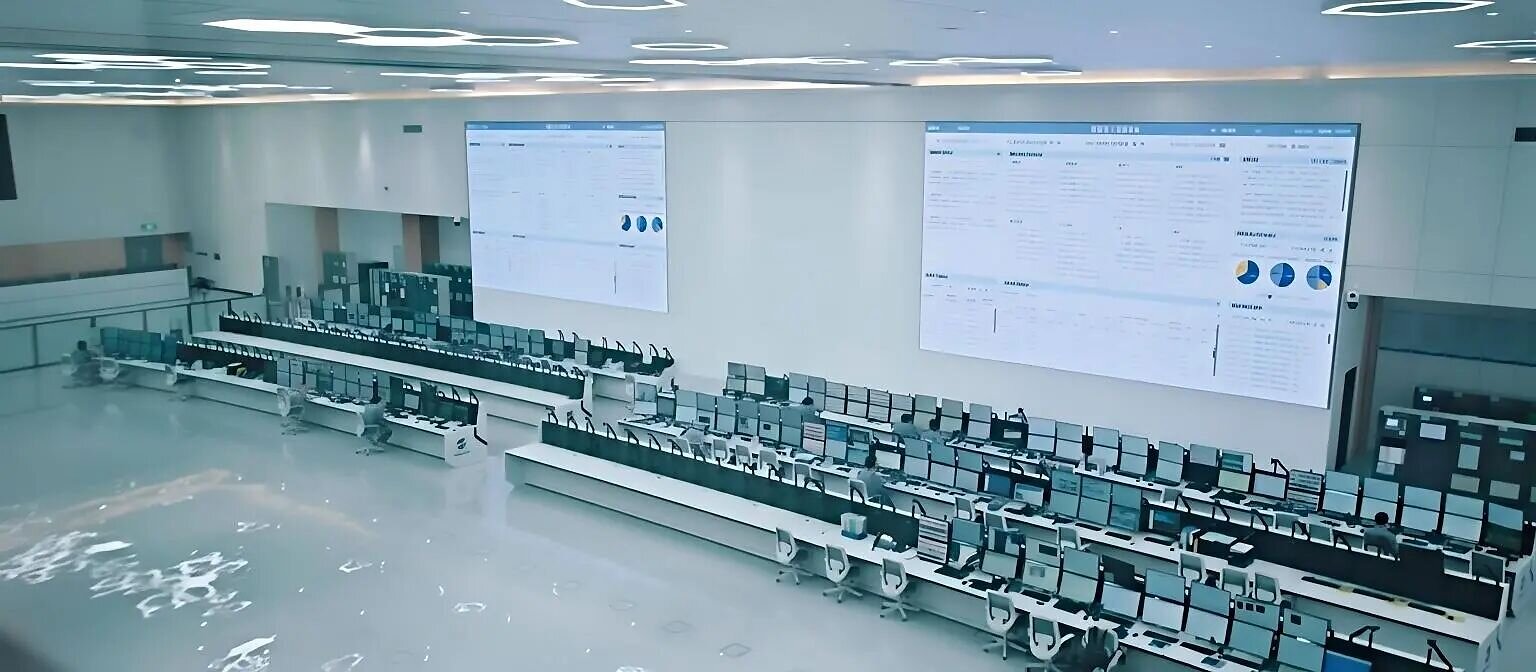
Control room shown in autonomous dispatch project material released by SUPCON. Image source: SUPCON / PR Newswire; the specific industrial park and photograph date are not stated.
This product range allows visiting teams to discuss both basic control and higher-level applications: planning control systems for new process units, adding optimization capabilities to existing units, and exchanging data and operating targets between production units. Discussions should address specific products, versions and project configurations, establishing which capabilities come from standard products and which require process-specific development and site integration.
The autonomous dispatch system at Wanhua Chemical's Penglai Industrial Park provides a named production coordination application. In a case release published on 13 November 2025, SUPCON described a system that had already been commissioned. It combines AI and mechanistic models to perform material balancing, make dispatch decisions and send instructions to the DCS.
The case illustrates the connection between production dispatch and underlying control. Understanding a specific SUPCON DCS product requires application material corresponding to that product and process unit. The Penglai dispatch project provides a starting point for discussing higher-level applications; it does not directly validate the performance or suitability of a particular DCS model.
SCIYON: control products and existing plant retrofits
SCIYON was founded in 1993, is headquartered in Nanjing and listed on the Shenzhen Stock Exchange in 2010. The company developed from industrial automation, with products including the NT6000 distributed control system, turbine control and industrial software. Its related applications cover plant control, operating data and production management.
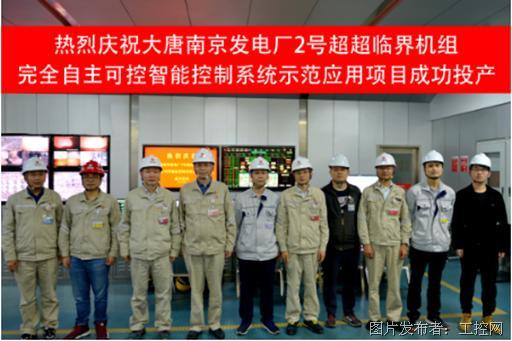
Commissioning event for the control system retrofit at Unit 2 of Datang Nanjing Power Plant. Photograph from project material submitted by SCIYON; the photograph date has not been independently confirmed.
NT6000 control products, together with software such as real-time databases and device management, allow visiting teams to examine solutions from both the control platform and operating information perspectives. SCIYON has a named retrofit application at a large generating unit. Technical discussions can therefore cover product selection, connections to existing control strategies, system replacement, commissioning and handover to the operating team.
Project material submitted by SCIYON describes a control system retrofit using NT6000 V5 at the 660 MW Unit 2 of Datang Nanjing Power Plant. The work involved DCS and the turbine's digital electro-hydraulic control system, or DEH. According to the submitted material, the system entered commercial operation on 6 May 2021. This historical generating unit retrofit case provides a basis for discussing the renewal of existing control systems and the engineering work involved.
The application helps readers understand the relationship between control products, migration of existing functions and changeover commissioning at a generating unit. Applications in other process units should be examined through the corresponding product and project material.
Understanding the relationship between control systems and production dispatch
A distributed control system receives instrument data, executes control logic and presents operating conditions through operator stations. A plant's existing control strategies, instruments and actuators, input/output points and operating practices are connected to this system.
Production optimization and dispatch address operating targets and production coordination, including unit loads, material supply and demand, and production plans. They use plant data and connect to control systems. Control platforms and higher-level applications are distinct subjects for discussion; each manufacturer's specific offerings should be understood through the relevant products and projects.
Using plant conditions to prepare further discussions
When exploring a manufacturer's products, visiting teams can outline their plant's existing systems, assets they hope to retain and production issues. A plant that can continue using its control platform but wants better production coordination raises different technical questions from one facing maintenance or expansion constraints. Product suitability needs to be checked against the plant's process and system conditions.
On smaller screens, scroll the table to see all three columns.
| Existing plant conditions | Topics to prepare for discussion | Details to explore further |
|---|---|---|
| The control system can remain in use, while production coordination and operating targets need improvement | How production optimization or dispatch applications can connect | Available data, process models, and how recommendations and instructions are executed |
| The control platform faces maintenance or expansion constraints | The engineering work involved in renewing the control system | Assets that can be retained, functional migration, shutdown and commissioning conditions |
| A new process unit or changes to several systems are progressing together | How control products, higher-level software and site teams work together | System boundaries, interfaces and the work each party actually undertakes |
These topics help prepare discussions about products and applications. A specific project requires further understanding of the relevant models, versions, technical conditions and implementation team. Each case provides application context for those discussions.
Understanding interfaces, site coordination and ongoing support
Systems integration requires an understanding of the data the plant can provide: who maintains real-time measurements, historical records, material information and production plans, and whether units and time conventions are consistent. Reading data and writing operating targets involve different interfaces. The handovers between plant control, operators and higher-level software should also be discussed in the context of the plant's actual conditions.
Retrofitting a continuously operating facility also involves shutdown changeovers, offline testing, checking existing logic, site commissioning, training and recovery arrangements for abnormal conditions. Another project's commercial operation record can help explain the scope of work, but it cannot directly establish the implementation schedule for a different plant.
In discussions about an overseas project, visiting teams can explore the manufacturer's products, versions and technical support scope, alongside the role of local engineering teams in site surveys, installation, systems integration and commissioning. A technical exchange can examine software upgrades, fault recovery and routine maintenance across the system lifecycle, including how engineering teams divide those tasks.
Bring your plant's questions to discussions in China
To prepare a technical exchange, outline the industry and process units, existing control systems, equipment you hope to retain, and whether the main objective is maintenance and renewal, operational optimization or production coordination. A clear project scope makes it easier to identify companies and specialists who can address practical engineering questions.
China Innovation Visits draws on industry networks and specialist expertise to connect teams with relevant companies and experts in control systems, production optimization and engineering. Our China-based teams coordinate company discussions and site exchanges. Topics and the scope of site activities are confirmed according to project needs and host arrangements.
Share your project background, intended dates, group size and technical priorities through our inquiry page so that we can prepare a suitable exchange programme.
Cover illustration: original CIV schematic of field signals, control and operations. Illustrative functional layers, not a vendor system architecture or a site photograph.