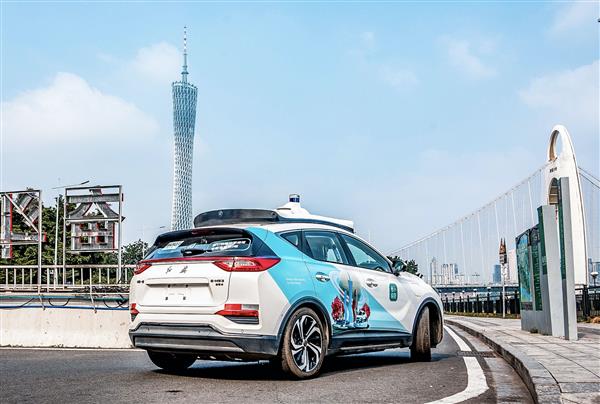
Baidu Apollo Park tour in Guangzhou takes a delegation to the one Apollo Park built around a service concept rather than a test track. Apollo Park Guangzhou opened in March 2021 in Huangpu district, developed with the district and Guangzhou Development Zone, and describes itself as China's first autonomous driving MaaS demonstration base: mobility as a service, rather than a research campus or a depot.
The stronger reason to come here is the city. Guangzhou has become the most competitive robotaxi market in China. Baidu's Apollo Go operates here, and so do XPeng, WeRide, Pony.ai, DiDi and others, supported by a local manufacturer in GAC and by a regulatory framework that has repeatedly moved first. A delegation can compare operators, business models and regulatory approaches inside one city, which is not possible anywhere else in China.
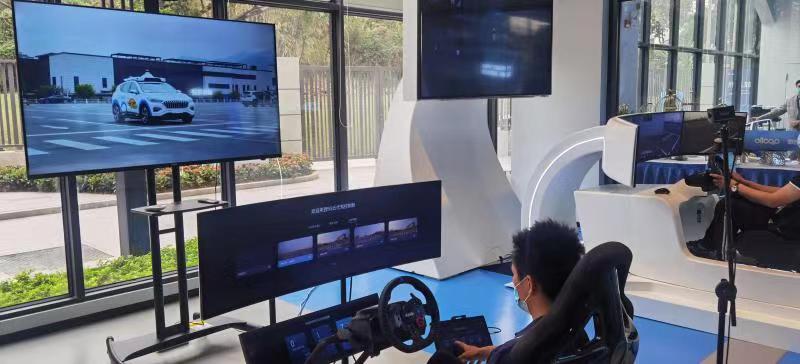
A visit is organised around the autonomous driving exhibition hall, a ride in an autonomous vehicle, and a briefing and Q&A with company specialists.
China Innovation Visits coordinates the Baidu Apollo Park tour, including the company reception, scheduling, Guangzhou transport and English interpretation.
Key takeaways
- Visit China's first autonomous driving MaaS demonstration base, in the park built around service rather than testing.
- Ride an autonomous vehicle on public roads and see the digital twin map behind the operation.
- Understand why Guangzhou, not Beijing or Shanghai, became the most contested robotaxi market in China.
- Compare Apollo Go with the other operators running in the same city.
- Link the programme with the Beijing Apollo Park and Shanghai Apollo Park for a three-city view.
Why visit Apollo Park in Guangzhou?
Most autonomous driving visits show a company's own technology in isolation. Guangzhou shows a market. Five of the largest robotaxi operators in China run services in this city, often within a few districts of each other, alongside a domestic carmaker that supplies vehicles and capital to several of them.
That concentration changes the questions a delegation can ask. Instead of asking one operator whether its technology works, you can ask why operators with different architectures, different vehicle partners and different capital structures all chose the same city, and which of them is closest to a working business.
For companies in mobility, logistics, automotive or infrastructure, that is a more useful half-day than a single-company presentation.
What Apollo Park Guangzhou is
The park and its role
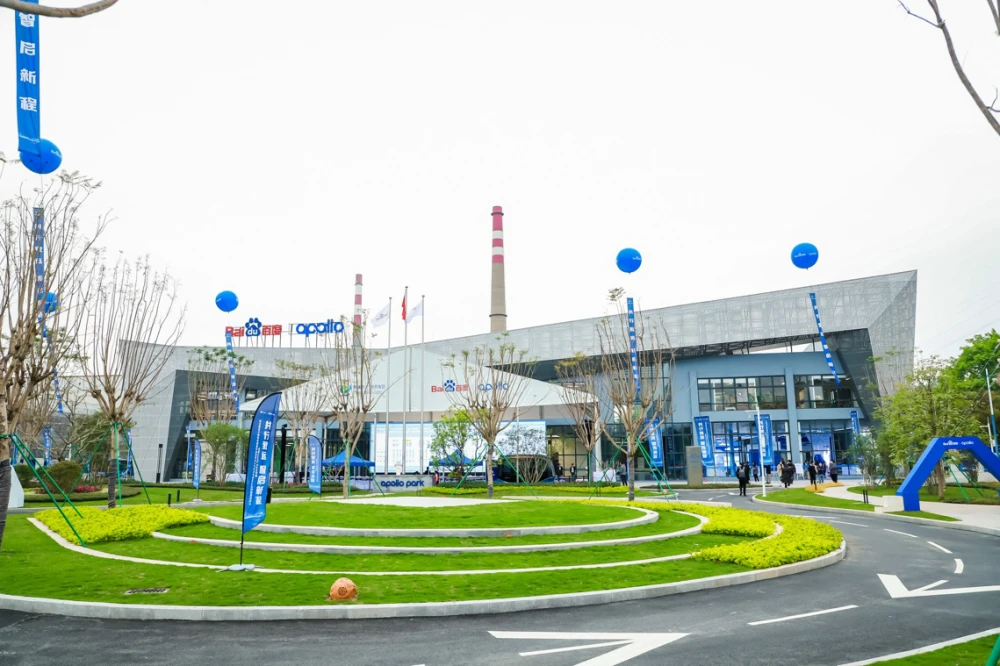
Apollo Park Guangzhou opened on 8 March 2021, built with Huangpu district and Guangzhou Development Zone. Chinese sources describe it as the country's first autonomous driving MaaS demonstration base, with a site area of about 30,000 square metres, and as home to what was then the largest autonomous driving MaaS fleet in China.
The site sits in the Yuzhu area of the artificial intelligence and digital economy pilot zone, on land that was previously a building materials wholesale market and was redeveloped as part of a district upgrade. The functions described include an operations and command centre for the mobility service, a vehicle-road coordination command centre, research and development for autonomous driving and vehicle-road coordination, a product exhibition centre, and vehicle storage and maintenance.
How the three Apollo Parks differ
This is the point most visitors miss, and it is worth stating plainly. Baidu has built several Apollo Parks, and they are not the same thing:
- Beijing, Yizhuang, opened May 2020: about 17,000 square metres, described as a testing base for autonomous driving and vehicle-road coordination, with more than 300 test vehicles and about 750 kilometres of open test roads.
- Shanghai, Jiading, opened July 2021: just under 10,000 square metres, described as an operations base, covering about 1,076 kilometres of test roads.
- Guangzhou, Huangpu, opened March 2021: about 30,000 square metres, built around the MaaS service concept.
Beijing is where the testing happens. Shanghai is where operations run. Guangzhou is where the service concept was demonstrated first. Choose the park that matches the question your delegation is actually asking.
What you see on the visit
The exhibition hall
The hall covers the development of autonomous driving technology and Baidu's work in the field, including a digital twin map reproduced at 1:1. The map is the part worth slowing down on, because it shows what the vehicle believes about the road rather than what a camera sees.
The ride
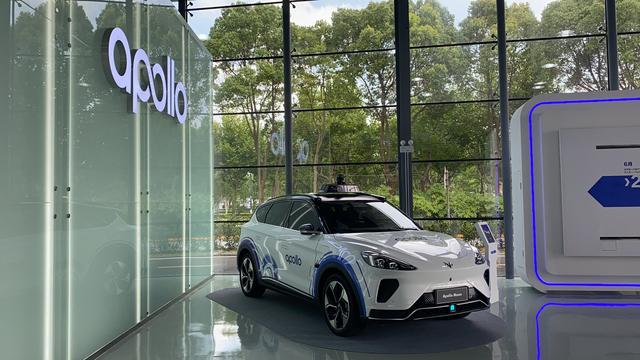
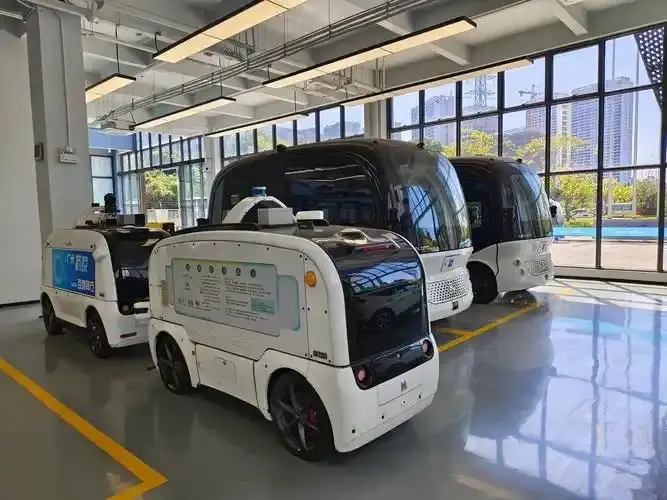
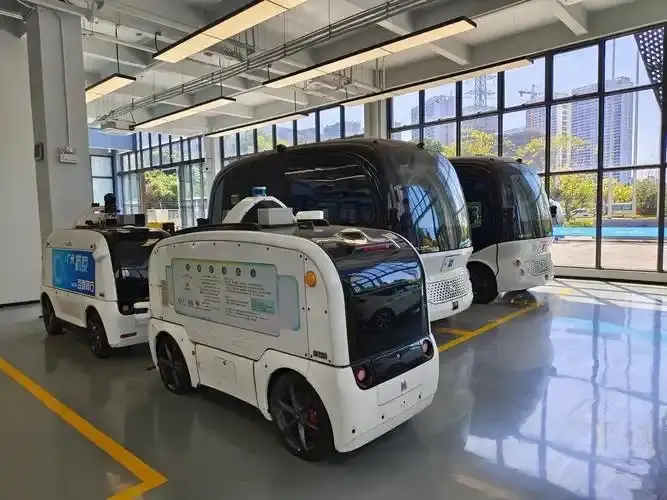
The programme normally includes a ride in an autonomous vehicle on real roads, arranged by the host. This is the part that settles arguments. Delegations who have read about disengagements and remote operators behave differently once they have sat in the vehicle.
Rides depend on vehicle availability, route permissions and conditions on the day, and are confirmed with the host in advance.
The briefing
The standard theme is Baidu's exploration and practice in autonomous driving: where the technology stands, how commercialisation is structured, and how the "vehicle-road-cloud integration" approach is meant to support deployment. The Guangzhou session usually covers Baidu's progress in Guangdong specifically.
Tell us what your team wants to test. The host prepares around the delegation's interests, and the questions determine which specialists come to the room.
Sample Visit Agenda
09:30–10:30 Visit to Baidu's Autonomous Driving Base
10:30–11:00 Test Ride Experience with Apollo Go Robotaxi or Autonomous Minibus
11:00–12:00 Thematic Sharing: Development Trends of Autonomous Driving Vehicles
The vehicle-road-cloud question
What the term means
Vehicle-road-cloud integration is the idea that the vehicle is not the only intelligent part of the system. Roadside units, a city-level data platform and cloud compute contribute information the vehicle cannot sense itself, and the city builds the digital layer alongside the physical one.
Guangzhou has invested along those lines. City reporting describes about 378 kilometres of smart road built across Nansha, Huangpu, Huadu, Panyu and Haizhu, with about 460 roadside units deployed and a city-level connected vehicle data platform. The same reporting puts more than 10,000 vehicles with on-board units in service, mainly buses and ride-hailing cars, described as the first Chinese city to pass that mark. Guangzhou was also named in the national vehicle-road-cloud integration pilot city list.
Why it matters commercially
The strategic question is who pays. If the roadside infrastructure is publicly funded, operators get a capability they did not build. If it is not, the operator carries a cost that only pays back at scale. Ask the host how much of the capability Apollo Go depends on is on the vehicle and how much is in the road, because the answer determines how portable the service is to a city without that infrastructure.
Apollo Go in Guangzhou today
Where it operates
Apollo Go runs in Guangzhou, and its operating area has widened. Reporting from mid-2026 describes service in core parts of Haizhu, Panyu and Huangpu districts, open to the general public through the app with no special application. Earlier coverage described a narrower footprint around Huangpu Science City, with fixed pick-up and drop-off points rather than kerbside stops.
Outside the programme, delegations can usually book Apollo Go independently within the operating area. Tell us if you want to arrange that and we will advise on practicalities.
Scale and the claims to test
Company figures describe Apollo Go operating in 28 cities globally, with cumulative orders above 23 million, total autonomous mileage above 350 million kilometres and fully driverless mileage above 240 million kilometres. Baidu has also stated an accident rate far below human drivers; that is a company-stated comparison and worth asking how it was measured.
The more useful number for a Guangzhou discussion is unit economics, which is why the competitive comparison below matters.
The field Apollo Go is competing with
Five operators in one city
Guangzhou hosts an unusual concentration: Baidu Apollo, Pony.ai, WeRide, DiDi and XPeng, plus GAC-backed OnTime and others. Several of them publish results, which makes the comparison concrete:
- Pony.ai reported 2025 robotaxi revenue of about 116 million yuan, up 129 per cent, and said it reached positive unit economics on a per-vehicle basis in Guangzhou shortly after putting its seventh-generation vehicle into commercial operation in November 2025.
- WeRide reported 2025 revenue of about 685 million yuan, up 90 per cent, with robotaxi revenue of about 148 million yuan, up 209.6 per cent, and a fleet of 2,113 autonomous vehicles including 1,125 robotaxis.
- Baidu's advantage is scale and its multi-manufacturer approach, working with partners including GAC Aion rather than owning vehicle production.
Why Guangzhou, and not somewhere else
Three reasons recur. Guangzhou issued what Chinese reporting describes as the country's first autonomous driving passenger testing permit, in 2019, and was the first city in China to run commercial demonstration operations. Huangpu and Nansha offer newer districts with lower traffic density and enough ride demand to be worth serving. And GAC, a major domestic carmaker, provides vehicles and, in several cases, capital to operators.
The result is a genuine test bed. Whether it becomes the first city to make robotaxi work commercially is an open question, and it is the best question to bring to the room.
Who this visit suits
The programme suits mobility, ride-hailing and fleet operators comparing deployment models. It suits automotive suppliers and manufacturers, because the vehicle-partner question is central here. It suits infrastructure and public-sector delegations, because the roadside investment question is live. And it suits investors trying to separate operators that are scaling from those that are still demonstrating.
It suits delegations less if they want a single-company technology showcase with no competitive context.
Combining the visit with other Guangzhou stops
Apollo Park works as the mobility anchor of a Guangzhou programme. A GAC Aion factory tour in Guangzhou covers the manufacturing side, and GAC is a vehicle partner in this ecosystem, which makes the pairing unusually coherent.
Combinations are coordinated around the delegation's objectives, travel schedule and host availability.
Practical notes
- The visit is a business programme. Delegations are received as professional visitors and follow the host's rules.
- Photography and video rules are confirmed in advance; tell us during planning if you need images for internal reporting.
- Smart casual is appropriate. The visit involves standing and walking, and a ride.
- Rides are subject to vehicle availability, route permissions and weather, and are confirmed with the host.
- The meeting point is confirmed in writing after the host approves the booking.
- English interpretation can be arranged for the hall, ride briefing, session and Q&A.
Questions before a Baidu Apollo Park visit in Guangzhou
Is the visit open to international business delegations? Yes, subject to advance arrangements and confirmation by the host. We recommend planning at least 30 days ahead.
What is the group size? Visits are normally arranged for groups of 10 or more and fewer than 20 participants. Smaller groups can sometimes be accommodated.
How long does the visit take? The standard programme runs about two and a half hours, covering the exhibition hall, a ride and the briefing and Q&A.
How is this park different from the Beijing and Shanghai ones? Guangzhou opened in March 2021 as China's first autonomous driving MaaS demonstration base, at about 30,000 square metres. Beijing is the testing base and Shanghai the operations base.
Can we ride in an autonomous vehicle? A ride arranged by the host is normally included, subject to vehicle availability and route permissions. Apollo Go also operates publicly in parts of Guangzhou and can be booked independently.
Do participants need a technical background? No. The visit can be approached through mobility, operations, investment or policy, and terminology is handled through interpretation.
Is English interpretation provided? Yes, interpretation can be arranged for the hall, ride, briefing and Q&A, with terminology prepared around the delegation's interests.
Where in Guangzhou does Apollo Go operate? Reporting from mid-2026 describes core parts of Haizhu, Panyu and Huangpu districts, with fixed pick-up and drop-off points. The operating area changes, so check the app or ask us to confirm.
Who else operates robotaxis in Guangzhou? Pony.ai, WeRide, DiDi, XPeng and GAC-backed OnTime, among others. That concentration is the main reason to visit this city rather than another.
How should safety claims be read? Company-stated comparisons against human drivers are useful talking points but depend on how they were measured. Ask what the denominator is and over what period.
Does the programme always run as described? It is built around the elements above. Facilities and areas opened on the day are subject to what the site opens, and we confirm the final scope in writing during planning, before you commit.
Arrange your Apollo Park tour
Tell us your dates, group size and what your team wants to understand: the service model, the vehicle-road-cloud approach, or how the operators in Guangzhou compare. China Innovation Visits will coordinate the company reception, discussion priorities, transport and English interpretation.
Contact China Innovation Visits to arrange your Baidu Apollo Park tour in Guangzhou.