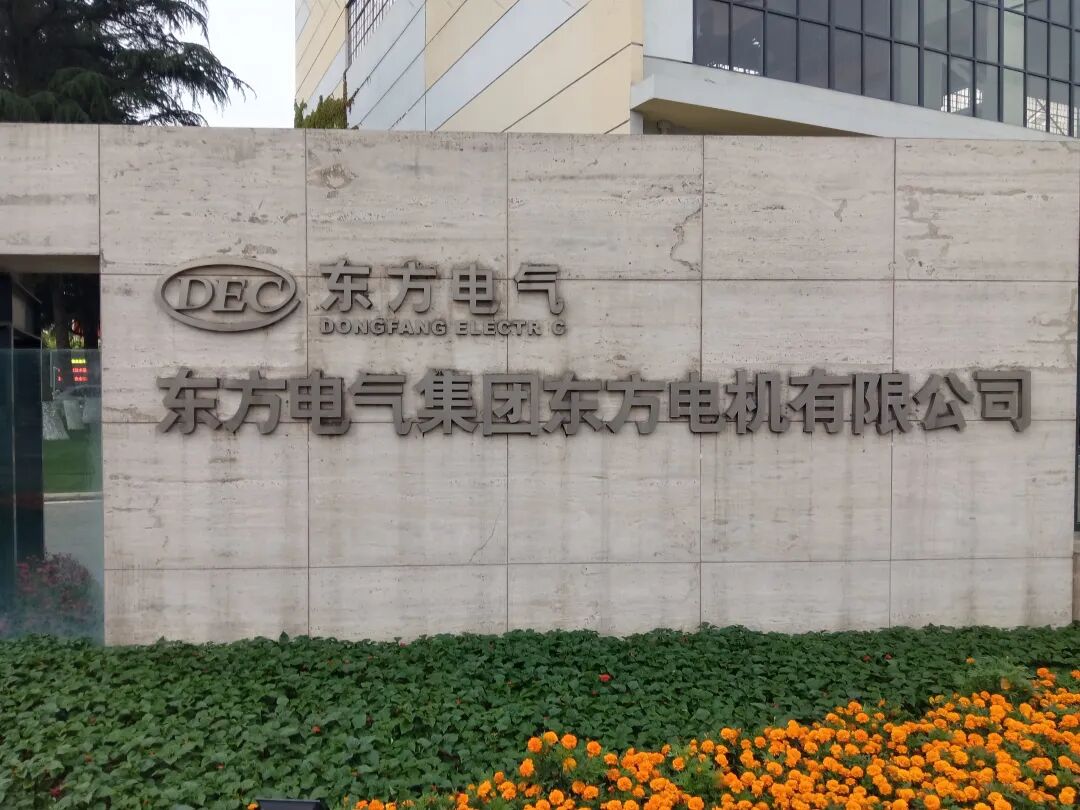
A Dongfang Electric(东方电气) visit in Chengdu takes a delegation to the company that has supplied roughly a third of China's power-generation equipment. Dongfang Electric Corporation is a centrally administered state-owned group headquartered in Chengdu. Its listed arm, Dongfang Electric Corporation Limited, trades in Shanghai under 600875 and in Hong Kong under 01072. In 2025 the listed company reported operating revenue of about 78.6 billion yuan, up 12.8 per cent, and net profit attributable to shareholders of about 3.83 billion yuan, up 31.1 per cent.
The number that gives the visit its scale is cumulative output: the company states it has produced more than 840 million kilowatts of power-generation equipment — about 84 gigawatts — and has supplied equipment and services to nearly 90 countries and regions. Very few manufacturers in the world can make that claim, and fewer still can show coal, hydro, nuclear, gas, wind and solar equipment under one corporate roof.
The second reason to go is that Dongfang Electric is where the argument about China's energy transition becomes concrete. The group still builds the world's most advanced coal units and is simultaneously one of the country's main suppliers of nuclear island equipment, pumped-storage hydro and heavy-duty gas turbines. A delegation that wants to understand how China is managing both sides of that equation will get a more useful conversation here than at a company that only does one.
China Innovation Visits coordinates the Chengdu programme, including the company reception, scheduling, local transport and English interpretation.
Key takeaways
- See the full equipment range in one group: coal, hydro, nuclear, gas, wind and solar.
- Understand how a Chinese state-owned equipment maker moved from licensed designs to its own 50 MW heavy-duty gas turbine.
- Discuss the 2025 result: revenue up 12.8 per cent, profit up 31.1 per cent, and how much of that is operating.
- Examine the nuclear equipment business, including the Guangzhou base and the "16 domestic firsts" record.
- Compare the approach with a CATL visit in Ningde, where the storage side of the same energy system is built.
Why visit Dongfang Electric in Chengdu?
Power equipment is a good subject for a delegation because the market is measurable and the engineering is honest. Machines either reach their design parameters or they do not. Dongfang Electric describes itself as one of the world's largest suppliers of power-generation equipment and one of the largest power-plant engineering contractors, and the volume behind that claim is verifiable.
The visit is also a lesson in industrial geography. The group's headquarters and coordinating functions sit in Chengdu, while its heaviest manufacturing is in Deyang, about an hour away. A delegation that understands this split understands why the company is organised the way it is: design and contracting in the provincial capital, heavy fabrication where the river and rail infrastructure can move 1,000-tonne castings.
Chengdu is not a city most delegations visit for heavy industry, which is part of the value. The company is not performing for an audience. The city does have a second energy anchor worth combining on the same trip: a Tongwei solar visit in Chengdu covers the photovoltaic side of the same system. For a consumer-goods contrast rather than an energy one, a Gree washing machine visit in Chengdu pairs well with it.
Company background
Two founding dates, and why both are correct
The group gives 1958 as its starting point: that year, the Deyang Hydroelectric Equipment Works broke ground in Sichuan and later became Dongfang Electric Machinery Works. Dongfang Boiler Works followed in Zigong in 1966 and Dongfang Turbine Works in Mianzhu in the same year. The group entity itself, China Dongfang Electric Corporation, was registered on 6 November 1984, when the "Dongfang Complete Power Plant Equipment Company" was formed in Chengdu from those member factories.
A delegation will hear 1958 quoted. It is the industrial starting point, not the date the group was incorporated. Both are used officially, and the difference matters if you are checking a corporate registry.
Ownership and listing
China Dongfang Electric Corporation is a wholly state-owned company directly administered by China's state assets regulator, and sits at number 34 on the regulator's list of central state-owned enterprises. The listed arm, Dongfang Electric Corporation Limited, was listed in Shanghai on 10 October 1995 under the name Dongfang Electric Machinery, and was renamed Dongfang Electric in November 2007. Its H shares trade in Hong Kong under 01072. At the end of 2025 the listed company reported total assets of about 162.674 billion yuan.
Luo Qianyi became chairman and party secretary in 2025, arriving from a finance career across several central state-owned groups. Zhang Yanjun, a boiler engineer by training who rose through Dongfang Boiler, has been general manager since March 2024. A finance chairman paired with a technical general manager is a deliberate configuration for a group that has to fund both its traditional business and its newer industries.
The six "electricities"
How the group describes itself
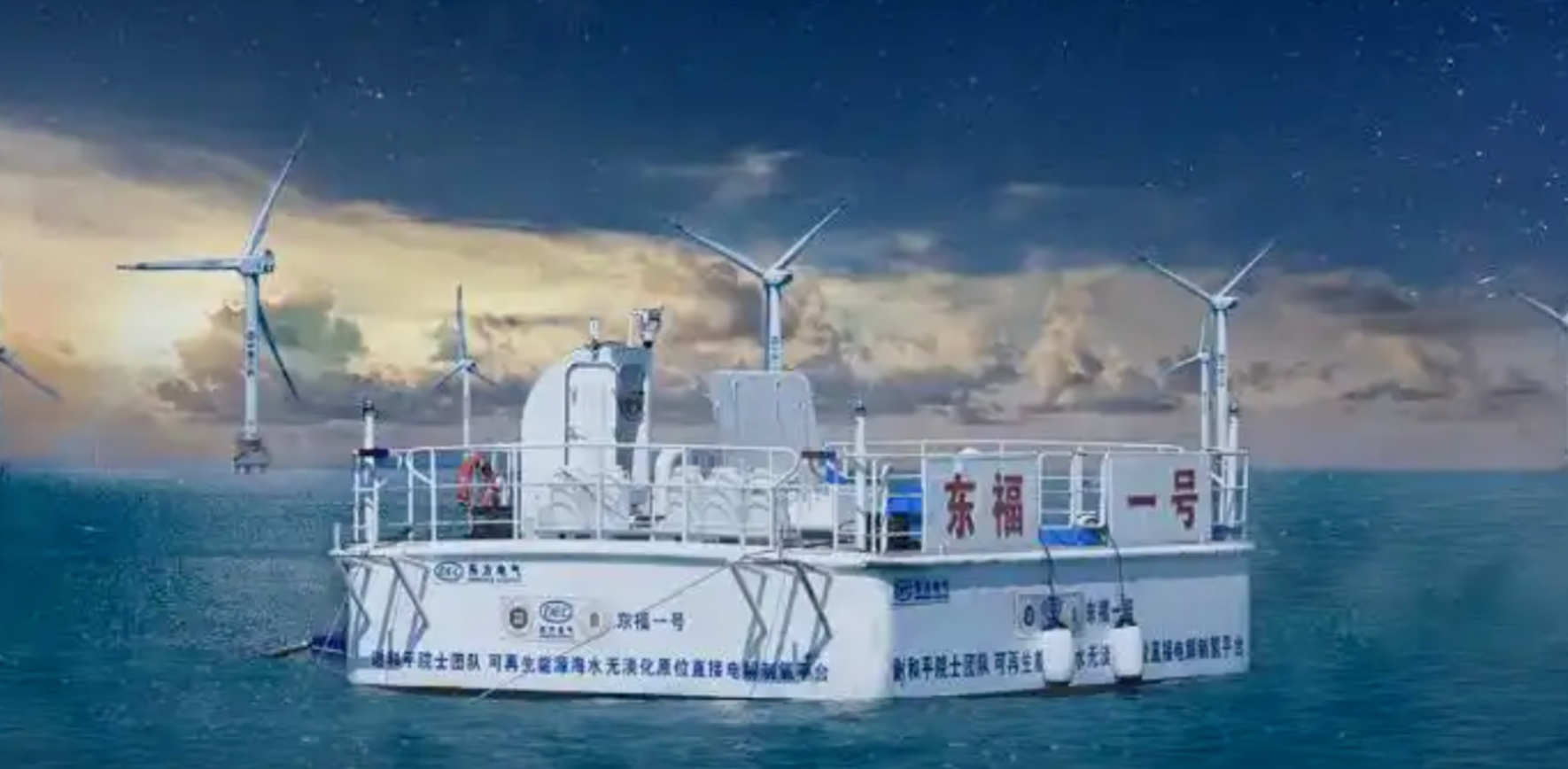
Dongfang Electric summarises its portfolio as "six electricities in parallel, six industries in coordination". The six electricities are wind, solar, hydro, nuclear, gas and coal. The six industries are high-end petrochemical equipment, energy conservation and environmental protection, engineering and international supply chain, modern manufacturing services, power electronics and control, and emerging industries.
Where the annual report is more precise
The listed company's own 2025 annual report describes a "one core, two wings" structure. The core is high-end energy equipment: thermal, hydro, nuclear, gas and wind. The two wings are manufacturing services — plant services, integrated energy, manufacturing digitalisation and supply chain — and emerging industries, which include energy storage and hydrogen, environmental and chemical engineering, industrial drives, power electronics and control, and solar.
The distinction is worth raising on site. In the group's own marketing solar sits inside the six electricities; in the listed company's reporting it sits in the emerging-industries wing. That is not a contradiction so much as a signal about maturity: solar is not yet one of the core equipment lines.
Scale
The 2025 annual report states cumulative output of power-generation equipment above 840 million kilowatts, equipment and services delivered to nearly 90 countries and regions, and continuous inclusion since 1994 in the ENR list of the world's 250 largest international contractors. Dongfang Electric Machinery, the Deyang subsidiary, passed 760 million kilowatts of cumulative output by mid-2026 — described in reporting as the equivalent of 34 Three Gorges dams — and has ranked first in the world by annual output for many consecutive years. The same reporting credits it with supplying roughly 30 per cent of China's hydro equipment, 60 per cent of its nuclear equipment and 40 per cent of its thermal equipment.
The 2025 results
Revenue and profit
For 2025 the listed company reported operating revenue of about 78.615 billion yuan, up 12.8 per cent; total profit of about 4.785 billion yuan, up 23.2 per cent; and net profit attributable to shareholders of about 3.831 billion yuan, up 31.1 per cent.
The group also publishes a separate sustainability report, which puts 2025 operating revenue at 85.028 billion yuan, up 12.54 per cent, and net profit at 3.836 billion yuan, up 8.09 per cent. The gap is not an error: the group figure includes entities outside the listed company. Ask which number a speaker is using before comparing it with anything else.
Orders
New effective orders reached 117.251 billion yuan in 2025, the second consecutive year above 100 billion. Reporting on the annual results puts the order book at about 140.3 billion yuan at the end of the year. For an equipment maker with multi-year build cycles, the order book is the more forward-looking number, and it is the one to ask about.
Shareholder returns
Under its 2025–2027 shareholder return plan the company proposed a cash dividend of 5.3 yuan per 10 shares for 2025, a total of about 1.833 billion yuan, equal to 47.84 per cent of net profit attributable to shareholders.
How to read the profit
Growth that is not purely operating
Net profit rose 31.1 per cent while revenue rose 12.8 per cent. Reporting on the results notes that the profit increase reflects both business growth and changes in fair value — that is, part of the improvement does not come from selling and building equipment.
This is the single most useful question a delegation can bring. Ask what the profit looks like after non-recurring items, and how much of the improvement came from margin rather than revaluation.
The margin reality
On the reported figures, net profit of 3.831 billion yuan on revenue of 78.615 billion yuan is a net margin of roughly 4.9 per cent. That is a normal margin for heavy equipment manufacturing and a long way from the margins of the battery or software companies a delegation may have visited on the same trip. Heavy power equipment is a volume business with long cycles and state-influenced pricing, and the visit is more instructive if that is stated plainly at the start.
Nuclear: the strongest franchise
Guangzhou and the domestic-firsts record
Dongfang Heavy Machinery in Guangzhou is described as one of the world's largest nuclear equipment manufacturing bases and the first domestic nuclear equipment localisation base built in China. Its products span Generation II-plus, third-generation designs including Hualong One, AP1000, EPR and CAP1400, fourth-generation high-temperature gas-cooled reactors, marine nuclear power platforms and components for the international thermonuclear reactor programme. The company credits it with a record of 16 "domestic first" nuclear main equipment items.
Dongfang Wuhan Nuclear Equipment, a wholly owned subsidiary, was China's first supplier of reactor internals and has supplied components for both Hualong One and the smaller Linglong One design.
On market position, the company states it holds first place in China's nuclear equipment market, and media reporting puts its share above 40 per cent. The specific share is a media figure rather than a disclosed one; the ranking is the company's own.
Gas turbines: the long domestic programme
The G50
Dongfang Turbine in Deyang developed the G50, described as China's first F-class 50 MW heavy-duty gas turbine with fully independent intellectual property. It passed a 2,000-hour full-load commercial operation assessment in September 2024, and by 2026 had accumulated more than 12,000 hours of commercial operation. It was exported to Kazakhstan in November 2025, and in April 2026 the company signed an agreement with a North American customer for ten G50 units.
Larger machines
In March 2026 China's first 550 MW F-class gas unit entered commercial operation at the Huadian Chongqing Tongnan project, using an M701F5 turbine with a combined-cycle efficiency of 61.66 per cent and described as the largest single-unit capacity among domestic F-class heavy machines. Dongfang Turbine supplied the core equipment. The company has also completed full-load testing of a first 15 MW heavy-duty gas turbine.
Reporting puts Dongfang Turbine's share of China's gas power market above 70 per cent. As with the nuclear share, treat the precise number as reported rather than disclosed.
Coal, hydro and wind
Coal at 630°C
On 8 June 2026 the world's first 630°C double-reheat ultra-supercritical 1,000 MW coal unit entered commercial operation at the Datang Yuncheng demonstration project, with Dongfang Electric supplying the three main machines and key auxiliary equipment. In 2025 the world's first 700 MW ultra-supercritical circulating fluidised bed boiler entered operation; Dongfang Boiler in Zigong supplied it, and the project was named among the year's ten super-engineering projects by state-owned industry media. Dongfang Boiler is described as holding the world's largest share of the circulating fluidised bed boiler market. The group also reports the first commercial operation of a supercritical carbon dioxide power generation unit.
Hydro
Hydro output moved sharply in 2025: the company reported hydro generator set production of 8,056.6 MW, up 112 per cent. Pumped storage is the driver, and Dongfang Electric has been building in the segment for years. The group has also commissioned what it describes as the world's first plateau hydro research and production base in Nyingchi, Tibet.
Wind, where it is not the leader
Dongfang Electric Wind Power, also in Deyang, has delivered more than 15,000 turbines and has brought out a 26 MW semi-direct-drive offshore machine and a 17 MW direct-drive floating offshore machine. Reporting places it sixth in China's wind power market by share.
That ranking is worth stating during the visit. A group that leads in nuclear, thermal and gas equipment is mid-table in wind, and asking why is a better question than asking it to repeat its marketing. Delegations comparing wind specialists can also look at a Goldwind factory tour in Beijing.
Where the sites are
- Chengdu — group headquarters and coordinating functions. The registered address is 333 Shuhan Road, Jinniu district; the correspondence address given in the 2025 annual filing is 18 Xixin Avenue, Chengdu high-tech west zone. Honghua Electric, the group's oil drilling equipment company, is also here.
- Deyang — the manufacturing heartland: Dongfang Electric Machinery, Dongfang Turbine and Dongfang Electric Wind Power.
- Zigong — Dongfang Boiler.
- Guangzhou — Dongfang Heavy Machinery, the nuclear equipment base.
- Wuhan — Dongfang Wuhan Nuclear Equipment, reactor internals.
Delegations should plan travel with this map in mind. Chengdu is where the group is directed from; the heavy manufacturing that makes the visit worth taking is mostly in Deyang.
What a visit covers
The standard programme
| Time | What happens |
|---|---|
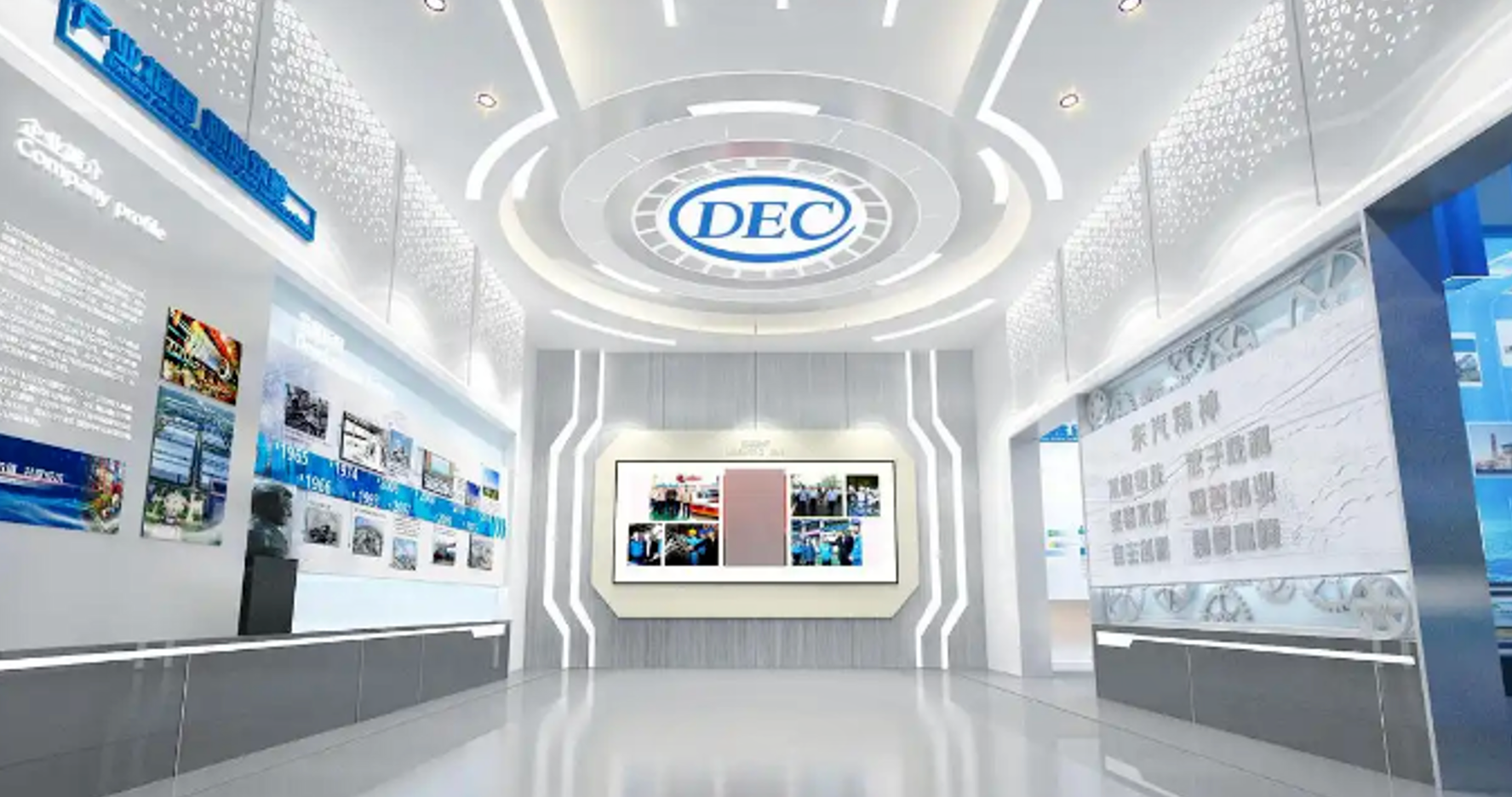
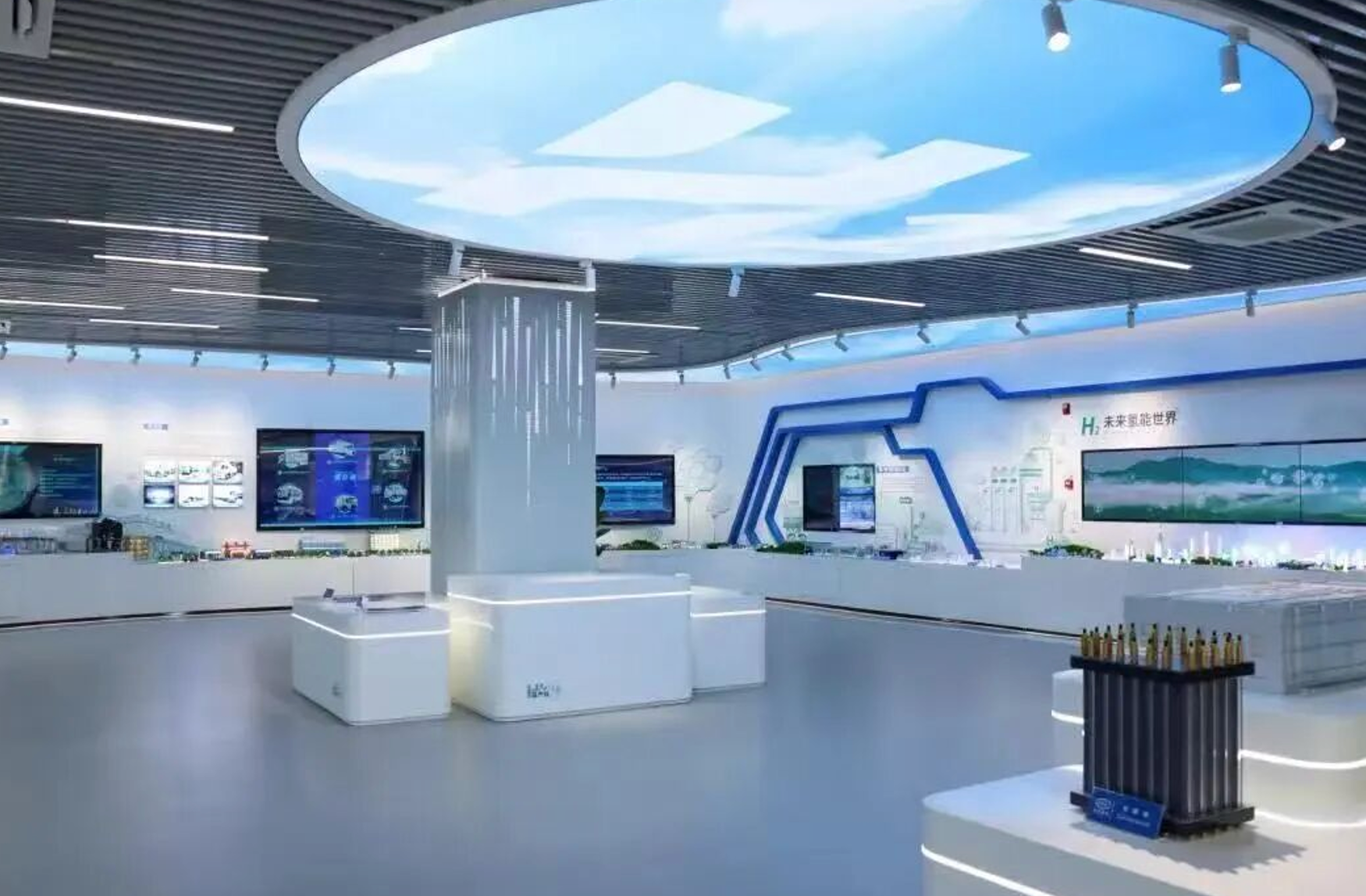
| 09:00–10:00 | Corporate exhibition hall: the development of China's power equipment industry |
| 10:00–11:00 | Heavy equipment manufacturing area: nuclear power equipment manufacturing |
| 11:00–12:00 | Technology R&D centre and clean energy laboratory |
| 14:00–15:30 | Themed discussion: technology trends in energy equipment |
The programme is adapted to what the delegation wants to understand, and the final scope is confirmed in writing during planning, before you commit.
Practical notes
- The visit is a business programme. Delegations are received as professional visitors and follow the host's rules.
- Booking requires approval in advance, normally two to three weeks. Companies submit a participant list; government and public institutions usually need a formal letter. Tell us early so the paperwork does not delay the date.
- Groups are normally kept to about 25 people per batch, with larger delegations split.
- Photography rules are confirmed in advance; tell us during planning if you need images for internal reporting.
- Smart casual is appropriate. The programme involves walking through exhibition and technical areas.
- English interpretation can be arranged for the exhibition, technical sessions, briefing and Q&A.
Questions before a Dongfang Electric visit in Chengdu
Is the visit open to international business delegations? Yes, subject to advance arrangements and confirmation by the host. Host approval takes time, so we recommend planning at least 30 days ahead.
What is the group size? Visits are normally arranged for groups of 10 or more, with a single batch usually kept to about 25 participants. Larger delegations are split.
How long does the visit take? The standard programme runs about three hours, typically covering the exhibition hall, technical areas, and a briefing and Q&A.
Where is the visit held? At the group's base in Chengdu. Manufacturing sites are spread across Deyang, Zigong, Guangzhou and Wuhan, and we confirm the location and meeting point in writing after the host approves the booking.
Do participants need a technical background? No. The visit can be approached through energy policy, manufacturing, operations, investment or procurement, and terminology is handled through interpretation.
Is English interpretation provided? Yes, interpretation can be arranged for the exhibition, technical sessions, briefing and Q&A.
How large is the company? The listed company reported 2025 operating revenue of about 78.6 billion yuan and net profit attributable to shareholders of about 3.83 billion yuan. The wider group reports about 85.0 billion yuan.
How much equipment has it produced? The 2025 annual report states cumulative power-generation equipment output above 840 million kilowatts, about 84 gigawatts, delivered to nearly 90 countries and regions.
Is Dongfang Electric the largest in the world? The annual report describes it as one of the world's largest suppliers of power-generation equipment and power-plant contractors, and its Deyang machinery subsidiary has ranked first in the world by annual output for many consecutive years. It is not first in every category: reporting places its wind business sixth in China.
How should the 2025 profit growth be read? With care. Net profit rose 31.1 per cent on revenue up 12.8 per cent, and reporting notes the increase reflects fair-value changes as well as operations. Ask for the figure excluding non-recurring items.
Does the programme always run as described? It is built around the elements above. Facilities and areas opened on the day are subject to what the site opens, and we confirm the final scope in writing during planning, before you commit.
Arrange your Dongfang Electric visit
Tell us your dates, group size and what your team wants to understand: the nuclear equipment business, the gas turbine programme, the coal technology path, or how a state-owned equipment group funds both its traditional and emerging industries. China Innovation Visits will coordinate the company reception, discussion priorities, transport and English interpretation.
Contact China Innovation Visits to arrange your Dongfang Electric visit in Chengdu.