
An XGIMI(极米科技) visit in Chengdu takes a delegation to the company that has shipped more home projectors than anyone else in the world for three years running. XGIMI Technology was founded in 2013, is headquartered in Chengdu, and listed on the Shanghai Stock Exchange's STAR Market under 688696 in 2021. In 2025 it reported revenue of about 3.47 billion yuan and net profit attributable to shareholders of about 143 million yuan.
The reason to go in 2026 is what happened to the shape of the business: overseas revenue rose 87.63 per cent in the first half of 2026 and now accounts for about 46.6 per cent of the business, against about 24.5 per cent a year earlier. overseas revenue rose 87.63 per cent in the first half of 2026 and now accounts for about 46.6 per cent of the business, against about 24.5 per cent a year earlier.
That is one of the clearest live examples in Chinese consumer hardware of a company adding an export market alongside its home base, and it is worth seeing up close. Group gross margin improved from about 33 per cent to about 39 per cent year on year over the same period, so the change is visible in the mix as well as in the revenue line.
China Innovation Visits coordinates the Chengdu programme, including the company reception, scheduling, local transport and English interpretation.
Key takeaways
- See a full projector product range, from entry-level portable units to ultra-short-throw and high-end laser models.
- Understand the export shift: overseas revenue from about 24.5 per cent to about 46.6 per cent of the business in a year.
- Ask how the overseas build-out was paid for: six thousand offline points of sale, seven overseas warehouses, three wholly owned subsidiaries and a Vietnam production base.
- Examine the optical engine and picture-adaptation work that the company develops in-house.
- Discuss the new businesses built on the same optics: in-car projection, commercial display and AI glasses.
- Compare with an Anker Innovations headquarters visit on Chinese consumer hardware going overseas, or an XREAL visit on the near-eye display end of the same optics industry.

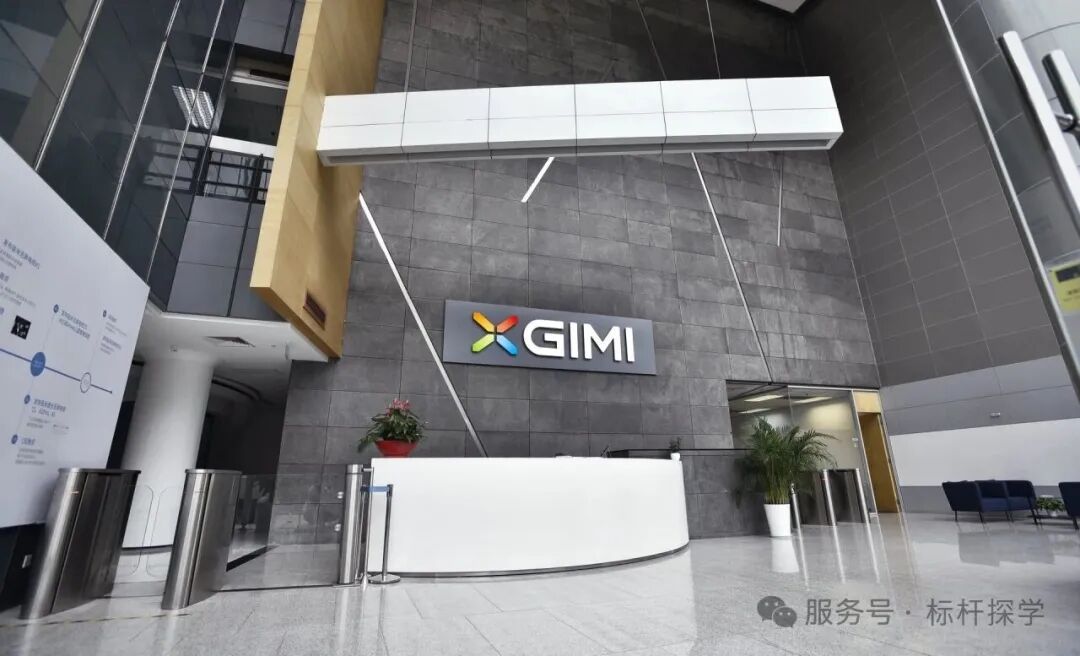
Why visit XGIMI in Chengdu?
Projectors are a good lens on Chinese consumer hardware because the category moved from a niche to a mass market and then met a ceiling. XGIMI rode the first half of that and is now navigating the second, and the company's answer — move the growth offshore and reuse the optics in cars and commercial display — is the interesting part.
It is also a rare case of a Chinese consumer brand with genuine overseas brand position rather than contract manufacturing. The company reports its projector products ranked first by GMV in the Amazon Europe category for full-year 2025 and again in the first half of 2026, and second in the United States in November 2025. Whether that holds is a commercial question; that it is being asked at all is a change from a decade ago.
Chengdu is a practical setting. The city has a deep electronics supply base and a steady stream of engineering graduates, and the company has been based there for over a decade. A visit here combines with other programmes in the city, including a Tongwei solar visit in Chengdu and a Gree washing machine visit in Chengdu for the white-goods manufacturing contrast.
Company background
2013 to the STAR Market
XGIMI was founded in 2013 and listed on the STAR Market in 2021. Its business is the design and sale of smart projectors and related accessories, together with internet operation services on its own platform.
Market position, according to IDC and Runto data cited in the company's reporting: first in China projector shipments in 2018, and first in China every year since — eight consecutive years to 2025 — with six consecutive years leading both shipments and sales value domestically. It also reports three consecutive years as the world's largest home projector brand by shipments.
Note the wording carefully. Global first place is in the home projector category, not projectors overall. Business and cinema projectors are a different market with different leaders.
What it sells
In the first half of 2026, projector units and accessories were about 1.503 billion yuan, or 93.73 per cent of revenue, and internet operation services about 63 million yuan, or 3.91 per cent. The business is overwhelmingly hardware, with a small recurring software layer on top.
The product range spans entry-level portable models, mid-range and high-end laser projectors, and ultra-short-throw models for small rooms.
The 2025 results
Revenue and profit
Revenue was about 3.467 billion yuan in 2025, up 1.85 per cent. Net profit attributable to shareholders was about 143 million yuan, up 19.40 per cent. Profit excluding non-recurring items was about 114 million yuan, up about 24 per cent. Gross margin was 32.20 per cent and net margin 4.09 per cent.
Profit growing faster than revenue tells you the year was about cost control and mix rather than volume. The company describes this as supply chain efficiency and resource allocation work.
The 2025 and first-half 2026 results at a glance
Across the two reporting periods the direction is consistent: 2025 revenue was about 3.467 billion yuan, up 1.85 per cent, with net profit attributable to shareholders about 143 million yuan, up 19.40 per cent and profit excluding non-recurring items up about 24 per cent. In the first half of 2026 the overseas share of revenue roughly doubled. The company put the year's spending into the export build-out — six thousand offline points of sale, seven overseas warehouses, subsidiaries in South Korea, Japan and Germany and a Vietnam production base — and into research, which reached about 207 million yuan in the first half of 2026.
The export shift
The number
Overseas revenue was about 748 million yuan in the first half of 2026, up 87.63 per cent, and about 46.58 per cent of revenue, against about 24.52 per cent a year earlier. Domestic revenue was about 818 million yuan, about 51 per cent.
Half the business now comes from outside China. That is a structural change, not a quarterly one, and it has happened in roughly a year.
How it was built
The company reports over 6,000 offline points of sale across Europe, North America, Japan and Australia, seven overseas warehouses, wholly owned subsidiaries in South Korea, Japan and Germany, and a production base in Vietnam that has started operating. Online, it sells through Amazon and its own direct site.
Two localisation examples are worth asking about. In Japan the company developed a ceiling-light projector combining projector, speaker and light, because Japanese homes are compact and a box on a table does not fit the room. For overseas remote controls it added one-touch buttons for Netflix and Prime Video. These are small decisions that explain a large share of the export result.
What it did to margin
Analyst commentary notes group gross margin improving from about 33 per cent to about 39 per cent year on year in the first half of 2026 as the overseas mix rose. Export-led margin expansion is the mechanism that makes the whole strategy worth it, and it is the number to watch in the next two reports.
New businesses built on the same optics
In-car projection
The company's smart cockpit products have entered production and are fitted to several flagship models from a leading Chinese new energy vehicle group. This is the most credible of the new businesses, because it has shipped: the company's smart cockpit products are fitted to several flagship models from a leading Chinese new energy vehicle group.
Ask which vehicle programmes are contracted, at what volumes, and how the company plans the ramp.
Commercial display
The company's first commercial display series has completed initial deliveries, targeting education, immersive entertainment and exhibition use, with a strategy launch in Beijing in April 2026. Commercial and education projection is a market with established international incumbents, so the question is what XGIMI's entry point is.
AI glasses
A smart glasses brand incubated by the company was shown at CES in January 2026. Treat this as an early-stage attempt rather than a business line, and ask what the plan is.
The common thread is the optics capability. A delegation working on display supply chains will find the cross-application story the most useful part of the visit.
Research and intellectual property
R&D investment was about 207 million yuan in the first half of 2026, up 4.85 per cent, equal to 12.89 per cent of revenue, up 0.74 percentage points. R&D staff numbered 601, or 33.08 per cent of total headcount, up 4.24 percentage points, with average R&D compensation of about 211,000 yuan.
The company reports 1,288 patents in total as of mid-2026: 584 invention patents, 442 utility model patents and 262 design patents. The company also develops its own optical engines and picture adaptation features including auto focus, auto keystone correction, obstacle avoidance and screen alignment.
Note that a projector company's patents are mostly incremental. Ask which ones protect the optical engine and which are software and design.

What a visit covers
The standard programme
| Time | What happens |
|---|---|
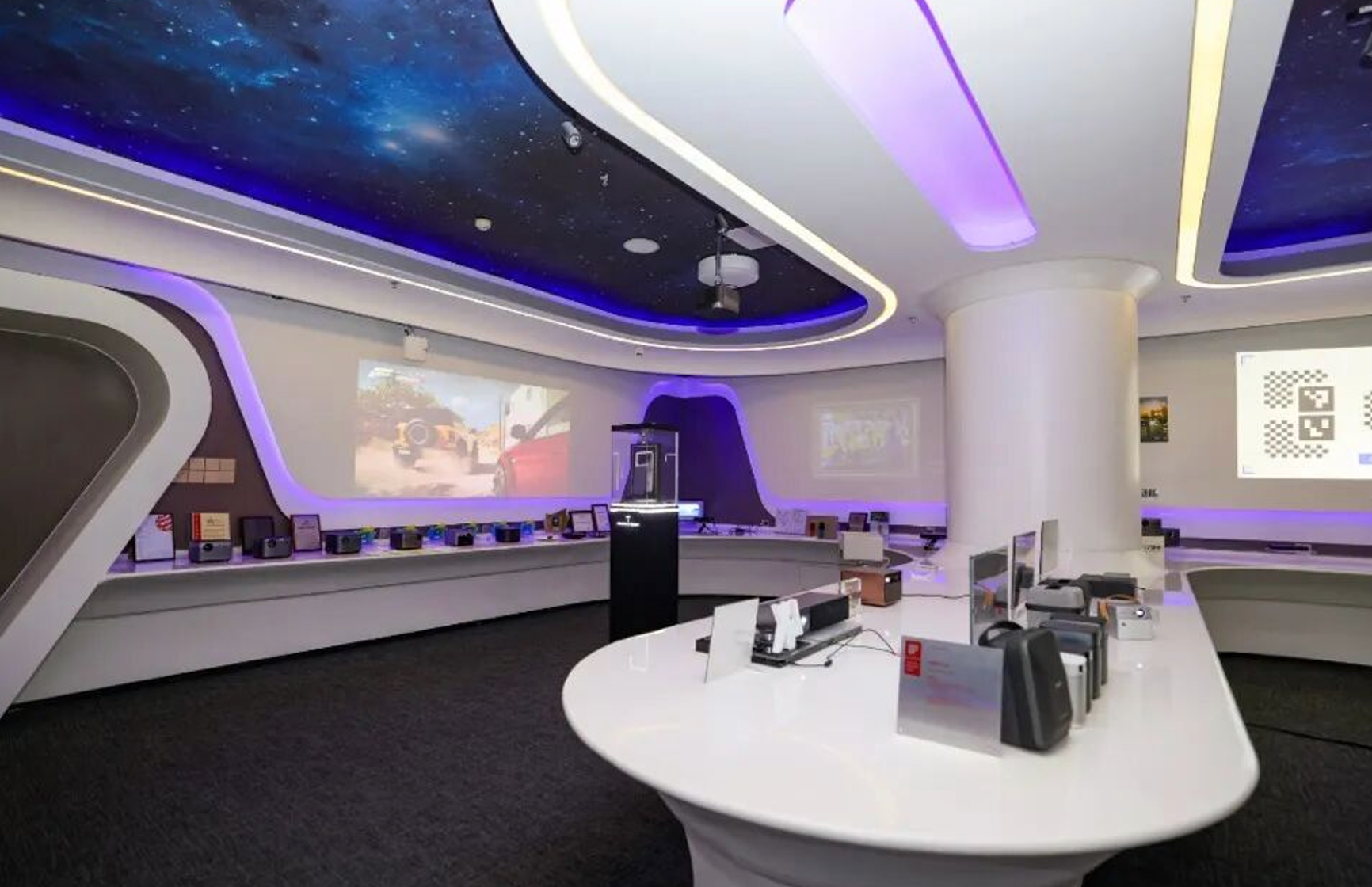
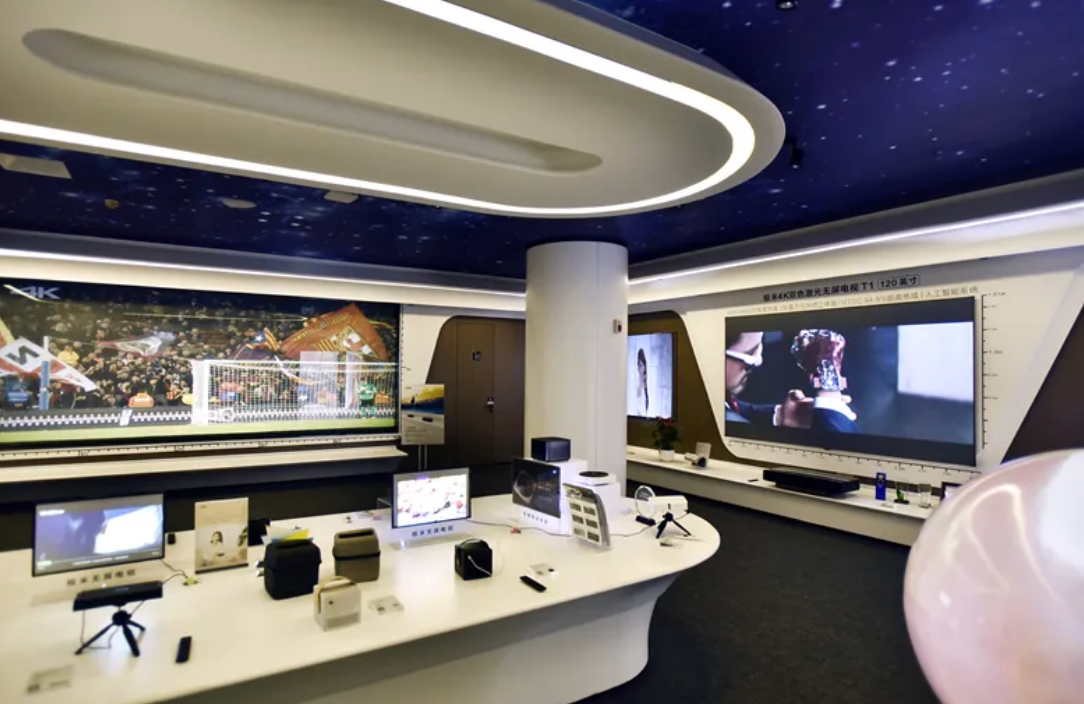
| 09:30–10:00 | Registration and product exhibition hall: product history and technology |
| 10:00–11:00 | Technical briefing on optical engine and optics design |
| 11:00–12:00 | Hands-on product experience and picture-quality comparison |
| 14:00–15:30 | Factory session, delivered remotely with live video from the Chengdu plant |
| 15:30–17:00 | Discussion with management on consumer electronics innovation and brand building |
The factory component is delivered remotely; we confirm it with the host for your date, and the final scope is confirmed in writing during planning, before you commit.
The product comparison session is genuinely useful: side-by-side picture quality is the only way to understand what the optical engine work actually buys, and it is the part delegations remember.
Who it suits
The visit suits consumer electronics, retail and brand delegations, supply chain and procurement teams, display and optics specialists, and investors watching Chinese hardware exports. It also suits anyone studying how a Chinese consumer brand localises for Japan, Europe and the United States rather than just shipping product.
Practical notes
- The visit is a business programme. Delegations are received as professional visitors and follow the host's rules.
- Booking requires approval in advance. Foreign participants normally need to be registered with the host ahead of time, and that process is longer than for domestic visitors; allow additional working days for the paperwork.
- Provide the participant list, nationalities and industry focus early; the technical depth of the briefing is adjusted to suit.
- Photography rules are confirmed in advance; some areas carry confidentiality requirements. Tell us during planning if you need images for internal reporting.
- Smart casual is appropriate. The programme involves walking through exhibition and technical areas.
- English interpretation can be arranged, including specialist preparation on optics and consumer electronics terminology. Bilingual materials and an English summary can be prepared on request.
Questions before an XGIMI visit in Chengdu
Is the visit open to international business delegations? Yes, subject to advance arrangements and confirmation by the host. Registration of foreign participants takes extra time, so we recommend planning at least 30 days ahead.
What is the group size? Visits are normally arranged for groups of 10 or more. We confirm the practical maximum with the host for your date.
How long does the visit take? The standard programme runs about two hours, covering the exhibition hall, a technical briefing, product sessions and a discussion.
Where is the visit held? At the company's base in Chengdu. We confirm the meeting point in writing after the host approves the booking.
Do participants need a technical background? No. The visit can be approached through consumer electronics, retail, brand, procurement, supply chain or investment, and terminology is handled through interpretation.
Is English interpretation provided? Yes, including preparation on optics and consumer electronics terminology, and bilingual handouts can be arranged.
How large is the company? Revenue was about 3.47 billion yuan in 2025, with 601 R&D staff as of mid-2026 and 1,288 patents in total.
Is XGIMI the world's largest projector company? It reports three consecutive years as the largest home projector brand by shipments, and eight consecutive years leading China. The global claim is for the home category, not all projectors.
What is the in-car projection business? The company's smart cockpit products have entered production and are fitted to several flagship models from a leading Chinese new energy vehicle group. Ask which programmes are contracted and at what volumes.
How much of the business is overseas now? About 46.6 per cent of revenue in the first half of 2026, at about 748 million yuan, up 87.63 per cent, against about 24.5 per cent a year earlier.
What documentation is needed in advance? A participant list with passport details for foreign visitors, submitted to the host for registration, plus the delegation's industry focus. We tell you the lead time for your specific group.
Does the programme always run as described? It is built around the elements above. Facilities and areas opened on the day are subject to what the site opens, and we confirm the final scope in writing during planning, before you commit.
Arrange your XGIMI visit
Tell us your dates, group size and what your team wants to understand: optical engine development, the export shift and how it was built, localisation for Japan, Europe and the United States, in-car projection and commercial display, or how far the optics capability extends beyond projectors. China Innovation Visits will coordinate the company reception, discussion priorities, transport and English interpretation.
Contact China Innovation Visits to arrange your XGIMI visit in Chengdu.