A Lepu Medical(乐普医疗) visit in Beijing takes a delegation to one of China's most complete cardiovascular healthcare groups. Lepu Medical Technology (Beijing) was founded in 1999, is headquartered in Beijing, and has been listed on the Shenzhen ChiNext board under 300003 since 2009, as one of the first cohort of companies on that exchange. It builds implantable devices, drugs and monitoring services for the same patient population, which is rarer than it sounds.
The reason to go in 2026 is that the company has just come through the largest change in its history and turned it into growth. Revenue in 2025 was 6.483 billion yuan, up 6.22 per cent, while profit attributable to shareholders rose to 962 million yuan and operating cash flow more than doubled to 1.517 billion yuan. A company that sells both devices and drugs into the same clinical pathway has more room to move than one that sells only one of them.
The second reason is where the growth is now coming from. Three businesses that barely existed a few years ago — innovative drugs, neuromodulation and brain-computer interfaces, and dermatology — all produced first results in 2025, including the company's first overseas drug licensing deal. For a delegation studying how a mature Chinese medical device company builds a second act, this is a live case rather than a retrospective one.
China Innovation Visits coordinates the Beijing programme, including the company reception, scheduling, local transport and English interpretation.
Key takeaways
- See the full cardiovascular chain in one place: coronary intervention, structural heart disease, drugs, and home and hospital monitoring.
- Understand the "device plus drug plus service" structure, and why a company that sells all three behaves differently from a single-product maker.
- Look closely at NeoVas, the bioresorbable coronary scaffold that was China's first domestically developed product of its kind to reach market approval.
- See how software became a regulated product: the AI-ECG Platform, which the company describes as the first artificial intelligence ECG product from China to receive United States FDA registration.
- Discuss the new engines — GLP-1 drugs licensed to a Danish partner, deep brain stimulation, and brain-computer interface work.
- Compare with a Mindray overview on the monitoring and imaging side of Chinese medical devices, or a Fosun Pharma visit on the therapeutic and international side.
Why visit Lepu Medical in Beijing?
Cardiovascular care is the hardest category in Chinese medical devices to read from outside. The products are regulated, the buying is institutional, and the clinical evidence takes years. A company that has stayed at the front of that category through a decade of pricing change, and come out with growing revenue and more than doubled operating cash flow, has solved problems worth studying directly.
It is also one of the few places where devices, drugs and services sit in one group. Most Chinese device companies moved into drugs later, or never; most drug companies have no device business. Lepu has run both for years, and the interesting question on a visit is not whether the model works but where the two halves actually reinforce each other.
Beijing is the right setting. The group's headquarters, much of its registered manufacturing and its clinical relationships are in the city, and the capital's hospital and research density is part of why the company is based there. Delegations building a wider health technology programme often pair it with a BrainCo visit on the neurotechnology and brain-computer interface side.
Company background
1999 to a listed platform
The company was founded in 1999 and listed on the ChiNext board in Shenzhen in 2009 as one of its first cohort. It describes itself as a platform company built around cardiovascular patients, spanning prevention, diagnosis, treatment and post-procedure management, and it now employs 8,689 people.
The controlling shareholder is Pu Zhongjie, chairman, whose holding together with concert parties was 24.72 per cent at the end of 2025.
Three engines
Revenue in 2025 split into three businesses. Medical devices contributed 3.254 billion yuan, about 50.2 per cent of revenue, at a gross margin of 69.89 per cent. Pharmaceuticals contributed 2.165 billion yuan, about 33.4 per cent, at a gross margin of 64.23 per cent. Healthcare services and health management contributed 1.063 billion yuan, about 16.4 per cent, at a gross margin of 45.57 per cent.
The two largest businesses together make up 83.6 per cent of revenue, and both carry gross margins above 64 per cent. That mix is why group gross margin reached 64.01 per cent in 2025, up 3.13 percentage points year on year.
The 2025 results
Revenue and profit
Revenue was 6.483 billion yuan, up 6.22 per cent. Profit attributable to shareholders was 962 million yuan, up 289.57 per cent, and profit after removing non-recurring items was 842 million yuan, up 280.48 per cent. Net margin reached 15.72 per cent, up 12.49 percentage points.
Part of the profit increase came from the company's first revenue recognised on an innovative drug licensing deal, and part from cost control: selling expenses fell 18.64 per cent. Excluding non-recurring items, the underlying improvement is still large, because the non-recurring total was 120 million yuan, about 12.42 per cent of attributable profit.
Cash and returns to shareholders
Operating cash flow was a net inflow of 1.517 billion yuan, up 106.48 per cent — more than double the previous year, and a figure management attributes to tighter control of spending across the group. Cash generation of that size is what funds the pipeline work without new equity.
Total assets were 26.139 billion yuan at the end of 2025, up 6.37 per cent, with net assets attributable to shareholders of 16.115 billion yuan, up 6.01 per cent. Basic earnings per share were 0.5219 yuan and weighted return on equity was 6.12 per cent, up 4.53 percentage points.
The company paid dividends twice during 2025, distributing 600 million yuan in cash across the year, and proposed a final distribution of 1.6275 yuan per ten shares.
What it sells
Coronary intervention
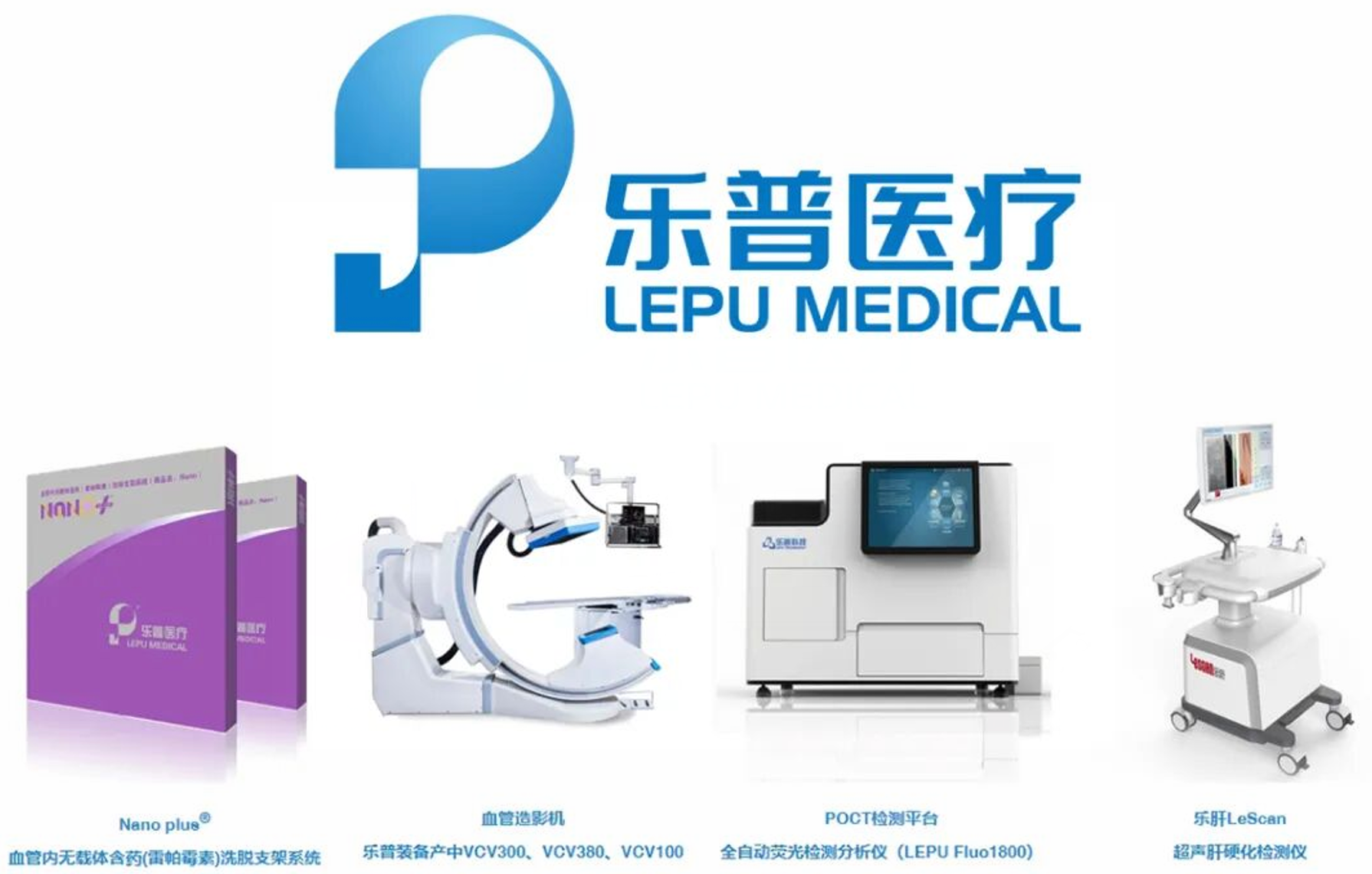
This is the founding business. Coronary interventional products generated 1.644 billion yuan in 2025, up 1.39 per cent, covering drug-eluting stents, drug-coated balloons, cutting balloons and the accessory portfolio around them. It remains the part of the group most clinicians recognise.
Structural heart disease
Structural heart disease products generated 528 million yuan, up 12.41 per cent — the fastest-growing part of the device business. The portfolio includes occluders for congenital heart defects, and in 2022 the group's MemoSorb fully absorbable occluder system received approval in China, which the company describes as the world's first fully absorbable occluder, for the treatment of ventricular septal defect.
Pharmaceuticals
The pharmaceutical business generated 2.165 billion yuan, up 23.18 per cent. Generic formulations contributed 1.667 billion yuan, up 18.36 per cent, and active pharmaceutical ingredients 271 million yuan. The notable line is the rest: innovative drugs generated 227 million yuan of revenue for the first time, through licensing.
Healthcare services and monitoring
The services business generated 1.063 billion yuan, up 4.36 per cent. It covers cardiovascular specialty hospitals, medical diagnostic laboratories and a pharmaceutical and device e-commerce platform, plus the AI monitoring business built on the company's cloud platform — medical-grade cardiac monitoring, home health monitoring and smart rehabilitation care. Dermatology within this segment generated 115 million yuan in its first full year on the market.
NeoVas: the scaffold that disappears
How it works
NeoVas is a bioresorbable coronary rapamycin-eluting scaffold system. The scaffold body is made of poly-L-lactic acid and the drug-carrying coating of poly-D,L-lactic acid; both are gradually broken down and absorbed by the body after the vessel has been reopened, leaving no permanent implant behind. It received its registration certificate from China's National Medical Products Administration on 27 February 2019, the first bioresorbable scaffold developed in China to be approved for market.
Development from project launch to approval took close to ten years. The clinical programme enrolled more than 1,400 patients and ran four years of follow-up, with Han Yaling, then of the General Hospital of the Northern Theater Command, as principal investigator and Fu Guosheng of Sir Run Run Shaw Hospital as co-principal investigator.
What the clinical programme showed
The company describes the three-year follow-up as showing long-term safety better than comparable international scaffolds of the same generation, and no statistical difference from metallic drug-eluting stents in revascularisation and safety, with a statistically superior result on vessel recovery after the scaffold has degraded — the argument being that the vessel returns closer to its original elasticity once nothing is left in place.
For a delegation, NeoVas is the clearest single example of what a Chinese device company does when it decides to compete on the frontier rather than on price. It is also a fair illustration of the timescale: a decade from project to approval, and four years of clinical follow-up after that.
AI-ECG: software as a regulated product
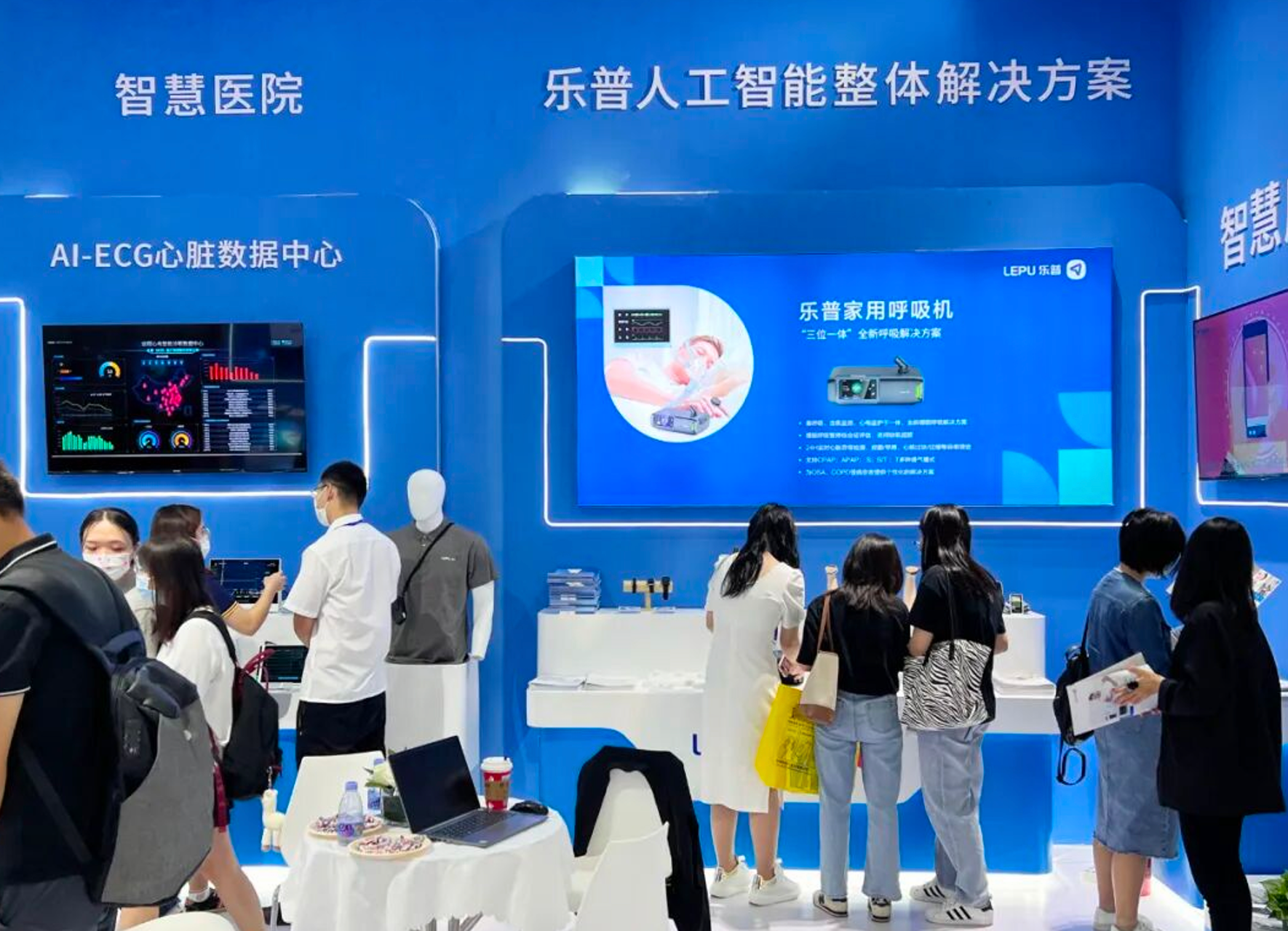
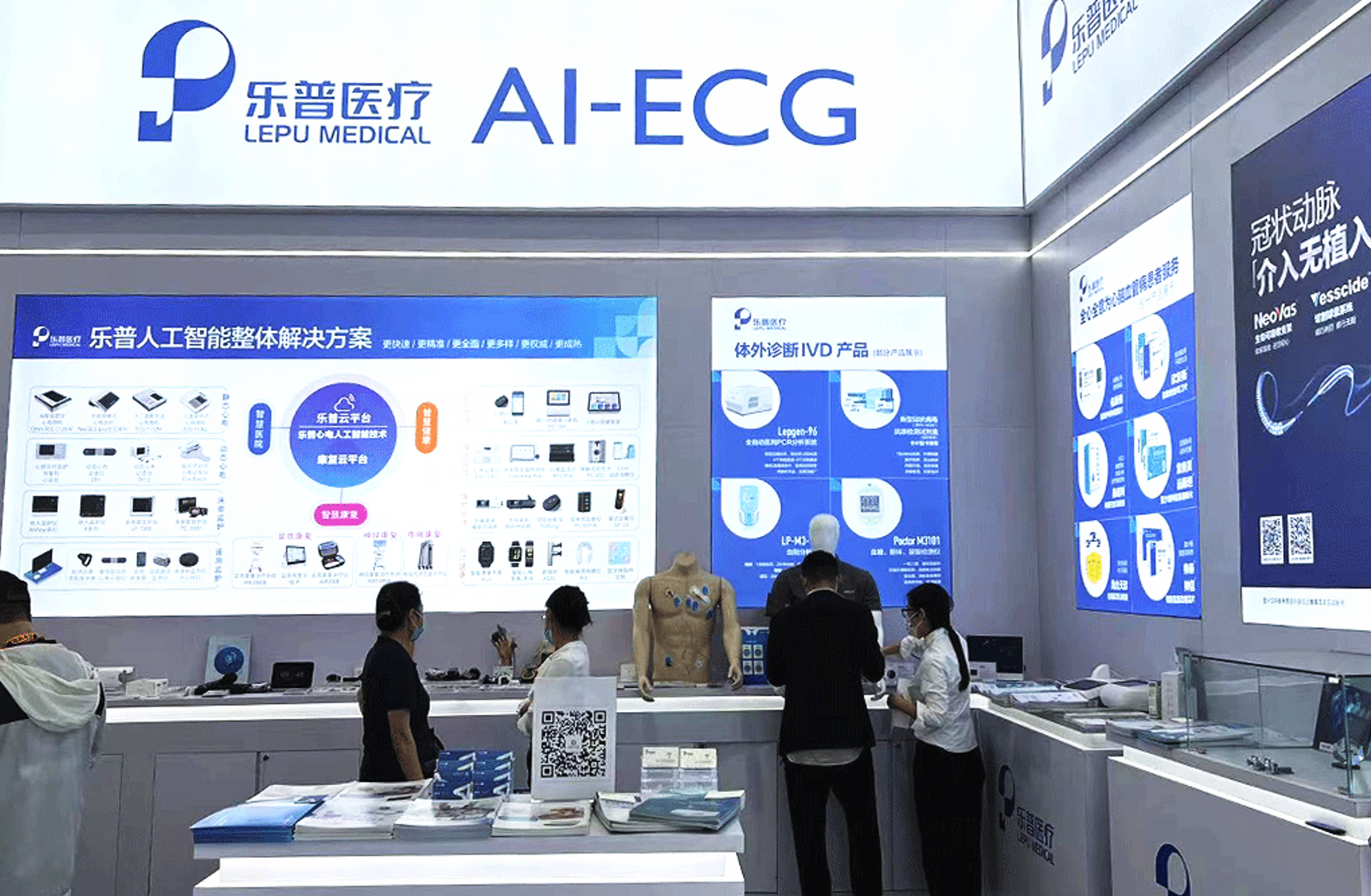
The AI-ECG Platform is an electrocardiogram automatic analysis and diagnosis system developed by the company's wholly owned Shenzhen subsidiary. It was launched publicly in March 2018 and received United States FDA registration on 19 November 2018, which the company describes as the first artificial intelligence ECG product from China to clear that route.
Two things make it worth asking about. The first is that it turned a software function into a regulated, sellable medical product rather than a feature inside someone else's device. The second is the ecosystem around it: the group runs ambulatory cardiac monitoring services at scale, which gives the algorithm data, and in 2019 the company signed a strategic cooperation agreement with Intel on medical artificial intelligence.
The monitoring business is now where the group's home health and hospital services meet, and it is the part of the portfolio most visitors from software backgrounds find easiest to engage with.
The pipeline: three new engines
Innovative drugs and Minwei Bio
The group's innovative drug work sits in Shanghai Minwei Biotechnology, a controlled subsidiary founded in 2021 and based in the Zhoupu medical park in Shanghai Pudong. Its lead candidate MWN105 is a GLP-1, GIP and FGF21 receptor triple agonist.
In October 2025 Minwei Bio licensed MWN105 outside Greater China to Sidera Bio ApS of Denmark. The terms include a first investment payment and near-term milestones totalling 35 million US dollars, milestone payments of up to 1.01 billion US dollars, a 9.99 per cent equity stake in Sidera Bio, and tiered royalties on net sales. By 31 December 2025 the company had received the first irrevocable investment payment of 30 million US dollars.
The follow-on candidate MWN109, a GLP-1, GIP and GCG triple agonist in both injectable and oral forms, produced the numbers management points to. In the Chinese Ib arm, the injectable form produced a maximum mean weight reduction from baseline of 16.67 per cent over 14 weeks including titration in the 3.0 to 9.0 milligram target dose range. The oral tablet produced mean reductions of 4.18,5.72,6.99 and 7.82 per cent at 7.5,15,30 and 45 milligrams over four weeks including titration, a dose-response the company says compares favourably with published data for comparable GLP-1 drugs at the same stage. The company expects the injectable form to enter Phase III in China in the fourth quarter of 2026 and the oral form in the first quarter of 2027.
Minwei Bio also works on a small interfering RNA platform with cardiovascular targets including Angptl3 for lipid lowering and AGT for blood pressure, both in clinical stage, and completed an A+ funding round in September 2025 that added a Tencent-affiliated investor as a shareholder.
Neuromodulation and brain-computer interfaces
In 2025 the company received a registration certificate in China for a rechargeable implantable deep brain stimulation system and began commercialising it. A vagus nerve stimulator for epilepsy and stroke and a spinal cord stimulation system for pain are in clinical stage.
On brain-computer interfaces the group works on both non-invasive and invasive tracks through its controlled subsidiary Ruihan Medical, which describes itself as among the earliest companies in China to work on non-invasive brain-computer interfaces. A digital electroencephalography device and a finger joint continuous passive motion device have received approval in China. The invasive programme has completed animal studies on an interventional multi-channel brain-computer interface and moved into human clinical study.
Dermatology and consumer health
Three dermatology products were approved and launched in 2025, including a polylactic acid facial filler, and the segment generated 115 million yuan in its first year. The company has said a further three to five products are expected to follow. This is the group's deliberate move into self-paid consumer healthcare rather than reimbursed clinical care.
Overseas business
Overseas revenue was 1.257 billion yuan in 2025,19.38 per cent of the total, against 5.226 billion yuan in China. The device business sells through distributor networks in a range of markets, and the AI-ECG Platform has cleared the United States regulatory route.
The more interesting development for a delegation is the change in the kind of thing being sold abroad. For most of its history the group exported devices; in 2025 it exported intellectual property, licensing a drug candidate to a European partner with milestone payments tied to global development. That is a different business, and the discussion session is the best place to ask how the company intends to build it.
Research and intellectual property
The group spent 1.089 billion yuan on research and development in 2025, about 16.80 per cent of revenue, and increased its research headcount to 1,380, up 7.39 per cent. By the end of 2025 it had filed 2,369 patent applications in total.
The portfolio is wide: coronary intervention, structural heart disease, cardiac rhythm, neuromodulation, brain-computer interfaces, metabolic drugs and dermatology, all under one regulatory and quality system. For visitors, the interesting question is how a group of this size decides where the next 1 billion yuan of research spending goes, and the answer in 2025 was clearly towards the three new engines rather than the legacy stent business.
What a visit covers
The standard programme
| Time | What happens |
|---|---|
| First 30 minutes | Reception and exhibition hall: the company's history and the full product matrix |
| 30–70 minutes | Manufacturing or laboratory areas |
| 70–120 minutes | Discussion with research or international business staff |
The standard visit runs about 120 minutes: 30 minutes in the exhibition hall, 40 minutes in the manufacturing or laboratory areas and 50 minutes in discussion, with the start time set with the host. Multi-day programmes can add a research centre session and a wider discussion on innovation strategy. Multi-day programmes can add a research centre session and a wider discussion on innovation strategy.
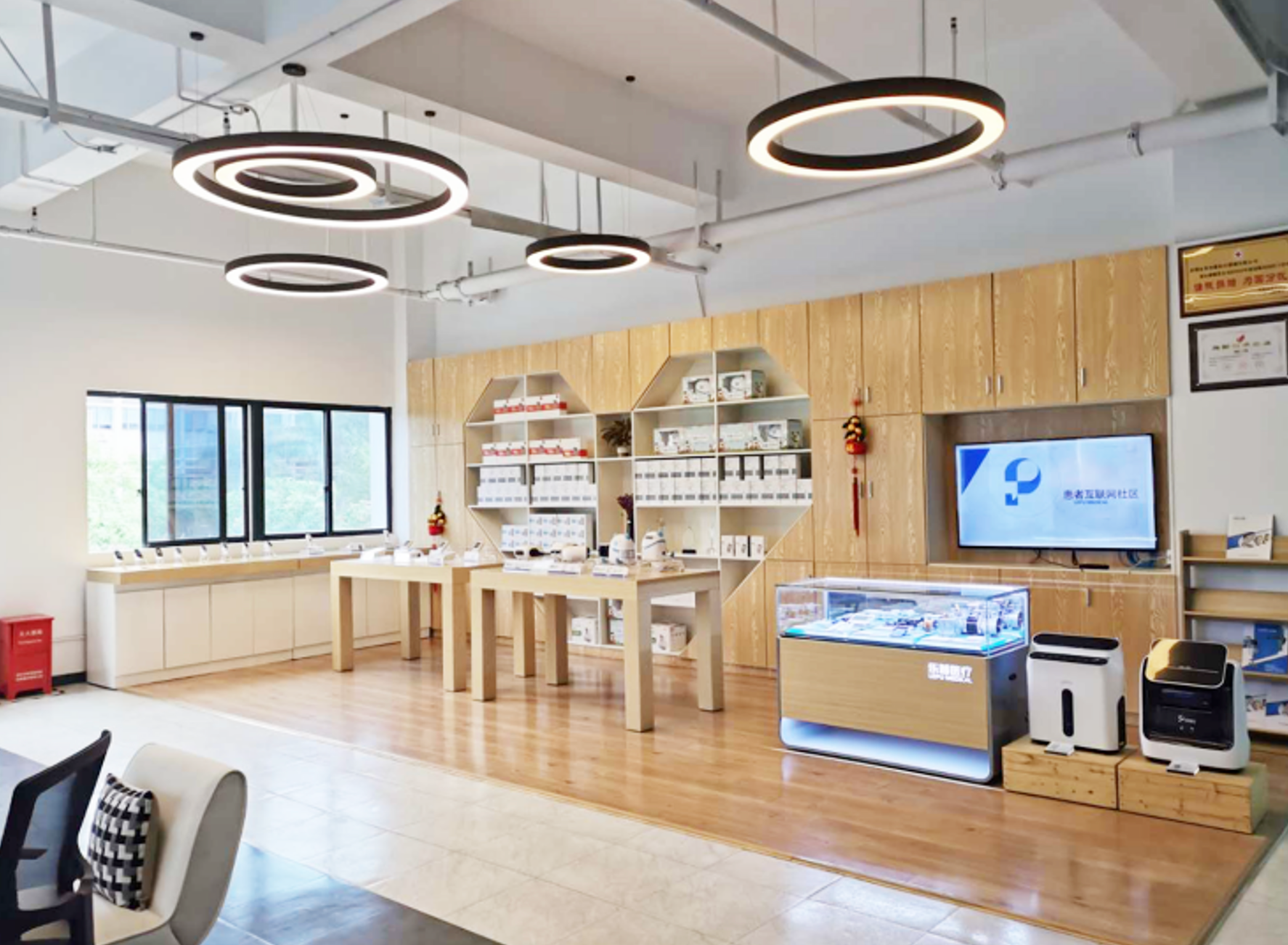
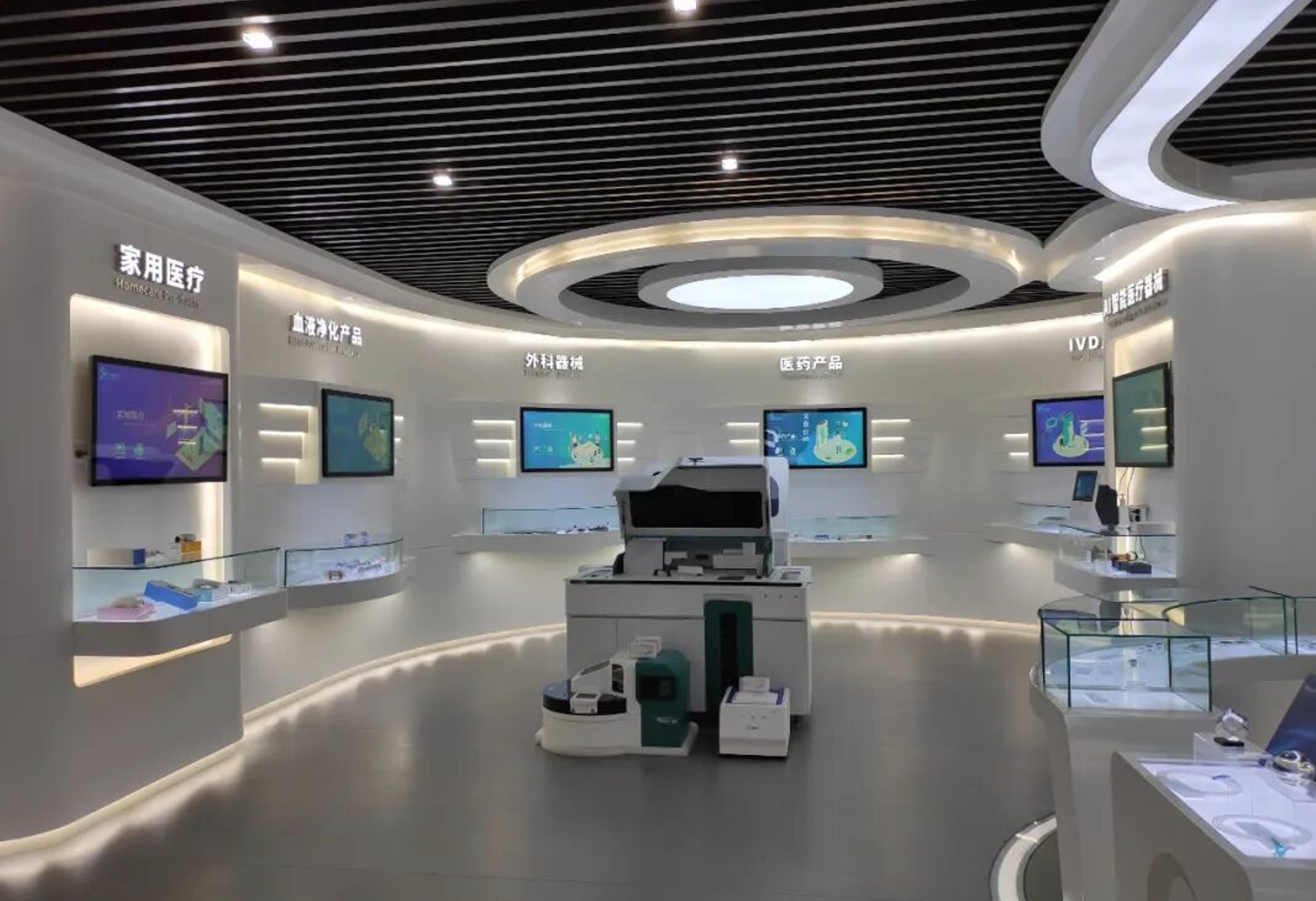
The exhibition hall is where the full-chain structure is easiest to grasp, because devices, drugs and monitoring services are laid out as one patient pathway rather than as separate businesses. The discussion session is where strategy, regulatory and commercial questions are handled.
Who it suits
The visit suits medical device and pharmaceutical companies, hospital groups and clinical managers, investors and analysts, and health technology delegations. It is also used by university and hospital management groups working on innovation systems, and the company is experienced in receiving professional visitors.
Practical notes
- The visit is a business programme. Delegations are received as professional visitors and follow the host's rules.
- Booking requires approval in advance. Foreign participants normally need to be registered with the host ahead of time, and that process is longer than for domestic visitors; allow additional working days for the paperwork.
- Provide the participant list, nationalities and professional focus early; the technical depth of the briefing is adjusted to suit.
- Photography rules are confirmed in advance; some areas carry confidentiality requirements. Tell us during planning if you need images for internal reporting.
- Smart casual is appropriate. The programme involves walking through exhibition and technical areas.
- English interpretation can be arranged, including specialist preparation on clinical and medical device terminology. Bilingual materials and an English summary can be prepared on request.
Questions before a Lepu Medical visit in Beijing
Is the visit open to international business delegations? Yes, subject to advance arrangements and confirmation by the host. Registration of foreign participants takes extra time, so we recommend planning at least 30 days ahead.
What is the group size? Visits are normally arranged for groups of 10 or more. We confirm the practical maximum with the host for your date.
How long does the visit take? The standard programme runs about two hours, covering the exhibition hall, a technical briefing and a discussion. Longer programmes can include the research centre.
Where is the visit held? At the company's headquarters in Beijing. We confirm the meeting point in writing after the host approves the booking.
Do participants need a medical background? No. The visit can be approached through medical devices, pharmaceuticals, healthcare operations, investment or research management, and terminology is handled through interpretation.
Is English interpretation provided? Yes, including preparation on clinical and device terminology, and bilingual handouts can be arranged.
How large is the company? Revenue was 6.483 billion yuan in 2025, up 6.22 per cent, with profit attributable to shareholders of 962 million yuan and 8,689 employees.
What are the three businesses? Medical devices at 3.254 billion yuan, about half of revenue; pharmaceuticals at 2.165 billion yuan; and healthcare services and health management at 1.063 billion yuan.
What is NeoVas? A bioresorbable coronary scaffold that received Chinese market approval in February 2019, the first of its kind developed in China. Its scaffold body and coating are absorbed by the body over time, leaving no permanent implant.
What is the AI-ECG Platform? An electrocardiogram automatic analysis and diagnosis system that received United States FDA registration in November 2018, which the company describes as the first artificial intelligence ECG product from China to do so.
What is new in the pipeline? A GLP-1 drug candidate licensed to a Danish partner in October 2025, a rechargeable deep brain stimulation system approved in 2025, brain-computer interface work on both non-invasive and invasive tracks, and a new dermatology business.
What documentation is needed in advance? A participant list with passport details for foreign visitors, submitted to the host for registration, plus the delegation's professional focus. We tell you the lead time for your specific group.
Does the programme always run as described? It is built around the elements above. Facilities and areas opened on the day are subject to what the site opens, and we confirm the final scope in writing during planning, before you commit.
Arrange your Lepu Medical visit
Tell us your dates, group size and what your team wants to understand: how a device and drug group covers one patient pathway end to end, how a decade-long programme produced China's first approved bioresorbable coronary scaffold, how software became a regulated product, or how a mature company builds new engines in metabolic drugs, neuromodulation and consumer health. China Innovation Visits will coordinate the company reception, discussion priorities, transport and English interpretation.
Contact China Innovation Visits to arrange your Lepu Medical visit in Beijing.