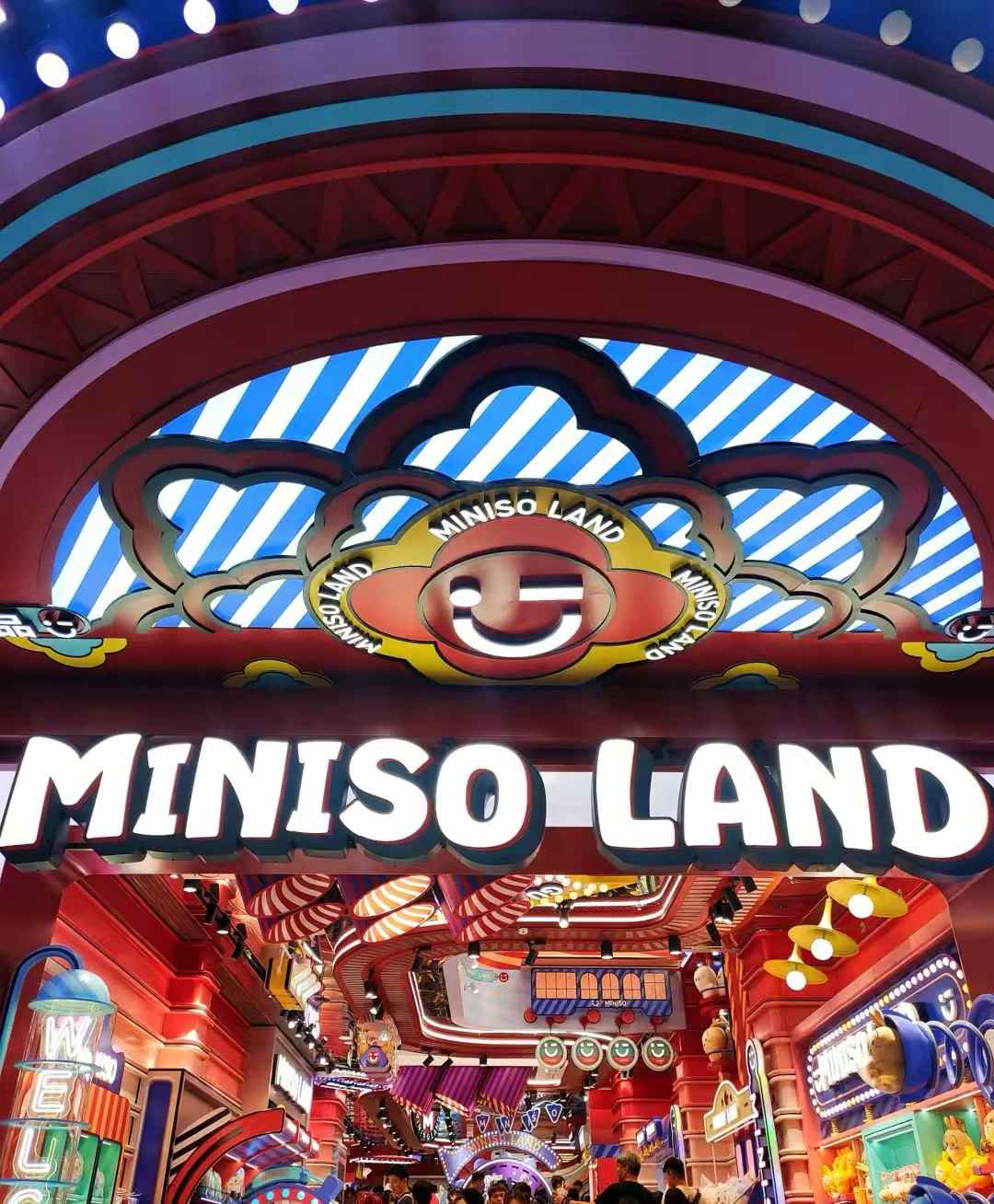
A MINISO visit in Guangzhou takes an international delegation inside one of the few Chinese consumer brands that has built a genuinely global retail footprint. MINISO Group Holding Limited lists in New York under MNSO and in Hong Kong under 9896. Its China headquarters is in Guangzhou, in the Pazhou area of Haizhu district.
The reason to go is not the stores. Delegations can walk into a MINISO store in most major cities. The reason is the business model: how a value retailer turned itself into an IP platform, and what that conversion costs.
In the first half of 2026 the group reported revenue of about 11.5 billion yuan, up 22.4 per cent, with 8,674 stores across the group. Its own artist IP, YOYO, passed 1 billion yuan in gross merchandise value in the first nine months of 2026, less than 16 months after its first product launched. Both numbers are worth examining, and neither means quite what a headline suggests.
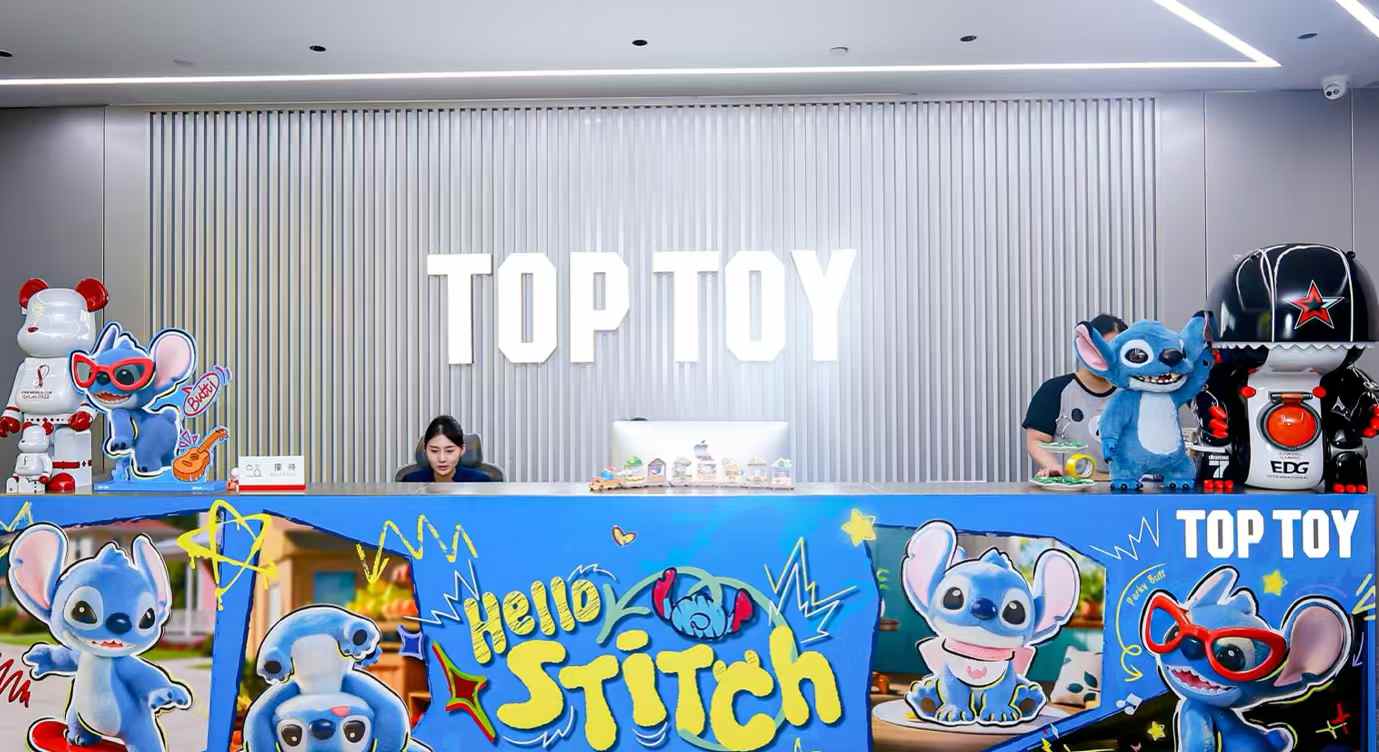
A visit is organised around the company's exhibition halls, the TOP TOY display area, and a briefing and Q&A with company specialists.
China Innovation Visits coordinates the MINISO tour, including the company reception, scheduling, Guangzhou transport and English interpretation.
Key takeaways
- See how a value retailer repositioned itself as an IP platform, and what that shift costs.
- Examine the retail partner model, which funds expansion without company-owned stores.
- Understand what a proprietary IP actually does for a retailer, using YOYO as the case.
- Discuss globalisation honestly: growth is real, and so is the difference between markets.
- Compare the approach with other Chinese consumer businesses such as Dewu and Xiaohongshu.
Why visit MINISO in Guangzhou?
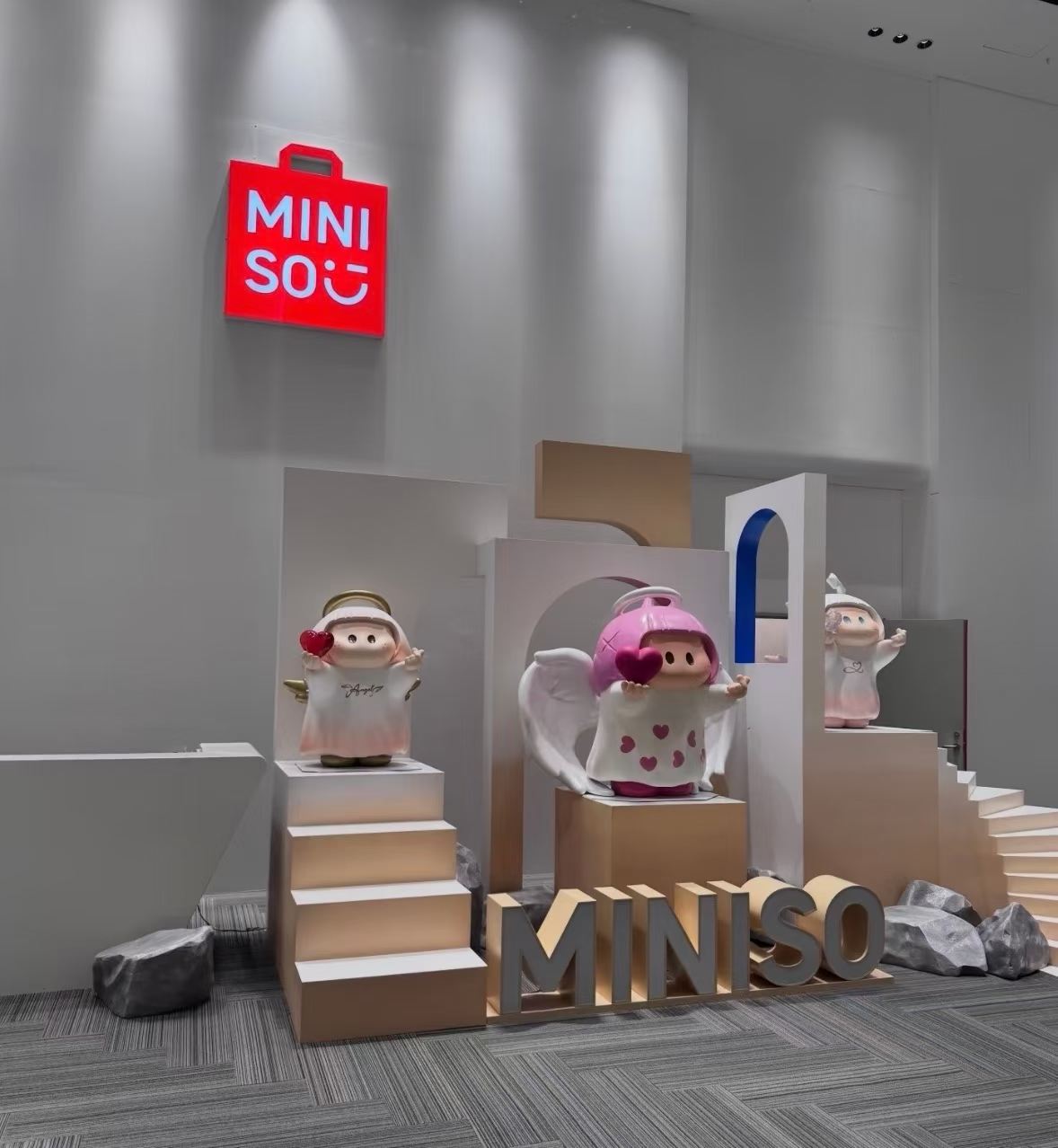
MINISO is a useful subject because it sits at an intersection most delegations care about: physical retail, supply chain, brand building and international expansion, all inside one company that publishes detailed numbers.
It is also a company that has changed its own story more than once. It began as a value variety retailer, built a global store network, and has since repositioned around IP design and, more recently, around building its own IP rather than only licensing others. Watching how a company narrates that shift, and whether the financials support it, is the real content of the visit.
Guangzhou adds context. The city's trading and manufacturing base is the supply side of the business, and the visit can be combined with other Guangzhou programmes.
Company background
From a variety chain to a global retailer
MINISO was founded in 2013 by Ye Guofu, who is chairman and chief executive, together with Japanese designer Miyake Junya. Ye had earlier built Aiyaya, a low-price variety and accessories chain that Chinese reporting says reached about 3,000 stores by the end of 2010.
The company listed in New York in 2020 and in Hong Kong in 2022. It is worth noting for the visit that the brand's early positioning leaned on its Japanese design connection; the company has since repositioned explicitly as a global IP collaboration retailer, and describes its ambition as becoming a leading IP design retail group.
What the company owns now
The group operates two brands. MINISO is the core variety and lifestyle retail brand. TOP TOY is the pop-toy and collectibles brand, which reported revenue of about 985 million yuan in the first half of 2026, up 32.7 per cent, and had 365 stores.
The group also holds a stake in Yonghui Superstores, acquired in 2024, which is why its reported profit includes a share of that investment. That is a separate business from the retail brand and should be treated as such in any discussion of operating performance.
The store network and the partner model
Scale as of mid-2026
As of 30 June 2026 the group had 8,674 stores. MINISO brand accounted for 8,309: 4,665 in mainland China and 3,644 overseas. TOP TOY accounted for 365, of which 317 were in mainland China and 48 overseas.
The overseas breakdown is the part worth studying. Of 3,644 overseas MINISO stores, 795 were directly operated, 439 ran under the retail partner model and 2,410 under a distributor model. In mainland China, 4,624 of 4,665 stores ran under the retail partner model, with 1,173 partners investing in stores.
Why the model matters
The retail partner model is the mechanism behind the expansion speed. Partners put up the capital and operate the store; the company supplies product, systems and brand standards. That converts a capital-intensive rollout into a working-capital-light one, and it is the reason the network can grow by hundreds of stores a year without straining the balance sheet.
The trade-off is control. Ask how product mix is enforced across partner stores, how inventory risk is allocated, and what happens to a partner when a location underperforms. Those answers determine whether the model scales or just grows.
The 2026 numbers
First half of 2026
For the six months to 30 June 2026, the group reported revenue of about 11.5 billion yuan, up 22.4 per cent, and gross profit of about 5.09 billion yuan, with gross margin at 44.3 per cent, level with a year earlier.
Profit for the period was about 957 million yuan, up 5.6 per cent. Adjusted net profit excluding foreign exchange effects was about 1.22 billion yuan, down 1.7 per cent. Operating cash flow was about 1.48 billion yuan, up 45.5 per cent.
Within the MINISO brand, mainland China revenue grew 26.2 per cent with mid-single-digit same-store GMV growth, the brand's fastest first-half growth in three years. Overseas revenue grew 14.9 per cent, with same-store GMV down by a low single digit.
How to read the profit figure
One caveat belongs in any serious discussion. The reported profit for the period includes non-operating items, including an unrealised fair value gain on an AI partnership investment of about 277 million yuan and a share of results from the Yonghui investment of about 60 million yuan. Strip those out and the operating picture is less flattering than the headline.
Selling and distribution expenses rose 39.6 per cent, faster than revenue, driven by depreciation and rent on directly operated stores, promotion and advertising, IP licensing costs, and overseas payroll. That is the direct cost of the IP and direct-store strategy, and it is the number to ask about.
YOYO and the IP strategy
What YOYO achieved
YOYO is the company's first proprietary artist IP. Its first product launched in June 2025. By an announcement dated 9 October 2026, the company said YOYO had recorded gross merchandise value above 1 billion yuan in the first nine months of 2026 and had reached 53 countries and regions.
The trajectory the company reports: monthly sales above 100 million yuan in both June and July 2026 in the China market, a collaboration with Toy Story 5 that passed 100 million yuan in global GMV in its first month, and monthly GMV above 200 million yuan in August 2026.
GMV is not revenue
This distinction matters and should be raised directly. GMV measures the value of goods sold through the channel, not the revenue the company recognises or the profit it keeps. A 1 billion yuan GMV figure for an IP is an impressive distribution result, not a profit result.
The useful questions in the room concern what sits behind it: repeat purchase, inventory turn, gross margin per product line, and how acceptance differs between markets. A proprietary IP that sells well in one market and not another is a different asset from one that travels.
From licensing to owning
The company describes having worked with more than 180 IP. Building its own is the strategic shift worth studying, because licensing costs money per unit and builds no asset, while owned IP carries development risk but accumulates value.
By mid-2026 the company said it had signed more than 30 artist IP. It launched a second proprietary IP, CHOUCHOU, in August 2026. TOP TOY reported more than 30 proprietary IP of its own. The question to put to the host is whether the method is repeatable: can the company produce a second and a third YOYO, or was the first one partly luck?
The briefing themes
Culture and international strategy
The standard themes cover company culture and the internationalisation path, including how the company approaches market selection, localisation and store format by market.
Business model
The second theme covers the business model in more detail: the retail partner structure, supply chain and product development, store operations, and the company's approach to building hit products. Companies often ask for this theme to be extended, because it is where the operational detail sits.
Tell us which theme your team wants when you book. The host prepares around the delegation's interests.
What you see on the visit
The exhibition halls
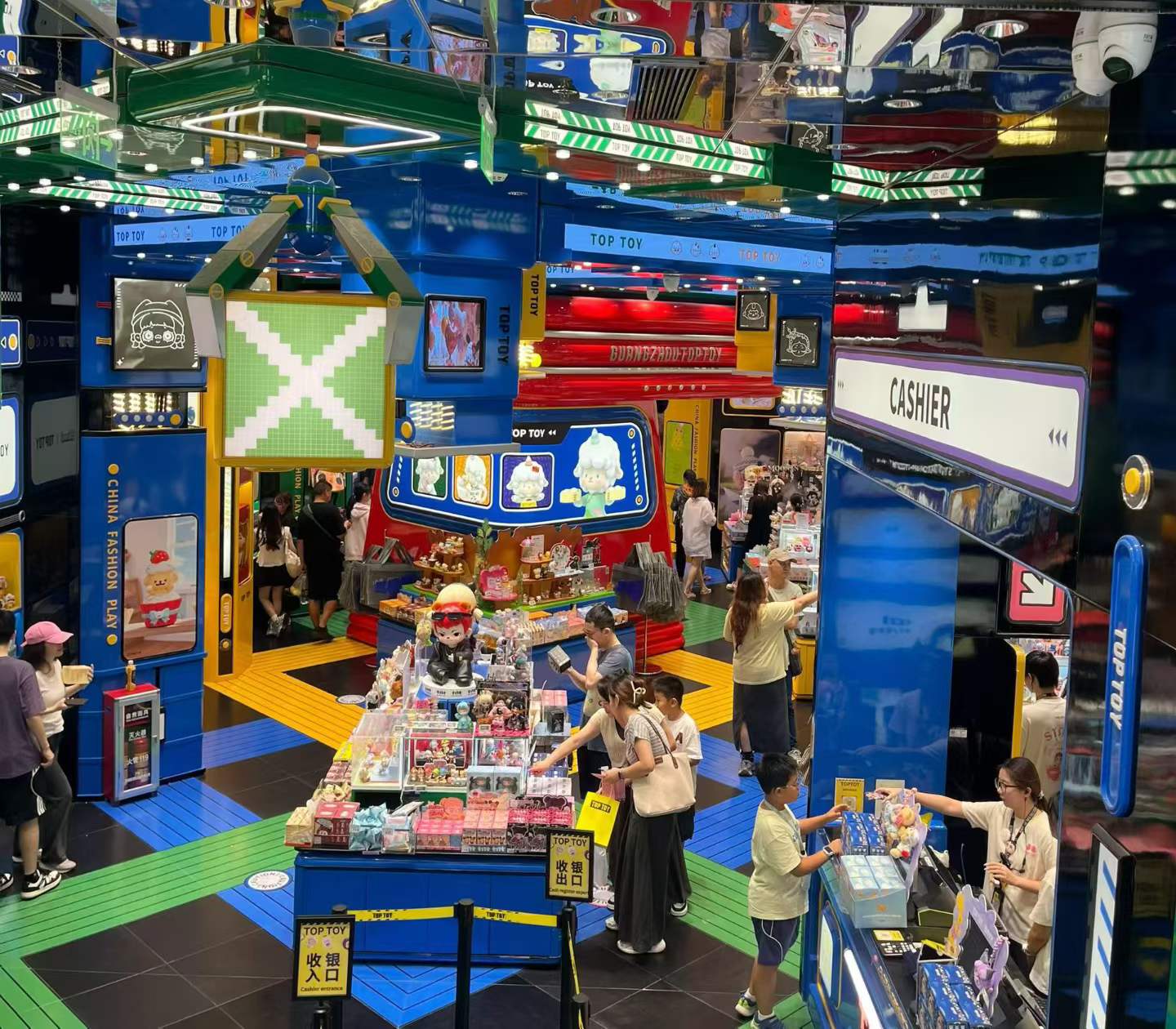
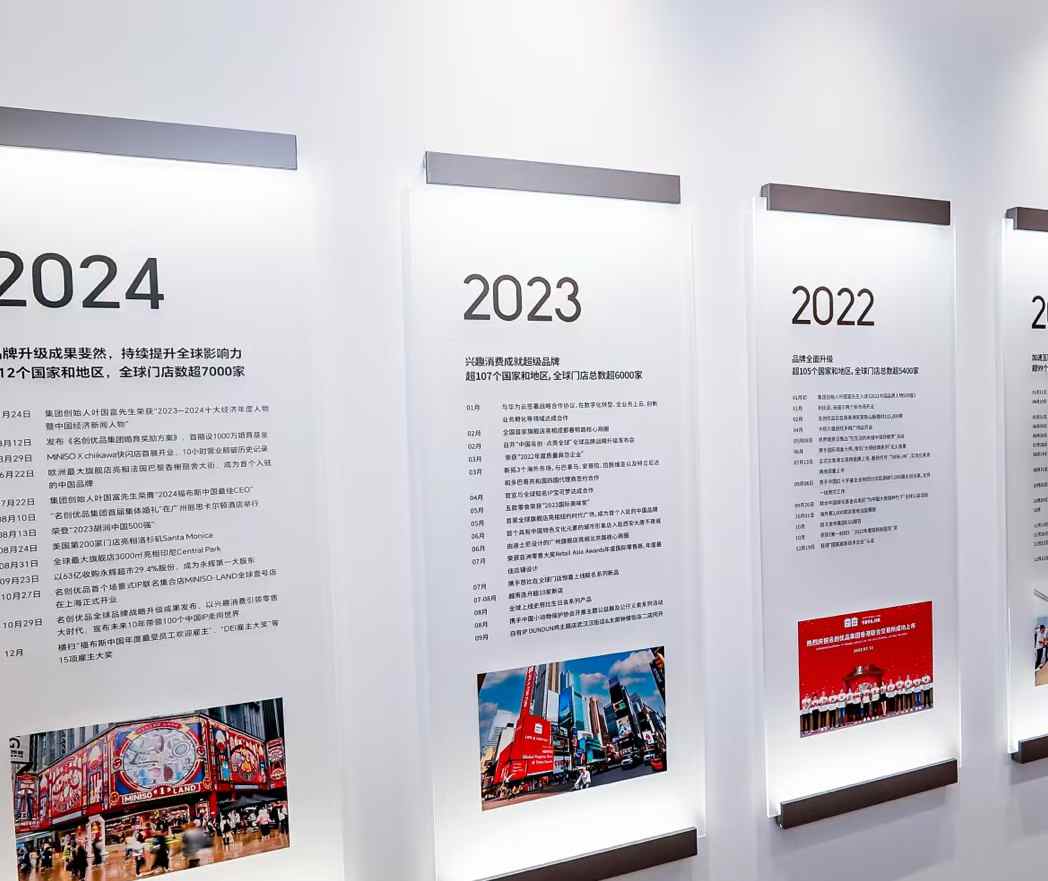
The visit opens with the corporate culture exhibition hall, covering the company's development history and global business layout, followed by the TOP TOY display area, where the pop-toy brand's products and IP portfolio are laid out.
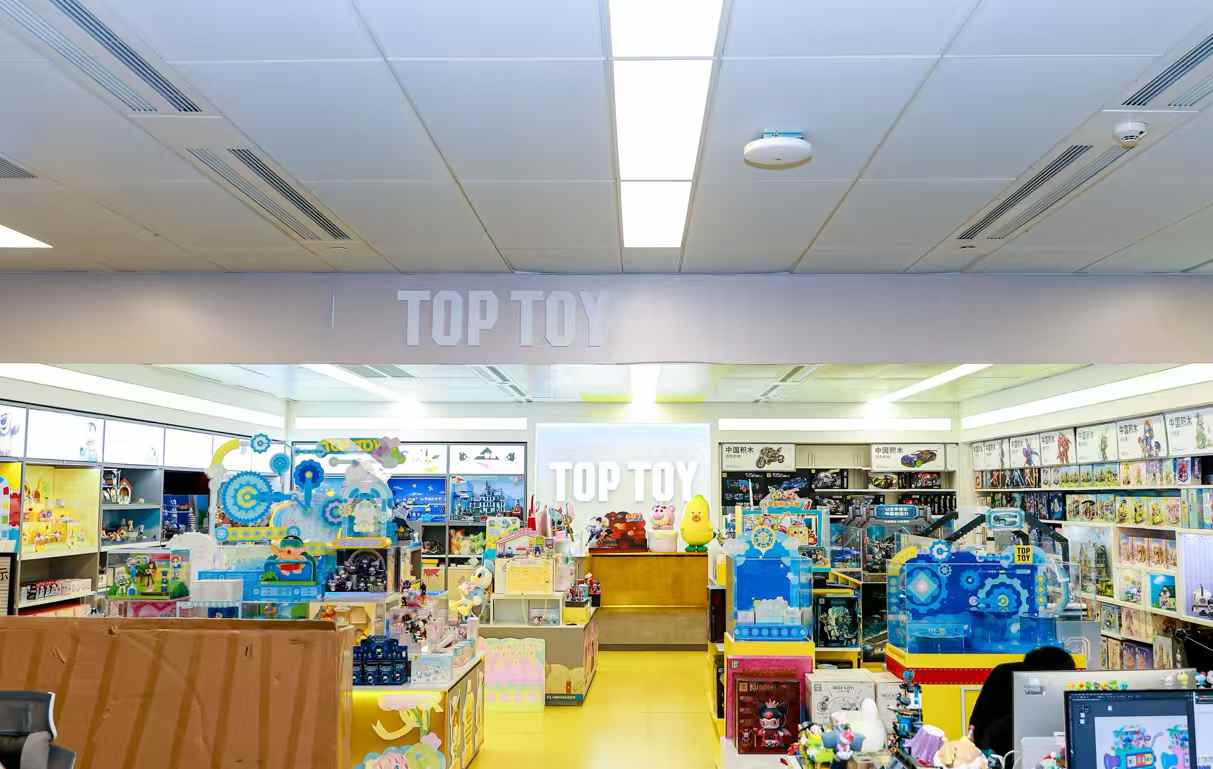
The TOP TOY area is the most useful part for most delegations, because it shows how a collectibles business is merchandised differently from a variety store: different product cycles, different price architecture, different customer behaviour.
Format and duration
The standard programme runs about two and a half hours, typically in the morning, covering the halls and a briefing and Q&A. Groups wanting the fuller business model session can extend the programme into the afternoon.
Who this visit suits
The programme suits retail and consumer goods executives, because the partner model and the store-format ladder are directly transferable questions. It suits brand and licensing teams, because the shift from licensed to owned IP is the central strategic issue in the sector. It suits investors covering Chinese consumer and retail. And it suits supply chain and manufacturing delegations, because the product development system is the part that is hardest to copy.
It suits these groups less if they are looking for a consumer brand story without financial scrutiny.
Combining the visit with other Guangzhou stops
MINISO works as the consumer and retail anchor of a Guangzhou programme. A GAC Aion factory tour in Guangzhou covers advanced manufacturing on the other side of the city.
Combinations are coordinated around the delegation's objectives, travel schedule and host availability.
Practical notes
- The visit is a business programme. Delegations are received as professional visitors and follow the host's visitor rules.
- Photography rules are confirmed in advance; tell us during planning if you need images for internal reporting.
- Smart casual is appropriate; the visit involves walking and standing through exhibition areas.
- The exact building, floor and meeting point are confirmed in writing after the host approves the booking.
- English interpretation can be arranged for the halls, briefing and Q&A.
Questions before a MINISO visit in Guangzhou
Is the visit open to international business delegations? Yes, subject to advance arrangements and confirmation by the host. We recommend planning at least 30 days ahead.
What is the group size? Visits are normally arranged for groups of 10 or more and fewer than 20 participants. Smaller groups can sometimes be accommodated.
How long does the visit take? The standard programme runs about two and a half hours, covering the halls and a briefing and Q&A. It can be extended into the afternoon on request.
Where is the visit held? At the company's headquarters in Guangzhou, in the Pazhou area of Haizhu district. We confirm the building and meeting point in writing after the host approves the booking.
Do participants need a retail background? No. The visit can be approached through retail, brand, investment or supply chain, and terminology is handled through interpretation.
Is English interpretation provided? Yes, interpretation can be arranged for the halls, briefing and Q&A, with terminology prepared around the delegation's interests.
How large is the company now? As of 30 June 2026 the group reported 8,674 stores, with 4,665 MINISO stores in mainland China and 3,644 overseas, plus 365 TOP TOY stores.
Is YOYO's 1 billion figure revenue? No. It is gross merchandise value, meaning the value of goods sold through the channel. Revenue and profit are different and lower, and we would raise the distinction during the briefing.
How should the profit figure be read? Reported profit for the first half of 2026 included non-operating items such as an unrealised fair value gain and a share of the Yonghui investment. Adjusted net profit excluding foreign exchange effects fell slightly year on year.
Can we choose the briefing theme? Yes. The themes cover culture and international strategy, or the business model in more detail. Tell us which fits your delegation.
Does the programme always run as described? It is built around the elements above. Facilities and areas opened on the day are subject to what the site opens, and we confirm the final scope in writing during planning, before you commit.
Arrange your MINISO visit
Tell us your dates, group size and which theme your team wants: culture and international strategy, or the business model in detail. China Innovation Visits will coordinate the company reception, discussion priorities, transport and English interpretation.
Contact China Innovation Visits to arrange your MINISO company visit in Guangzhou.