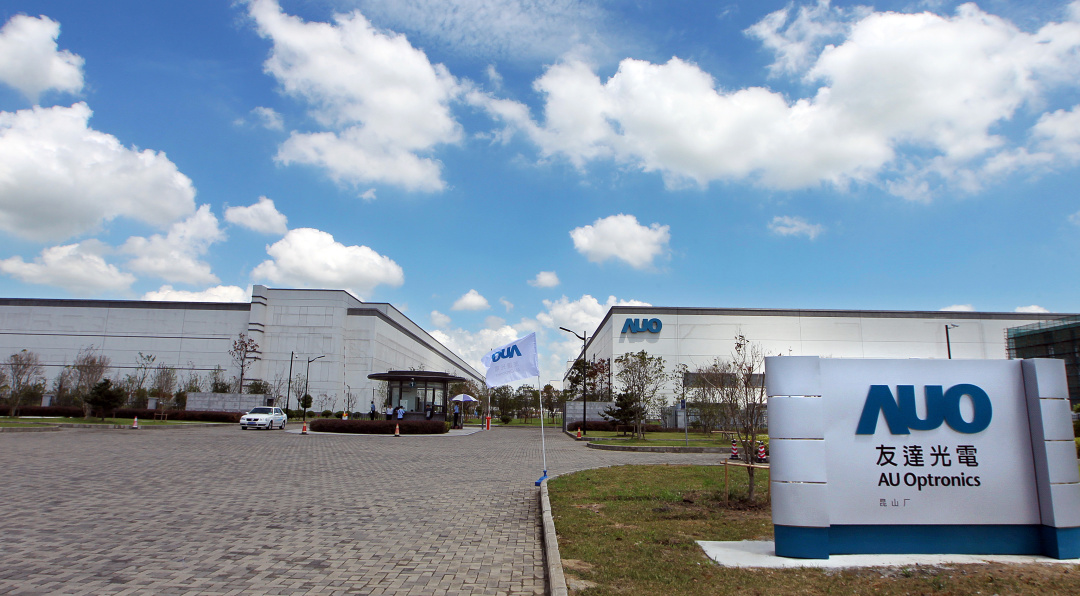
An AUO (友达光电) visit in Suzhou takes a delegation inside the display plant that was named, in January 2026, the first Talent Lighthouse in the global display industry by the World Economic Forum. It is AUO's earliest production base in mainland China, running in Suzhou Industrial Park since 2001, and it sits in a city that now holds nine lighthouse factories — more than any other city in China.
The reason to go is not the panels. Display manufacturing is cyclical and capital-heavy, and AUO has just come through three consecutive loss-making years. In 2025 the group returned to profit, with revenue of NTD 281.4 billion and net profit of NTD 6.8 billion, and the way it got there — changing the mix of what it sells and rebuilding the workforce around digital skills — is a more useful subject than the product catalogue. A plant that has been making displays since 2001 and was still capable of changing how it works is the part of the story that transfers to other industries.
China Innovation Visits coordinates the Suzhou programme, including the company reception, scheduling, local transport and English interpretation.
Key takeaways
- The Suzhou plant has been in operation since 2001 and is AUO's oldest production base in mainland China; the group itself was founded in 1996.
- In January 2026 the World Economic Forum recognised it as a Talent Lighthouse, the first site in the global display industry to receive that category — which the network had added only in 2025.
- The published results behind the award: more than 500 digital projects deployed, over 1,000 employees trained in digital skills since 2022, staff turnover down nearly 70 per cent, engagement up 11 per cent and output up 29 per cent.
- The day runs through the smart manufacturing showroom, the digital twin and AI inspection demonstrations, and the environment, safety and energy control centre before a long afternoon session.
- The afternoon theme is AUO's own manufacturing evolution, from lean production to an intelligent factory, including how AI agents are used in scheduling.
- The city context is part of the value: Suzhou as a whole now has nine lighthouse factories, and five of them sit in the same industrial park as this plant.
- Same-city comparisons that pair well with this visit are an Inovance Technology factory tour for motion and control components, and an AISpeech visit in Suzhou for in-car voice systems.
Why visit AUO in Suzhou?
Most smart-manufacturing programmes a delegation can book are about output: faster lines, more robots, higher automation rates. This one was awarded for something harder to copy. The Talent category evaluates how a manufacturer recruits, schedules, trains and keeps the people who run the plant, and the World Economic Forum added it to the Global Lighthouse Network only in 2025 — so the recognition AUO received in January 2026 was in a category that had existed for a year, not thirteen.
That matters to a visiting team because talent is the constraint most manufacturers actually hit. Equipment can be bought. A scheduling system can be licensed. Getting a workforce of close to ten thousand people through a digital transition, in an industry where frontline turnover is chronically high, is the part that usually stalls. AUO's Suzhou plant treated that as an engineering problem, and the results it published are specific enough to interrogate: a hiring cycle cut by around three quarters, rotation designed around fatigue, and an AI assistant that takes routine monitoring and reporting off supervisors' desks.
The commercial context sharpens the visit. AUO reported revenue of NTD 281.4 billion in 2025, roughly flat on the year, with net profit of NTD 6.8 billion and earnings per share of NTD 0.90 — the group's first profitable year after three consecutive losses. Full-year gross margin rose to 11.5 per cent from 8.6 per cent, and the reason was not volume. It was mix: mobility and vertical solutions together grew from 38 per cent of revenue in 2024 to 43 per cent in 2025, while the display segment's share fell from 56 per cent to 52 per cent. AUO has said it wants those two newer pillars to reach 70 per cent of revenue by 2030.
For an automotive, medical or industrial buyer, that mix shift is the reason this plant is worth a day. A panel maker that is becoming a display-centric solution provider is selling into different supply chains than it was five years ago, and the operation behind those sales has had to change with them.
Suzhou is also the right place to look at this. The city now holds nine lighthouse factories, more than any other city in China, and Suzhou Industrial Park alone accounts for five of them. A delegation can spend a week in one metropolitan area and see several genuinely different answers to the same operating question, which is not true of most industrial destinations.
Company background
A display company founded in 1996
AUO was established in 1996 and is headquartered in Hsinchu, Taiwan, China. It grew through consolidation — the 2001 merger with Unipac and later acquisitions — into one of the world's largest display manufacturers, with a product range that runs from small panels for wearables to large-format television panels. Three decades in, the company describes itself not as a panel supplier but as a display-centric solution provider, organised around three pillars: display technology, mobility solutions, and vertical solutions for markets such as healthcare, education and retail.
Suzhou since 2001
The Suzhou plant was established in 2001 and is the group's earliest production base in mainland China. Over more than two decades it has moved from a full display production site towards a centre for smart manufacturing and talent development, and AUO states that it has trained and sent out more than a thousand specialists who went on to support the group's operations in Xiamen, Kunshan and Vietnam. The site also incubates group businesses, including industrial AI services.
That history is worth knowing before the visit, because it changes what a delegation should look for. This is not a greenfield showcase built for visitors. It is a working plant with two decades of installed equipment and an inherited workforce, which is the situation most visiting manufacturers are actually in.
The January 2026 recognition
On 15 January 2026 the World Economic Forum announced 23 new sites joining the Global Lighthouse Network, and AUO's Suzhou plant was among them, in the Talent category. The network now spans more than 220 sites in over 30 countries and evaluates manufacturers across five dimensions: productivity, supply chain resilience, sustainability, customer centricity and talent.
AUO holds two lighthouse recognitions in total. Its Taichung plant joined the network in 2021 in the productivity category. Suzhou's 2026 award is separate, and it is the first in the display industry to be given for talent.
What the day covers
The smart manufacturing showroom
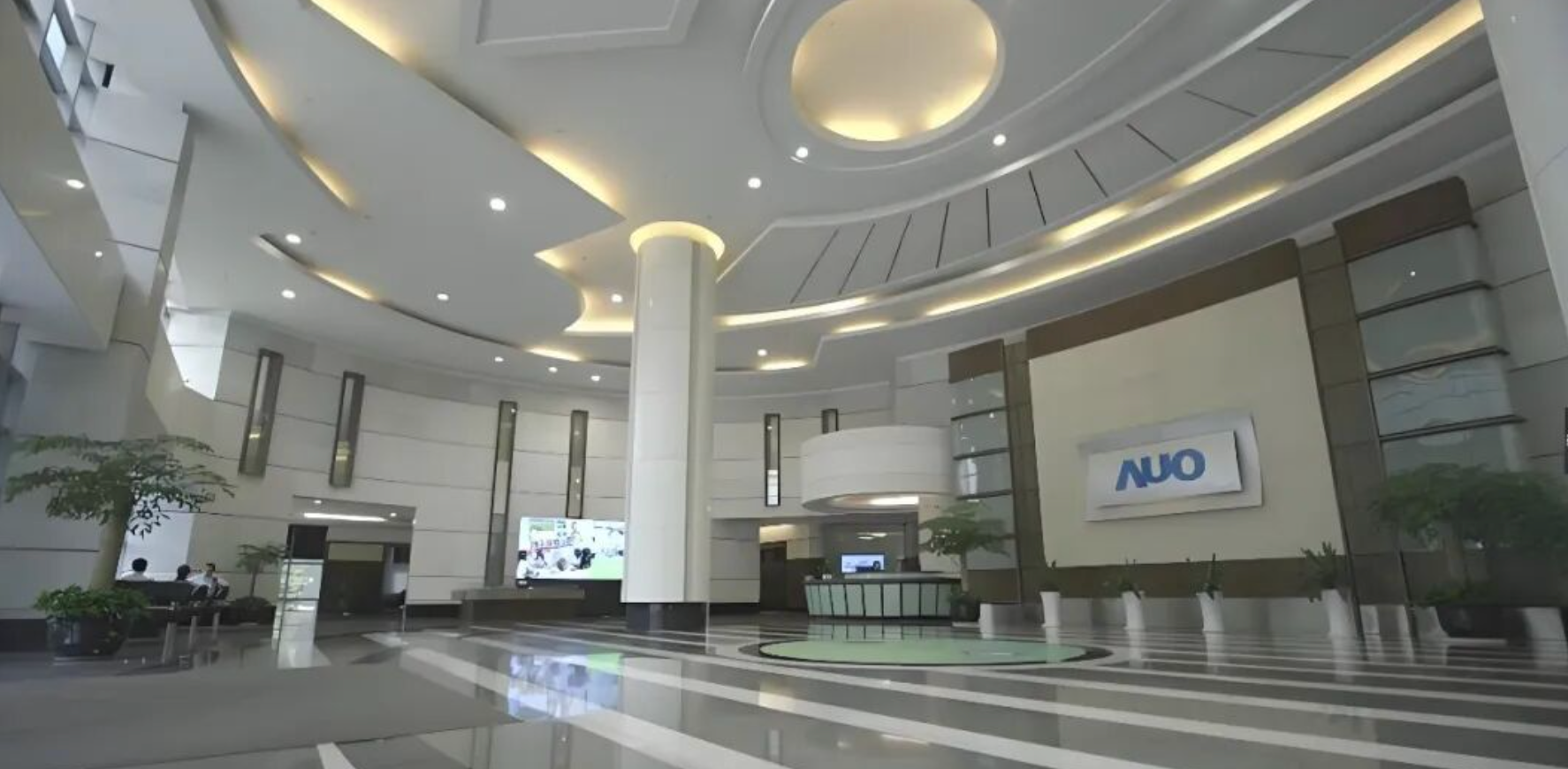
The programme opens with a guided walk through the showroom, where the host sets out the company's history and the strategic frame for the visit: the lighthouse programme, the environmental and social commitments, and how the plant's digital roadmap was sequenced. For a delegation that has read the marketing material, the useful part of this block is the sequencing — what the plant did first, what it deliberately did not do, and what it had to standardise before any of the later systems worked.
Digital twin, AI inspection and the industrial metaverse hall
The demonstrations come next. The plant runs an industrial metaverse hall where digital twin technology is shown in use: virtual commissioning before a line is changed, and predictive maintenance on equipment that is already installed. Alongside it, the AI inspection area shows machine-vision defect detection on the line. The questions worth asking here are concrete rather than conceptual — how much of the inspection is automated, where a person still makes the call, how the model handles a defect it has not seen before, and what happens to the data afterwards.
The plant's own published operating numbers from its 2025 provincial advanced smart factory listing are a useful check on what the demonstrations represent: a flexible production model built for high-mix, low-volume orders, with equipment effectiveness up 15 per cent and defect rates down 6.3 per cent. Those are real production figures, not showcase figures.
The environment, safety and energy control centre
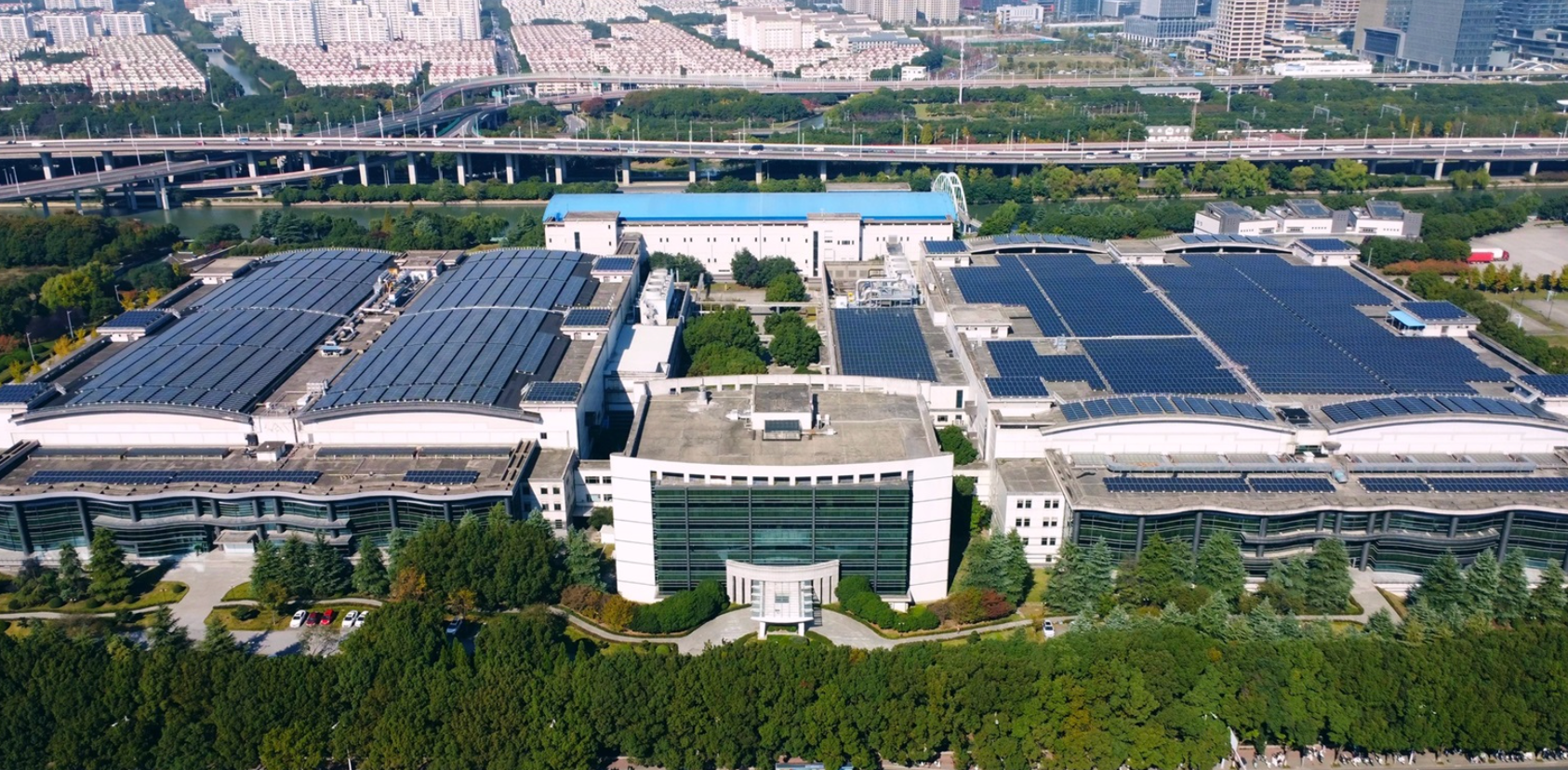
A control room aggregates energy consumption, safety alerts and environmental indicators onto live dashboards, which is how the plant manages the environmental commitments it publishes: rooftop solar generating around 9.8 million kilowatt-hours a year, a plastic neutralisation rate of 95 per cent, membership of the RE100 initiative and a commitment to 100 per cent renewable electricity by 2050. For visiting energy and EHS managers this is the most directly transferable block of the day, because the technology is ordinary and the discipline is not.
The afternoon session
The day closes with a long seated session, run by the host on the theme of AUO's manufacturing evolution: the sequence of transitions from lean production towards an intelligent factory, what each stage required, and how AI agents are being applied to scheduling and production optimisation. The plant also runs the localised production-system practices that underpin this — self-completion at each process step and andon-style escalation, the approaches most associated with the Toyota Production System — and a delegation that asks how those survive automation will get a better session than one that asks for a company introduction.
The Talent Lighthouse in detail
Three programmes carried most of the weight in the WEF submission, and each one is worth examining on its own terms.
A-Interview: hiring in a market with high turnover
Manufacturing hiring in the Yangtze River Delta is a volume business with a high drop-off rate. AUO's Suzhou plant built an AI interview and full-cycle recruitment system, trained on its own recruitment data, to move selection from experience-based judgement towards a data-driven match between candidate and post. The published result is a hiring cycle shortened by 75 per cent. The interesting question for a visiting HR or operations lead is not the model but the governance: who owns the decision, what the system is allowed to reject, and how the data it learns from is kept clean.
Smart scheduling and the 90-day rotation
The scheduling system integrates data from several platforms to place people more precisely. The most concrete policy attached to it is a 90-day rotation for roles identified as physically fatiguing, alongside lighter-load posts for staff who need them, a multi-skill development path and more choice over which jobs an employee takes on. Turnover at the plant fell by nearly 70 per cent and engagement rose 11 per cent. Whatever the technology contributed, the policy is the part a visiting plant can copy this quarter.
AgentX: an AI assistant for supervisors
AgentX is a virtual assistant for frontline supervisors, built on large language models with retrieval-augmented generation. It automates monitoring, anomaly warnings and report generation across quality, equipment and safety, on the argument that supervisors spend too much of their day on administration and too little on decisions and their teams. This is the block that most surprises visiting operations managers, because it is the clearest example in the programme of automation aimed at management work rather than production work.
Inside the numbers
2025: back to profit
AUO's 2025 results give the visit its edge. Revenue of NTD 281.4 billion was almost exactly flat, up 0.4 per cent, but net profit attributable to owners reached NTD 6.8 billion against a loss in the prior year, and earnings per share came in at NTD 0.90. Gross margin recovered from 8.6 per cent to 11.5 per cent. A company that improves profitability by more than ten percentage points of margin without growing revenue is doing something to its mix rather than its volume, and that is what the rest of the visit explains.
Where the growth is coming from
The revenue structure moved in one direction. Mobility solutions — automotive and related applications — plus vertical solutions for healthcare, education and retail grew from 38 per cent of revenue in 2024 to 43 per cent in 2025, while the display segment's share declined from 56 per cent to 52 per cent. AUO's stated target is for the two newer pillars to account for 70 per cent of revenue by 2030, supported by a cash-generating display business. For a delegation from the automotive or medical device industry, this is the part of the story that determines whether the company becomes a supplier or a competitor.
The Micro LED option
AUO has continued to invest in Micro LED, targeting automotive displays, wearables and high-end applications, and has described a set of four adjacent bets on the technology that include optical communications, low-earth-orbit satellite components and augmented-reality glasses. None of this is revenue at scale yet. It is worth raising in the session, because it is the clearest place where the company's manufacturing capability and its next market are being connected — and because the answer will say a lot about how the plant expects its own roadmap to change.
Sample visit programme
09:30–10:30 Visit to AUO, including the AUO Corporate Culture Corridor, AUO Smart Industry Hall, Smart HR Management Hall, and Smart Environmental and Safety Management Hall.
10:30–11:30 Thematic Sharing: AUO's Digital Transformation Journey, covering the systematic upgrade path from automation to digitalization and then to intelligentization.
Where an AUO visit can be arranged
The programme described here runs at AUO's Suzhou plant in Suzhou Industrial Park, and it is a single-site day rather than a route around the city. The Suzhou tech tour page collects the other company programmes available in the same park, and most international delegations reach the city by high-speed rail from Shanghai, which is how we usually build the week — a Shanghai tech tour as the base, with Suzhou as one full day inside it. Tell us your dates and your delegation size and we will confirm what the site can host.
The most instructive comparison is with the other end of the display industry. A BOE factory tour in Hefei covers the largest panel maker in the market and a different generation strategy; the two days together give a delegation the volume leader and a specialist that has moved its revenue into automotive and vertical markets. Teams more interested in components than in panels should pair this with the Inovance Technology factory tour, also in Suzhou. We plan the Yangtze River Delta as one route rather than as separate bookings.
Practical notes for the day
Build in travel time. Suzhou Industrial Park is an industrial district rather than a city centre, and the programme starts at 09:00 with a coach transfer. A delegation arriving from Shanghai on the morning of the visit is taking on more schedule risk than it looks, and one that also books an evening departure from Shanghai on the same day is taking on more still. We sequence the day around real travel time rather than map distance.
Bring the right people. The showroom and the talent programmes speak to operations, HR and general management; the digital twin, AI inspection and control-room blocks speak to engineering, IT/OT and EHS. This visit pays off most when the delegation includes whoever owns the plant's digital roadmap and whoever owns its workforce plan, because the award being studied was given for the intersection of the two.
Send the questions in advance. The afternoon session runs three hours and is the block most sensitive to preparation. Concrete questions — how a changeover is scheduled, what the AI inspection system does and does not decide, how energy data becomes an operational decision, how a rotation policy survives a demand spike — produce a materially better session than a general request for a company introduction.
Respect the site rules, and plan for interpreting. Visitor names are submitted ahead of the visit so that passes can be issued, photography on the production line is restricted and phones stay outside the areas where the rules apply, and closed-toe shoes are the sensible default. Line access itself is confirmed with the host during planning rather than assumed. The vocabulary of display manufacturing, process integration and industrial software does not translate cleanly, so professional English interpretation is part of how we run the programme rather than an optional extra.
What previous delegations asked us to change
Three adjustments come up repeatedly when we review this programme with groups that have already been through it.
Weight the digital blocks, not the showroom. The showroom is well built and moves quickly, and delegations consistently report that the digital twin, AI inspection and control-room sections are where the questions came from. Where the timetable allows, we now compress the walk and give the extra time to the systems.
Name the pillar you came for. Teams arrive interested in one of three things — the talent programmes, the digital manufacturing stack, or the business shift into automotive and vertical markets — and the day reads very differently depending on which. Say which one at planning stage and the host prepares different people for the room.
Split the delegation for the session. Operations and engineering want different material from the same three hours. Where the group is large enough, we split them for part of the afternoon and bring them back together for the closing discussion.
Questions before an AUO visit
Where is the visit held? At AUO's plant in Suzhou Industrial Park, Jiangsu Province — the group's earliest production base in mainland China, in operation since 2001.
Why is this plant significant? It was recognised by the World Economic Forum in January 2026 as a Talent Lighthouse, the first site in the global display industry to receive that category.
What exactly did it win the award for? Talent development rather than output: more than 500 digital projects deployed, over 1,000 employees enabled with digital skills, a hiring cycle shortened by about 75 per cent, staff turnover down nearly 70 per cent, engagement up 11 per cent and output up 29 per cent.
Is AUO a panel maker or something else now? Both, and the balance is shifting. Display is still the largest single segment at 52 per cent of 2025 revenue, while mobility and vertical solutions together reached 43 per cent, up from 38 per cent a year earlier.
What does the showroom actually show? The company's history and strategy, the lighthouse programme, an 8K display, the Virtual Sky Canopy installation, and the digital twin and AI inspection demonstrations in the industrial metaverse hall.
Will we see the production line? The programme is built around the showroom, the digital systems and the session. Line access is arranged with the site and confirmed during planning rather than assumed.
What is the afternoon session about? AUO's manufacturing evolution — the progression from lean manufacturing to an intelligent factory, the stages of that transition, and the use of AI agents in scheduling and production optimisation.
Is the localised production system covered? Yes. The plant works with self-completion at each process step and andon-style escalation, and the session is the place to ask how those practices are maintained once the systems are automated.
Can the session be tailored to our team? Yes. Sessions are usually built around talent and workforce transformation, digital manufacturing, energy and environmental management, or the shift into automotive and vertical markets, and the theme is confirmed before the visit.
Which other sites can be arranged on the same route? The programme is available in Suzhou and Xiamen, and other Suzhou company visits are collected on the Suzhou tech tour page. Most delegations pair it with a stop in Shanghai.
How far in advance should we book? Around 30 days is the practical lead time, because the site is an operating facility and the speaker schedule is set internally. Shorter notice sometimes works and depends on availability.
What is the minimum group size? The programme starts at 10 participants. Larger delegations are workable and we plan the rooms and the session format around the number you bring.
Can we take photographs? Photography is restricted on the production line, and phones and recording equipment stay outside the areas where the rules apply. The showroom and the session are handled differently, and we confirm the specifics before you travel.
Is English interpretation provided? Yes. English interpretation on site is part of how we run the programme, and it matters most in the showroom and the session, where display and process terminology carries the meaning.
Are the timings fixed? The schedule above is the sequence the host works to. The visit arrangements, timings and programme are subject to final confirmation with the host.
Arranging your AUO visit
We arrange the visit for you end to end: the introduction to the host, the scheduling on the Chinese side, the session theme, visitor registration and English interpretation on the day. Tell us your dates, your delegation size and what your team is trying to find out, and we will shape the day around it. Start at chinatechvisits.com/company-visits.