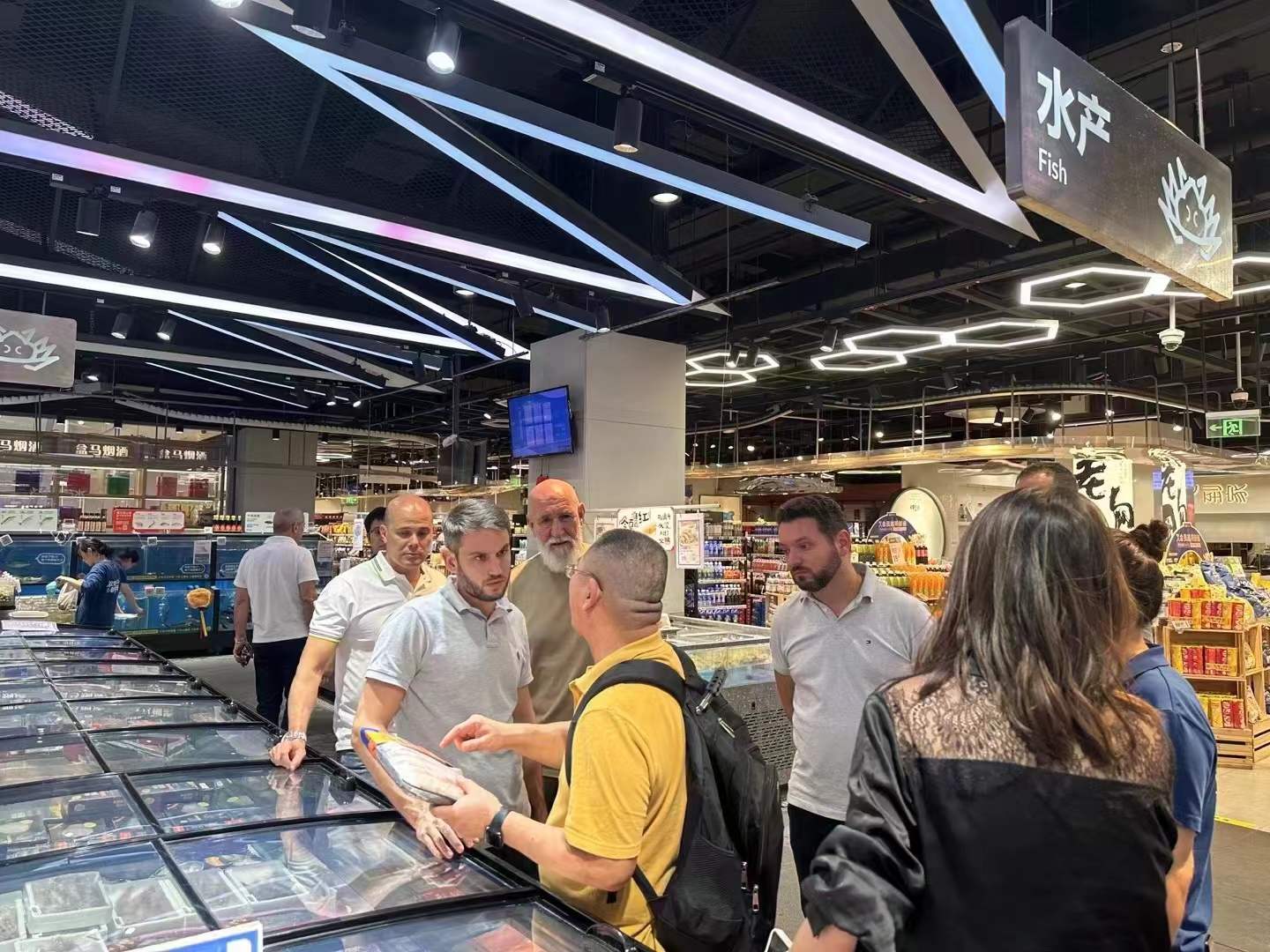
When a Brazilian trade delegation visited Hangzhou, one stop stood out: Hema (盒马鲜生), a fresh-food retail format. To an outside observer it looks like a supermarket. To the delegates, it was a working window into how Chinese retail actually operates.
What the delegation actually looked at
Not only the shelves, but the system behind them: Hema describes its store-and-warehouse model as part of an online-and-offline retail format. A store can serve walk-in shoppers while also supporting online order fulfilment. Hema's own company history describes delivery in as little as 30 minutes, subject to the service available in a given location. That is a delivery proposition, not a promise that every store, order or visit follows the same process. See Hema's official overview.
One field account shared for this article describes staff using handheld devices to pick online orders and an overhead conveyor moving packed orders toward dispatch. These are useful details to look for, but they describe an observed setup; equipment and access vary by store. Read the field account.
Where the customer experience meets fulfilment
The customer-facing side brings fresh products, prepared food and in-store dining into one visit. The operational question is how a store coordinates that experience with online picking, order handoff and replenishment. Seen together, these activities make the store a useful case study in connecting physical retail with digital demand.
For a visiting team, the value is in examining the choices behind the visible setup: how the store balances shelf availability with picking orders, how product freshness shapes replenishment, and how the layout supports both shoppers and fulfilment work. The details will differ across locations, so the visit should focus on the host site's actual operations rather than assuming every store uses identical equipment or procedures.
Questions to bring into the visit
- How are in-store shopping and online fulfilment coordinated in this location?
- What steps happen between an online order and its handoff to a delivery partner?
- How do freshness requirements affect replenishment and day-to-day decisions?
- Which parts of the operating model depend on the local customer base and store format?
These questions help a delegation look beyond the technology itself. A conveyor or handheld device matters because of the workflow it supports; the broader lesson is how customer experience, product availability and fulfilment fit together.
What a visit can show
A report can describe Hema's model. An on-site visit can help a team observe the pace of the sales floor, understand the relationship between shopping and fulfilment, and discuss the operating choices behind the format. Any discussion with staff or access to fulfilment and back-of-house areas depends on the host location's approval and should be confirmed in advance.
The takeaway is rarely "copy the model." It is a sharper sense of how physical and digital retail can work together, which capabilities that requires, and what may or may not transfer to another market.
Arranging your Hema visit
We arrange the visit for you end to end: the introduction to the host, the scheduling on the Chinese side and English interpretation on site. Tell us your dates, your delegation size and what you want to see, and we will confirm what can be arranged. Start at chinatechvisits.com/company-visits.