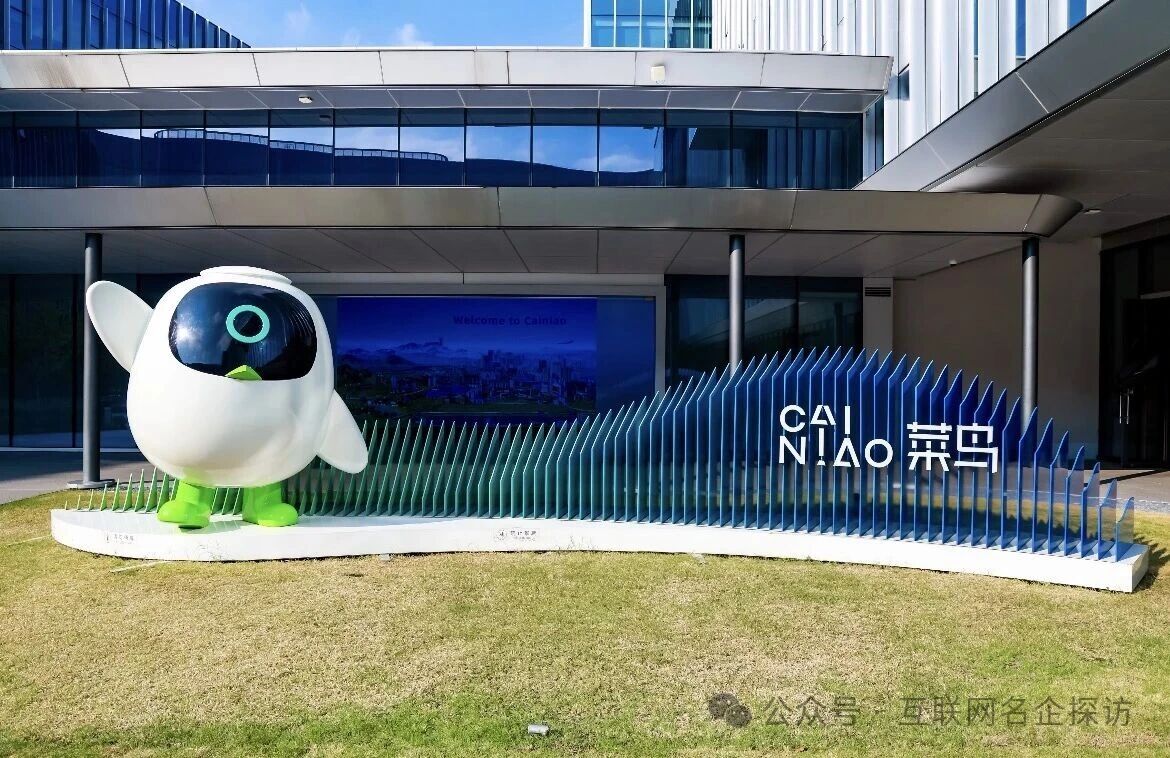
A Cainiao(菜鸟) visit in Hangzhou takes a delegation inside the logistics network behind Chinese cross-border e-commerce, which is the fastest-changing part of Chinese logistics and the least understood. Cainiao Smart Logistics Network was founded in 2013, is headquartered in Hangzhou, and sits within the Alibaba group. It handles more than five million cross-border parcels a day and its network reaches more than 200 countries and regions.
The reason to go in 2026 is that Cainiao has moved from being a platform that coordinates other people's deliveries to being an operator with its own hubs, aircraft, warehouses and last-mile networks abroad. It runs eHubs in Hong Kong, Kuala Lumpur, Liège and Los Angeles, operates more than 70 overseas warehouses across 18 countries and regions, and now sells next-day and second-day delivery to consumers in nine markets including Spain, France, the United States and Mexico.
The second reason is the timeline it has set. The company states a vision of global delivery within 72 hours, and it is already running a five-day product into Europe, a three-day product across 35 European countries, and a three-day service across the six Gulf states. Those are not pilot projects; they are commercial products sold to merchants on AliExpress, TikTok Shop, Amazon and Mercado Libre.
China Innovation Visits coordinates the Hangzhou programme, including the company reception, scheduling, local transport and English interpretation.
Key takeaways
- See how more than five million cross-border parcels a day move through one network.
- Understand the hub model: eHubs in Hong Kong, Kuala Lumpur, Liège and Los Angeles, plus more than 70 overseas warehouses.
- Examine the delivery products — global five-day delivery, three-day delivery across Europe and the Gulf — and what they require operationally.
- Look at the automation work: AI customs clearance that compresses clearance time by 80 per cent, self-developed warehouse robots, and unmanned delivery vehicles in more than thirty Chinese cities.
- Discuss what a platform becomes when it starts operating its own assets abroad.
- Compare with a Fengyi drone logistics overview on the aerial side, or a JD Robotics visit on warehouse automation in China.
Why visit Cainiao in Hangzhou?
Cross-border e-commerce is reshaping parcel logistics faster than any other force, and Cainiao is the company built for it. The economics are different from traditional express: the volumes are smaller and more fragmented, the customs work is harder than the transport, the customer expects a delivery promise set by the marketplace rather than by the carrier, and the seller is often a small merchant with no logistics expertise. Cainiao's answer — consolidation, automated customs, overseas warehouses and local delivery partnerships — is worth studying directly.
It is also the clearest example of a Chinese logistics platform internationalising by operating rather than by partnering. Most platforms coordinate; Cainiao now owns hubs, leases aircraft capacity, runs warehouses and employs delivery networks in nine markets. That is a much heavier commitment and a different risk profile, and the visit is where the trade-off can be discussed honestly.
Hangzhou is the right setting. The company's headquarters is in the city, alongside Alibaba, and the region's combination of e-commerce, payments and logistics software is why the company is based there. Delegations building a wider programme often pair it with an Alibaba visit on the platform side.
Company background
2013 to a global network
Cainiao was founded in 2013 with a stated mission of 24-hour delivery within China and 72-hour delivery worldwide, and it describes its strategy as industrialisation, globalisation and digitalisation, and organises its business into four services: global supply chain, cross-border logistics, overseas local express, and logistics technology.
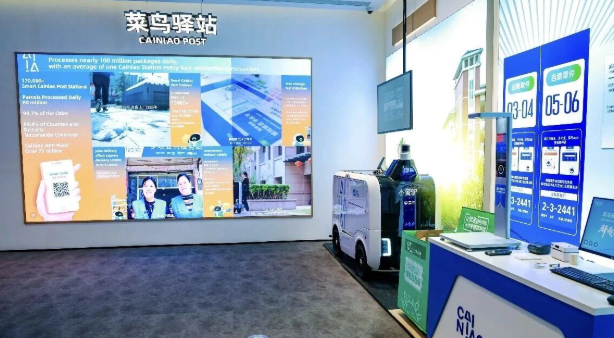
In China, the Cainiao Station network is one of the largest community-level collection and returns networks in the country, covering neighbourhoods and university campuses. It is the part of the business most visitors already know, and it is the reason the brand has consumer recognition: a returns and collection layer that works with many carriers rather than for one.
Group revenue passed 100 billion yuan in the 2025 financial year for the first time, driven by international logistics. In 2025 its domestic supply chain business moved into the Alibaba e-commerce group while continuing to develop as an independent company and expanding external business.
What it operates
The physical network now includes eHubs at Hong Kong, Kuala Lumpur, Liège and Los Angeles, hundreds of cross-border warehouses and sorting centres, and more than 70 overseas warehouses across 18 countries and regions. Since April 2026 it has opened seven new warehouses in Europe, in the Netherlands, France, Spain, Poland, the United Kingdom and Germany.
It serves the major global marketplaces — AliExpress, TikTok Shop, Amazon and Mercado Libre — as well as small and medium merchants, and it handles more than five million cross-border parcels a day.
The delivery products
Global five-day delivery
Cainiao's flagship cross-border product is global five-day delivery. The company shortened its original ten-day product to five days in September 2023, and in September 2025 added six more countries to the five-day network: Vietnam, Hungary, Singapore, Qatar, the Philippines and Austria. Cross-border parcels now reach Europe in as little as five calendar days.
Three days in Europe and the Gulf
Two newer products matter more than the headline. In Europe, Cainiao supports e-commerce parcels sent between 35 European countries, covering 99 per cent of European countries and regions, with a pan-European three-day service. In 2025 it became the first global logistics company to connect all six Gulf states for parcel exchange between them, with delivery as fast as three days.
In January 2026 it launched government-to-government cross-border service in the Americas, initially connecting the United States to Mexico and covering the most active e-commerce regions of the western United States and 99 per cent of Mexico.
Overseas local express
Beyond cross-border, Cainiao operates local express networks in nine markets, starting with Mexico and now including Spain, France and the United States, offering next-day, second-day and weekend delivery. Since April 2025 external orders for the overseas local express business have grown more than 200 per cent, and orders from within the Alibaba system and from external platforms are now roughly equal.
For a delegation, that ratio is the number to ask about. A logistics business that becomes a carrier in its own right rather than a captive service is a different business, and it is what Cainiao is becoming.
Technology
Customs and clearance
The least glamorous and most decisive part of cross-border logistics is customs. Cainiao has built an AI customs system that performs intelligent product classification, dynamic duty calculation and compliance validation, and the company reports that it compresses customs clearance time per shipment by 80 per cent.
That is where the delivery promises come from. Cutting transport time is expensive; cutting clearance time is software, and it is the reason a five-day product is commercially viable at consumer parcel economics.
Robotics and unmanned delivery
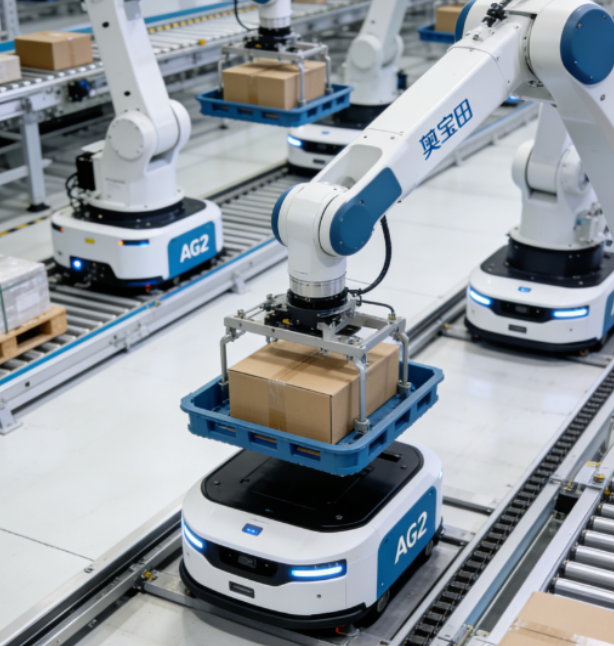
In warehousing, Cainiao develops its own equipment, including a climbing robot — the ZeeBot — and a four-directional shuttle system. In 2025 it announced what it describes as the world's largest unmanned logistics system, spanning unmanned warehousing, sorting, customs clearance and transport.
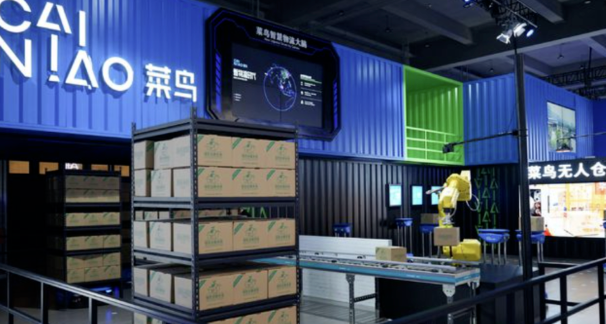
On the road, its unmanned vehicle solution for intelligent warehousing and distribution is now operating in more than thirty Chinese cities, including Chengdu, Chongqing, Wuhan, Ganzhou, Xiangtan and Zhuzhou. It responds to store replenishment demand in real time, plans routes dynamically, and moves distribution from once-daily to multiple times daily, reducing total distribution cost for partner merchants by more than 15 per cent on average. Partners include retail, pharmaceutical, express and grocery businesses.
Cainiao's logistics technology business has more than 800 global cooperation projects and serves 26 Fortune Global 500 companies, providing automated sorting for postal operators and automated warehousing for consumer goods retailers.
Warehousing and overseas supply chain
Cainiao's overseas supply chain operates more than 70 warehouses in 18 countries and regions, covering Europe, South-East Asia and North America. Order volume handled by its overseas warehouses grew 32 per cent in 2025.
More specialised capacity is being added. In 2026 the company plans to open a set of category-specific warehouses in Europe, including battery warehouses and large-item warehouses, and in August 2026 it opened two new warehouses in Paris and Mannheim with 4PX to support large-item storage and local delivery.
That shift towards category-specific and large-item handling is a signal of what cross-border e-commerce is becoming: fewer small parcels, more furniture, appliances and batteries, which need different buildings, different handling and different compliance.
What a visit covers
The standard programme
| Time | What happens |
|---|---|
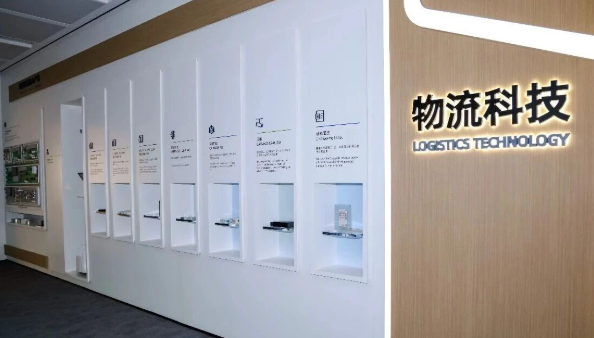
| Morning | Reception, registration and group photo at the headquarters, then a guided walk through the exhibition hall: company history, global network and core technology |
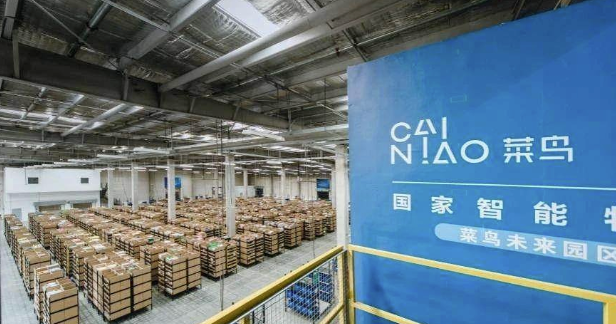
| Morning | Intelligent warehousing and distribution centre: robot sorting and unmanned delivery vehicles in operation |
| Afternoon | Hands-on session on the intelligent dispatch system, cross-border parcel tracking and the Cainiao Post station service |
| Afternoon | Themed briefing on global strategy, logistics technology and supply chain digitalisation, followed by a case-study discussion with company specialists |
| Late afternoon | Departure |
The programme runs in stages and is adapted to what the delegation wants to understand. The sequence above follows the standard order; the final scope and timings are confirmed in writing during planning, before you commit.
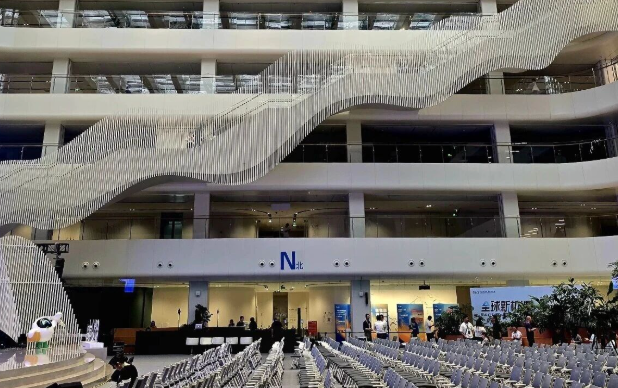
The exhibition hall is where the network is easiest to grasp, because hubs, routes, warehouses and last-mile are presented as one system. The briefing and discussion sessions are where cross-border strategy, customs and compliance, and cooperation questions are handled.
Who it suits
The visit suits logistics and supply chain companies, e-commerce and marketplace operators, retailers and brands selling cross-border, manufacturers, investors and analysts, and public sector delegations working on trade infrastructure. It is also used by university groups studying operations and international business, and the company is experienced in receiving professional visitors.
Practical notes
- The visit is a business programme. Delegations are received as professional visitors and follow the host's rules.
- Booking requires approval in advance. Foreign participants normally need to be registered with the host ahead of time, and that process is longer than for domestic visitors; allow additional working days for the paperwork.
- Provide the participant list, nationalities and professional focus early; the technical depth of the briefing is adjusted to suit.
- Photography rules are confirmed in advance; some areas carry confidentiality requirements. Tell us during planning if you need images for internal reporting.
- Smart casual is appropriate. The programme involves walking through exhibition and technical areas.
- English interpretation can be arranged, including specialist preparation on logistics, customs and supply chain terminology. Bilingual materials and an English summary can be prepared on request.
Questions before a Cainiao visit in Hangzhou
Is the visit open to international business delegations? Yes, subject to advance arrangements and confirmation by the host. Registration of foreign participants takes extra time, so we recommend planning at least 30 days ahead.
What is the group size? Visits are normally arranged for groups of 10 or more. We confirm the practical maximum with the host for your date.
How long does the visit take? The standard programme runs about two hours, covering the exhibition and demonstration area, a technical session and a discussion.
Where is the visit held? At the company's headquarters in Hangzhou. We confirm the meeting point in writing after the host approves the booking.
Do participants need a logistics background? No. The visit can be approached through logistics, e-commerce, retail, customs and trade, technology or investment, and terminology is handled through interpretation.
Is English interpretation provided? Yes, including preparation on logistics and customs terminology, and bilingual handouts can be arranged.
How large is the network? More than five million cross-border parcels a day, reaching more than 200 countries and regions, with hubs in Hong Kong, Kuala Lumpur, Liège and Los Angeles.
How fast are the delivery products? As little as five calendar days to Europe, three days between 35 European countries, and three days between the six Gulf states.
How much overseas infrastructure does it have? More than 70 overseas warehouses in 18 countries and regions, with seven new European warehouses opened since April 2026, and local express operations in nine markets.
What is distinctive about the technology? An AI customs system that the company reports compresses clearance time per shipment by 80 per cent, self-developed warehouse robots including a climbing robot and shuttle system, and unmanned delivery vehicles operating in more than thirty Chinese cities.
What documentation is needed in advance? A participant list with passport details for foreign visitors, submitted to the host for registration, plus the delegation's professional focus. We tell you the lead time for your specific group.
Does the programme always run as described? It is built around the elements above. Facilities and areas opened on the day are subject to what the site opens, and we confirm the final scope in writing during planning, before you commit.
Arrange your Cainiao visit
Tell us your dates, group size and what your team wants to understand: how five million cross-border parcels a day are consolidated, cleared and delivered, what it takes to run five-day delivery into Europe commercially, how overseas warehouses and local express networks are built market by market, or where automation actually reduces cost in a parcel network. China Innovation Visits will coordinate the company reception, discussion priorities, transport and English interpretation.
Contact China Innovation Visits to arrange your Cainiao visit in Hangzhou.