
As of 19 August 2026, Unitree Robotics is listed on the Shanghai Stock Exchange STAR Market (688836). Its 2025 prospectus reports revenue of RMB 1.699 billion and net profit attributable to the parent company of RMB 278.21 million. The separately reported net profit after excluding non-recurring items was RMB 590.75 million; these are different measures. The prospectus also reports more than 5,500 humanoid-robot shipments in 2025, excluding wheeled dual-arm robots, and describes Unitree as the global leader by that shipment measure. Shanghai Stock Exchange listing notice · SSE prospectus filing
From cerebellum to brain
Unitree's prospectus describes planned investment in robot-model research and development, robot hardware, new products and manufacturing capacity. That is a stated use-of-proceeds plan, not evidence that those projects have already produced commercial results. The strategic question for visitors is how the company is balancing robot hardware, motion control and the software that interprets tasks. SSE prospectus filing
Why see it in person
The numbers above are public. What a briefing deck cannot give you is the robots in motion — how a humanoid balances and recovers, how a quadruped handles stairs and rough ground, and how the team explains those choices face to face. Those signals only show up live in the showroom, which is why China Innovation Visits (https://www.chinatechvisits.com) builds programs that take decision-makers to the robots and the people behind them, not just to a slide presentation.
The filing shows you the shipment rank. The showroom shows you the robots that earned it.
What a delegation experiences
A sample visit to Unitree's Hangzhou robotics showroom takes about two hours. The schedule below is indicative and can be adjusted to on-site conditions:
| Time | Activity | What the group does |
|---|---|---|
| 09:30–10:00 | Pre-visit orientation | Brief introduction to Unitree and its company background, followed by a discussion of what to learn from the visit and how to observe the demonstrations. |
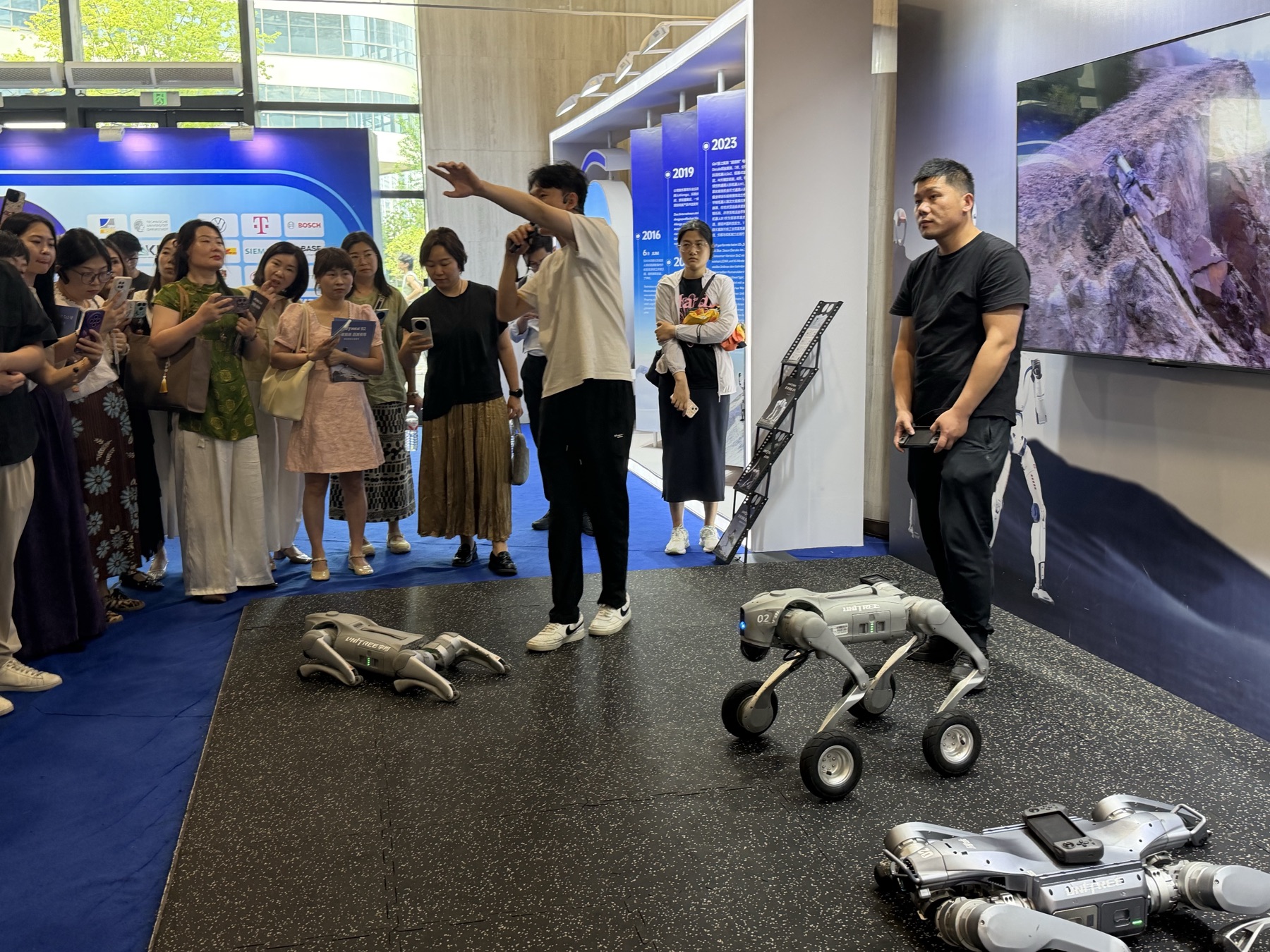
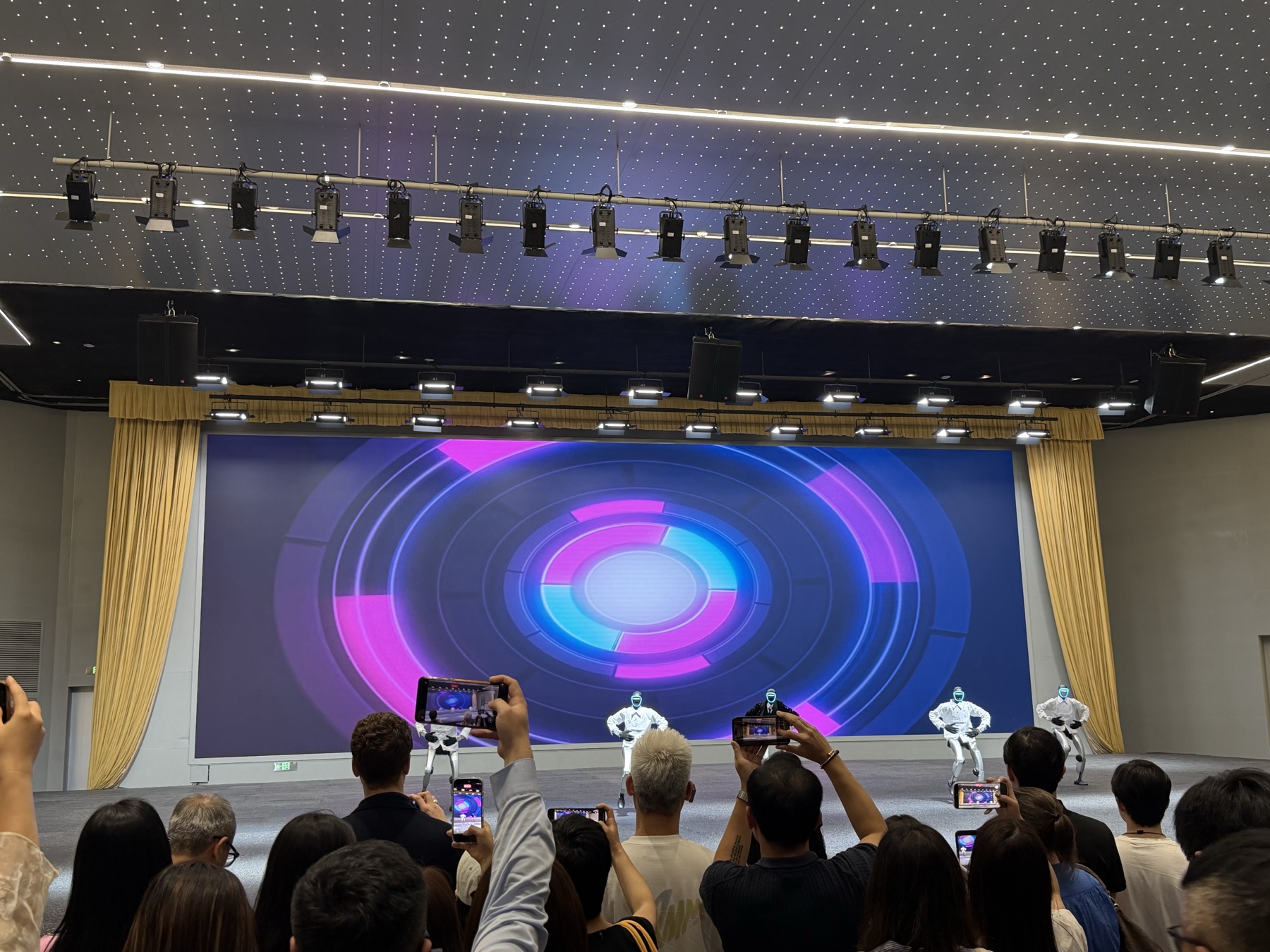
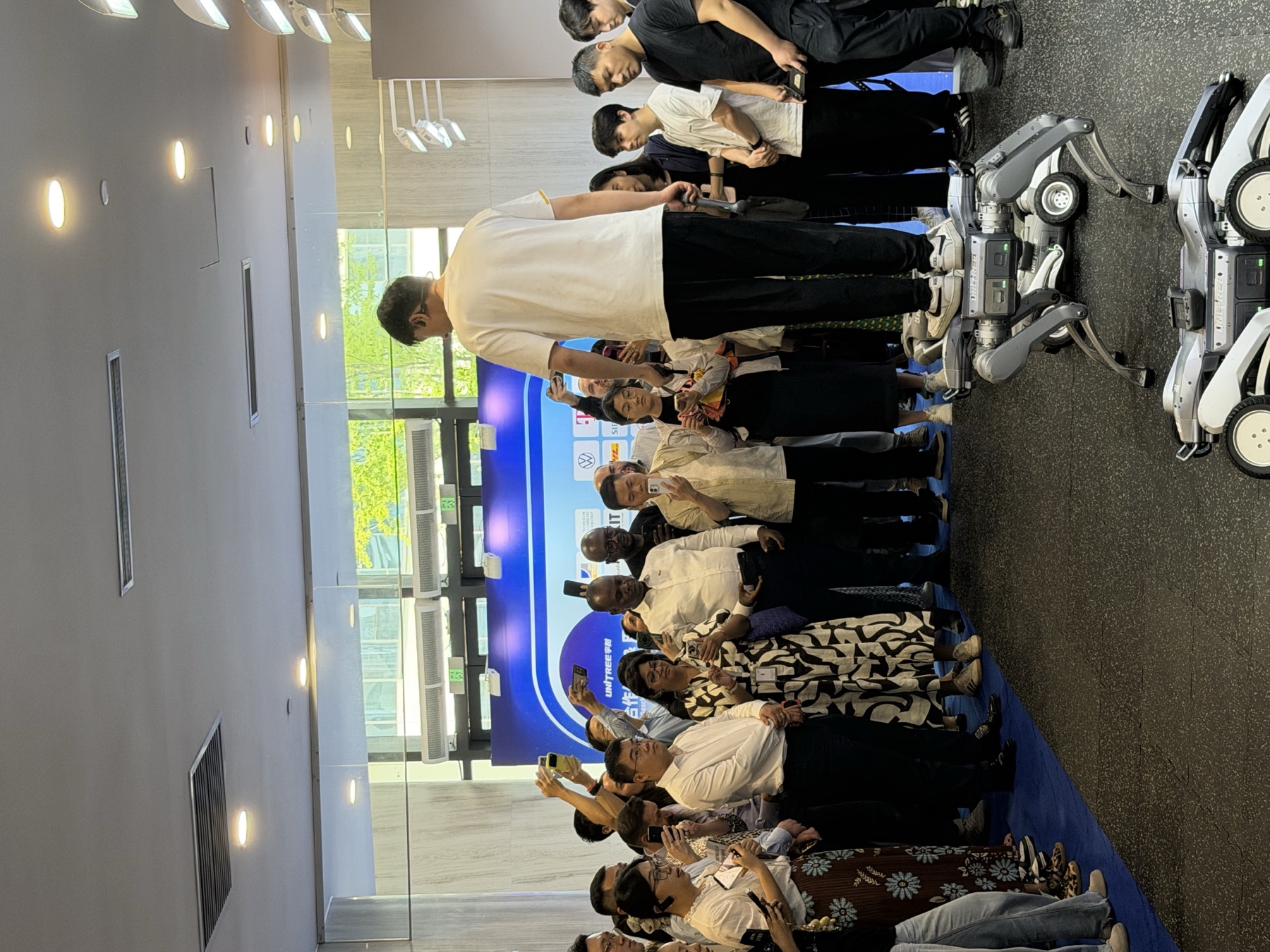
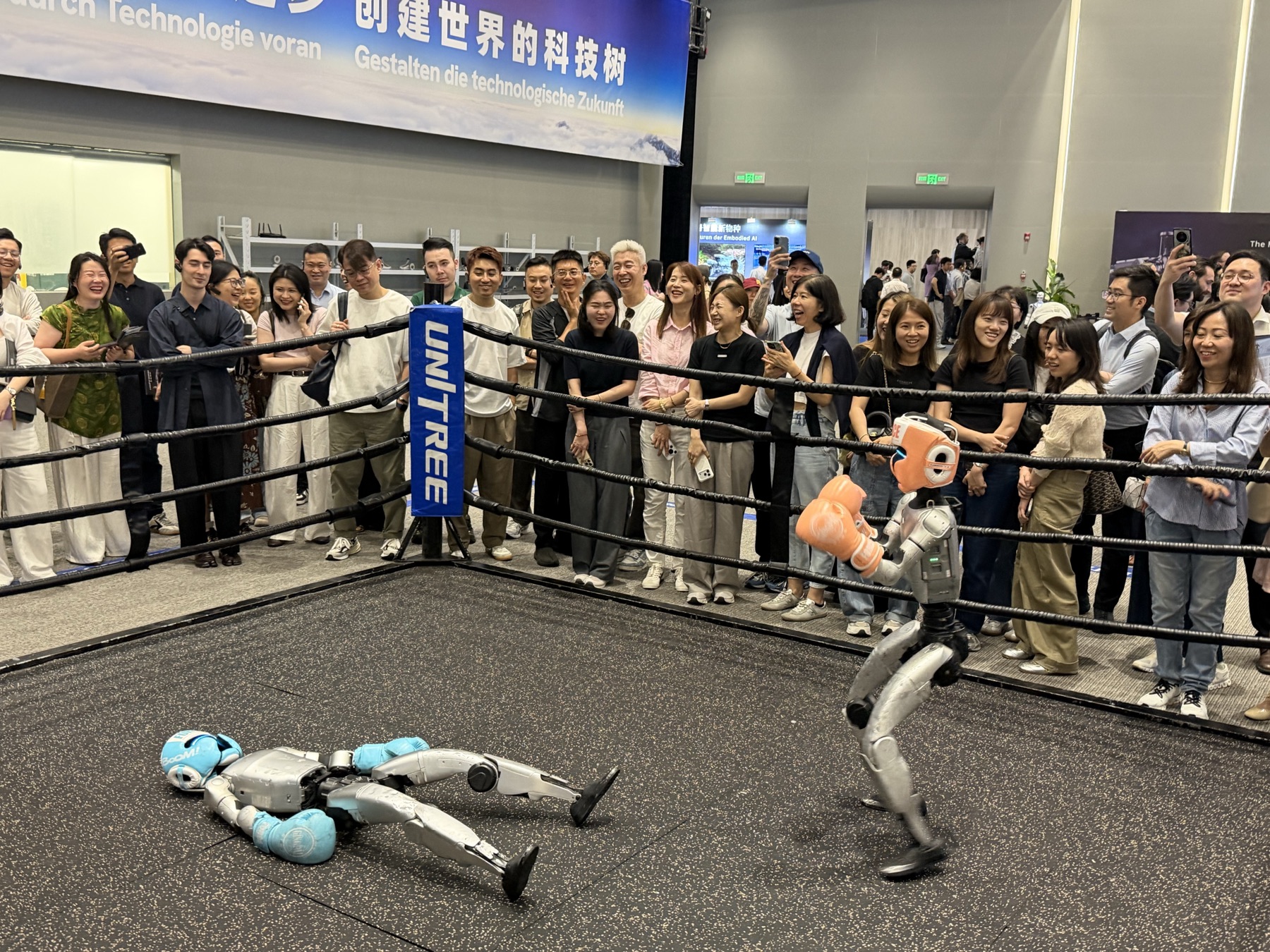
| 10:00–10:30 | Robotics showroom visit | Explore Unitree's development from its first-generation quadruped robot, XDog, in 2016 to the G1 humanoid robot in 2024. See demonstrations of humanoid and quadruped robots by technical staff. |
| 10:30–11:30 | Exchange and sharing | A session on "The Current State and Future Trends of Robotics," with time for discussion and questions. |
The showroom visit gives the group a close-up look at the products and their development; the exchange session provides a structured discussion of the wider robotics landscape.
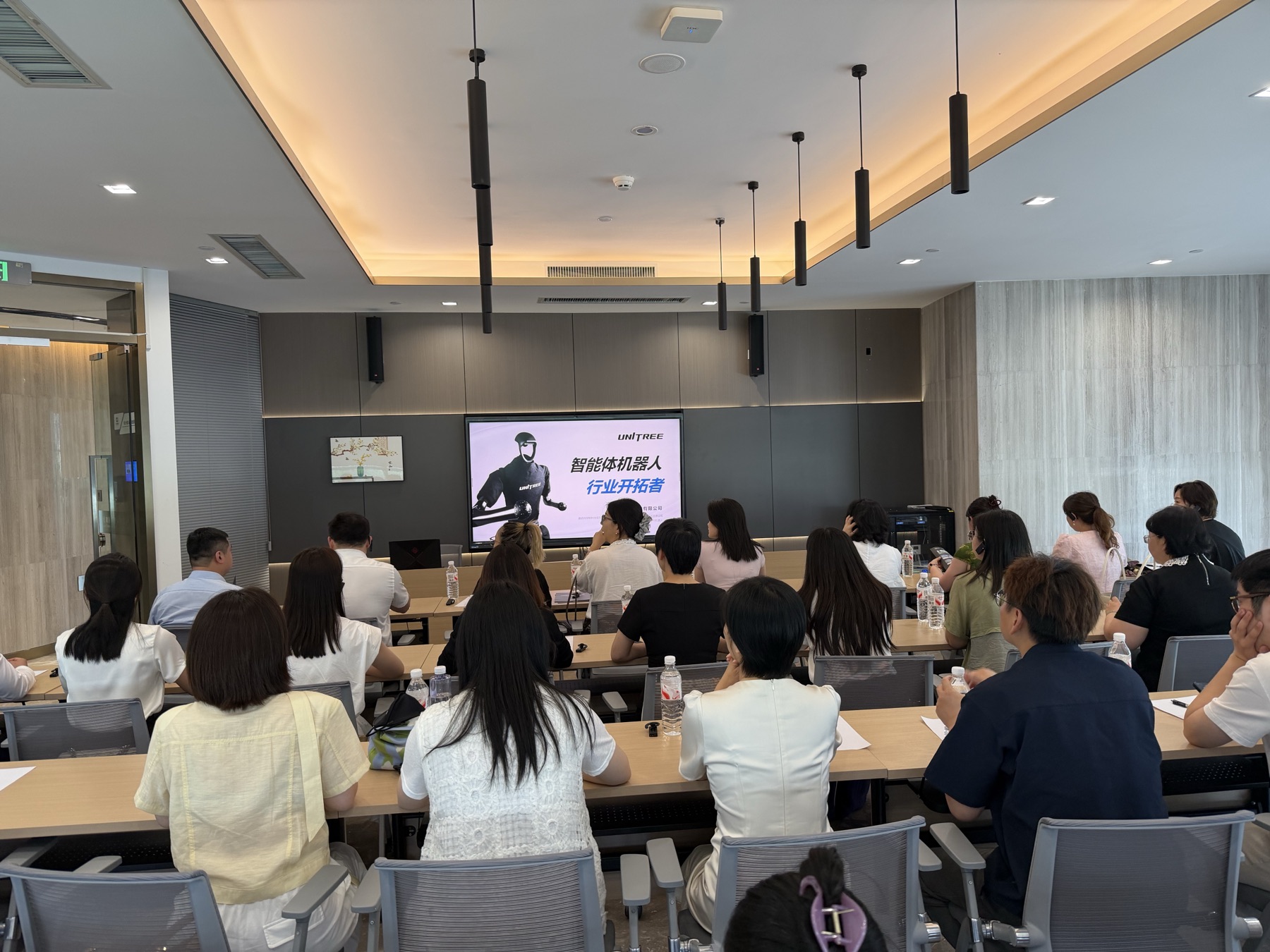
Photos from the Unitree visit
Questions delegations ask before they go
Do we need a robotics background? No. The programme suits investors, manufacturing leaders and policy teams as much as engineering teams — the point is to feel the iteration speed, not to audit the code.
Will we see the robots moving? Yes — a live demonstration of the quadruped and humanoid robots is part of the showroom programme. Which robots are demonstrated depends on the day's schedule, and we confirm that when we arrange your visit.
Is English interpretation provided? Yes. English interpretation on site is part of how the programme is run.
Who do we speak to in the exchange session? The closing session is held with the Unitree team hosting your group; tell us the topics you want covered and we shape the discussion around them. We confirm the attendees when arranging the visit.
Arranging your Unitree visit
We arrange the visit for you end to end: the introduction to the host, the scheduling on the Chinese side and English interpretation on site. Tell us your dates, your delegation size and what you want to see, and we will confirm what can be arranged. Start at chinatechvisits.com/company-visits.