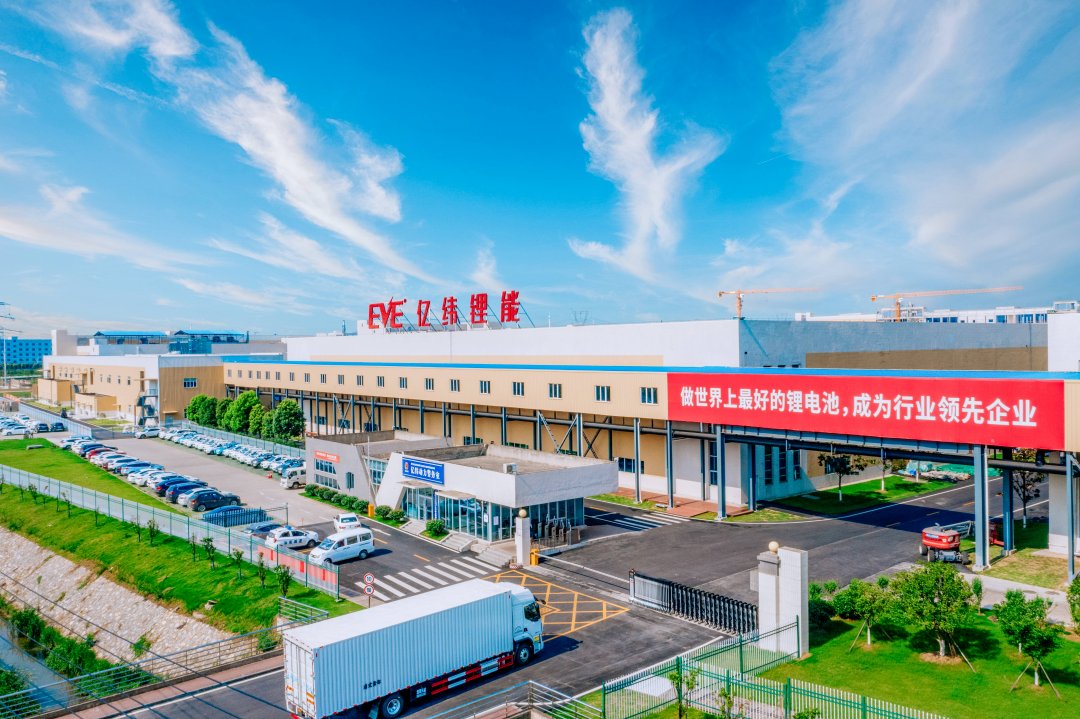
An EVE Energy(亿纬锂能) visit in Huizhou takes a delegation to one of the few battery makers that runs three businesses at once: consumer cells, EV cells and storage cells. EVE Energy was founded in 2001, is headquartered in Huizhou in Guangdong, and has been listed on Shenzhen's ChiNext board under 300014 since 2009.
The reason to go in 2026 is the shift in the mix. For the first half of the year the company reported revenue of about 45.7 billion yuan, up 62.2 per cent, and net profit attributable to shareholders of about 3.30 billion yuan, up 105.7 per cent. Energy storage had overtaken EV batteries as its largest business by volume. That change happened fast, and a visit is the cheapest way to understand what it cost.
The second reason is that the interesting number here is not the revenue. It is the margin. Storage is EVE's fastest-growing business and also its least profitable one. A delegation that asks about that gap will learn more in two hours than from the exhibition hall alone.
China Innovation Visits coordinates the Huizhou programme, including the company reception, scheduling, local transport and English interpretation.
Key takeaways
- See all three battery businesses in one company: consumer, EV and storage.
- Understand the pivot: storage passed EV batteries as the largest business by volume in the first half of 2026.
- Discuss the margin mix — consumer batteries carry the highest gross margin and storage the largest volume.
- Examine the large cylindrical cell programme and what it is actually for.
- Ask about the overseas build-out in Malaysia and Hungary, and the Hong Kong listing application.
- Compare the approach with a CATL visit in Ningde and a Sunwoda battery visit, two other routes into the same industry.
Why visit EVE Energy in Huizhou?
Battery companies are a good subject for a delegation because the industry is measurable in gigawatt-hours and the competitive order is published every month. EVE sits in an unusual position: it is large enough to matter globally and small enough that it still has to pick its fights.
The visit is also a working lesson in diversification. Most battery makers that survived the last decade specialised. EVE did not. It ran consumer cells — where it built its reputation in vaping and wearable devices — alongside EV cells and, increasingly, storage. Ask what that costs in capital and what it buys in resilience when one of the three markets turns down.
Huizhou is not Shenzhen. It is quieter, the company is the largest industrial presence in the city, and the group is not performing for an audience.
Company background
From consumer cells to three businesses
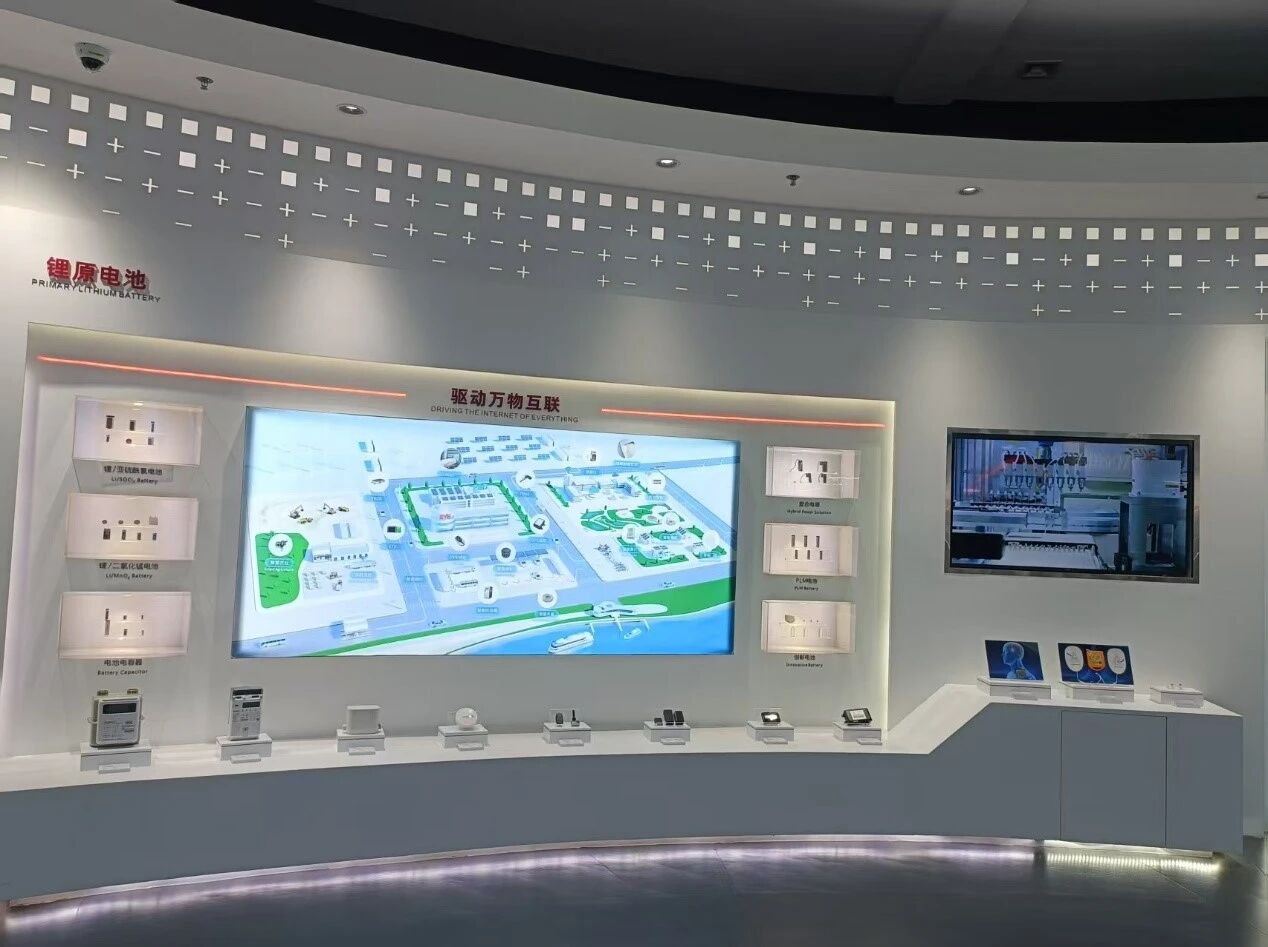
EVE was founded in 2001 and listed on the ChiNext board in 2009. Its consumer battery business — cells for e-cigarettes, wearables and other small devices — is the part of the company that most visitors have already used without knowing it, and it remains the highest-margin of the three.
EV and storage cells came later and now dominate revenue. The company has described 2025 as a "harvest year" for storage, with the segment running at full production and full sales.
Where the money comes from
In the first half of 2026 the revenue split was roughly: EV batteries about 17.28 billion yuan, storage batteries about 15.09 billion yuan, battery materials about 6.87 billion yuan and consumer batteries about 6.41 billion yuan. By geography, domestic revenue was about 34.36 billion yuan, or 75.2 per cent, and overseas revenue about 11.33 billion yuan, or 24.8 per cent.
That last ratio is worth noting before the visit. A company with a quarter of its revenue outside China, a Hungarian plant under construction and a Hong Kong listing application is a company whose strategy is increasingly about where the cells are made, not just how many.
The 2026 first half
Revenue and profit
For the first half of 2026 EVE reported revenue of about 45.691 billion yuan, up 62.2 per cent; net profit attributable to shareholders of about 3.301 billion yuan, up 105.7 per cent; and net profit excluding non-recurring items of about 2.451 billion yuan, up 111.9 per cent. The board proposed a cash dividend of 2.30 yuan per 10 shares.
Volume
Storage battery shipments reached 44.46 GWh in the half, up 54.9 per cent, and SNE Research ranked EVE second in the world by storage shipments. EV battery installations ranked seventh globally, up 51.7 per cent, while commercial-vehicle EV batteries ranked second globally, up 65.3 per cent.
Those three rankings tell the whole strategy in one line: the company is not going to win the passenger-car battery war against the two leaders, so it is winning in commercial vehicles and in storage instead.
The full-year setting
For the full year 2025, revenue was about 61.470 billion yuan, up 26.4 per cent, and net profit was about 4.134 billion yuan. The first half of 2026 is running well ahead of that, with revenue up 62 per cent and profit growing faster still, so the briefing is a good place to ask how much of the improvement the company expects to hold through the second half.
Reading the profit
Growth, and what it costs
Revenue grew 62 per cent in the first half and profit grew faster. Two things sit behind that. The first is operating leverage: a company running its plants harder carries its fixed costs better. The second is mix, because the three businesses carry different margins.
At the end of the third quarter of 2025 the company's gross margins by business were roughly 26.8 per cent for consumer batteries, 15.3 per cent for EV batteries and 11.2 per cent for storage batteries. Storage has the largest volume growth of the three, which is why mix is the second lever rather than the first.
The question to bring
Ask how the company expects storage margin to develop, and whether it gets there through price, through chemistry, or through making its own materials. The answer will tell you more about the next three years than the exhibition will.
Storage: the largest business and the thinnest one
What changed
Storage revenue reached about 15.09 billion yuan in the first half of 2026, up 69.2 per cent, on shipments of 44.46 GWh. The company states that storage has overtaken EV batteries as its largest business by volume, and that orders on hand already exceed existing capacity.
For 2025, storage shipments were 71.05 GWh, up 40.8 per cent, against EV shipments of 50.15 GWh, up 65.6 per cent — 121.2 GWh in total across both.
Why it matters to a delegation
Grid storage is the part of the battery industry most exposed to policy and least exposed to brand. Cells are sold into systems, the buyers are utilities and integrators, and the competition is on cost per cycle rather than on features. That is a different commercial discipline from selling to a carmaker, and a delegation with any interest in energy infrastructure will find the contrast useful.
The Fluence agreement
The numbers
On 18 September 2026 EVE's subsidiary Hubei EVE Power signed a framework supply agreement with Fluence, a global storage system integrator, covering planned deliveries of 206 GWh between 2027 and 2031. Of that, 16 GWh in 2027 is a firm committed volume, with 190 GWh of reserved capacity across 2028 to 2031 — a structure the industry describes as firm floor plus flexible reservation.
The scale is about 1.7 times EVE's entire 2025 combined EV and storage shipments. Reporting describes it as the largest framework order Fluence has placed with a Chinese cell maker.
How to read it
A framework agreement is not a purchase order, and the firm part is the 2027 volume. Delegations should ask what has been contracted versus reserved, and what happens to the reserved volume if prices move. The company has said storage orders on hand exceed current capacity, which is a statement about expansion plans as much as about demand.
Large cylindrical cells
The bet
EVE has built a 20 GWh large cylindrical cell plant and describes itself as the first high-volume supplier for the next generation of models from a leading international carmaker. It reports more than 80,000 vehicles equipped with its large cylindrical cells and a longest single-vehicle distance of over 270,000 kilometres.
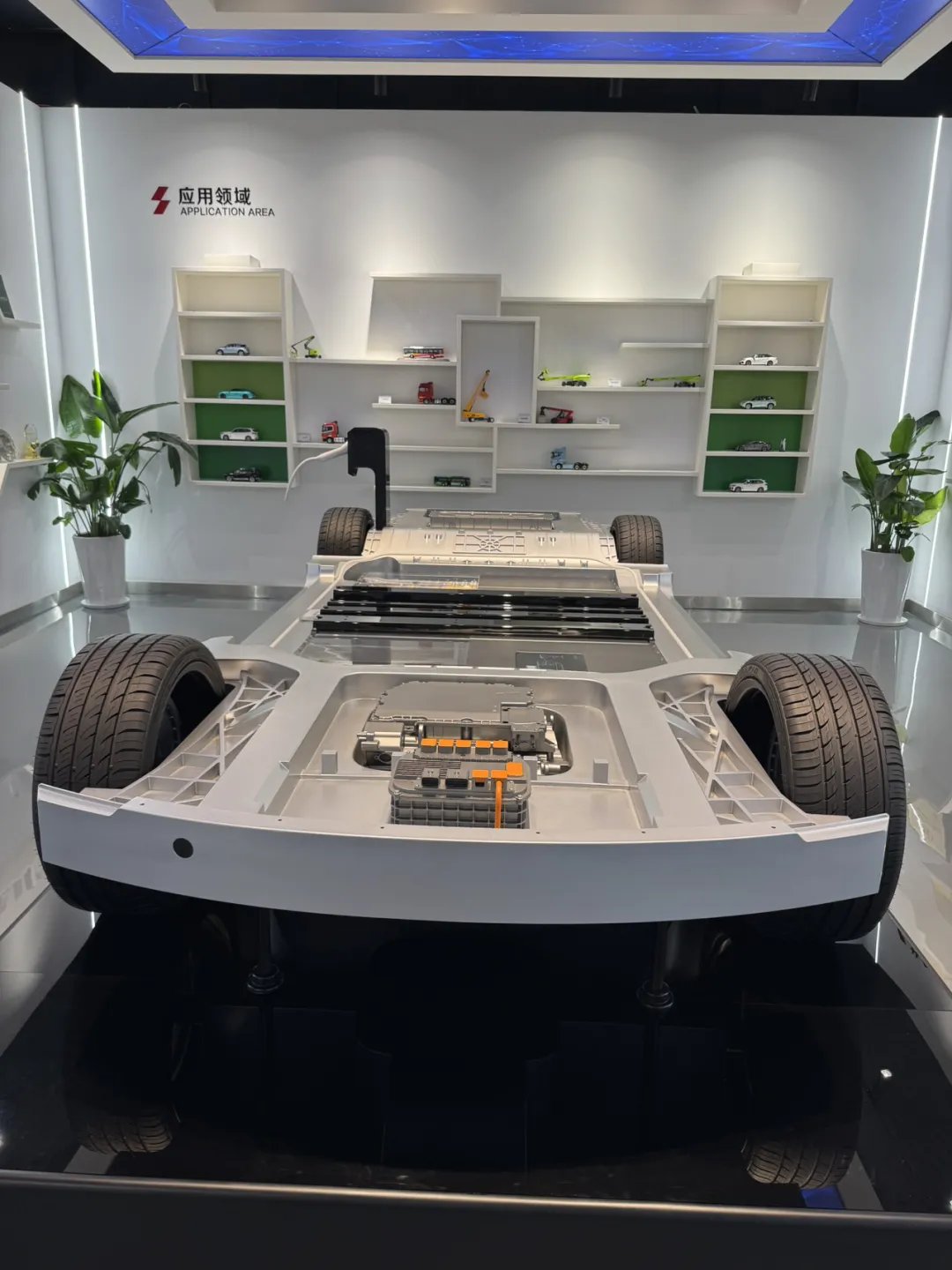
In 2024 global shipments of 46-series large cylindrical cells were about 2.2 GWh, or 0.2 per cent of the total EV battery market. EVE shipped 0.4 GWh of that, ranking second among 46-series makers according to Frost & Sullivan, which forecasts the segment growing to 370.5 GWh by 2029.
What to ask
The forecast implies a compound annual growth rate above 90 per cent, which is a forecast, not a result. Ask how much of the Hungarian plant's 30 GWh is already committed, and what happens if the large cylindrical format ends up serving fewer models than expected.
Overseas: Malaysia, Hungary and the filing
Malaysia
EVE's Malaysian base was planned in three phases. Phase one, a cylindrical cell project, came off the line in February 2025. Phase two is a storage project; the company has disclosed planned investment of up to about 8.654 billion yuan for the second and third phases, with combined annual capacity of 48 GWh.
Hungary
The Hungary plant sits in the north-west industrial zone of Debrecen, on a site of more than 400,000 square metres, with a designed capacity of 30 GWh and production expected to start in 2027. It will focus on 46-series large cylindrical EV cells. The company has said the location is deliberately close to the factories of its main European automotive customers. Combined overseas investment across Hungary and Malaysia has been reported at more than 18 billion yuan.
The Hong Kong application
EVE first filed for a Hong Kong listing on 30 June 2025; that application lapsed at the end of December 2025 and a second filing was made on 2 January 2026, with CITIC Securities as sponsor. The stated use of proceeds is the continued construction of the Hungary base. Notably, the third Malaysian phase was removed from the fundraising plan in the updated filing — a change worth asking about directly, because it says something about where the company sees demand.
Cash, debt and capacity
The balance sheet behind the build-out
At the end of 2025 total assets were about 125.5 billion yuan and cash was about 8.5 billion yuan. Operating cash flow was about 7.49 billion yuan for the full year 2025, which is what funds a construction programme of this size alongside the Hong Kong listing.
Capacity in build
The Hungary base is being built at 30 GWh, close to customers in Europe, and the stated use of proceeds from the Hong Kong filing is its continued construction. How the company phases that capacity against European demand is one of the more useful questions to put to it, because it is a real-time read on where it expects orders to come from.
Competitive position
The wider market is the setting. Industry commentary expects the two Chinese leaders to hold about 64 per cent of the EV battery market in 2026 between them, leaving roughly 30 per cent for everyone else. Delegations tracing that competitive order usually pair this visit with a BYD company visit, because the two leaders set the price everyone else has to meet. EVE has said its storage orders exceed capacity and that it ranks second globally in storage shipments, which is the part of the portfolio where its position is strongest.
What a visit covers
The standard programme
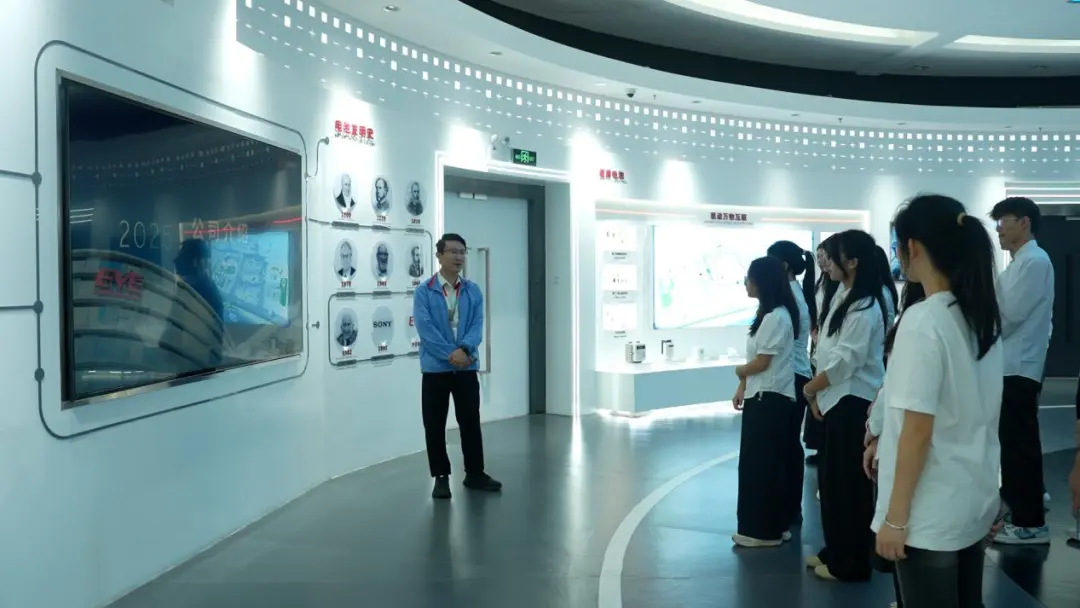
09:30–10:30 Visit to the Photovoltaic Energy Storage Demonstration Base and Exhibition Hall; On-Site Exploration of the Intelligent Production Process for Lithium Battery Products
10:30–11:30 Thematic Sharing and Exchange: AI Empowering Intelligent Lithium Battery Manufacturing The sharing session focuses on the application practices of AI in intelligent lithium battery manufacturing. In the context of corporate development and industry evolution, it demonstrates practical experience in exploring diverse technological pathways and transforming technological innovation into sustainable industrial capabilities.
The sequence and durations above are the standard pattern; the host confirms the final schedule, and we confirm the scope in writing during planning, before you commit.
Practical notes
- The visit is a business programme. Delegations are received as professional visitors and follow the host's rules.
- Booking requires approval in advance, normally two to three weeks. Production-area visits need host approval and safety briefing, so lock the date early.
- Groups are normally kept to about 40 people per batch, with larger delegations split to keep the visit workable.
- Photography rules are confirmed in advance; production areas generally carry confidentiality requirements. Tell us during planning if you need images for internal reporting.
- Smart casual is appropriate. The programme involves walking through exhibition and technical areas.
- English interpretation can be arranged for the exhibition, technical sessions, briefing and Q&A.
Questions before an EVE Energy visit in Huizhou
Is the visit open to international business delegations? Yes, subject to advance arrangements and confirmation by the host. Host approval takes time, so we recommend planning at least 30 days ahead.
What is the group size? Visits are normally arranged for groups of 10 or more, with a single batch usually kept to about 40 participants. Larger delegations are split.
How long does the visit take? The standard programme runs about three hours.
Where is the visit held? At the company's base in Huizhou, Guangdong. We confirm the meeting point in writing after the host approves the booking.
Do participants need a technical background? No. The visit can be approached through manufacturing, operations, investment, procurement or energy strategy, and terminology is handled through interpretation.
Is English interpretation provided? Yes, interpretation can be arranged for the exhibition, technical sessions, briefing and Q&A.
How profitable is the company? For the first half of 2026 it reported revenue of about 45.7 billion yuan and net profit of about 3.30 billion yuan. Margins differ sharply by business: storage, the fastest-growing segment, was reported at about 11 per cent gross margin in late 2025, against about 27 per cent for consumer batteries.
Has storage really overtaken EV batteries? By volume, yes: the company states storage became its largest business by volume in the first half of 2026, on shipments of 44.46 GWh. By revenue, EV batteries were still slightly larger, at about 17.28 billion yuan against 15.09 billion yuan for storage.
Is EVE one of the largest battery makers? It ranked second globally in storage shipments and seventh in EV battery installations in the first half of 2026, according to SNE Research. The two Chinese leaders together hold about 60 per cent or more of the EV battery market.
How is the expansion funded? Operating cash flow was about 7.49 billion yuan in 2025, and the stated use of proceeds from the Hong Kong filing is the continued construction of the Hungary base. Ask how the company phases that spend against European demand.
Does the programme always run as described? It is built around the elements above. Facilities and areas opened on the day are subject to what the site opens, and we confirm the final scope in writing during planning, before you commit.
Arrange your EVE Energy visit
Tell us your dates, group size and what your team wants to understand: the storage pivot, the margin structure, the large cylindrical programme, the overseas build-out, or applying battery sourcing to your own operations. China Innovation Visits will coordinate the company reception, discussion priorities, transport and English interpretation.
Contact China Innovation Visits to arrange your EVE Energy visit in Huizhou.