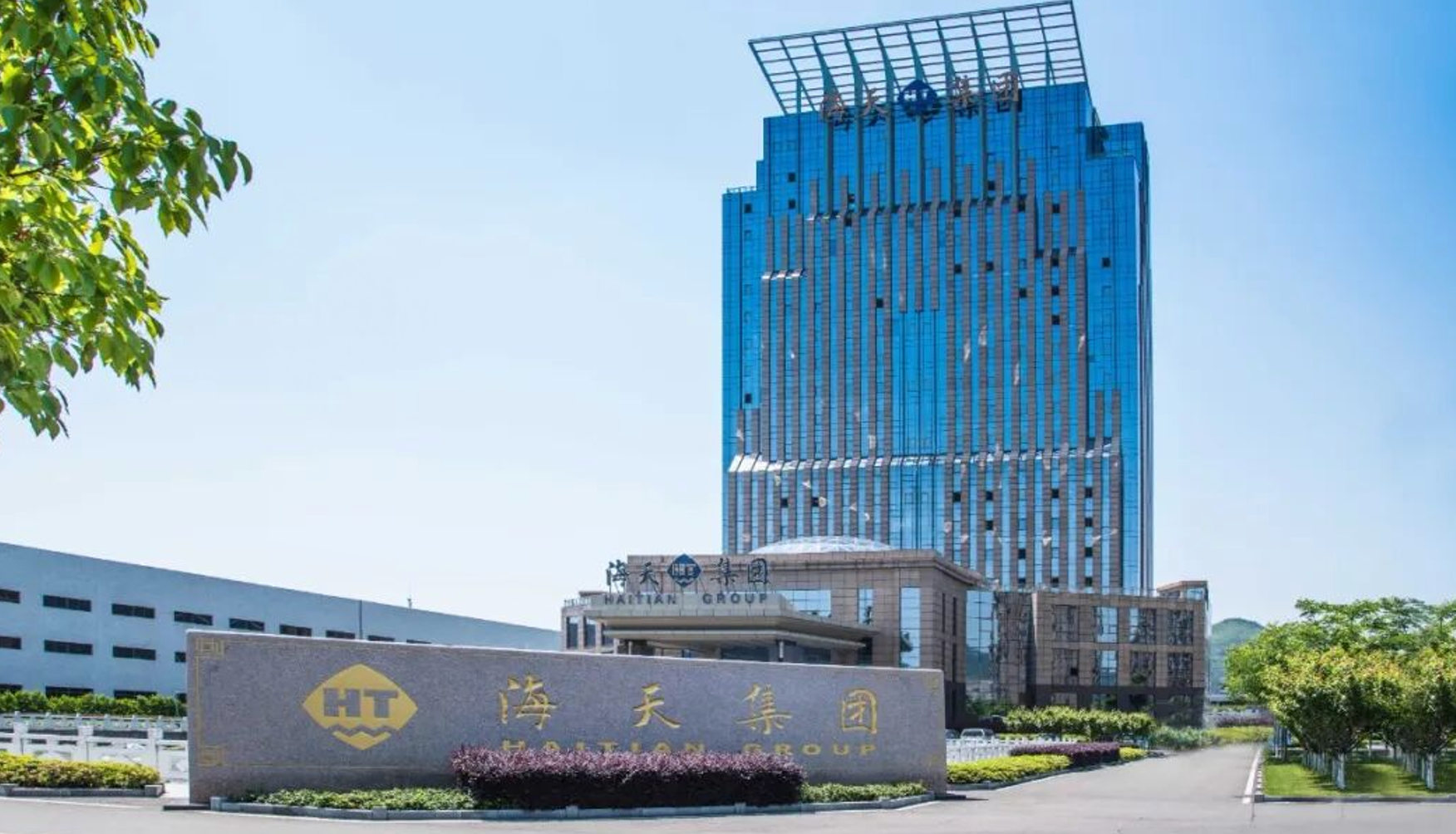
A Haitian Precision(海天精工) visit in Ningbo takes a delegation to one of the few Chinese machine tool makers that sells into the top of its own market. Ningbo Haitian Precision Machinery was founded in 2002, listed on the Shanghai Stock Exchange under 601882 in 2016, and describes itself as a maker of mid-to-high-end CNC metal cutting machine tools. In 2025 it reported revenue of about 3.37 billion yuan and net profit attributable to shareholders of about 429 million yuan.
The reason to go in 2026 is the acceleration. The first half of 2026 produced revenue of about 2.005 billion yuan, up 20.55 per cent, with net profit up 19.38 per cent, and the second quarter was stronger still at 28.90 per cent revenue growth. A delegation arriving now can ask where the growth came from — domestic demand for high-end equipment, faster import substitution, or the overseas build-out — and which of the three the company expects to lead in 2027.
The second reason is the product concentration. Gantry machining centres — the very large bridge-type machines used for aerospace structures, dies and energy components — are more than half of revenue. That is a narrow business to be the domestic leader in, and the visit is a good place to see how narrow it really is.
China Innovation Visits coordinates the Ningbo programme, including the company reception, scheduling, local transport and English interpretation.
Key takeaways
- See gantry, vertical and horizontal machining centres built in one plant, including the large-span machines used for aerospace and die work.
- Understand the product mix: gantry, horizontal and vertical machining centres, and which lines carry the margin.
- Ask how much of the 2026 growth is domestic high-end demand and how much is export, because the two carry different margins.
- Discuss five-axis development and what import substitution actually means for aerospace parts.
- Examine the overseas build-out: Malaysia, Germany and Serbia, and why export margin differs from domestic margin.
- Compare with a FANUC factory tour in Shanghai on how automation suppliers are structured, or an Inovance factory tour on the control and drive side of Chinese factory equipment.
Why visit Haitian Precision in Ningbo?
Machine tools are the upstream of the upstream. Every car body, aircraft frame, wind turbine component and phone casing is made on machines like these, so a machine tool maker sees capital expenditure plans before the factories placing the orders announce them. For a delegation trying to read Chinese manufacturing rather than tour it, that is the useful position.
It is also a clean test case for import substitution. China buys a large share of its high-end machine tools from Germany and Japan, and the domestic industry has been trying to move up for two decades. Haitian Precision is one of the companies that has moved furthest in the largest format — which makes it the right place to ask where the substitution has actually happened and where it has not.
Ningbo is a practical setting. It is a manufacturing city with a deep supplier base around it, and the visit can be combined with other programmes in the region. Delegations working on heavy industry often pair it with a Sany factory tour in Beijing, which sits on the customer side of what Haitian builds.
Company background
Founded in 2002, listed in 2016
The company was founded in 2002 and listed on the Shanghai Stock Exchange in 2016, which funded the capacity and product expansion that followed. Its stated business is the research, production and sale of CNC metal cutting machine tools, with gantry, horizontal and vertical machining centres as the core product lines.
It describes its machines as serving more than 50 countries and regions across automotive, aerospace, die and mould, and general machinery customers. That figure is the company's own; treat it as a claim about market presence rather than a market share.
Four bases
The company's own site lists four manufacturing bases: Ningbo Dagang, Ningbo Yanshan, Dalian Haitian Precision and the Haitian mountain factory, together about 570,000 square metres of temperature-controlled machining and assembly space. Temperature control matters here: the accuracy claims of a machine tool are only meaningful in a stable thermal environment, and the plant is built around that constraint.
At the end of 2025 the group employed 2,435 people, up 6.1 per cent on the year.
What it makes
Gantry machining centres
Gantry machining centres brought in about 1.90 billion yuan in 2025, up 7.95 per cent, or about 56 per cent of revenue. This is the part of the business the company is known for: large, bridge-framed machines that travel over a fixed table, used where the workpiece is too big or too heavy to move precisely.
Publicly cited industry figures put the company's share of the domestic gantry machining centre market above 25 per cent, and its share of heavy-duty gantry machines at around 80 per cent. Those are third-party figures rather than audited ones, and the visit is a reasonable place to ask how the company defines the segments it leads.
Vertical and horizontal
Vertical machining centres brought in about 841 million yuan, up 6.07 per cent, roughly a quarter of revenue. Horizontal machining centres brought in about 400 million yuan, at a 29.74 per cent gross margin — the highest of the three lines, and worth asking about directly, because it is the line the company has developed furthest for aerospace and die work.
Five-axis and the substitution question
Five-axis machining — cutting a complex part from multiple angles in one setup — is where aerospace and high-end die work sits, and where German and Japanese suppliers have been strongest. The company reported in its 2025 annual report that it developed several five-axis models during the year, alongside die machining equipment and CNC vertical lathes.
The honest framing for a delegation: developing a five-axis model and winning five-axis production work are different milestones, and the second one takes years. Ask which parts are in production on company machines and which are still qualification work.
The 2025 results
Revenue and profit
Revenue was about 3.368 billion yuan in 2025, up 0.48 per cent. Net profit attributable to shareholders was about 429 million yuan, down 17.97 per cent. Net profit excluding non-recurring items was about 385 million yuan, down 18.41 per cent.
The 2025 position was a holding one: revenue of about 3.368 billion yuan, operating cash flow of about 593 million yuan, up 138.51 per cent, and a conservative balance sheet with interest-bearing debt of about 58 million yuan. That cash generation is what funded the product and capacity work that is showing up in the 2026 figures.
Cash and returns
Operating cash flow was about 593 million yuan, up 138.51 per cent, and basic earnings per share were 0.82 yuan. Weighted average return on equity was 15.35 per cent, down 5.70 percentage points. Basic earnings per share were 0.82 yuan and the company proposed a dividend of 3 yuan per 10 shares.
Financial structure is conservative: the debt-to-asset ratio was 44.91 per cent, and interest-bearing debt was about 58 million yuan, a little over 2 per cent of assets. A company with almost no debt in a cyclical industry is a company that expects to wait out the cycle.
The three-year view
Taking a longer view helps: three-year revenue compound growth to the end of 2025 was 1.96 per cent, which is what a capital goods business looks like when it spends a cycle building product rather than shipping volume. The 2026 half-year figures below are where that work starts to show.
The industry the company operates in
What management says
Management describes a two-sided effort: closing the technology gap with international high-end manufacturers while competing with a growing number of larger domestic private companies that expanded capacity and product ranges after 2020. Both point the same way — towards higher specification rather than higher volume.
The sector context matters for a delegation. The Chinese machine tool industry has more than 16,000 companies and is highly fragmented; commentary on the sector puts the share of the top five below 40 per cent. China Machine Tool & Tool Builders' Association data show the domestic industry returning to growth in 2025, with overall revenue up 1.6 per cent, and the company's own 2026 half-year growth of more than 20 per cent is running well ahead of that.
Reading the margins by product
The 2025 gross margins by product line are instructive: gantry machines 27.57 per cent, horizontal machines 29.74 per cent, vertical machines 20.50 per cent. The two lines with the highest margins are the large-format machines, gantry at 27.57 per cent and horizontal at 29.74 per cent, and those are the lines the company has been developing for aerospace, die and energy work.
The implication for a delegation: mix, not volume, is what moved the margin. Ask which mix the company is planning for 2027.
The 2026 recovery
The first half
Revenue was about 2.005 billion yuan in the first half of 2026, up 20.55 per cent. Net profit attributable to shareholders was about 283 million yuan, up 19.38 per cent. Machine tool sales were about 1.973 billion yuan, up 20.69 per cent.
The second quarter was stronger than the first: revenue of about 1.19 billion yuan, up 28.90 per cent, and net profit of about 172 million yuan, up 24.25 per cent. Gross margin in the quarter was 25.92 per cent and net margin 14.42 per cent.
The number behind the number
Here is the figure a delegation should bring to the briefing. In the first half of 2026 headline profit rose 19.38 per cent, while profit excluding non-recurring items rose 3.31 per cent. The two numbers describe different things: the reported improvement and the operating improvement.
It is worth asking what sits in that difference, because it says where the operating improvement and the reported improvement diverge.
The company's own explanation for the half is domestic demand for high-end equipment, driven by fast-growing emerging industries and faster import substitution, plus internal work on product performance, product range and capacity utilisation. The industry context supports part of that: China Machine Tool & Tool Builders' Association data show the domestic machine tool industry returning to growth in 2025, with overall revenue up 1.6 per cent after two down years.
Overseas
Malaysia, Germany and Serbia
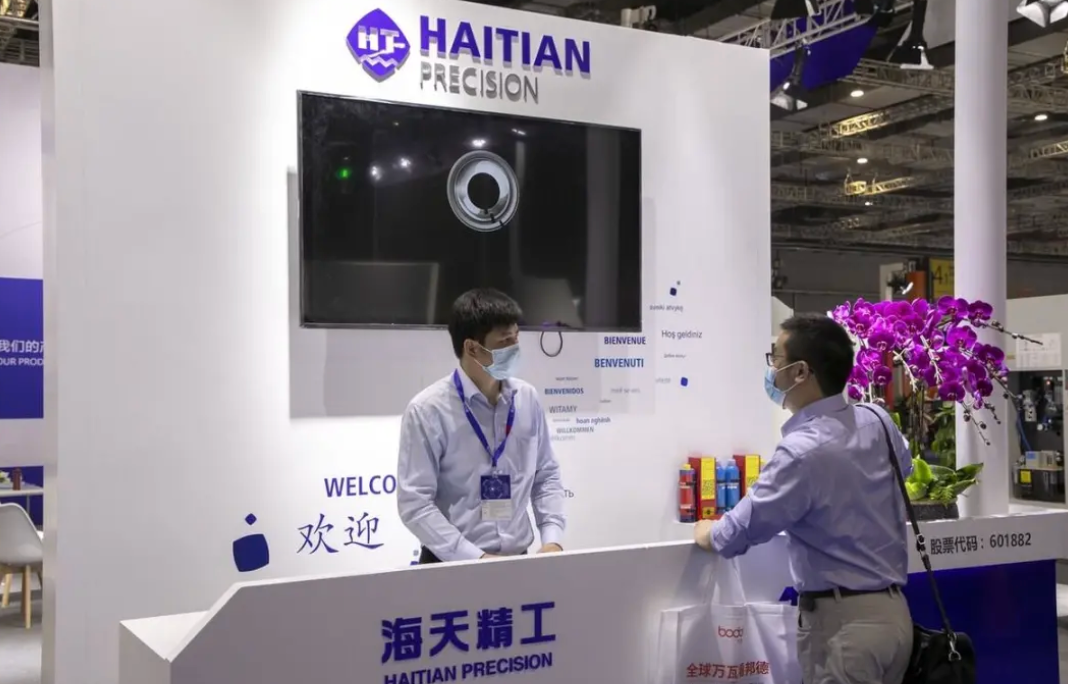
The company has been building overseas capacity and service, with projects in Malaysia, Germany and Serbia. A Kuala Lumpur application and demonstration centre opened in April 2025, aimed at Southeast Asian customers.
Germany and Serbia are a different kind of move: they place the company inside the European customer base rather than exporting to it. Ask what the European subsidiaries are doing — sales and service, assembly, or full manufacturing — because the three have very different cost and commitment profiles.
Why overseas matters to margin
Export business in Chinese machine tools generally carries a higher margin than domestic business, and the company's overseas expansion is partly a margin decision rather than only a volume one. It is also a hedge: a company that sells only into the domestic capital expenditure cycle is fully exposed to it.
This is the part of the visit most relevant to a delegation thinking about supply chains rather than machines.
Research and products
The R&D spend
R&D investment was about 153 million yuan in 2025, down 7.68 per cent, equal to about 4.55 per cent of revenue. R&D staff numbered 493, down 4.09 per cent, and made up 20.25 per cent of headcount against 22.40 per cent a year earlier. Five-year compound growth in R&D investment was 6.19 per cent.
A company cutting R&D while its industry is at a cyclical low is making a defensible short-term choice and an arguable long-term one. It is a fair question for the technical session.
What the product work produced
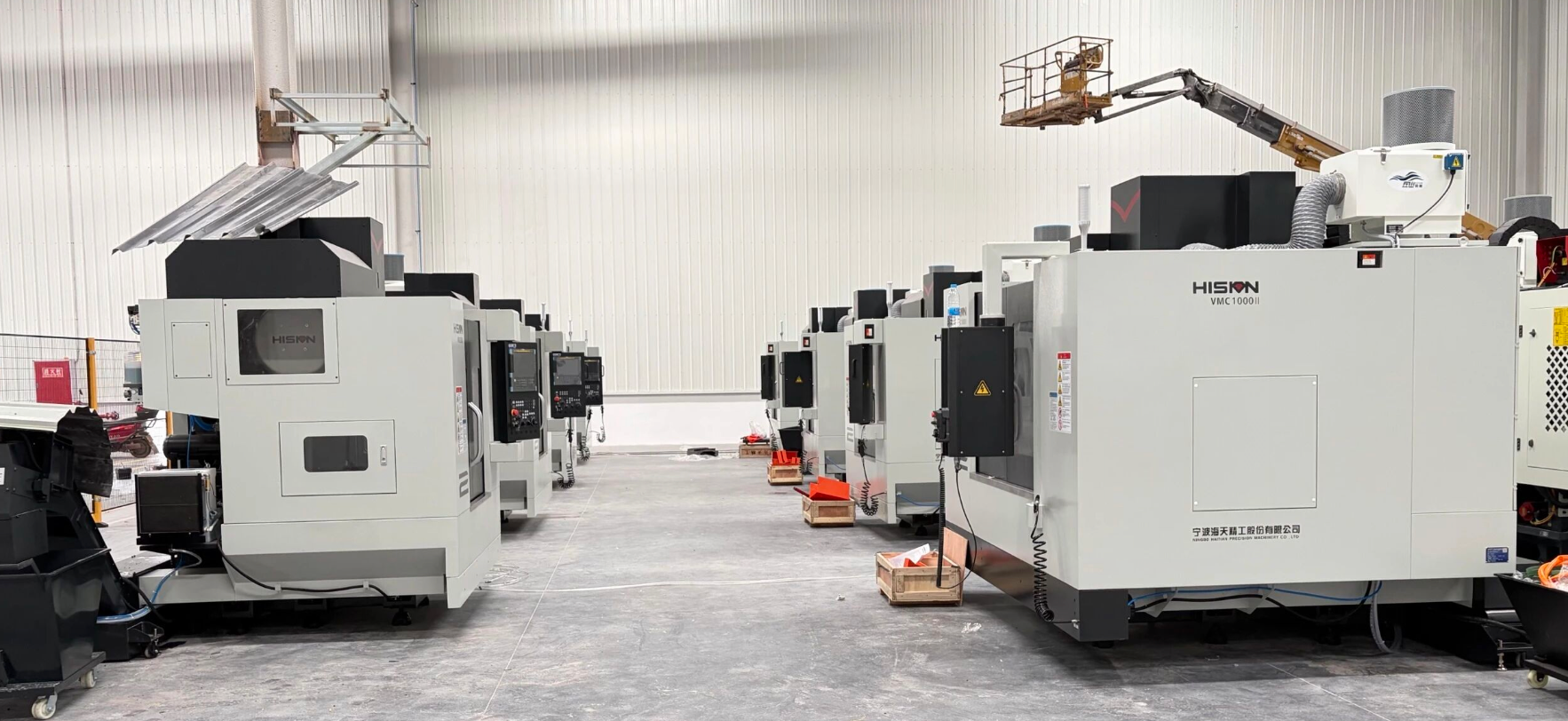
The 2025 annual report describes new five-axis machining models, die machining equipment and CNC vertical lathes, continued technical accumulation in the gantry range, a reliability push on horizontal machines, and platform consolidation on high-volume products to raise parts commonality and assembly efficiency. It also describes improving in-house functional components and beginning to sell them on the open market.
That last item is worth a question. A machine tool maker that starts selling its own components externally is testing whether it has a second business.
What a visit covers
The standard programme
| Time | What happens |
|---|---|
| 09:00–09:30 | Arrival, registration and welcome |
| 09:30–10:30 | Exhibition hall briefing: the company and its product range, including large-format machines |
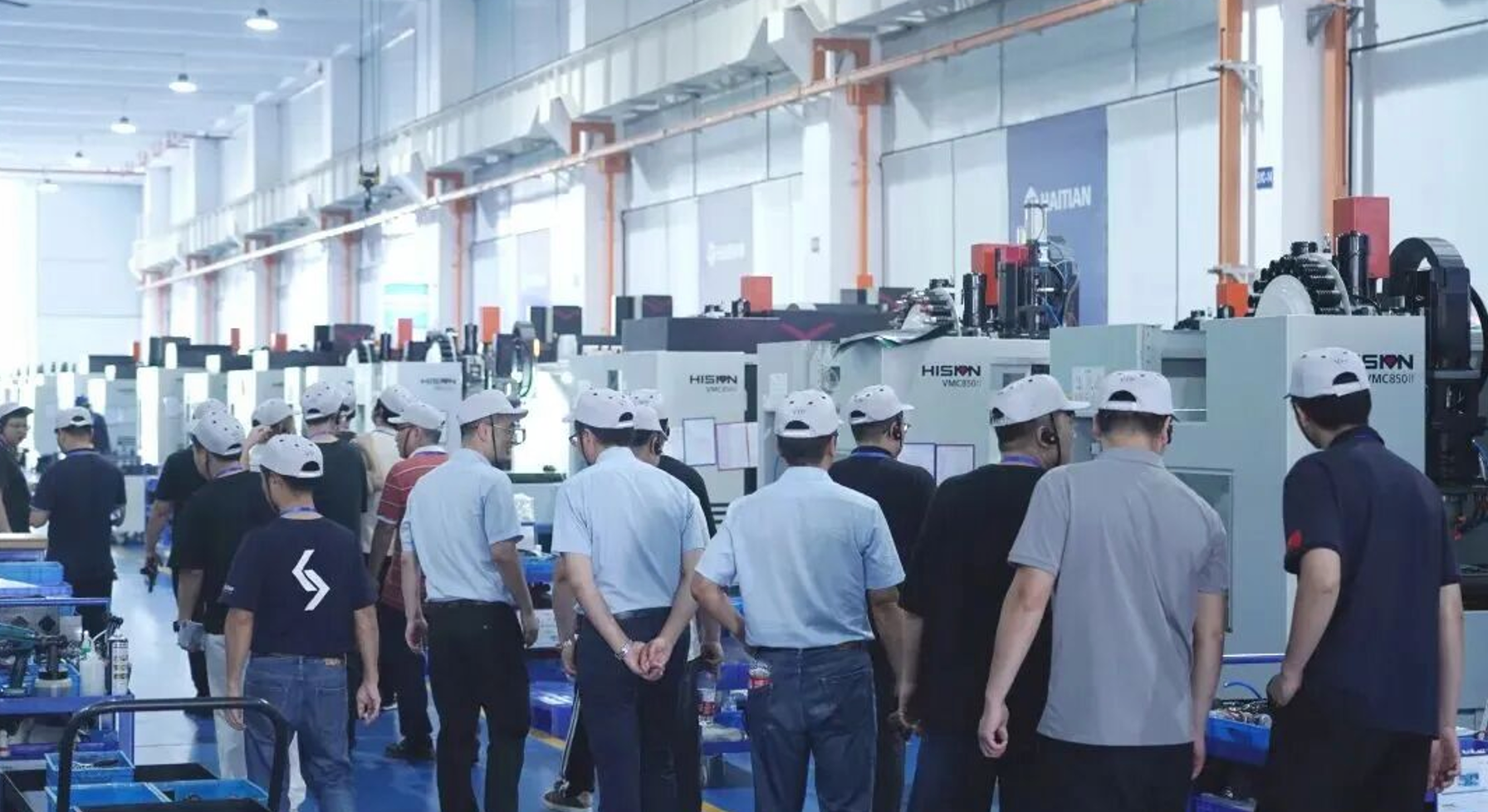
| 10:30–11:30 | Walk through machining and assembly areas |
| 14:00–15:30 | Technical exchange with engineering or management |
| 15:30–16:30 | Closing discussion |
Timings are confirmed with the host when the booking is approved, and the final scope is confirmed in writing during planning, before you commit.
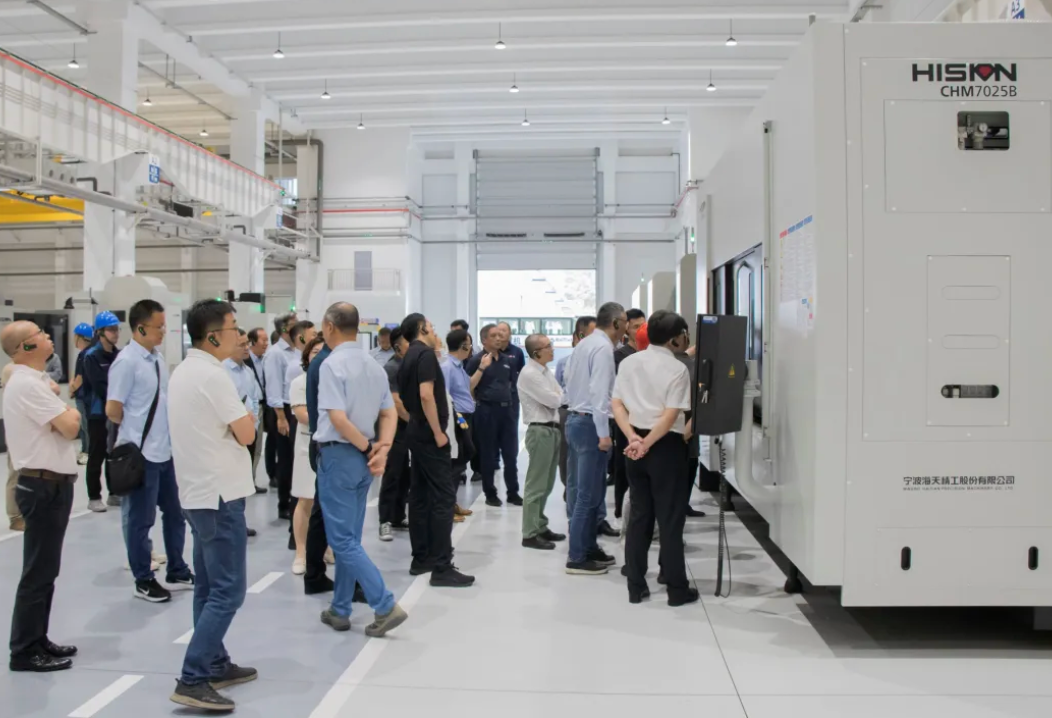
The exhibition hall is where the product range is laid out at scale, including large-format machines, and the technical session is where the delegation's own questions are handled — normally the most valuable hour for a group with a specific manufacturing interest.
Who it suits
The visit suits manufacturing, procurement, operations, investment and supply chain delegations, and it is a fit for groups working on aerospace supply, die and mould, automotive structures, or heavy equipment. Delegations from universities and technical institutes also use it, and the company is used to receiving them.
Practical notes
- The visit is a business programme. Delegations are received as professional visitors and follow the host's rules.
- Booking requires approval in advance. Foreign participants normally need to be registered with the host ahead of time, and that process is longer than for domestic visitors; allow additional working days for the paperwork.
- Provide the participant list, nationalities and industry focus early; the technical depth of the briefing is adjusted to suit.
- Photography rules are confirmed in advance; some areas carry confidentiality requirements. Tell us during planning if you need images for internal reporting.
- Smart casual is appropriate. The programme involves walking through exhibition and machining areas, so flat shoes are sensible.
- English interpretation can be arranged, including specialist preparation on machine tool and manufacturing terminology. Bilingual materials and an English summary can be prepared on request.
Questions before a Haitian Precision visit in Ningbo
Is the visit open to international business delegations? Yes, subject to advance arrangements and confirmation by the host. Registration of foreign participants takes extra time, so we recommend planning at least 30 days ahead.
What is the group size? Visits are normally arranged for groups of 10 or more. We confirm the practical maximum with the host for your date.
How long does the visit take? The standard programme runs about two hours, typically covering the exhibition hall, machining and assembly areas, and a briefing and Q&A.
Where is the visit held? At the company's base in Ningbo. We confirm the meeting point in writing after the host approves the booking.
Do participants need a technical background? No. The visit can be approached through manufacturing, procurement, operations, investment or supply chain, and terminology is handled through interpretation.
Is English interpretation provided? Yes, including preparation on machine tool terminology, and bilingual handouts can be arranged.
How large is the company? Revenue was about 3.37 billion yuan in 2025, with about 2,435 employees at the end of the year and four manufacturing bases totalling about 570,000 square metres.
How much of the business is gantry machining centres? About 56 per cent of 2025 revenue, at about 1.90 billion yuan. Publicly cited industry figures put its domestic gantry share above 25 per cent and heavy-duty gantry share around 80 per cent.
What is the 2026 growth made of? Revenue was about 2.005 billion yuan in the first half, up 20.55 per cent, with net profit up 19.38 per cent and the second quarter up 28.90 per cent. The company attributes it to domestic demand for high-end equipment, faster import substitution, and internal work on product performance, product range and capacity utilisation.
Did 2026 really turn? Revenue rose 20.55 per cent in the first half and headline profit 19.38 per cent. Profit excluding non-recurring items rose 3.31 per cent, so it is worth asking how much of the improvement is operating.
What documentation is needed in advance? A participant list with passport details for foreign visitors, submitted to the host for registration, plus the delegation's industry focus. We tell you the lead time for your specific group.
Does the programme always run as described? It is built around the elements above. Facilities and areas opened on the day are subject to what the site opens, and we confirm the final scope in writing during planning, before you commit.
Arrange your Haitian Precision visit
Tell us your dates, group size and what your team wants to understand: large-format machining and aerospace work, the 2026 demand recovery, five-axis development and import substitution, the overseas build-out in Malaysia and Europe, or how a Chinese machine tool maker competes on price and mix. China Innovation Visits will coordinate the company reception, discussion priorities, transport and English interpretation.
Contact China Innovation Visits to arrange your Haitian Precision visit in Ningbo.