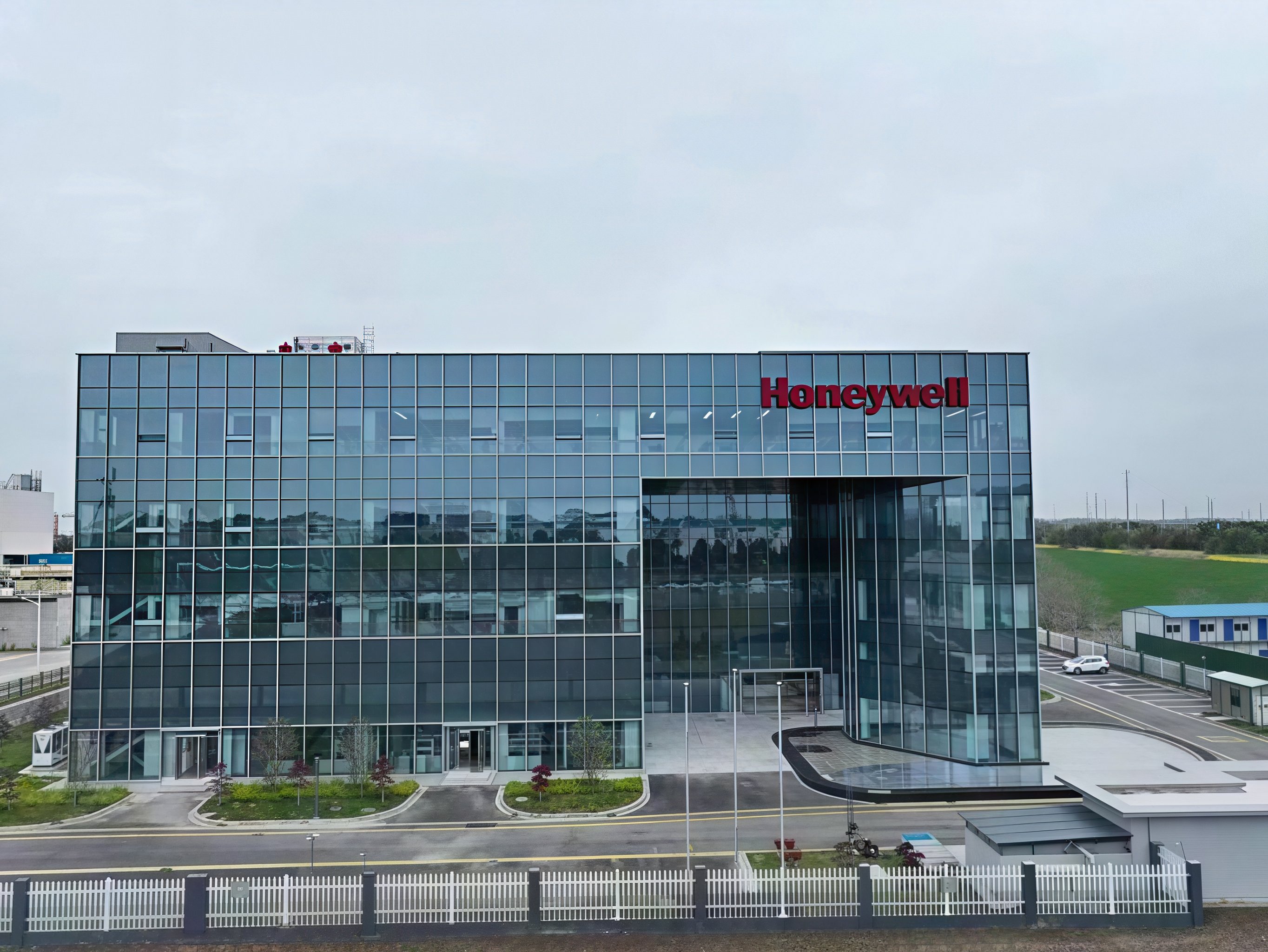
A Honeywell visit in China can be arranged in two places, and they are two different programmes rather than two halves of one. Shanghai is where the company shows what its automation business does now, in a China Innovation Center that opened in Zhangjiang on 1 September 2026. Suzhou is where a factory that has been producing since 1999 shows how the operating discipline behind that equipment is kept in place. Each is booked on its own; a delegation with the time for both runs them on consecutive days about thirty minutes apart by high-speed rail, without changing hotel.
One programme is a walk through twelve industry settings. The other is a working factory: the production line, the exception and escalation loop that runs it, and a three-hour taught course on lean digitalisation in the afternoon. This page sets out what you will see on each, what your team will take away, and the programme the host works to.
China Innovation Visits arranges the programme in both cities, including the company reception, scheduling, intercity transport and English interpretation.
Key takeaways
- Two places, two programmes: the China Innovation Center in Zhangjiang, Pudong, Shanghai, and a manufacturing plant in Suzhou Industrial Park. Either can be booked on its own.
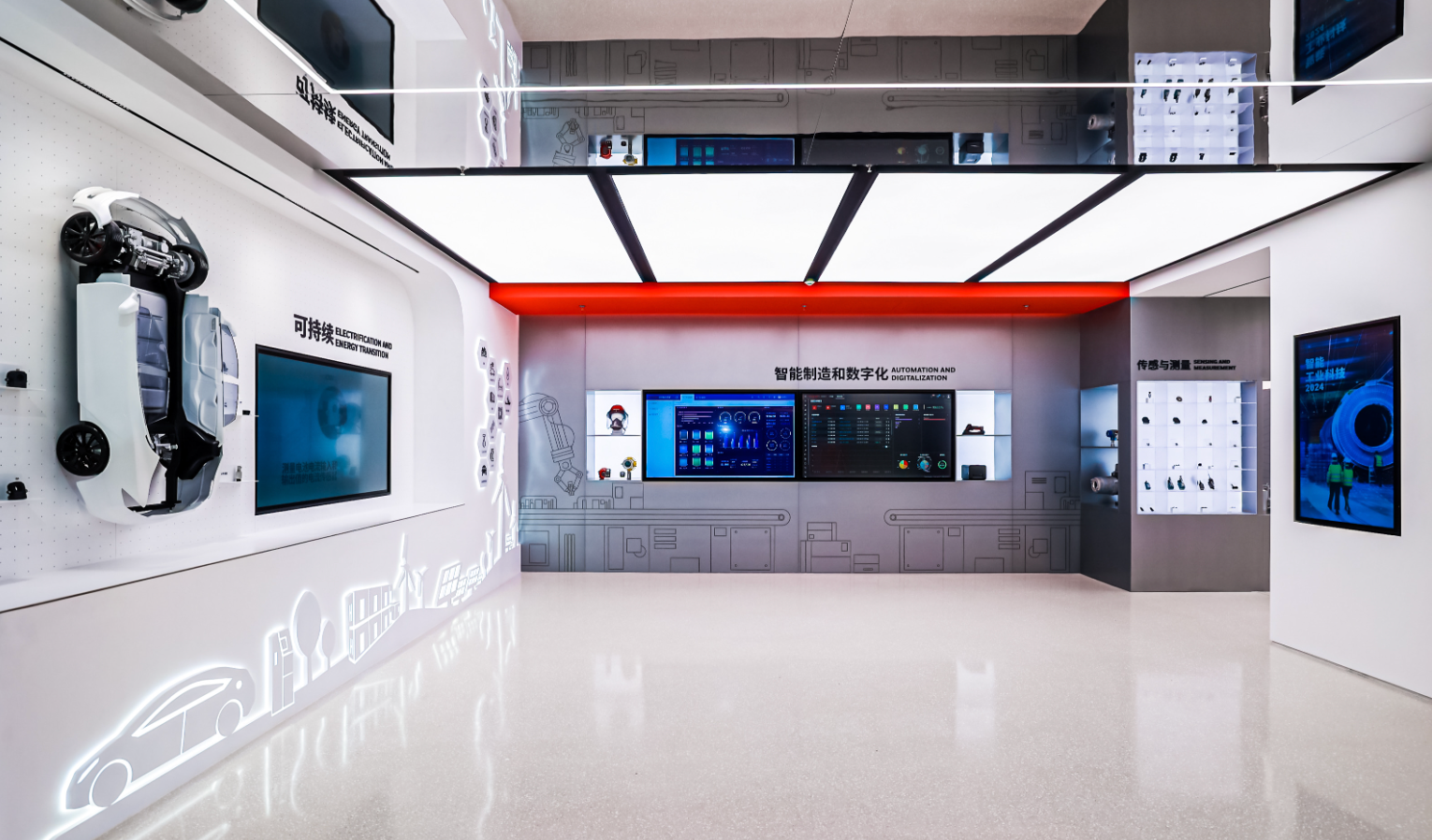
- The Shanghai programme is a technology and scenario experience: three themes and twelve industry scenarios, from semiconductors and energy storage to rail transit, smart healthcare and data centres, presented as customer settings rather than product categories.
- The Suzhou programme is a working plant that has produced since 1999: material called off against production takt on electronic kanban, a warehouse managed end to end on a warehouse management system, visible-management boards on every line, and an exception loop that escalates automatically and writes the resolution back.
- On the Suzhou programme the morning is spent on the line watching that loop behave; the afternoon is a taught three-part course covering the introduction to lean digitalisation, Honeywell's lean-digital architecture, and its applications.
- The operating result most delegations come to examine is capacity up fourfold without adding workers or floor space, with average production-line problem response cut from five minutes to under three.
- The plant has been a national Green Factory demonstration enterprise since 2018, and energy and environmental management is part of what the host presents.
- Same-route comparisons that pair well with either programme are an Inovance Technology factory tour for industrial automation built by a Chinese company, a FANUC factory tour in Shanghai for factory automation seen from the supplier's side, and a Lianbao Technology visit in Hefei for large-scale electronics assembly.
Key visit details
Where the two programmes are held
The Shanghai programme is at the China Innovation Center in Zhangjiang, Pudong. The Suzhou programme is at the manufacturing plant in Suzhou Industrial Park, Jiangsu Province. The two cities are roughly thirty minutes apart by high-speed rail, so a delegation that wants both can run them back to back without a second hotel.
Which one to choose
The two are not interchangeable, and most delegations take one. Shanghai suits a team that wants to see the range of what the company now sells — twelve industries, one site, half a day — and it is the easier programme to fit around an international arrival. Suzhou suits a team with an operating question: a working line, an escalation system to watch in operation, and a taught course in the afternoon. If your group owns a plant, or is deciding what has to be standardised before anything can be automated, take Suzhou. If the group is still working out what to automate at all, Shanghai answers that faster. When a delegation has the time for both, they run on consecutive days.
How each programme is shaped
The Shanghai programme is a half-day block that can be extended with additional company programmes in the city. The Suzhou programme is a full schedule running from 08:30 to 16:00 and is best kept intact. Visitors are received by company staff, the programme is delivered in English with interpretation on site, and the afternoon of the Suzhou programme is taught rather than presented.
Who gets the most out of it
Both are pitched at working level rather than at a general audience. The Shanghai programme suits operations, engineering and general management. The Suzhou programme pays off most when the delegation includes whoever owns continuous improvement or plant operations, and whoever owns manufacturing systems or IT/OT, because the architecture section is where the sharpest questions come from. Groups start at ten participants; larger delegations are planned around the number you bring.
Booking and access
Around thirty days of lead time is the practical working figure, because both sites are operating facilities and the speaker schedule is set internally. Visitor names are submitted in advance so that passes can be issued. Shorter notice sometimes works and depends on availability — ask, and we will tell you honestly what is possible for your dates.
What you will see in Shanghai
The centre is arranged by industry rather than by product line, which changes what a walk-through feels like. Instead of moving through one business group after another, you move through the settings where the technology is used.
Twelve industry scenarios, three themes
Under energy, the scenarios are the future refinery and low-carbon energy. Under intelligent manufacturing, they are semiconductors, energy storage and new energy vehicles, shipbuilding and marine engineering, and life sciences. Under buildings and infrastructure, they are rail transit, commercial buildings, smart hotels, smart healthcare, high-end manufacturing, and data centres. Each is presented as a customer problem with the automation stack around it, so a delegation from any one of those twelve industries can spend its time in its own sector rather than in a general overview.
The exhibition and what is in it
The experience centre on site shows the company's technology through models, digital projection and interactive exhibits rather than through literature — including a reconstruction of the temperature-control device behind the 1885 patent that starts the company's history. It is the most efficient way to establish the range of what the company makes. The centre also integrates a user-experience design studio and an innovation workshop alongside the exhibition space, so the visit shows how the company validates a technology in an industry setting before it reaches a customer.
What to look at while you are there
Three things repay attention. First, how the twelve scenarios are laid out — a structure like that is a statement about where the company expects its automation business to grow. Second, how the Forge connected platform is used across those scenarios, because an industrial software layer that spans semiconductor plants and commercial buildings is either an integration advantage or an integration problem, and it is not obvious from outside which. Third, where the platform stops and the customer's own systems begin, which is the question every operations team eventually has to answer for itself.
What you will see in Suzhou
The plant is a working site, not a demonstration line. It produces scanners, mobile computers, label printers and scan engines for manufacturing, logistics, warehousing and healthcare customers on a multi-variety, low-volume, build-to-order model — which is precisely why its operating discipline is worth studying.
The production line
The line visit is where the operating system becomes visible. Materials are called off against production takt on electronic kanban rather than by manual requisition, so what you watch is the pull signal doing the work. The warehouse is managed end to end on a warehouse management system installed specifically to take the classic forms of waste out of material movement. Every line carries a visible-management board showing its state, so an anomaly is seen on the floor rather than reported in a meeting later. Quality control sits at the stations rather than at the end of the line.
The plant also builds its own automation, digitalisation and intelligence solutions for its own line instead of buying them as turnkey projects. For a delegation weighing build against buy, that is a question to put to the host directly while you are standing on the line.
The exception and escalation loop
The block after the line is the one most delegations remember, because it is built around watching the system behave rather than being told about it. What you watch is a full cycle: an exception is detected, the escalation is raised automatically, the right person is notified, the problem is handled, and the resolution is written back into a knowledge base with AI-assisted insight on top. The manufacturing operations platform behind it runs on a cloud microservices architecture, and a separate autonomous management system handles fast response to abnormal conditions so that routine escalations do not have to travel up a management hierarchy.
The figure to hold on to is the one the site publishes: average response to a production-line problem cut from five minutes to under three. That improvement came through visible management and escalation discipline before any of the newer digital layers arrived, which is the sequence the afternoon course explains.
The green factory programme
The plant has been recognised as a national Green Factory demonstration enterprise since 2018, and the host presents how energy and environmental management are run alongside production. For European delegations in particular this lands well, because supply-chain environmental reporting is now a procurement requirement rather than a preference, and it is useful to see what the operating data behind those claims actually looks like.
What your team will learn
The Suzhou afternoon is a taught session rather than a factory discussion, and it is the reason that programme is shaped the way it is. The plant runs a lean digitalisation research and training arm, and the course delivered on site has three parts.
The course itself
The first part is the introduction to lean digitalisation as a discipline: what changes when the improvement method and the information system stop being separate projects, and why plants that treat them as one-off purchases rather than a sequence tend to stall.
The second part is Honeywell's overall lean-digital architecture — how the operating system, the manufacturing operations platform and the data layer are structured so that a standard process and its digital representation stay aligned as both change.
The third part is application: what the architecture does on a line, in a warehouse and in a management review, with the failures and the workarounds included.
What each part of your team takes away
Operations leaves with the sequencing question answered: what has to be standardised before it can be digitised, and what happens to a plant that digitises first. Engineering and IT/OT leaves with the architecture question: where the platform boundary sits, what the data layer expects, and how a changeover or a quality escape is represented in the system. General management leaves with the scoping question: which parts of a modernisation budget buy capability and which buy software that nobody ends up following.
Questions worth bringing
Two ideas run through the programme, and both reward preparation. The first is that people, not software, are the constraint: the shift in how staff think about their work comes first, the management system is the pillar, and digitalisation is what becomes possible once those two are in place. The second is that data should travel down as well as up — the point of instrumentation is not only to inform management but to let the person at the machine make a clear decision quickly.
Delegations that arrive with a specific process in mind get considerably more out of the three hours than those that ask for a general introduction. Concrete starters that have worked well: how a changeover is standardised before it is digitised; what the escalation thresholds are and who set them; how the warehouse system removed each of the classic wastes; how many alerts the system raises per shift and what proportion are actionable; and how the architecture would be replicated in a plant running older equipment.
Sample visit programme
Each city has its own programme, and each is booked on its own.
Shanghai:
09:30–11:00 Corporate Exhibition Hall and Technology Experience
- Corporate Exhibition Hall Tour: Led by dedicated staff, visit the Honeywell Technology Experience Center (HTec) in Shanghai to learn about Honeywell's development trajectory, global business layout, and history in China.
- Cutting-Edge Technology Experience: Focus on visiting thematic exhibition areas such as aerospace, smart buildings, smart industry, and energy and sustainability; closely observe cutting-edge innovations; and experience interactive projects such as the simulated cockpit and intelligent building control, to gain in-depth insight into Honeywell's latest technologies in automation, the future of aviation, and energy transition.
11:00–11:30 Office Area and Innovation Space Tour
- Smart Building Experience: Visit Honeywell's smart building (the actual employee office area) to learn about the practical application of the Visual Central Control System (CCS) and the intelligent office environment (such as flexible workstations and intelligent environmental adjustment).
- Innovation Space Tour: Visit the "Honeywell Innovation Space" (the company's internal incubator) and the Innovation Wall to learn about Honeywell's corporate culture, innovation mechanisms, and employee innovation achievements.
11:30–12:00 Executive Exchange and Thematic Sharing
- Executive Roundtable: Engage in face-to-face exchange with executives from Honeywell Greater China or relevant business units (such as smart buildings, aerospace, and industrial safety) to discuss industry development trends, corporate innovation approaches, and cooperation opportunities.
- Thematic Sharing: A thematic sharing session led by relevant Honeywell executives, which may cover Honeywell's innovation approach, digital transformation practices, lean management experience, or green and low-carbon innovation.
Suzhou:
09:00–10:00 Company Introduction and Roundtable Exchange Conducted in the conference room, covering an overview of the Honeywell Suzhou Plant, corporate culture (a management philosophy integrating Chinese and Western elements), and an introduction to the Honeywell Operating System (HOS) and the lean digitalization system.
10:00–10:30 Cultural Exhibition Hall and Factory Campus Tour Visit the corporate culture exhibition hall to learn about the company's history, brand display, and employee culture.
10:30–12:00 On-Site Production Workshop Tour Led by the plant manager or a guide, visit the intelligent production workshops to gain on-site understanding of production line operations, the implementation of lean digitalization, and intelligent manufacturing solutions. This corresponds to the production line and anomaly escalation closed loop described in "What You Will See in the Suzhou Program" above. During this session, you may focus on observing electronic kanban material calling, the warehouse management system, visual management kanbans, workstation quality control, and the complete cycle of anomaly detection, escalation, handling, and write-back.
12:00–13:30 Lunch and Break
13:30–15:30 Thematic Sharing and Experience Exchange Honeywell executives or relevant persons in charge are invited to give thematic sharing sessions covering lean management, intelligent manufacturing, digital transformation, quality management, and corporate culture development, with in-depth analysis based on the company's actual cases.
15:30–16:30 Interactive Q&A The visiting delegation engages in face-to-face exchange with Honeywell executives to discuss and address questions arising from the visit and actual management pain points of enterprises.
Where a Honeywell visit can be arranged
The two programmes run at the China Innovation Center in Zhangjiang, Pudong, Shanghai, and at the manufacturing plant in Suzhou Industrial Park, Jiangsu Province. Both are collected with the other company programmes in their city — the Shanghai tech tour page lists the Shanghai options, and the Suzhou tech tour page lists the Suzhou ones. Tell us your dates and your delegation size and we will confirm what each site can host.
Either programme pairs well with a second stop, and the most useful contrasts are different in kind. The Inovance Technology factory tour, also in Suzhou, shows how a Chinese industrial company runs its own digital systems across an integrated component business, and is the closest comparison on operating systems. The FANUC factory tour in Shanghai covers factory automation from a supplier's side rather than a user's. A Lianbao Technology visit in Hefei adds large-scale electronics assembly and a very different balance between labour and automation. We plan the Yangtze River Delta as one route rather than as separate bookings.
Practical notes for the day
Build in travel time, but not much. If you take both programmes, the two cities are about thirty minutes apart by high-speed rail, so they run as consecutive days without a second hotel. The Suzhou plant is an industrial site in Suzhou Industrial Park rather than a city-centre office, so that programme starts at 08:30 with a transfer from your hotel. Delegations that also book an evening departure on the Suzhou programme are taking on more schedule risk than it looks; the Shanghai half-day leaves more of the day free. We plan around real travel time rather than map distance.
Bring the right people. The Shanghai programme speaks to operations, engineering and general management. The Suzhou programme pays off most when the delegation includes whoever owns continuous improvement or operations on the plant side and whoever owns manufacturing systems or IT/OT on the engineering side, because the architecture section is where the questions that matter come from.
Respect the site rules, and plan for interpreting. Photography on the production line is restricted, phones and recording equipment stay outside the areas where the rules apply, and closed-toe shoes are the sensible default on the factory day. Any protective clothing required is arranged for you. The vocabulary of standard work, takt, escalation logic and manufacturing software does not translate cleanly, so professional English interpretation is part of how we run the programme rather than an optional extra.
What previous delegations asked us to change
Three things come up repeatedly when we review these programmes with groups that have been through one.
Say which programme you want, and why. Delegations that know whether their question is an operating-discipline question or a scoping question pick the right city on the first pass, and get examples drawn from the matching end of the programme. Groups that take both usually say afterwards that the Suzhou programme was where the value sat.
Do not treat the Shanghai programme as an add-on. Half a day is enough to see the twelve scenarios properly, but only if it is planned as its own visit rather than as filler before a flight home.
Split the delegation for the course. Operations and engineering want different material from the same three hours. Where the group is large enough, we split them for part of the afternoon and bring them back together for the closing discussion, and we tell the host in advance so that the right speakers are in the room.
Questions before a Honeywell visit
Where is the visit held? There are two places, in two cities: the China Innovation Center in Zhangjiang, Pudong, Shanghai, and a manufacturing plant in Suzhou Industrial Park, Jiangsu Province, which has been producing since 1999. Either can be booked on its own.
How do we choose between Shanghai and Suzhou? Shanghai if the question is what the company now sells and how the portfolio fits together; Suzhou if the question is how a plant is actually run. Whichever you take, the programme is built around the parts of your operation you name in advance.
How far apart are the two sites? About thirty minutes by high-speed rail. Delegations that take both run them on consecutive days without needing a second hotel.
What will we actually see in Shanghai? Twelve industry scenarios arranged across three themes — energy, intelligent manufacturing, and buildings and infrastructure — the exhibition of the company's technology through models, digital projection and interactive exhibits, and the design studio and innovation workshop that sit alongside it.
What will we actually see on the Suzhou line? Material call-off against takt using electronic kanban, the warehouse management system behind material movement, quality control at the stations, visible-management boards showing the state of each line, and the exception and escalation loop in operation.
Is the Suzhou plant a demonstration line or a working plant? A working plant. It produces scanners, mobile computers, label printers and scan engines for manufacturing, logistics, warehousing and healthcare customers, on a multi-variety, low-volume, build-to-order model.
Is the programme about lean or about digitalisation? Both, and the join between them is the subject. The operating discipline came first and the digital layer was built on top of it, which is the sequence the Suzhou programme is designed to explain.
What is the operating result the plant is known for? Capacity grew fourfold without adding workers or floor space, and the average response time to a production-line problem fell from five minutes to under three.
Is the green factory programme part of the visit? Yes. The plant has been recognised as a national Green Factory demonstration enterprise since 2018, and energy and environmental management is included in the material presented.
Do we have to do both? No. Each programme is arranged on its own, and most delegations take one. Suzhou is the one to take if your team already knows what it wants to automate.
Can the course be tailored to our team? Yes. Sessions are shaped around the delegation's own process questions, and the theme is confirmed before the visit.
Which other sites can be arranged on the same route? Several other company programmes in each city are collected on the Shanghai tech tour and Suzhou tech tour pages, and most delegations add one more stop in the delta.
How far in advance should we book? Around 30 days is the practical lead time, because both sites are operating facilities and the speaker schedule is set internally. Shorter notice sometimes works and depends on availability.
What is the minimum group size? The programme starts at 10 participants. Larger delegations are workable and we plan the rooms and the session format around the number you bring.
Can we take photographs? Photography is restricted on the Suzhou production line, and phones and recording equipment stay outside the areas where the rules apply. Other areas are handled differently, and we confirm the specifics before you travel.
Is English interpretation provided? Yes. English interpretation on site is part of how we run the programme, and it matters most in the factory and course blocks, where the terminology carries the meaning.
Are the timings fixed? The schedules above are the sequences the host works to. Each programme is confirmed with the host during planning.
The visit arrangements, timings and programme are subject to final confirmation with the host.
Arranging your Honeywell visit
We arrange the programme for you end to end: the introduction to the host, the scheduling on the Chinese side, the course theme, intercity transport, visitor registration and English interpretation on the day. Tell us your dates, your delegation size and what your team is trying to find out, and we will shape the programme around it. Start at chinatechvisits.com/company-visits.