A configuration ordered through an e-commerce channel arrives as a single-unit request. By the same evening it is reflected in the factory's production priorities, and eight days later it ships. Few plants absorb that shape of demand at scale.
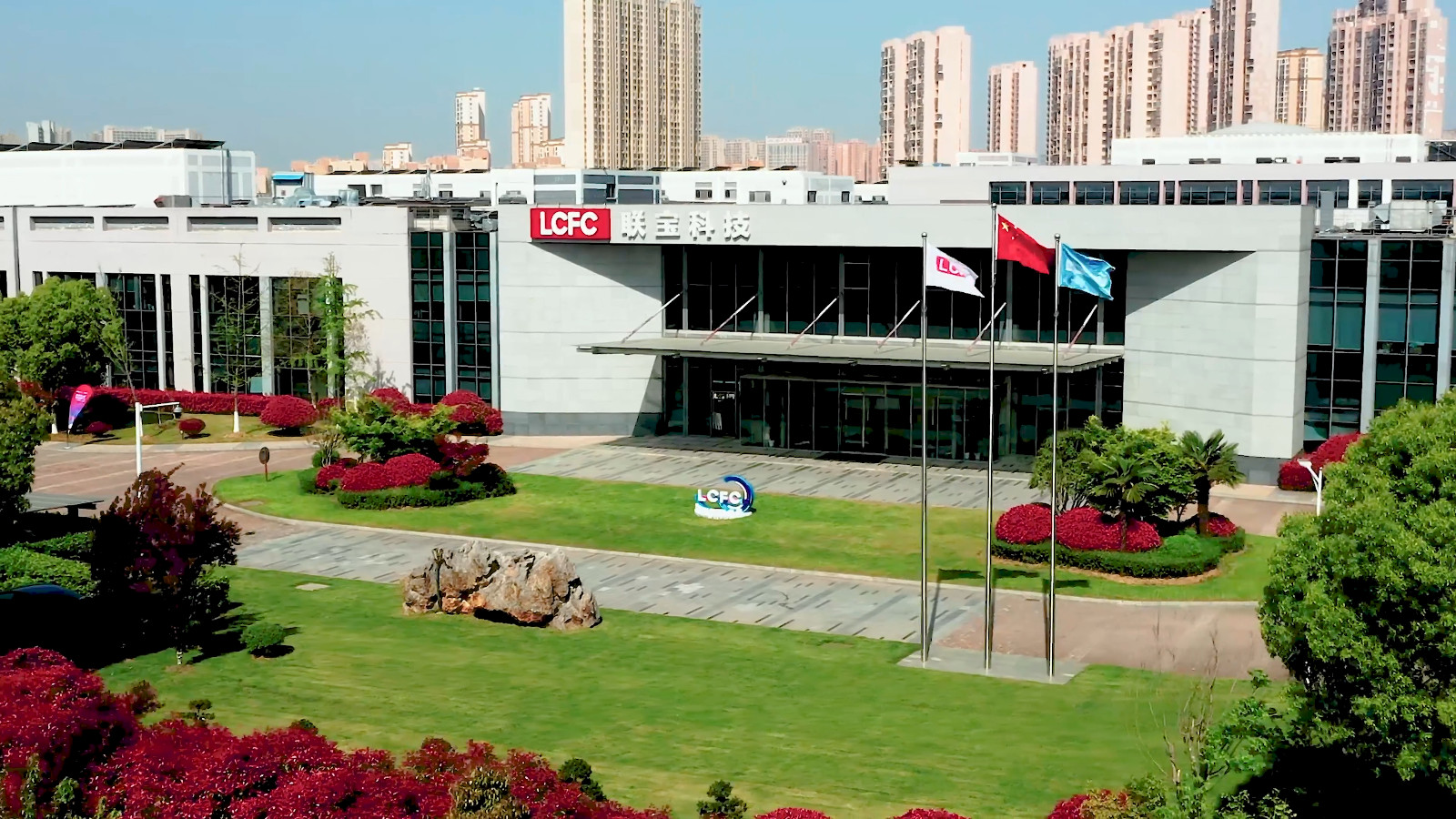
Lianbao Technology (LCFC) is Lenovo's largest personal-computer research and manufacturing base anywhere in the world, sited in the Hefei Economic and Technological Development Area. One notebook in every eight sold worldwide is built here.
Extreme variety, high volume and 126 export markets make the site a standard stop on a Hefei technology tour. This article sets out why the half day is worth the time, what you will see, and how to arrange it.
Key takeaways
- Lianbao Technology is Lenovo's largest PC research and manufacturing base, founded in December 2011, with registered capital of USD 265 million and more than 16,000 employees.
- Revenue reached 104.9 billion yuan in 2024, up 15 per cent, with export value up 20 per cent to USD 7 billion, and production value above 100 billion yuan for five consecutive years.
- Cumulative shipments passed 300 million units in February 2025, across an annual capacity of 40 million PC sets and 32 mainboard lines plus 36 whole-unit assembly lines.
- The site entered the World Economic Forum Lighthouse network in January 2023 on more than 30 fourth-industrial-revolution use cases: a 45 per cent labour-productivity gain, a 55 per cent reduction in supplier quality problems, a 15 per cent lower unit manufacturing cost and a 49 per cent cut in carbon emissions.
- The half day visits the exhibition hall, the digital control centre that runs AI-based scheduling, and the product assurance laboratory, then closes with a briefing on Lighthouse assessment and the four-hour ecosystem.
Why visit Lianbao Technology in Hefei?
Most manufacturers talking about flexible production describe a pilot cell; Lianbao describes a whole plant. Tens of thousands of distinct configurations run through the same facility, switching between small-batch customisation and volume output without a hard reset. For a delegation asking what large-scale personalisation costs in process discipline, this is the clearest demonstration in Chinese electronics.
Second, the order profile. Around 8,500 orders arrive each day and more than 80 per cent are for fewer than five machines. Traditional planning cannot absorb that shape of demand, so the scheduling system here was written in house and returns an optimal sequence in two to three minutes. Visitors watch it run in the digital control centre.
Third, comparison. Hefei's anchor companies span computing, displays, electric vehicles, batteries and solar equipment, so a delegation can study several manufacturing models in one trip.
Finally, the site is a working reference for supply-chain localisation. More than 500 global suppliers work with Lianbao, more than 70 have operations in Anhui, and local content for mechanical parts exceeds 60 per cent, with around 2,000 component types callable within four hours. The company calls this a four-hour industrial circle. For procurement leaders, that is the most transferable thing on the agenda.
Company background
From a greenfield site to Hefei's first hundred-billion enterprise
Lianbao Technology was established in December 2011 as a Lenovo Group subsidiary with registered capital of USD 265 million. Revenue broke 100 billion yuan in 2020, a first for a Hefei enterprise, and has stayed above it for five consecutive years. It has been Anhui's largest import and export enterprise for nine years running, and reported 104.9 billion yuan in 2024, up 15 per cent, on export value of USD 7 billion, up 20 per cent.
Scale, products and research
The plant occupies 457 mu and holds the largest single manufacturing building in the global PC industry. It runs 32 mainboard lines and 36 whole-unit assembly lines at an annual output of 40 million PC sets, and cumulative shipments passed 300 million units in February 2025. Output covers Lenovo and ThinkPad machines, AI PC models, servers and intelligent automotive electronics. By the end of 2024 it had filed more than 3,500 patent applications and been granted 2,188.
The Lighthouse listing
The World Economic Forum and McKinsey named the site a Lighthouse Factory in January 2023 on the strength of more than 30 flexible-automation and digital use cases. Four outcomes frame the programme: labour productivity up 45 per cent, supplier quality problems down 55 per cent, unit manufacturing cost down 15 per cent and carbon emissions down 49 per cent.
Inside the plant: what to look for
The control centre: watching a schedule run
The digital control centre is where the plant's defining constraint becomes visible: variety, not capacity. A day's order book mixes volume runs with single-unit requests, and every model change carries a setup cost. The scheduling system developed in house returns a sequence in two to three minutes, and visitors watch it as a live display, with material movement delegated to automated guided vehicles. The question to ask on site is what happens when the plan breaks – who may re-sequence, and how fast the plant recovers.
On the lines: what the mix looks like
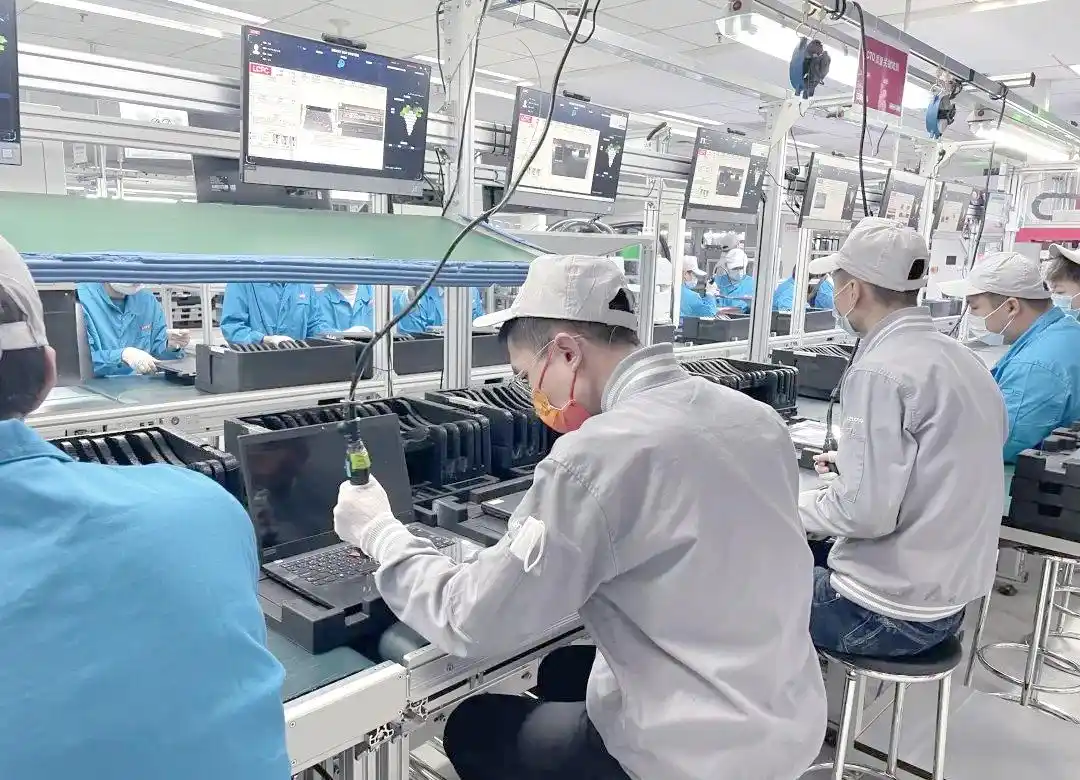
The Nezha line handles intelligent interconnected PC mainboard work; the Mercury line handles lean assembly of whole units. Alongside them, dark-factory pilot stations run functional testing of finished PCs without operators. The point is not how fast any one station runs but how one facility absorbs high-mix, low-volume work and steady volume output on the same shift pattern. Watch where a changeover happens, how material is presented to the station, and how far the mixed flow depends on the schedule rather than on people.
The assurance laboratory: where test data re-enters design
The product assurance laboratory is CNAS-accredited and holds more than a hundred environmental simulation rigs. Machines are dropped, frozen, baked, dust-loaded and static-tested well beyond ordinary industry thresholds, and the data feeds back into design rather than sitting in a compliance file. For delegations dealing with quality failures after a capacity increase, this is the stop that generates the most questions: how does a test result become a change to a product rather than a pass mark on a report?
What a visit covers
| Time | What happens |
|---|---|
| 13:00–13:30 | Gather at the hotel and transfer to the Lianbao Technology site at Yungu Road in the Hefei Economic and Technological Development Area. |
| 13:30–14:30 | Walk through the Lenovo exhibition hall: the company's development, its shipment network across 126 countries, the Lenovo and ThinkPad ranges, AI PC models, the AD1 automotive domain controller and intelligent manufacturing solutions. |
| 14:30–15:30 | Continue through the areas the host opens, including the Nezha mainboard line, the Mercury whole-unit assembly line, the dark-factory pilot stations, the automated high-bay warehouse and the SMT stations. |
| 15:30–16:30 | Briefing on Lighthouse Factory assessment criteria and Lianbao's selection logic, the peak manufacturing model and the four-hour ecosystem, the reverse-customisation case, and manufacturing trends in the AI PC era. |
| 16:30–17:00 | Question and answer session, group photograph, and departure. |
The table shows the standard half-day shape of the programme, running from 13:00 to 17:00. Content, sequence and duration can be tailored to the delegation's priorities, and the final scope is confirmed with the site during planning, before you commit.
Themes available for the briefing
The session is delivered by a senior Lianbao specialist and can be steered towards the delegation's sector. Recurring themes include the assessment standards behind Lighthouse Factory recognition; the peak manufacturing model and how the four-hour ecosystem is maintained; the reverse-customisation case, in which an e-commerce order shape reaches the factory's scheduling the same evening and ships in eight days; and AI PCs as they move into the mainstream product mix.
What different teams take away
Manufacturing and operations leaders get a worked example of high-mix scheduling. The useful question is not whether the algorithm is clever but what had to be standardised first – material presentation, station design, changeover discipline and data capture at every step.
Supply-chain and procurement teams get the four-hour circle. Local content above 60 per cent for mechanical parts, more than 70 suppliers co-located in the province, and direct system-to-system connection between supplier and factory are concrete, checkable arrangements. How suppliers were persuaded to relocate is often more valuable than the technology itself.
Quality and engineering functions get the assurance laboratory and its feedback loop. Testing designed to break a product, with the data routed back to design, is a different posture from testing designed to pass a gate. Teams dealing with reliability problems after a scale-up find this directly applicable.
Digital and IT teams get the control centre, where the scheduling engine, the live order display and automated material delivery are presented as one system rather than three separate projects. That framing makes the integration architecture the natural line of questioning.
Strategy and general-management groups get the commercial frame. A site that became Hefei's first hundred-billion-yuan enterprise, stayed above that mark for five consecutive years and exports USD 7 billion of output is a study in pursuing scale and variety at once.
How to arrange a Lianbao Technology visit
Programmes are arranged on request and confirmed by the site against its own reception calendar. Tell us the preferred date, the number of participants and the functions represented, and we will match the module – exhibition hall, control centre, laboratory, briefing themes – to what the group needs to learn. Because the company receives frequent delegations, please allow at least 30 days of notice. The programme is best suited to groups of 10–20 participants. We charge per group, so larger groups usually offer better value per person. Individuals and smaller groups are welcome to enquire at a higher per-person rate.
We handle the arrangements on the ground: the transfer from the hotel, site coordination, the guided walkthrough, the briefing and English interpretation. We also prepare a short pre-visit brief so participants arrive with the same baseline understanding.
Combine with other Hefei visits
Lianbao anchors the computing end of a Hefei technology tour. A natural pairing is a NIO visit in Hefei, moving the delegation from PC manufacturing into premium electric vehicles and highly automated body assembly. For energy rather than vehicles, a Gotion High-Tech visit in Hefei shifts the programme towards battery technology and solid-state development. Display-led delegations can add a BOE Hefei visit for the highest-generation panel lines in the world, and groups wanting a group-level management perspective add a Lenovo headquarters visit in Beijing.
Practical notes
- The programme runs from 13:00 to 17:00: roughly one hour in the exhibition hall, one hour across the areas the host opens, and one hour of thematic briefing.
- Please give at least 30 days of notice before the preferred date. The programme is best suited to groups of 10–20 participants. We charge per group, so larger groups usually offer better value per person. Individuals and smaller groups are welcome to enquire at a higher per-person rate.
- Comfortable closed shoes and long trousers are advisable for the walkthrough. Protective clothing and overshoes are provided where required.
- Photography is permitted in the exhibition hall; the areas the host opens involve commercial confidentiality, so cameras and phones are not used there.
- Briefing themes and speakers are coordinated with the company in advance, so raise any specific topic during planning.
- The site is inside the Hefei Comprehensive Bonded Zone, so traffic from the city centre should be built into the transfer time.
Questions before a Lianbao Technology visit
What does a Lianbao Technology visit include? The exhibition hall, a walkthrough of the areas the host opens, the digital control centre, the product assurance laboratory, and a thematic briefing with a question and answer session.
Where is the site located? At 3188-1 Yungu Road in the Hefei Economic and Technological Development Area, inside the Hefei Comprehensive Bonded Zone. The transfer from a city-centre hotel takes about thirty minutes.
How large is the company? It employs more than 16,000 people and runs 32 mainboard lines and 36 whole-unit assembly lines, with an annual capacity of 40 million PC sets.
What are the headline results? Revenue reached 104.9 billion yuan in 2024, up 15 per cent, and export value USD 7 billion, up 20 per cent. Cumulative shipments passed 300 million units in February 2025.
What makes the plant a Lighthouse Factory? The World Economic Forum named it one in January 2023, citing more than 30 flexible-automation and digital use cases. Reported outcomes: labour productivity up 45 per cent, supplier quality problems down 55 per cent, unit manufacturing cost down 15 per cent and carbon emissions down 49 per cent.
What is the most distinctive thing to see? The scheduling system in the digital control centre. It sequences around 8,500 daily orders in two to three minutes.
Who normally joins this programme? Manufacturing and operations executives, supply-chain and procurement leaders, quality and engineering managers, digital teams, strategy groups and business-school cohorts.
Do participants need a technical background? No. The briefing can be pitched at a management level, covering operating models, supply-chain design and commercial outcomes rather than engineering detail.
How far in advance should we book? At least 30 days, as dates are allocated against the company's own reception calendar.
Can the visit be combined with other companies? Yes. It combines well with electric-vehicle, battery, display and renewable-energy visits in Hefei, and can be extended into a two or three day programme.
Does the programme always run as described? It is built around the elements above. Facilities and areas opened on the day are subject to what the site opens, and we confirm the final scope in writing during planning, before you commit.
Arrange your Lianbao Technology visit
Send us your preferred dates, the number of participants and the areas the delegation most wants to understand, and we will arrange the whole programme: the transfer, site coordination, the guided walkthrough, the briefing, interpretation and supporting materials. Contact China Innovation Visits to start planning a Lianbao Technology visit in Hefei.