JD Logistics is a listed company in its own right
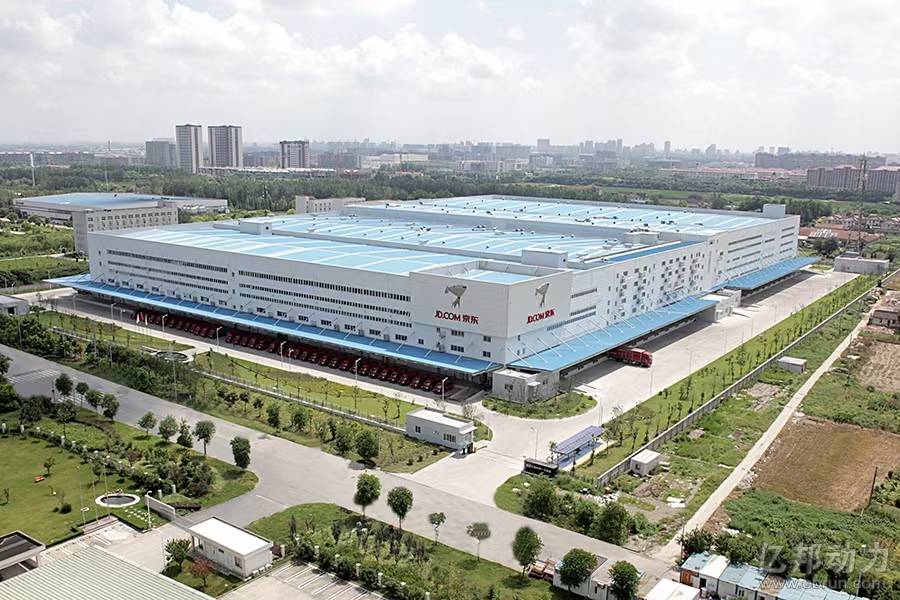
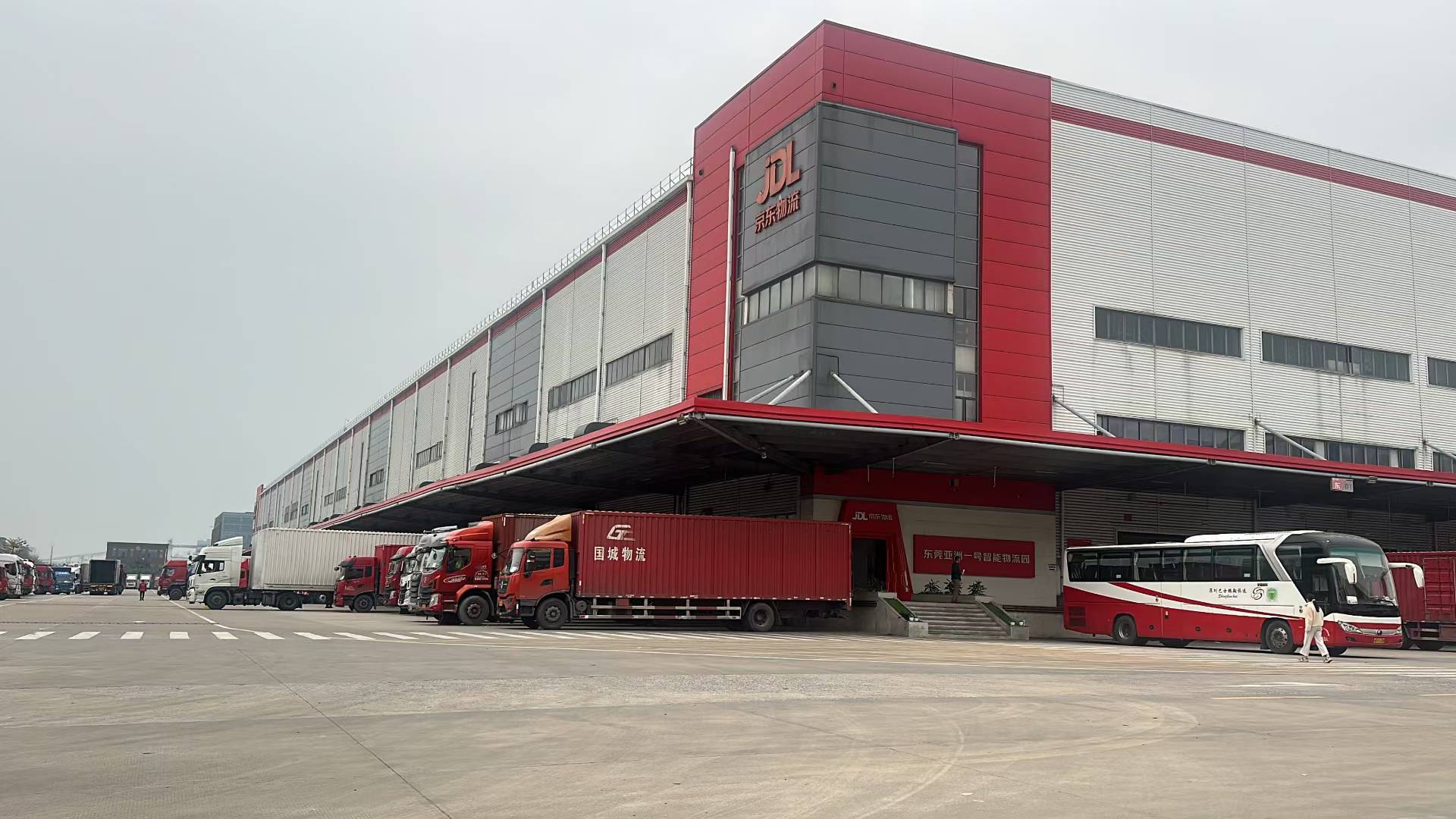
The distinction matters before anything else. JD Logistics, Inc. (HKEX: 2618) is a separate listed company from JD.com, Inc. (NASDAQ: JD; HKEX: 9618). JD Logistics owns and runs the warehousing, sorting and delivery network; JD.com runs the retail platform that sits on top of it. The site described here — Dongguan Asia No.1 — is a JD Logistics facility. It is not a JD.com headquarters programme, and it is not a JD Technology software demonstration. Delegations that arrive expecting a corporate showroom should know in advance that they are coming to an operating warehouse, on a shift, moving real parcels.
Why Dongguan
Dongguan has been one of JD Logistics' strategic cores in South China for over a decade, and the relationship is older than the warehouse that made the city famous. In June 2014 the company built its first sorting centre equipped with fully automated robotic systems in Machong. In September 2019 it opened South China's first 5G logistics park there. Asia No.1 followed on 18 December 2019, in the Xinsha Industrial Park in Machong, on the city's north-western edge.
The choice of location was a logistics decision, not a prestige one. Machong sits where the expressway network, the river port and the road link into the neighbouring Guangzhou Development District meet — which is why the same town attracted the e-commerce warehousing of several other platforms before it. What a delegation gets from standing there is not a scenic campus. It is a read on how a distribution footprint is actually placed to serve a region of more than 100 million people with next-day or same-day delivery.
Inside Dongguan Asia No.1
Asia No.1 is the flagship format of the JD Logistics network. Dongguan Asia No.1 is the largest integrated smart logistics centre the company has put into service, described at launch as the largest of its kind in Asia, and its core job is medium and small parcels for South China. The numbers are the reason people make the trip. The building covers close to 500,000 square metres — roughly the footprint of two National Stadiums. Daily order-processing capacity is 1.6 million parcels. The automated high-bay warehouse stores more than 20 million medium-sized items at once, with three to five times the storage density of a conventional warehouse.
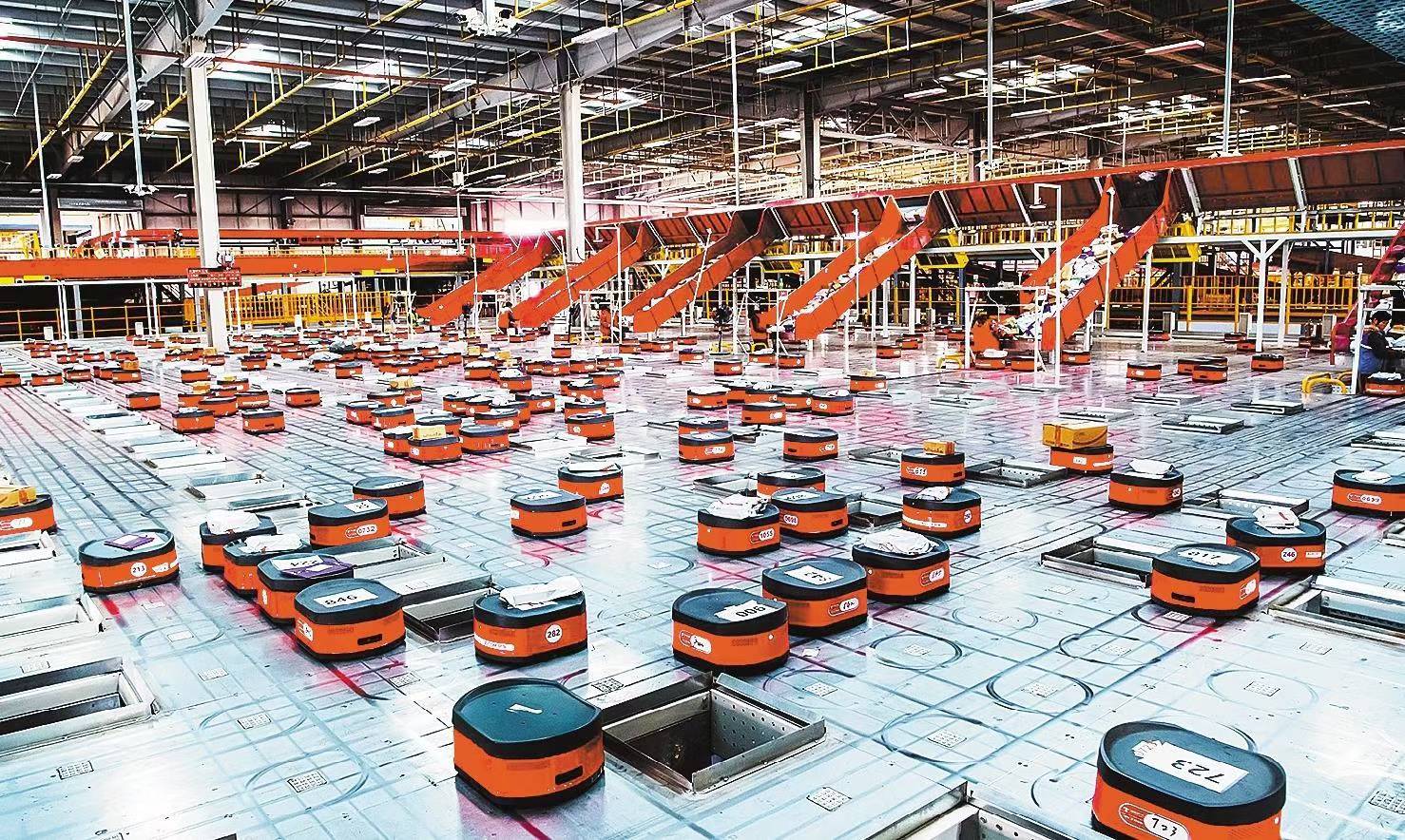
The hardware sits inside a 24-metre rack structure. Seventy-eight stacker cranes, each 22 metres tall, work the aisles; eight levels and sixteen picking channels are laid out for human-machine collaboration, so pickers work a station rather than walking a warehouse. The cross-belt sorter is 22 kilometres long end to end — about the length of the bridge section of the Hong Kong-Zhuhai-Macao Bridge — and feeds more than 800 discharge chutes, sorting parcels to destination sites across the country at a stated accuracy of 99.99 percent. A self-developed scheduling system the company calls its 'smart brain' coordinates the whole plant: one instruction dispatches thousands of pieces of automated equipment, and the same logic governs warehouse siting, inventory placement and route selection. On the floor, 'Dilang' carrier robots work a goods-to-person model, and a shuttle-based high-bay installation handles small items at two to five times manual picking efficiency. Blackout operation, reduced packaging and new-energy vehicles are standard practice rather than pilots.
The Wolf Pack: JD Logistics' own robot fleet
JD Logistics does not only buy automation — it builds and operates its own robot family, marketed as the 'Wolf Pack'. The line-up includes Zhilang for goods-to-person picking, Yilang, Dulang and Feilang for aerial delivery, and it spans the full chain from storage and picking through to handling, transport and last-mile delivery. Zhilang warehouses are a self-developed goods-to-person system in which a robot can complete an outbound movement in about one minute. Coordinating the fleet is Chao Nao 2.0, a scheduling layer that decides vehicle routing, inventory distribution and replenishment, and warehouse capacity allocation — decisions that used to depend on human experience. In September 2026 the company said it will procure 3 million robots, 1 million autonomous vehicles and 100,000 drones over the next five years to push unmanned operations through the logistics chain, and it is standing up a robot maintenance network with eight service centres across China.
The aerial arm is further along than most visitors expect. Feilang drones already fly parcel and express delivery, urgent medicine runs and disaster response; the company has opened more than 100 domestic drone routes, and in June 2026 launched China's largest-scale village delivery network by drone from Zizhong in Sichuan, covering 78 administrative villages with a fastest run of about seven minutes to a mountain village. To see how that compares with a low-altitude logistics operation built around a major city, pair this visit with the FengYi drone logistics visit.
What a delegation experiences
A JD Logistics visit organised through China Innovation Visits is built around the operating site rather than a presentation room. Delegates walk the automated sorting hall and watch the cross-belt system at work, view the high-bay structure and the stacker cranes, see carrier and shuttle robots on their rounds, and follow a parcel from inbound to dispatch. The seated part of the day is a briefing with the site or engineering team on the subjects the delegation actually came for: how the automation was specified and phased in, what the failure modes are, how quality is held at 99.99 percent accuracy at this volume, and where human labour still sits in the process. English interpretation runs throughout, and sessions are long enough to split questions between operations, supply-chain and commercial leads.
Because the site is in the Greater Bay Area, it combines well with the rest of the region: the Shenzhen robotics valley for the hardware supply chain behind the machines, Agibot for the humanoid side of embodied AI — the robot JD Logistics co-launched for its own warehouses came out of that ecosystem — and consumer-electronics plants on the same corridor for teams studying supplier networks rather than logistics itself.
Sample Visit Schedule
09:30–11:30 Visit to JD Asia No. 1 Tour of the JD Asia No. 1 Sorting Center, Automated High-Bay Warehouse, Operations Control Center, etc. Experience firsthand the multi-tier mezzanine picking area, production operation area, and outbound sorting area, and gain a full-visual understanding of the complete operational workflow of JD Asia No. 1: "inbound – putaway – storage – picking – SKU container management – outbound process – conveying – review and packaging – sorting."
11:30–13:30 Lunch / Break (Dining within JD premises to experience JD's distinctive logistics support services)
13:30–16:00 Thematic Sharing and Exchange: Supply Chain, Logistics, Digitalization (choose one of the three)
The timings and programme are subject to final confirmation with the host.
Questions before a JD Logistics visit
Is this a visit to JD.com or to JD Logistics? JD Logistics. JD Logistics, Inc. is a separately listed company (HKEX: 2618) that operates the warehouse, sorting and delivery network. This programme is built on its Dongguan Asia No.1 facility in Machong. Tell us if you also want a JD.com side and we will say clearly what can and cannot be arranged.
What do we actually see on site? The automated cross-belt sorting hall, the high-bay warehouse with its stacker cranes, carrier and shuttle robots in operation, and the control layer that schedules them. The walk follows the parcel flow from inbound to dispatch.
How far in advance should we arrange it? We recommend planning at least 30 days ahead, and our arrangements are normally built around groups of 10 or more, which is the size most industrial hosts are set up to receive. Smaller groups can sometimes be accommodated — tell us your numbers and we will confirm what is possible.
Do we need to work in logistics or e-commerce? No. The site is a useful benchmark for any team running a large distribution or fulfilment operation, and for investors and analysts trying to judge the distance between a robotics demonstration and a paid deployment at scale.
Is English interpretation provided? Yes. English interpretation on site is part of how the programme is run.
Arranging your JD Logistics visit
We arrange the visit for you end to end: the introduction to the host, the scheduling on the Chinese side and English interpretation on site. Tell us your dates, your delegation size and what you want to see, and we will confirm what can be arranged. Start at chinatechvisits.com/company-visits.