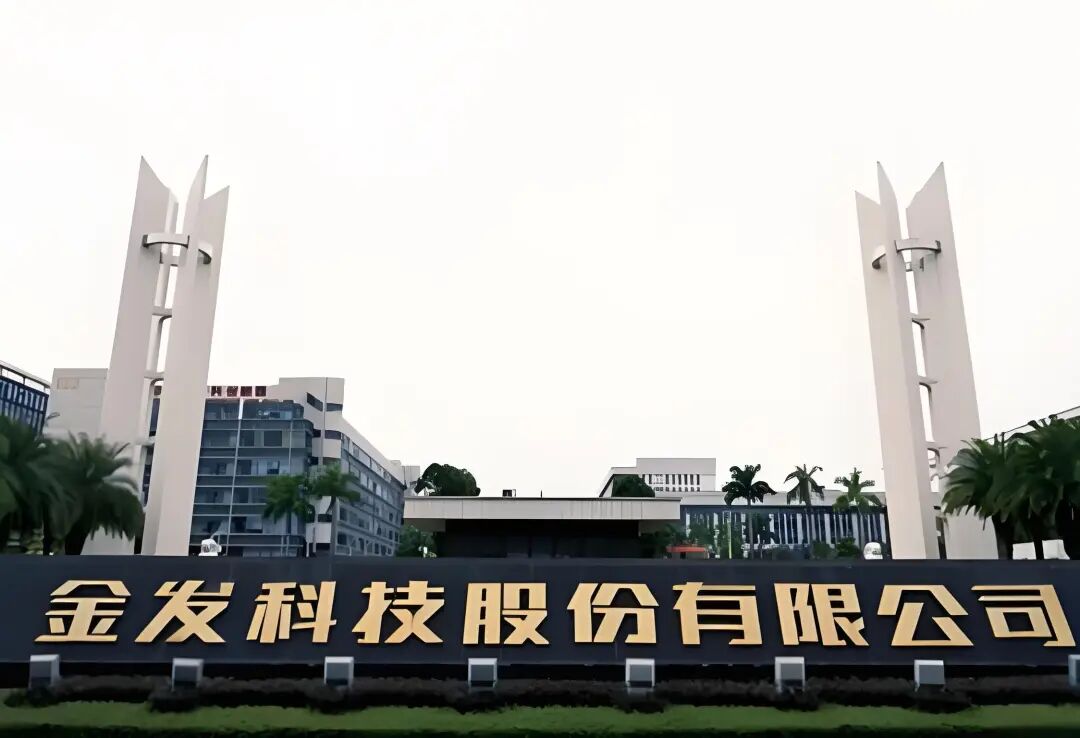
A Kingfa(金发科技) visit in Guangzhou takes a delegation to the largest modified plastics producer in the world by volume. Kingfa Science and Technology was founded in 1993, is headquartered in Guangzhou, and has been listed on the Shanghai Stock Exchange under 600143 since 2004. In 2025 it reported revenue of about 65.4 billion yuan, up 8.07 per cent, and sold 2.95 million tonnes of modified plastics.
The reason to go is that modified plastics are the invisible layer of almost every manufactured product. They decide whether a car bumper survives an impact, whether a server housing meets flammability standards, and whether a washing machine drum tolerates heat and detergent. Kingfa sells into all of them, which makes a visit here a way to read the state of Chinese manufacturing without visiting a factory.
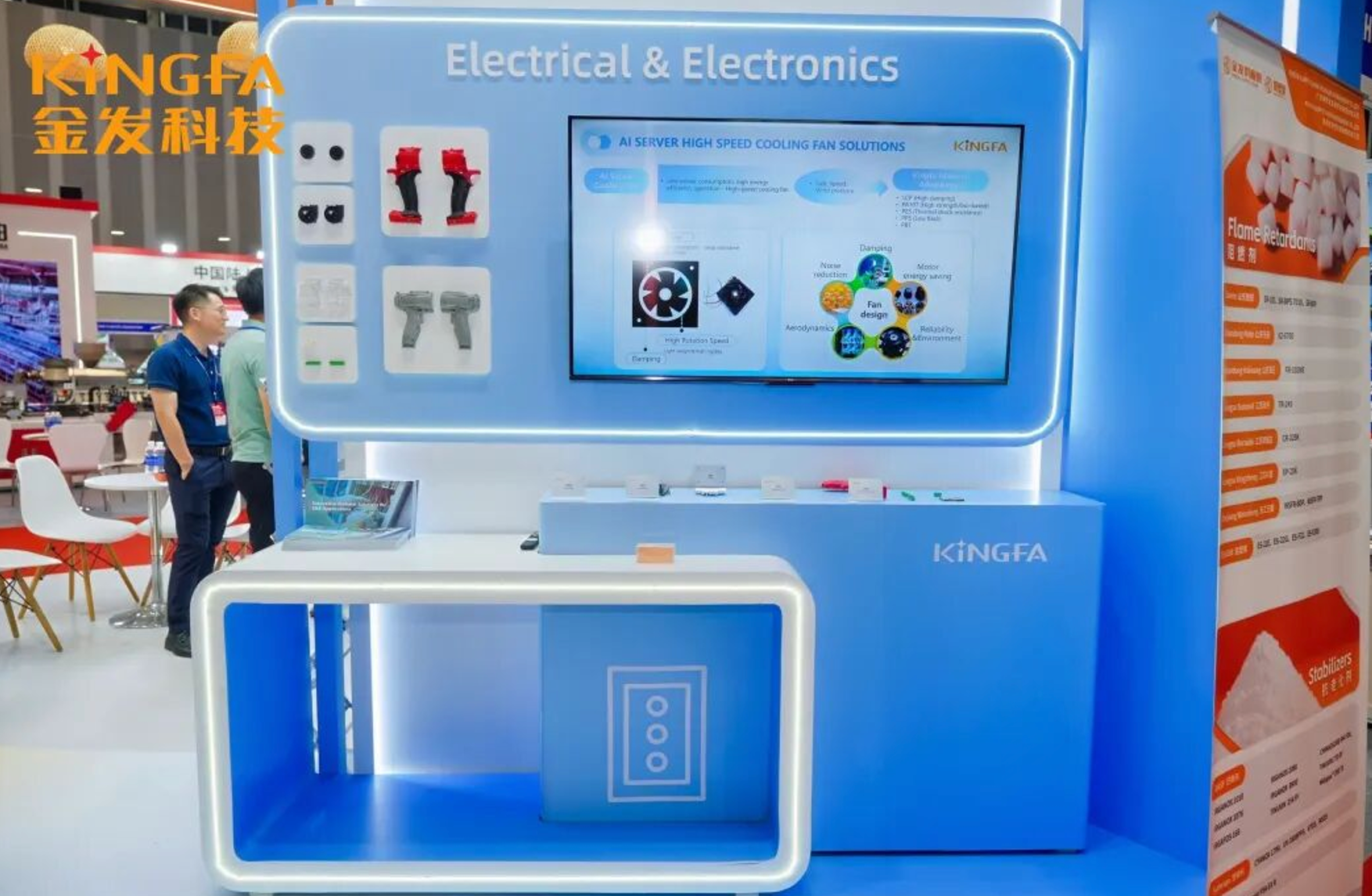
The second reason is the structure. The company integrated upstream into resin synthesis so that it controls feedstock for the compounding business, and it runs five segments with very different margin profiles on one balance sheet. How that integration is meant to pay back, and which segments carry the group, are the two questions that make the briefing worth the trip.
China Innovation Visits coordinates the Guangzhou programme, including the company reception, scheduling, local transport and English interpretation.
Key takeaways
- See the full chain from resin synthesis to modified compound, and why the company integrated it.
- Understand the volume position: 2.95 million tonnes of modified plastics sold in 2025.
- Discuss the margin structure — a 65 billion yuan business earning 1.24 per cent net.
- Examine the new materials business, where biodegradable plastics turned profitable.
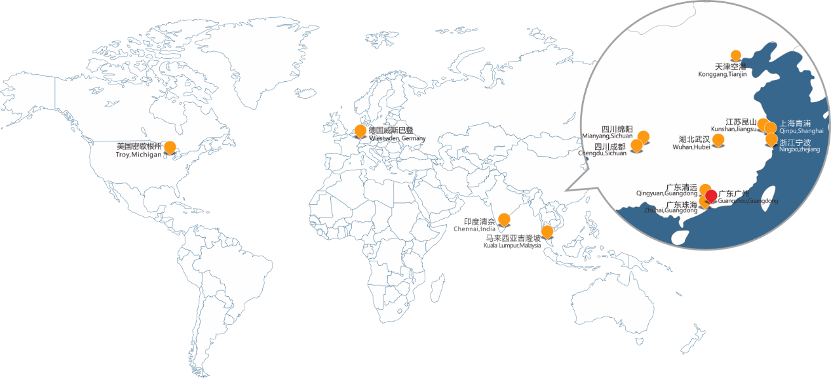
- Ask about the overseas network: plants in the US, Europe, India, Vietnam, Malaysia, Spain and Indonesia.
- Compare with a GAC Aion factory tour in Guangzhou, one of the automotive customers this material ends up inside.
Why visit Kingfa in Guangzhou?
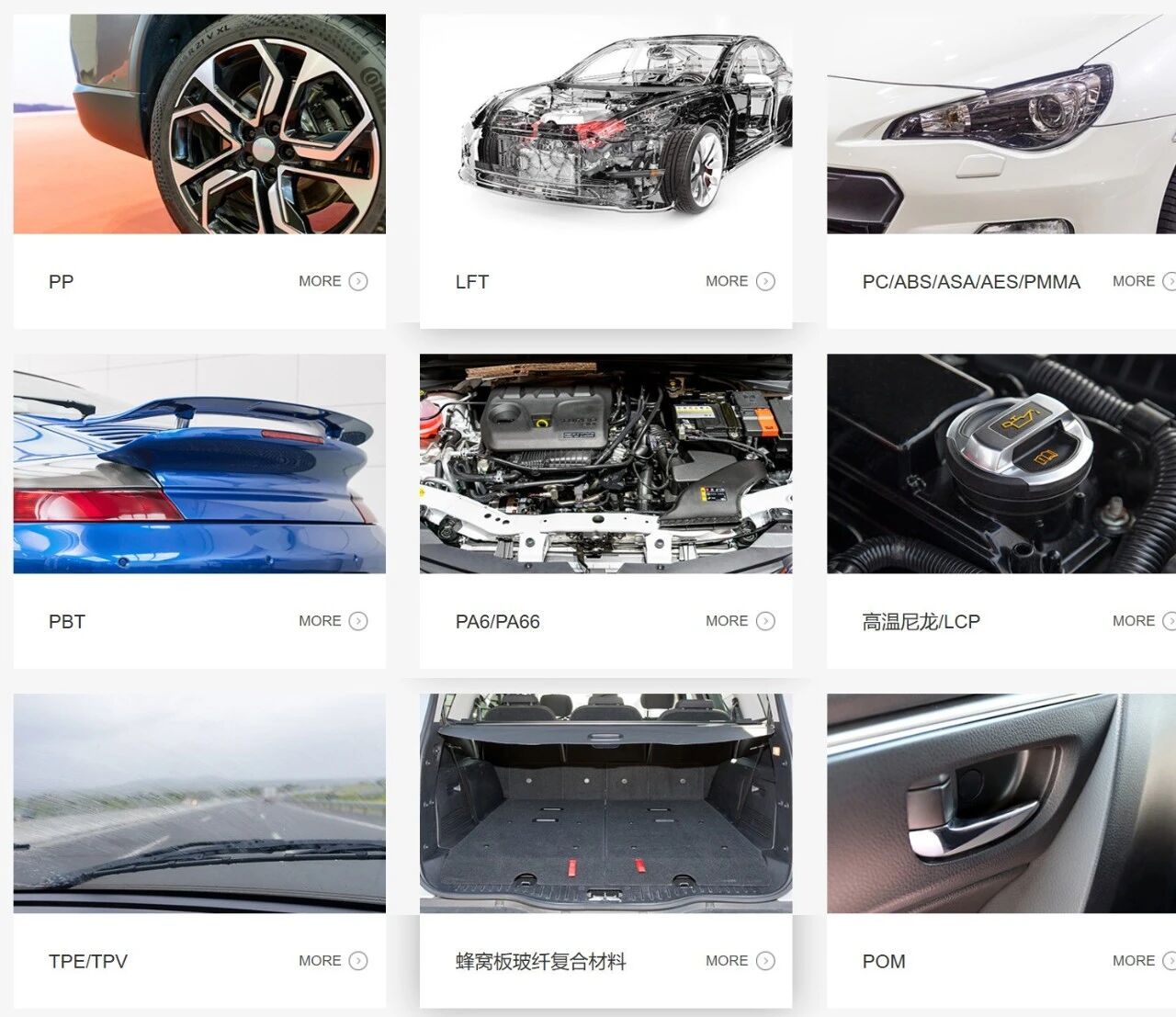
Materials companies are a good subject for a delegation because they sit upstream of everything and therefore see demand shifts first. If electric vehicles are growing, the material supplier knows before the assembler reports it. Kingfa sells into automotive, home appliances, electronics and electrical, new energy and consumer goods, which makes it a broad read on Chinese industry.
The visit is also a lesson in vertical integration. The company has moved from buying resin and modifying it to synthesising resin and modifying it in the same plant. That is a capital-heavy decision with a specific logic, and it is the most interesting strategic question on the table.
Guangzhou is the right setting. The company is based in the Science City area of the city's high-tech development zone, and the Pearl River Delta manufacturing base it serves is around it.
Company background
From trading to synthesis
Kingfa was founded in 1993 and listed in Shanghai in 2004. It describes itself as a chemical new materials company, and has grown from a modified plastics producer into a group with five reporting segments: modified plastics, green petrochemicals, trading goods, new materials, and medical and health products.
It has stated a strategy summarised as strengthening the middle while consolidating both ends — the middle being materials synthesis, the ends being upstream resources and downstream application.
The five segments
In 2025 modified plastics were about 35.781 billion yuan, or 54.71 per cent of revenue, up 11.55 per cent. Green petrochemicals were about 12.463 billion yuan, or 19.06 per cent, up 8.98 per cent. Trading goods were about 11.265 billion yuan, or 17.23 per cent, down 8.94 per cent. New materials were about 4.369 billion yuan, or 6.68 per cent, up 19.59 per cent. Medical and health products were about 1.044 billion yuan, or 1.6 per cent, up 85.41 per cent.
The 2025 results
Revenue and profit
Revenue was about 65.396 billion yuan in 2025, up 8.07 per cent. Net profit attributable to shareholders was about 1.150 billion yuan, up 39.44 per cent, and net profit excluding non-recurring items about 1.065 billion yuan, up 57.78 per cent. Operating cash flow was about 5.904 billion yuan, up 107.52 per cent. Basic earnings per share were 0.4459 yuan, weighted average return on equity 6.22 per cent, and the company proposed a dividend of 2 yuan per 10 shares.
Margin
Gross margin was 13.33 per cent, up 2.02 percentage points, and net margin 1.24 per cent, up 0.85 percentage points.
The longer record
Revenue was about 47.941 billion yuan in 2023,60.514 billion yuan in 2024 and 65.4 billion yuan in 2025, with net profit of 317 million, 825 million and 1.15 billion yuan respectively. Three-year revenue compound growth to the end of 2025 was 17.40 per cent, and net profit roughly quadrupled over the same three years. Margin improvement on a volume base of that size is the pattern worth raising in the briefing.
Reading the margin
Where the profit is
Gross margins by segment in 2025 were 24.43 per cent for modified plastics and 20.59 per cent for new materials. Those two lines are the compounding and speciality end of the business, and they are where the group's margin is earned.
Why it is structured that way
The green petrochemicals and trading segments are the upstream and distribution arms, and integrated producers often run them at low gross margin to secure feedstock and capture margin downstream in compounding. Whether that is what is happening here, and what the payback on the integration has been, is exactly the question to put to the company.
The balance sheet
Total assets were about 64.07 billion yuan and liabilities about 41.38 billion yuan, a debt-to-asset ratio of 64.58 per cent, with interest-bearing debt of about 24.43 billion yuan. The capital is going into resin synthesis capacity and the speciality materials lines, and asking how the company phases that investment against demand is the more useful question than reading the gearing alone.
The core business
Volume
Modified plastics finished-product sales reached 2.9506 million tonnes in 2025, up 15.64 per cent — a record for the company. The share of engineering plastics within the mix continued to rise. Electronics and electrical materials reached 462,200 tonnes globally, up 18.09 per cent. Automotive, new energy and electronics and electrical all recorded double-digit volume growth.
Note the distinction between capacity and sales. Material circulating in some training material cites annual modified plastics capacity above 3 million tonnes; the disclosed 2025 figure is 2.95 million tonnes sold.
What it goes into
The company cites applications in automotive lightweighting, appliance housings, power equipment and consumer electronics, and says it is entering embodied intelligence and AI server applications. A delegation with any interest in how material requirements change when a product moves from consumer to infrastructure grade will find the specifics useful — as will anyone who has already looked at the battery and cell side through a CATL visit in Ningde or a BYD company visit.
New materials: where the growth is
Biodegradable plastics
The company says its biodegradable plastics business broke through in industrial additive manufacturing and high-end food packaging barrier coatings, widening its functional polyester range and bringing the segment to profitability. It reports stable production of bio-based succinic acid and bio-based BDO, building a chain from bio-based monomer through polyester to modified material.
Specialty engineering plastics
The company has launched modified grades including PPA, LCP, PES, PEI and PPSU aimed at new energy, AI computing and embodied intelligence, with applications in photovoltaics, storage, EV three-electric systems, AI servers and robotics. LCP film, polyarylethersulfone for electrolytic hydrogen equipment and hollow-fibre membrane grade PES are described as at customer validation or production stage.
Capacity coming
An 80,000-tonne biodegradable polyester project is expected to start production around mid-2026. Planned units include 10,000 tonnes of LCP, 10,000 tonnes of high-temperature semi-aromatic polyamide and 6,000 tonnes of thermoplastic polyimide, scheduled to come on stream from the first quarter of 2027. A further 8,000-tonne transparent polyamide project was scheduled for the second quarter of 2026.
Ask what is contracted versus what is capacity waiting for demand.
Overseas
The network
The company reports that its US, European, Indian, Vietnamese and Malaysian bases grew in both volume and profit, and that plants in Spain and Indonesia came into operation during 2025. Overseas bases sold 297,500 tonnes of finished product, up 27.41 per cent, with revenue of about 4.234 billion yuan, up 35.20 per cent.
In the first half of 2026 overseas revenue was about 6.295 billion yuan, or 18.45 per cent of the main business, against 27.823 billion yuan domestic.
Why it matters
Modified plastics are bulky, and freight cost decides how far a compound can travel economically. Building plants near customers is the only way to serve them, which is why the overseas network is a strategy and not a footnote.
The 2026 quarter
In the first quarter of 2026 revenue was about 15.590 billion yuan, down 0.49 per cent, while net profit was about 305 million yuan, up 23.72 per cent. Revenue flat and profit up is a margin story; ask whether it came from mix or from input costs.
What a visit covers
The standard programme
9:30–10:00 Exhibition Hall Tour (30 minutes) Development history, core technologies, and global footprint, to build an overall understanding of the company.
10:00–10:40 Production Line Inspection (40 minutes) Automated production line for modified plastics, to observe the manufacturing process and quality control.
10:40–11:30 Executive Roundtable (50 minutes) Exchange views on industry trends around the company's position as a global leader in modified plastics and its transition to green new materials.
The programme is adapted to what the delegation wants to understand, and the final scope is confirmed in writing during planning, before you commit.
Practical notes
- The visit is a business programme. Delegations are received as professional visitors and follow the host's rules.
- Booking requires approval in advance. Foreign participants normally need to be registered with the host ahead of time; that process is longer than for domestic visitors.
- Provide the participant list, nationalities and industry focus early; the technical depth of the briefing is adjusted to suit.
- Photography rules are confirmed in advance; some areas carry confidentiality requirements. Tell us during planning if you need images for internal reporting.
- Smart casual is appropriate. The programme involves walking through exhibition and technical areas.
- English interpretation can be arranged, including specialist preparation on polymer and materials terminology.
Questions before a Kingfa visit in Guangzhou
Is the visit open to international business delegations? Yes, subject to advance arrangements and confirmation by the host. Registration of foreign participants takes extra time, so we recommend planning at least 30 days ahead.
What is the group size? Visits are normally arranged for groups of 10 or more. We confirm the practical maximum with the host for your date.
How long does the visit take? The standard programme runs about two hours, typically covering the exhibition hall, technical areas, and a briefing and Q&A.
Where is the visit held? At the company's base in Guangzhou, in the Science City area. We confirm the meeting point in writing after the host approves the booking.
Do participants need a technical background? No. The visit can be approached through manufacturing, procurement, sustainability, investment or supply chain, and terminology is handled through interpretation.
Is English interpretation provided? Yes, including preparation on polymer and materials terminology.
How large is the company? Revenue was about 65.4 billion yuan in 2025 with about 14,111 employees. It sold 2.95 million tonnes of modified plastics.
How profitable is it? Net profit was about 1.15 billion yuan in 2025, roughly quadruple the 2023 figure, with gross margin up 2.02 percentage points to 13.33 per cent. Modified plastics earned a 24.43 per cent gross margin and new materials 20.59 per cent.
Is it the largest in the world? The company and reporting describe it as the largest modified plastics producer by sales volume, a position it has held since 2018. It is a volume leader, not the largest chemical company by revenue.
What is changing fastest? New materials, up 19.59 per cent, and medical and health products, up 85.41 per cent — both from small bases. Overseas base revenue grew 35.20 per cent.
What documentation is needed in advance? A participant list with passport details for foreign visitors, submitted to the host for registration, plus the delegation's industry focus. We tell you the lead time for your specific group.
Does the programme always run as described? It is built around the elements above. Facilities and areas opened on the day are subject to what the site opens, and we confirm the final scope in writing during planning, before you commit.
Arrange your Kingfa visit
Tell us your dates, group size and what your team wants to understand: materials for lighter vehicles, biodegradable and bio-based plastics under Chinese policy, specialty polymers for AI servers and robotics, or how an integrated chemicals group manages a 1 per cent margin. China Innovation Visits will coordinate the company reception, discussion priorities, transport and English interpretation.
Contact China Innovation Visits to arrange your Kingfa visit in Guangzhou.