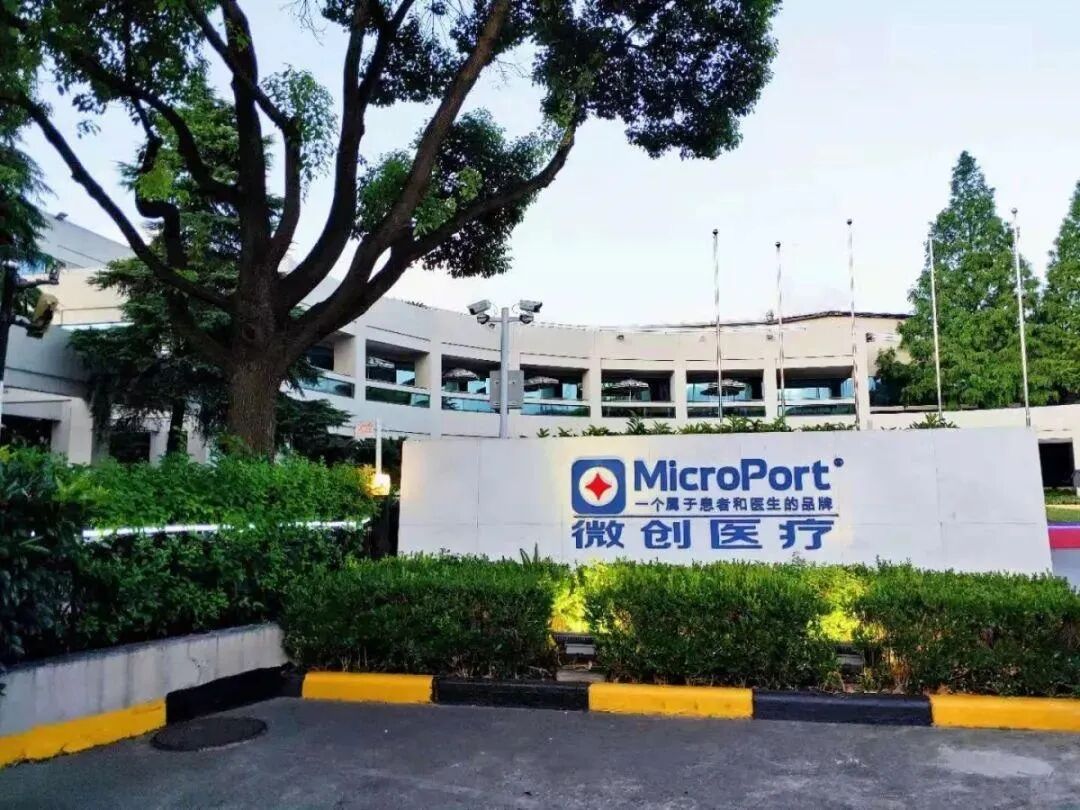
A MicroPort(微创医疗) visit in Shanghai takes a delegation to one of the most globalised medical device groups China has produced. MicroPort Scientific Corporation was founded in 1998, is headquartered in Shanghai's Zhangjiang Hi-Tech Park, and has been listed in Hong Kong under 00853 since 2010. Its products are in use in more than 20,000 hospitals worldwide, and the company says one of its devices is used somewhere in the world every five seconds.
The reason to go in 2026 is the shape of the business. More than half of revenue now comes from outside China, the largest single overseas market is Europe, and the company's own strategy is explicitly built around overseas expansion. For a delegation trying to understand how a Chinese medical device company clears regulators, builds distributor networks and sells into hospital systems abroad, this is the most advanced case available.
The second reason is the product range. MicroPort runs eight business segments at once — cardiovascular intervention, orthopaedics, cardiac rhythm management, aortic and peripheral vascular intervention, neuro intervention, structural heart disease, surgical robotics and more — and has incubated several separately listed companies from them. Very few medical device companies anywhere operate a portfolio that wide.
China Innovation Visits coordinates the Shanghai programme, including the company reception, scheduling, local transport and English interpretation.
Key takeaways
- See the full product portfolio in one place: cardiovascular, orthopaedics, cardiac rhythm, vascular, neuro, structural heart and surgical robotics.
- Understand how a Chinese device maker sells more than half its output outside China, with Europe the largest overseas market.
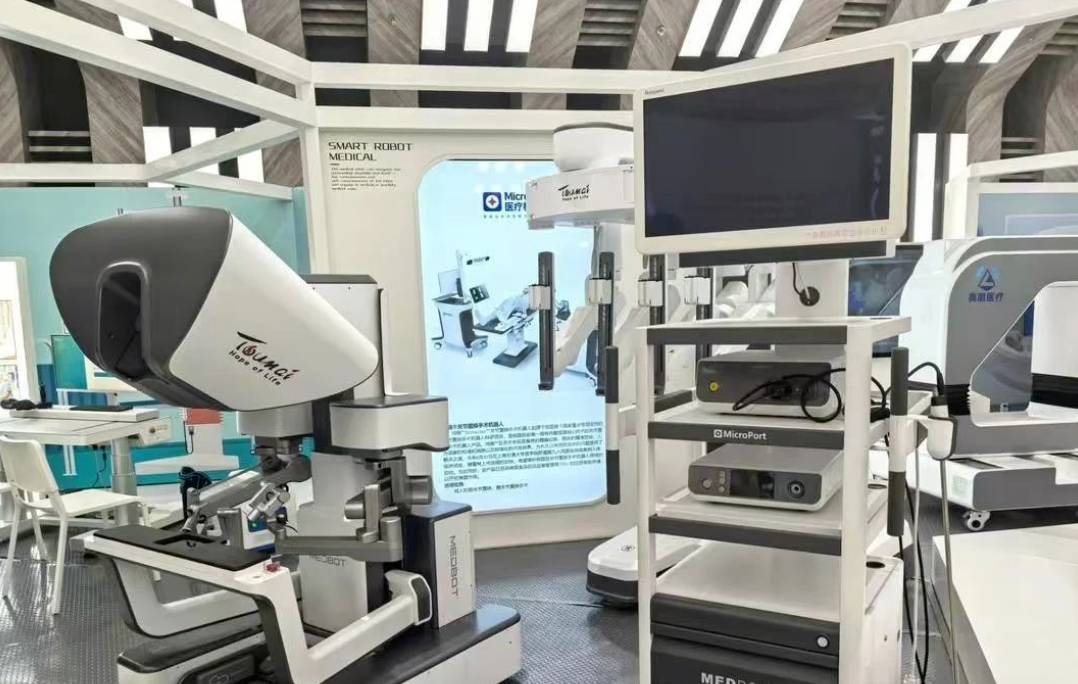
- Watch the Toumai surgical robot — including the remote surgery system approved in 2025 — and ask what the order book means.
- Discuss the regulatory path: how one portfolio is taken through NMPA, FDA, CE and PMDA approvals in parallel.
- Examine the incubation model, which has produced several separately listed companies from one group.
- Compare with a Mindray overview on the monitoring and imaging side of Chinese medical devices, or a Fosun Pharma visit on the therapeutic side.
Why visit MicroPort in Shanghai?
Medical devices are a hard category to internationalise. The products are regulated, the buyers are conservative, clinical evidence takes years to build, and distribution is local. A Chinese company that has sold more than half its output abroad has solved all of those problems, and the visit is the most efficient way to see how.
It is also a good place to see what breadth buys. MicroPort's segments share regulatory, manufacturing and commercial infrastructure, which is why a company of this size can carry eight product lines at once. For a delegation studying portfolio strategy rather than a single product, that is the useful lesson.
Shanghai is the right setting. The company's headquarters and much of its research sit in Zhangjiang, and the city's device cluster — suppliers, clinicians, contract manufacturers and regulators' inspection channels — is around it. Delegations building a wider healthcare programme often pair it with a Fourier Intelligence visit on the rehabilitation robotics side.
Company background
1998 to a global group
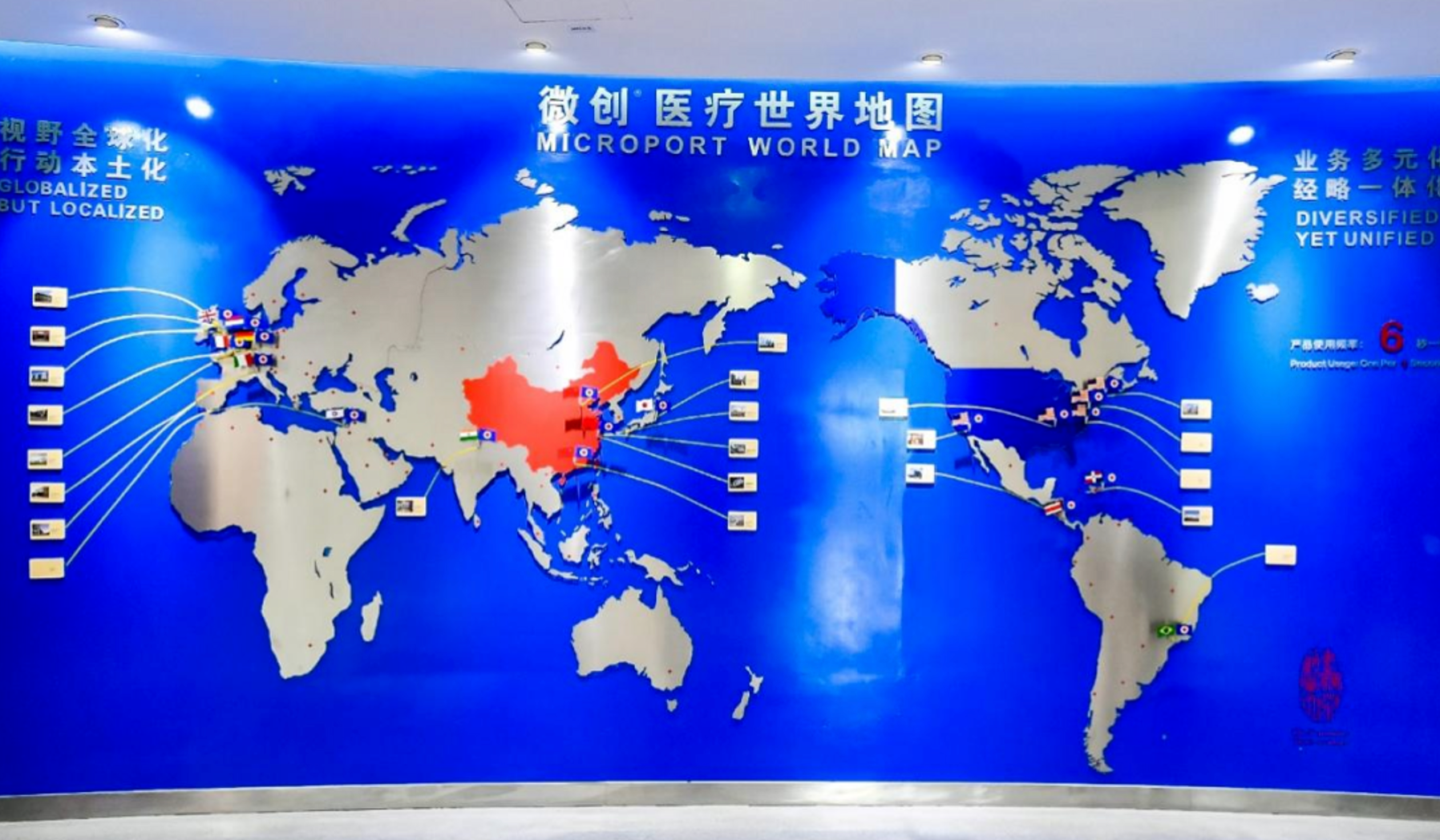
The company was founded in 1998 and listed in Hong Kong in 2010. It describes itself as a group focused on innovating, manufacturing and marketing high-end medical devices globally, and it now operates research, manufacturing, marketing and service sites across the Yangtze River Delta in China, in Irvine, Memphis and Boston in the United States, near Paris, near Milan, in Aachen, Oxford, Santo Domingo, Mumbai and San José, Costa Rica.
Chairman and chief executive is Dr Chang Zhaohua. The group reports more than 12,000 patents, including applications.
Eight business segments
Revenue by segment in 2025: orthopaedics about 21.2 per cent, cardiac rhythm management about 20.8 per cent, aortic and peripheral vascular intervention about 17.0 per cent, cardiovascular intervention about 16.4 per cent, neuro intervention about 10.0 per cent, other business about 8.7 per cent, structural heart disease about 3.9 per cent, and surgical robotics about 2.0 per cent.
Two things follow from that list. The group is genuinely diversified rather than dependent on one product, and its largest segments — orthopaedics and cardiac rhythm — are also the most international, which is where the overseas share comes from.
The 2025 results
Revenue and margin
Revenue was about 1.105 billion US dollars in 2025, up 7.2 per cent, or 6.0 per cent excluding currency effects. Gross profit was about 635 million dollars, up 10.5 per cent, with gross margin rising to 57.4 per cent — a high figure for the sector, and one the company attributes to supply chain integration and process optimisation.
Revenue has grown steadily over five years, from about 779 million dollars in 2021 to about 1.105 billion in 2025.
Back to profit
The group reported profit for the year of about 38 million dollars in 2025, against a loss of about 268 million dollars in 2024, and profit attributable to owners of about 49 million dollars. Adjusted operating profit moved from a loss of about 123 million dollars in 2024 to roughly break-even positive in 2025.
Management has said it is targeting an operating margin of around 4 per cent and continued positive operating cash flow, with finance costs falling and asset disposal proceeds contributing further.
Cash
Operating cash flow was a net inflow of about 69 million dollars in 2025, turning positive from a negative position a year earlier. For a company coming out of a heavy investment cycle, cash generation turning positive is the number that makes the rest of the plan credible.
What it sells
Cardiovascular intervention
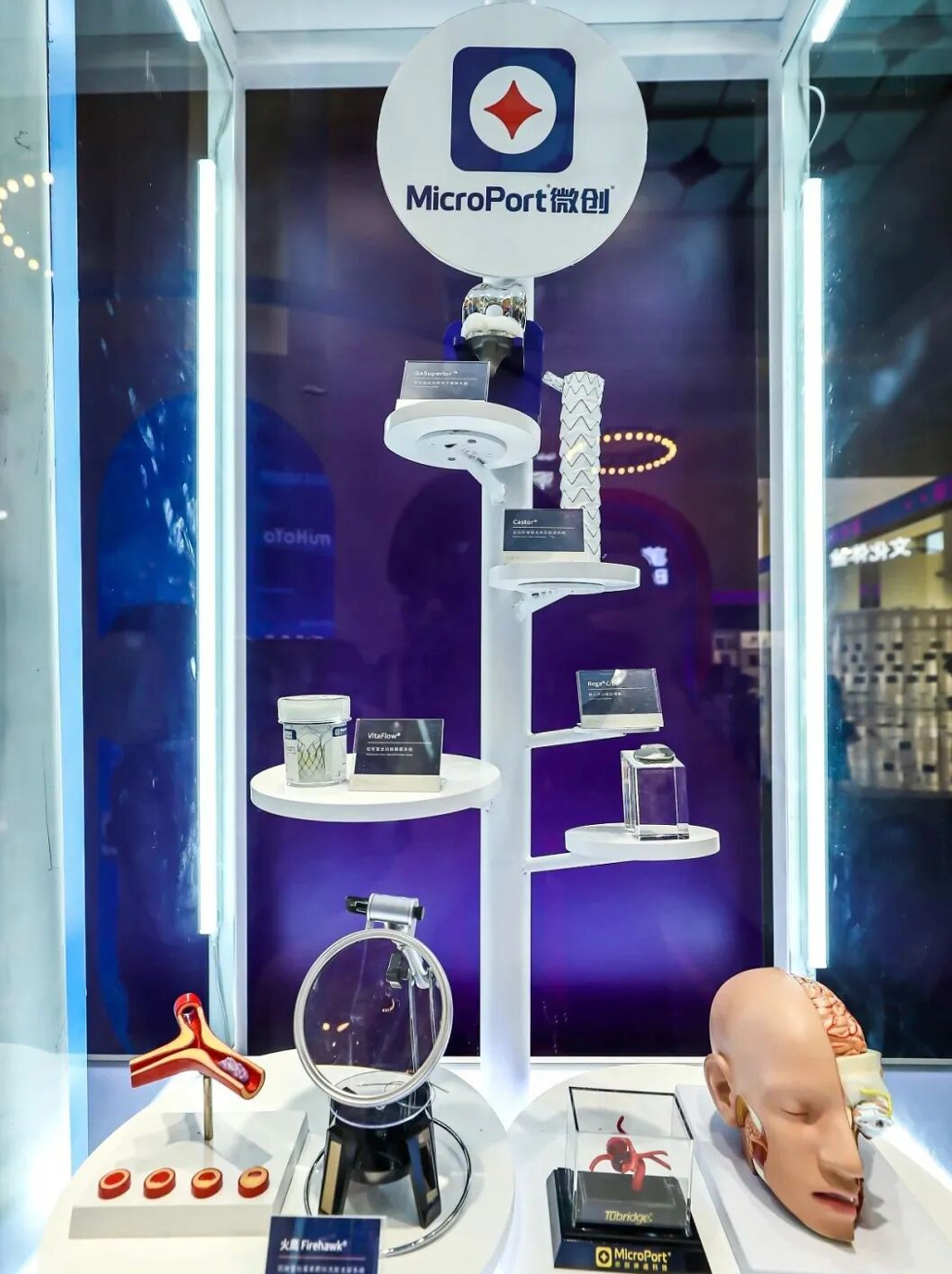
This is the founding business and still the segment most visitors know: coronary stents and the broader coronary portfolio. The company's Firehawk stent is described as the first polymer-based targeted-release drug-eluting stent, approved in more than 30 countries and regions.
The segment has moved from a single stent product to what the company calls a full coronary solution, covering implantable devices, intervention without implants, active devices and imaging diagnostics. Overseas, products such as the FireRaptor rotational atherectomy system have gained international academic recognition.
Cardiac rhythm management
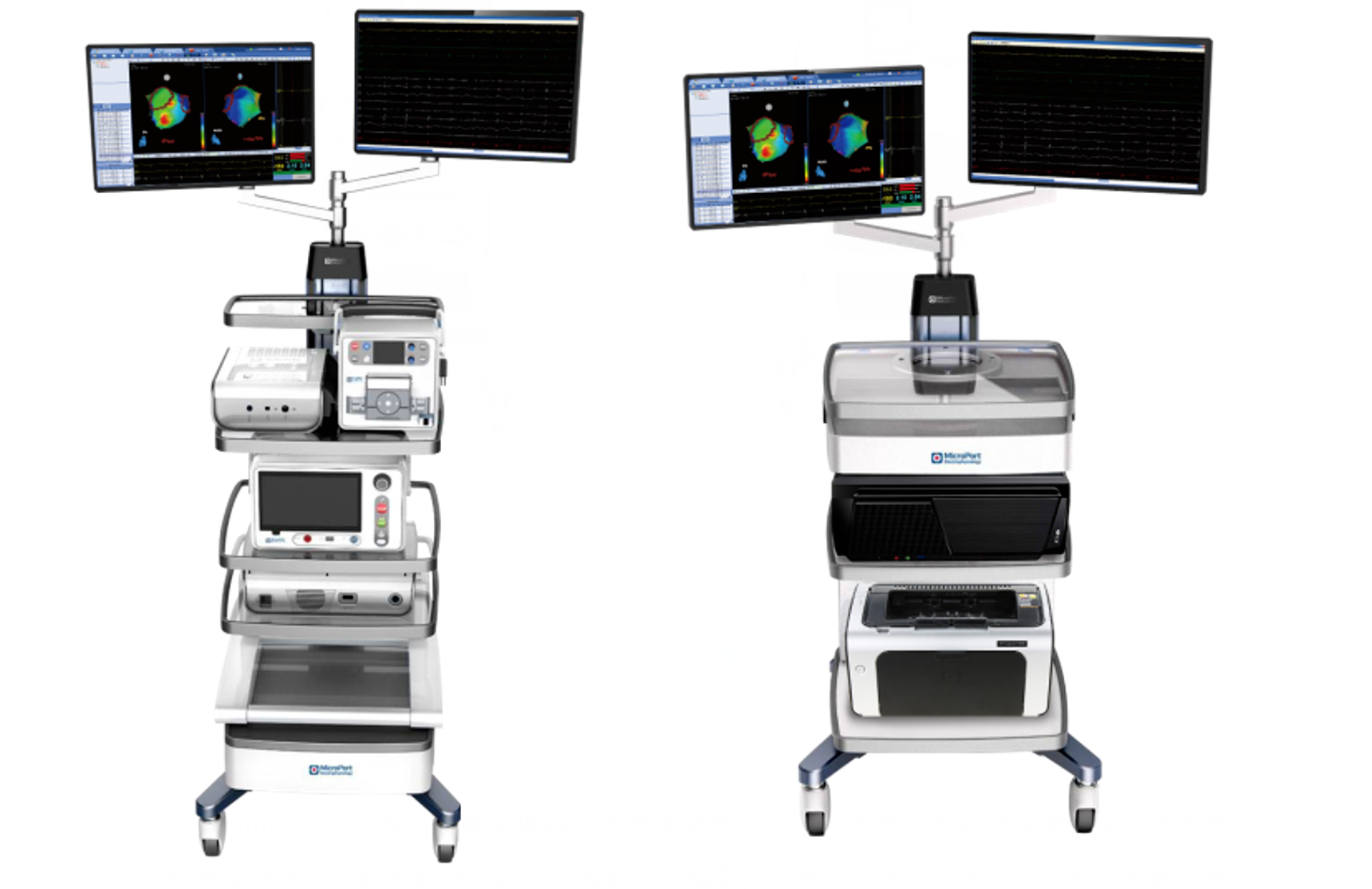
The group's domestic implantable cardioverter defibrillator reached commercial implantation, and its TEN series pacemakers were approved in China as the first and so far only domestic pacemaker series compatible with whole-body 3.0T magnetic resonance imaging. Abroad, the segment is building a left bundle branch area pacing solution and expanding through partners.
Aortic and peripheral vascular intervention
Overseas revenue in this segment grew about 95 per cent in the first half of 2025 and reached about 17.3 per cent of segment revenue. New products approved in China included the Cratos branched aortic stent graft system and the Tipspear transjugular portal access kit; the Hector thoracic multi-branch stent entered the green channel and received an EU custom-made device certificate, and Minos and Hercules products received CE marking.
Neuro intervention
Overseas revenue here grew about 67 per cent in the first half of 2025 to about 12.3 per cent of the segment. The business covers nearly 3,600 hospitals in China and leads domestic brands by market share. Eight products have been commercialised in 34 overseas countries, including nine of the ten largest neuro intervention markets by procedure volume.
Structural heart disease
Overseas revenue in this segment grew more than 235 per cent in the first half of 2025, and the transcatheter aortic valve products have entered more than 140 core hospitals in over 20 countries and regions. In China the products have been placed in more than 670 hospitals.
Surgical robotics: Toumai
The flagship
The surgical robotics segment is the smallest by revenue and the fastest growing: global revenue rose about 77 per cent in the first half of 2025, with overseas revenue up about 189 per cent. By mid-2025 the group's combined orders across its robot lines approached 150 units — around 90 for Toumai and around 60 for the Honghu line — with more than 100 commercial installations completed in total.
Since going overseas, Toumai has taken more than 50 overseas orders, with over 30 new orders in 2025 and 16 commercial installations completed in the first half of the year.
The remote surgery first
In April 2025 the Toumai remote surgery system received registration approval in China, which the company describes as the first remote surgical robot to be approved for market anywhere in the world. That marks the move of remote surgery from demonstration to commercial promotion, and it is one of the most interesting things to ask about in the technical session.
Overseas: more than half the business
The Global Access platform
The group's overseas commercialisation platform, which it calls Global Access, generated revenue of about 164 million dollars in 2025, up 78.8 per cent excluding currency effects, and reached break-even for the first time. Its purpose is to shorten the time from regulatory clearance to revenue for any product in the portfolio.
Management describes the overseas business as the main line of future development, and the arithmetic behind that is striking: of more than 300 products in the portfolio, fewer than 50 have gone overseas so far, and most major markets are still untouched.
Where the growth came from
The fastest overseas growth in 2025 came from the newest segments: surgical robotics overseas sales up about 287 per cent and structural heart disease up about 255 per cent, excluding currency effects. That pattern tells you what is happening — the company is exporting its newest technology first, not its oldest.
The overseas team numbered about 150 people in 2025, with plans to roughly double it in 2026 and build a much larger global organisation over time.
Europe is the largest market
Revenue by geography in 2025: China about 46.9 per cent, Europe about 29.7 per cent, Asia excluding China about 10.1 per cent, North America about 7.4 per cent, South America about 4.2 per cent, and other markets about 1.7 per cent.
Europe at nearly 30 per cent is the single largest overseas market, and it is where the orthopaedics and cardiac rhythm segments are strongest. For a European delegation, that means the company's commercial footprint, regulatory experience and clinical relationships are already in your market.
Research, intellectual property and the incubation model
The R&D network
The group reports more than 12,000 patents including applications, and runs research and development across its global sites rather than from China alone. In the first half of 2025 it received 20 first-time Class III registration certificates in China, and added 232 first-time registrations across 37 overseas countries and regions.
The R&D rate fell from about 20.6 per cent to about 13.2 per cent of revenue year on year in the first half of 2025, which the company attributes to improved efficiency and focusing on core projects rather than reduced ambition.
The green channel record
Forty of the group's products have entered China's special review pathway for innovative medical devices, which the company says is the largest total in the domestic device industry for ten consecutive years. That count is a reasonable proxy for how much genuinely new work is in the pipeline rather than incremental variation.
The incubation model
MicroPort has spun several businesses out into separately listed companies, including MicroPort CardioFlow, MicroPort EP MedTech, MicroPort Endovascular, MicroPort NeuroTech and MicroPort MedBot. The structure gives each business its own capital, management incentives and investor base while sharing group infrastructure.
This is the part of the visit most relevant to delegations thinking about corporate structure: it is a working example of running a device group as a platform rather than a single company.
What a visit covers
The standard programme
| Time | What happens |
|---|---|
| First 30 minutes | Reception and exhibition hall: the company's history and the eight product lines |
| 30–70 minutes | Manufacturing or laboratory areas: devices in development and testing |
| 70–120 minutes | Discussion with management or engineering staff |
The standard visit runs about 120 minutes: 30 minutes in the exhibition hall, 40 minutes in the manufacturing or laboratory areas and 50 minutes in discussion, with the start time set with the host. Multi-day programmes can add a research centre visit and a laboratory session alongside the headquarters exhibition. Multi-day programmes can add a research centre visit and a laboratory session alongside the headquarters exhibition.
The exhibition hall is where the breadth is easiest to grasp, because the segments are laid out side by side and surgical demonstrations are shown on screen. The discussion session is where commercial and regulatory questions are handled.
Who it suits
The visit suits medical device companies, hospital groups and procurement teams, investors and analysts, and life science delegations. It is also used by university and hospital management groups working on innovation systems, and the company is experienced in receiving them.
Practical notes
- The visit is a business programme. Delegations are received as professional visitors and follow the host's rules.
- Booking requires approval in advance. Foreign participants normally need to be registered with the host ahead of time, and that process is longer than for domestic visitors; allow additional working days for the paperwork.
- Provide the participant list, nationalities and professional focus early; the technical depth of the briefing is adjusted to suit.
- Photography rules are confirmed in advance; some areas carry confidentiality requirements. Tell us during planning if you need images for internal reporting.
- Smart casual is appropriate. The programme involves walking through exhibition and technical areas.
- English interpretation can be arranged, including specialist preparation on medical device and clinical terminology. Bilingual materials and an English summary can be prepared on request.
Questions before a MicroPort visit in Shanghai
Is the visit open to international business delegations? Yes, subject to advance arrangements and confirmation by the host. Registration of foreign participants takes extra time, so we recommend planning at least 30 days ahead.
What is the group size? Visits are normally arranged for groups of 10 or more. We confirm the practical maximum with the host for your date.
How long does the visit take? The standard programme runs about two hours, covering the exhibition hall, a technical briefing and a discussion. Longer programmes can include the research centre.
Where is the visit held? At the company's headquarters in Shanghai, Zhangjiang. We confirm the meeting point in writing after the host approves the booking.
Do participants need a medical background? No. The visit can be approached through medical devices, healthcare operations, procurement, investment or research management, and terminology is handled through interpretation.
Is English interpretation provided? Yes, including preparation on medical device terminology, and bilingual handouts can be arranged.
How large is the company? Revenue was about 1.105 billion US dollars in 2025, up 7.2 per cent, with products in use in more than 20,000 hospitals worldwide.
How much of the business is overseas? More than half of revenue in 2025. Europe was about 29.7 per cent of revenue, Asia excluding China about 10.1 per cent, North America about 7.4 per cent and South America about 4.2 per cent.
Is the company profitable? It returned to profit in 2025, reporting profit for the year of about 38 million US dollars against a loss in 2024, and operating cash flow turned positive.
What is the surgical robot business doing? The segment grew about 77 per cent globally in the first half of 2025, with combined orders approaching 150 units across its robot lines. The Toumai remote surgery system was approved in China in April 2025.
What documentation is needed in advance? A participant list with passport details for foreign visitors, submitted to the host for registration, plus the delegation's professional focus. We tell you the lead time for your specific group.
Does the programme always run as described? It is built around the elements above. Facilities and areas opened on the day are subject to what the site opens, and we confirm the final scope in writing during planning, before you commit.
Arrange your MicroPort visit
Tell us your dates, group size and what your team wants to understand: the coronary and structural heart portfolio, the surgical robotics business and remote surgery, how a Chinese device group clears regulators and sells in Europe and the United States, or how the incubation model produces separately listed companies. China Innovation Visits will coordinate the company reception, discussion priorities, transport and English interpretation.
Contact China Innovation Visits to arrange your MicroPort visit in Shanghai.