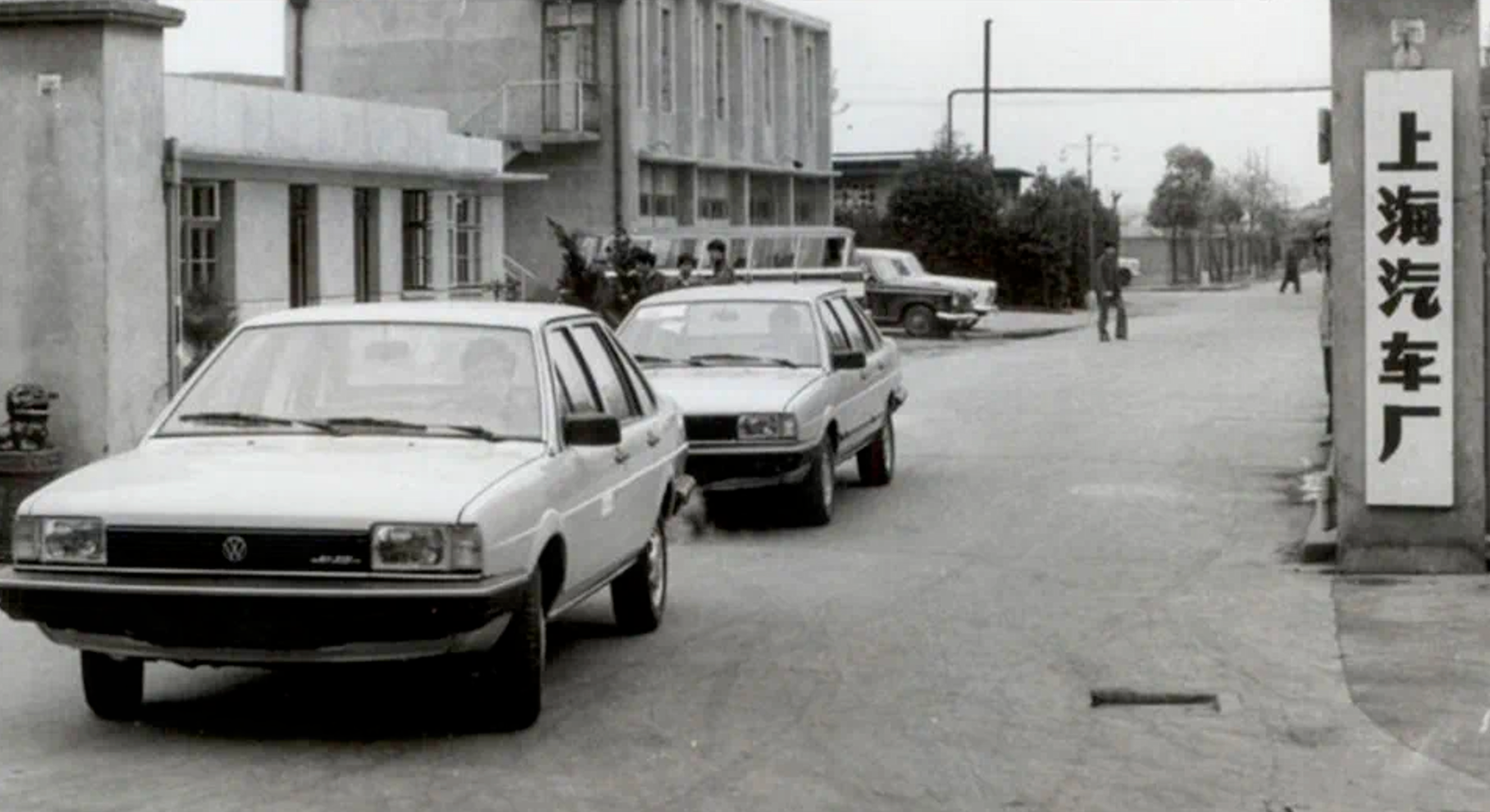
An SAIC Motor(上汽集团) visit in Shanghai takes a delegation to the largest car group China has built, and to the place where the modern Chinese car industry started. SAIC Motor Corporation is headquartered in Shanghai and has been listed in Shanghai under 600104. Its history runs from Shanghai Volkswagen, founded in 1984 as China's first passenger car joint venture, to a group that sold 4.507 million vehicles in 2025 and holds 13.1 per cent of the Chinese market.
The reason to go in 2026 is that SAIC has just come through its best year in half a decade. Vehicle sales rose 12.3 per cent to 4.507 million, revenue rose 4.6 per cent to 656.24 billion yuan, and profit attributable to shareholders rose more than fivefold to 10.11 billion yuan. After a period of restructuring, the group is growing on volume, revenue and profit at the same time, which is not common in a market this competitive.
The second reason is what the growth is made of. Own-brand vehicles reached 2.928 million units, up 21.6 per cent and 65 per cent of the group total. New energy vehicles reached 1.643 million, up 33.1 per cent. And overseas sales reached 1.071 million, taking cumulative overseas sales past six million. Three different transitions — to own brands, to electrics, to a genuinely localised overseas business — are running at once, and they can all be examined in one place.
China Innovation Visits coordinates the Shanghai programme, including the company reception, scheduling, local transport and English interpretation.
Key takeaways
- See how the largest Chinese car group runs own brands and joint ventures side by side, and how the balance has shifted.
- Understand the move from joint-venture assembly to own-brand product definition: 2.928 million own-brand vehicles, 65 per cent of the group.
- Look closely at the new energy portfolio — 1.643 million vehicles in 2025, from entry-level to premium, battery electric to plug-in hybrid.
- Discuss technology that is in production rather than announced: second-generation semi-solid-state batteries on the MG4, and a robotaxi service in commercial operation.
- Examine the overseas model: a thirty-thousand-unit-scale market in Europe, five more at fifty thousand, and local assembly rather than pure export.
- Compare with a BYD visit on the vertically integrated new energy model, or a Geely global overview on another route to international growth.
Why visit SAIC in Shanghai?
Most large car groups are hard to read because they are either growing or restructured, rarely both at once. SAIC in 2025 did both: it cut cost and reorganised product development, and it grew volume, revenue and profit. That combination is the thing worth studying, because it is what most incumbent manufacturers in Europe, Japan and Korea are now trying to do.
It is also the only place in China where you can see the joint-venture model and the own-brand model operating inside one company. SAIC Volkswagen and SAIC General Motors carry global brands and are now launching China-developed electric products; Roewe, MG, Maxus, IM and Wuling carry the group's own brands and set the growth rate. Watching the two halves compete and share is more instructive than visiting a company that only ever did one of them.
Shanghai is the right setting. The company's headquarters, technology centre and innovation showcase are in the city, and the Yangtze delta supply base around it — stamping, batteries, semiconductors, software — is the densest in the country. Delegations focused on manufacturing often pair it with a Fuyao Glass visit on the components side.
Company background
From the first joint venture to a 4.5 million vehicle group
SAIC's modern history begins in 1984, when Shanghai Volkswagen was established as China's first passenger car joint venture, opening the era in which Chinese manufacturers assembled foreign designs in exchange for technology. Four decades later the direction has reversed: the group defines its own products, develops its own platforms and exports them.
Scale in 2025: total assets of 960.2 billion yuan, revenue of 656.24 billion yuan, and 4.507 million vehicles sold.
The brand structure
The own-brand side is Roewe, MG, Maxus, IM, Wuling and the newer Shangjie brand. The joint-venture side is SAIC Volkswagen, covering Volkswagen, Audi and Škoda, and SAIC General Motors, covering Buick, Chevrolet and Cadillac.
Own brands sold 2.928 million vehicles in 2025, up 21.6 per cent, reaching 65 per cent of group volume — about five percentage points more than the year before. That share is the single clearest measure of how far the transition has gone.
The joint ventures are not standing still. SAIC General Motors grew 23 per cent in 2025, and SAIC Volkswagen remained above one million units a year. Both are now launching China-developed intelligent electric products: the Audi E5 Sportback and the Buick Zhijing L7 are the examples the group points to.
The 2025 numbers
Volume, revenue and profit
Vehicle sales were 4.507 million, up 12.3 per cent, giving the group a 13.1 per cent share of the Chinese market, up 0.3 percentage points. Revenue was 656.24 billion yuan, up 4.6 per cent. Profit attributable to shareholders was 10.11 billion yuan, up 506.5 per cent, and profit after removing non-recurring items was 7.42 billion yuan, up 237.2 per cent.
Operating cash flow was a net inflow of 34.31 billion yuan. Net profit across the group was 17.44 billion yuan, up 199 per cent, at a net margin of 2.70 per cent.
The mix shift
Revenue splits into vehicle business at 410.20 billion yuan, about 63.5 per cent, and components at 203.02 billion yuan, about 31.4 per cent, with the remainder in services and finance. By geography, China contributed 504.14 billion yuan, about 76.8 per cent, and overseas markets 152.11 billion yuan, about 23.2 per cent.
Two points matter for a visitor. Nearly a quarter of revenue is already overseas, which is high for a Chinese manufacturer of this size. And the components business is large enough to be a company in its own right, which is why the group can support a wide vehicle portfolio without depending on outside suppliers for everything.
New energy: 1.64 million vehicles
Volume and models
New energy vehicle sales were 1.643 million in 2025, up 33.1 per cent — about five percentage points faster than the Chinese industry average. Own-brand new energy sales were close to 1.5 million, up close to 50 per cent.
The product range now runs from entry-level to premium and from battery electric to plug-in hybrid: the MG4, Roewe M7, the IM LS6 and LS9, the Wuling Binguo S and the Maxus Dana, among others. New MG4 sales passed ten thousand units a month repeatedly after launch.
Technology: semi-solid-state batteries and beyond
The technology worth asking about is the part already in customers' hands. In 2025 SAIC became the first manufacturer in China to put second-generation semi-solid-state battery technology into volume production, on the new MG4, with low-temperature range and battery safety described as industry-leading. Its "Hengxing" extended-range system and "Lingxi" chassis 2.0 also reached production.
That distinction — in production rather than announced — is the useful test to apply to any Chinese manufacturer claim, and the technical session is where it gets applied.
Intelligent driving and software
SAIC holds intelligent connected vehicle demonstration operation licences in Shanghai for both passenger and commercial vehicles, which is unusual. Its Robotaxi 3.0 service entered commercial operation during 2025, operating without human intervention for the full trip.
On the software side the group has deepened cooperation with Huawei, OPPO and Doubao, producing the Shangjie brand, a new generation of intelligent cockpit and an AI vehicle system. The strategy is deliberately multi-partner rather than single-supplier, which is a decision worth probing in discussion.
Overseas: from exporting cars to exporting a value chain
The regional map
Overseas sales were 1.071 million vehicles in 2025, up 3.1 per cent, taking cumulative overseas sales past six million. The group now describes its approach as Glocal — global plus local — an explicit move from shipping products abroad to building the value chain there.
The shape of the business is one market at three hundred thousand units, Europe, and five more at around fifty thousand: the Americas, the Middle East, Australia and New Zealand, ASEAN and South Asia. Products and services reach more than 170 countries and regions.
MG is the core overseas growth engine. It sold more than three hundred thousand vehicles in Europe in 2025, making it the best-selling Chinese brand in Europe, and it ranks among the top ten passenger car brands in eighteen national markets including Australia and New Zealand, the Middle East, Latin America and South-East Asia — helped by a line of hybrid models introduced alongside the electric range.
Other brands are following: IM Motors launched the IM5 and IM6 in Thailand, the United Kingdom and Australia, and SAIC General Motors Wuling raised the share of new energy output at its Indonesian base to 80 per cent under an integrated Indonesia-Malaysia-Thailand strategy.
Localisation and logistics
Local production is the current priority rather than export volume. The group is building in Egypt with the Mansour Group, is progressing plans for a European base, and uses contract manufacturing and complete-knock-down assembly in several markets.
Logistics has become a strategic asset in its own right. SAIC's Anji Logistics operates a fleet of twenty-one ocean-going roll-on roll-off vessels, which is what allows a manufacturer of this scale to control delivery times to distant markets rather than depend on third-party capacity. For a delegation, the shipping question is one of the least discussed and most decisive parts of Chinese vehicle export economics.
What a visit covers
The standard programme
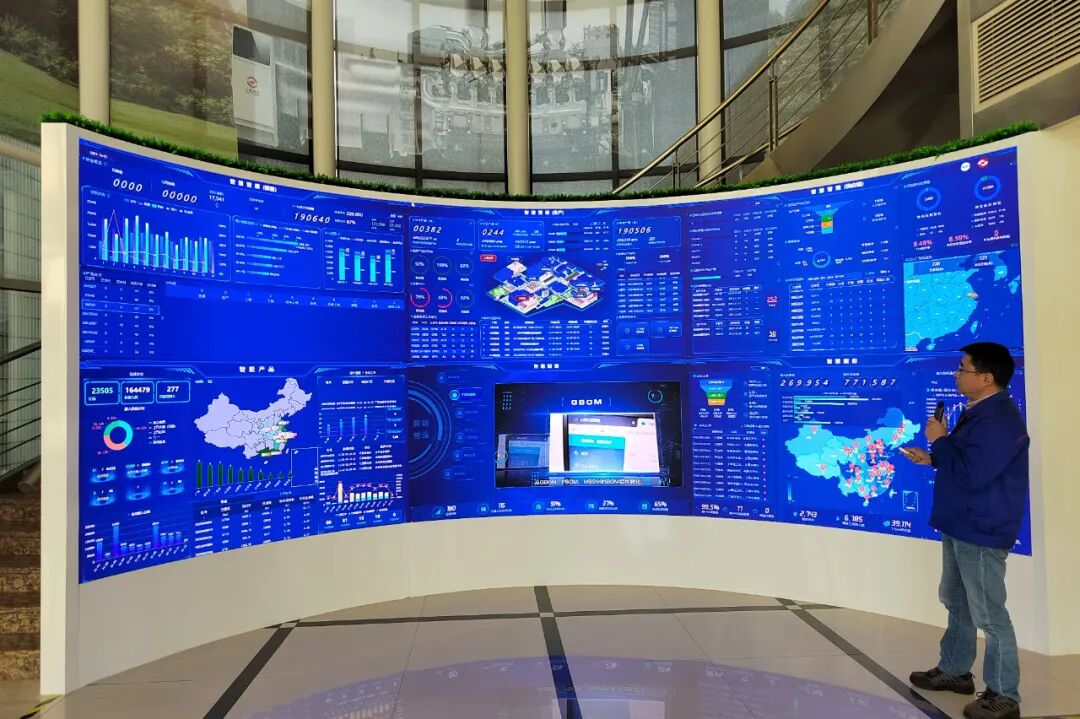
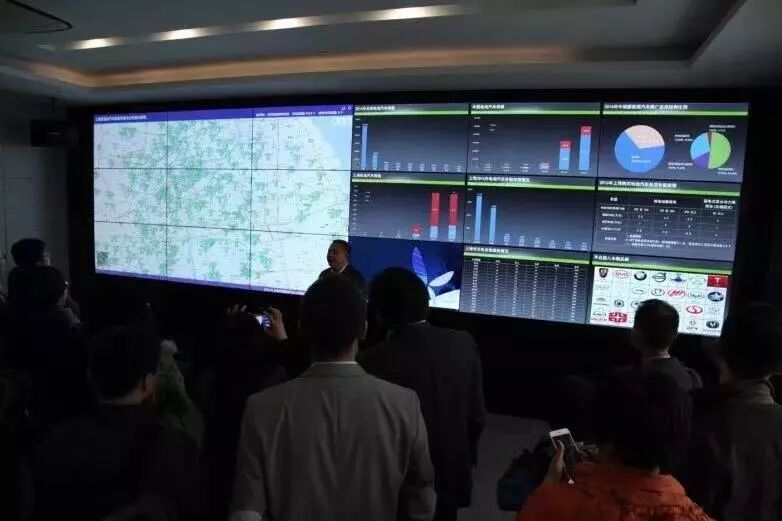
09:30–10:00 Corporate Exhibition Hall Tour Content: Visit the SAIC Motor Innovation Exhibition Center / Corporate Exhibition Hall to learn about SAIC Motor's development history, core technologies, and global footprint, and to build an overall understanding of the company.
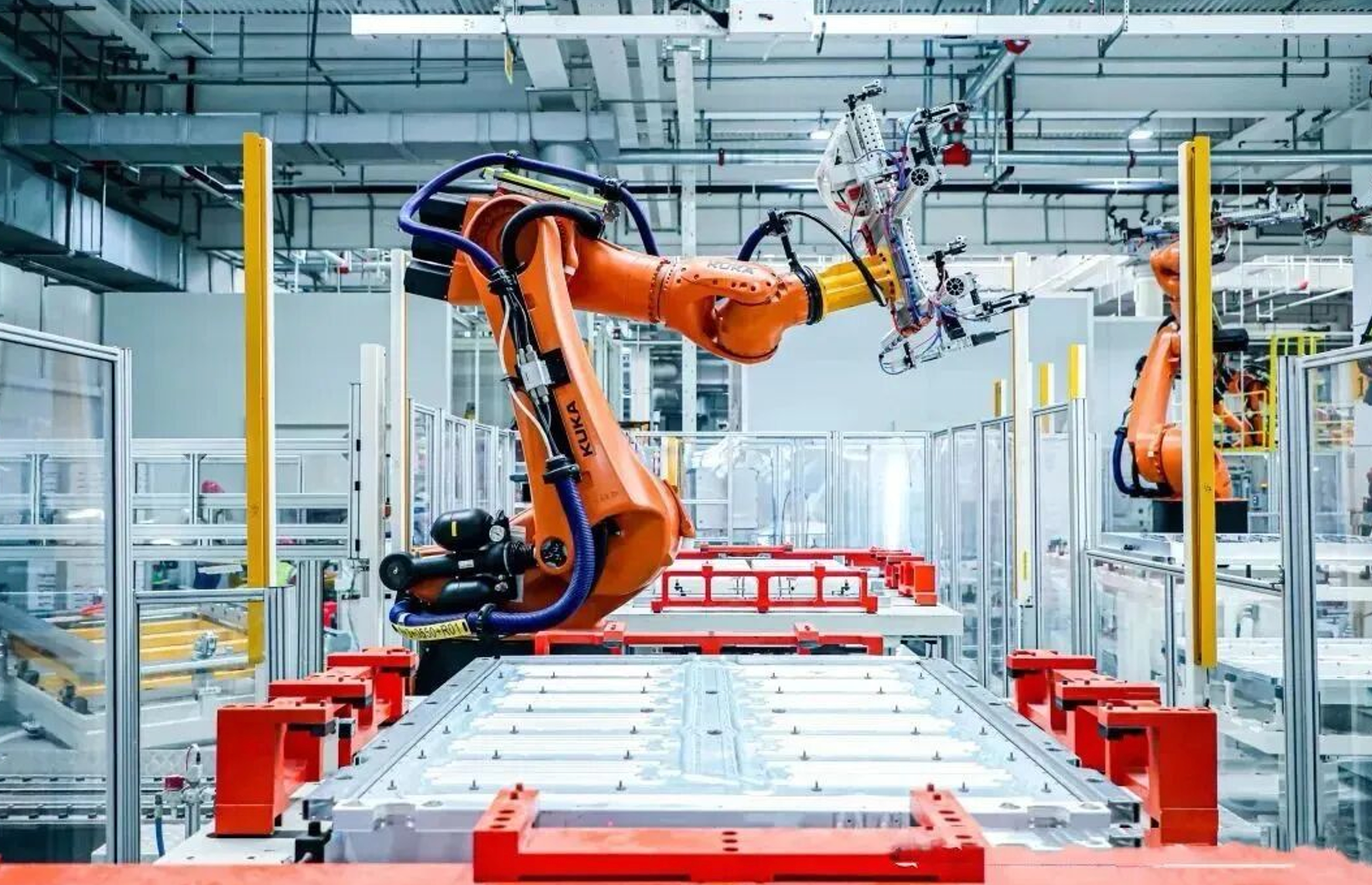
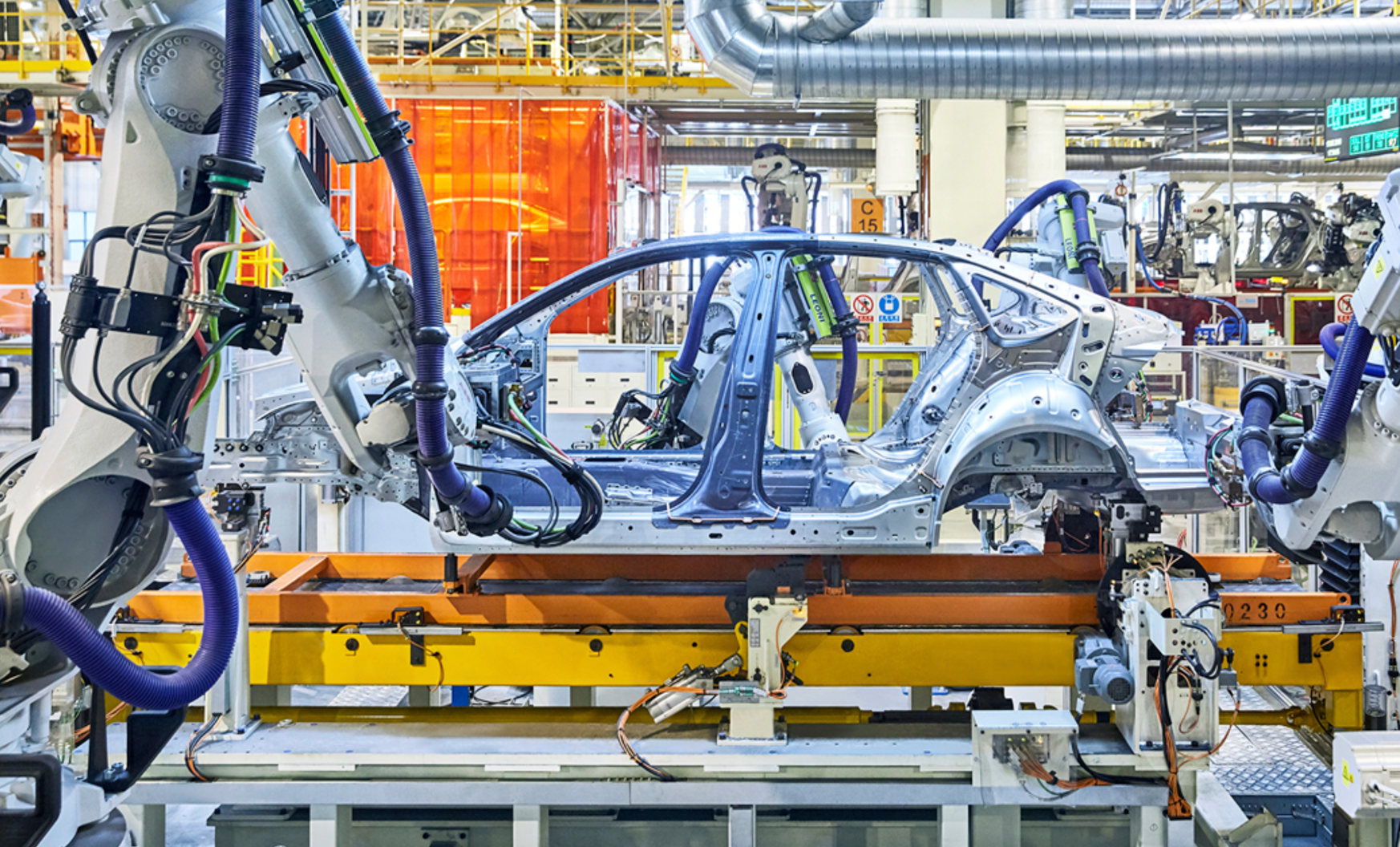
10:00–10:40 Production Line Inspection Content: Visit the new energy vehicle final assembly production line to closely observe intelligent manufacturing, precision assembly, and quality control, and to gain a firsthand understanding of the automobile manufacturing process.
10:40–11:30 Executive Roundtable and Interaction Content: Hold a roundtable discussion with SAIC Motor executives or business leaders, exchange views on industry trends around topics such as "The Dual-Driven Strategy of Global Expansion and New Energy Transformation," and engage in a Q&A session.
Who it suits
The visit suits automotive manufacturers and suppliers, mobility and fleet operators, dealers and importers, investors and analysts, and manufacturing delegations. It is also used by university and business school groups working on industrial transformation, and the company is experienced in receiving professional visitors, including international ones.
Practical notes
- The visit is a business programme. Delegations are received as professional visitors and follow the host's rules.
- Booking requires approval in advance. Foreign participants normally need to be registered with the host ahead of time, and that process is longer than for domestic visitors; allow additional working days for the paperwork.
- Provide the participant list, nationalities and professional focus early; the technical depth of the briefing is adjusted to suit.
- Photography rules are confirmed in advance; some areas carry confidentiality requirements. Tell us during planning if you need images for internal reporting.
- Driving experiences, where arranged, require a valid licence and are subject to the host's conditions. Tell us during planning if your group wants this.
- Smart casual is appropriate. The programme involves walking through exhibition and technical areas, so flat shoes are advisable.
- English interpretation can be arranged, including specialist preparation on powertrain, battery and intelligent driving terminology. Bilingual materials and an English summary can be prepared on request.
Questions before an SAIC Motor visit in Shanghai
Is the visit open to international business delegations? Yes, subject to advance arrangements and confirmation by the host. Registration of foreign participants takes extra time, so we recommend planning at least 30 days ahead.
What is the group size? Visits are normally arranged for groups of 10 or more. We confirm the practical maximum with the host for your date.
How long does the visit take? The standard programme runs about half a day, covering the innovation showcase, a technology session and a discussion. A full day allows deeper technical discussion.
Where is the visit held? At the company's headquarters and technology centre in Shanghai. We confirm the meeting point in writing after the host approves the booking.
Do participants need an engineering background? No. The visit can be approached through manufacturing, product strategy, international business, supply chain or investment, and terminology is handled through interpretation.
Is English interpretation provided? Yes, including preparation on powertrain and battery terminology, and bilingual handouts can be arranged.
How large is the company? Vehicle sales were 4.507 million in 2025, up 12.3 per cent, with revenue of 656.24 billion yuan and profit attributable to shareholders of 10.11 billion yuan.
How much of the business is own-brand? Own brands sold 2.928 million vehicles in 2025,65 per cent of group volume, up about five percentage points year on year.
How far has electrification gone? New energy vehicle sales were 1.643 million in 2025, up 33.1 per cent, ahead of the industry average. Own-brand new energy sales were close to 1.5 million, up close to 50 per cent.
How international is it? Overseas sales were 1.071 million vehicles in 2025 and cumulative overseas sales passed six million. MG sold more than three hundred thousand vehicles in Europe, the best-selling Chinese brand there.
What technology is in production? Second-generation semi-solid-state batteries on the new MG4, the Hengxing extended-range system, the Lingxi chassis 2.0, and a Robotaxi 3.0 service in commercial operation.
What documentation is needed in advance? A participant list with passport details for foreign visitors, submitted to the host for registration, plus the delegation's professional focus. We tell you the lead time for your specific group.
Does the programme always run as described? It is built around the elements above. Facilities and areas opened on the day are subject to what the site opens, and we confirm the final scope in writing during planning, before you commit.
Arrange your SAIC Motor visit
Tell us your dates, group size and what your team wants to understand: how a joint-venture assembler became an own-brand manufacturer at 65 per cent of volume, how semi-solid-state batteries reached volume production, how a Chinese brand became the best-selling Chinese brand in Europe, or how a manufacturer builds its own ocean shipping to control export economics. China Innovation Visits will coordinate the company reception, discussion priorities, transport and English interpretation.
Contact China Innovation Visits to arrange your SAIC Motor visit in Shanghai.