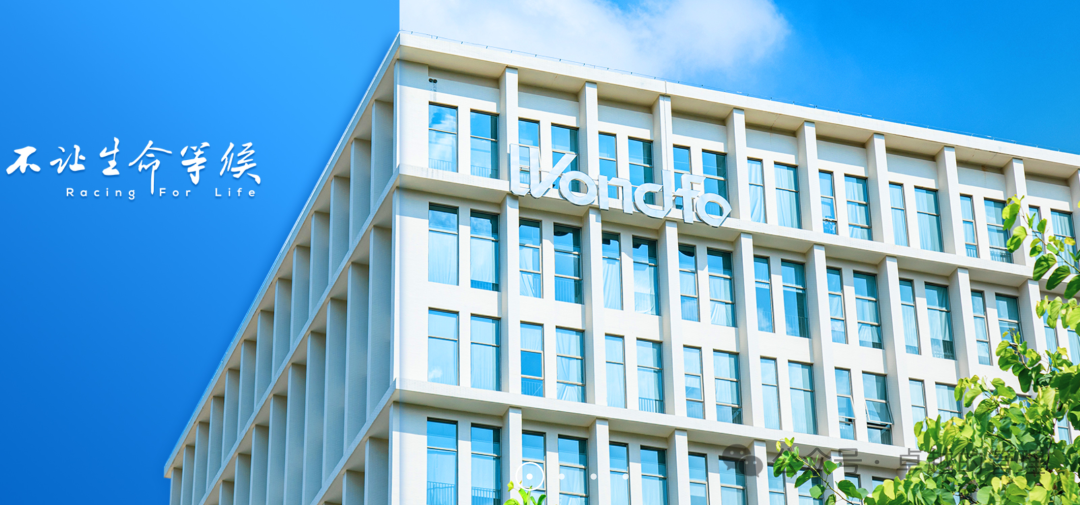
A Wondfo Biotech(万孚生物) visit in Guangzhou takes a delegation to one of the most international businesses in Chinese diagnostics. Guangzhou Wondfo Biotech was founded in 1992, is headquartered in Guangzhou Science City, and has been listed on the Shenzhen ChiNext board under 300482 since 2015. Its products are sold in more than 150 countries and regions, and overseas revenue reached 1.036 billion yuan in 2025 — close to half of the company's total, the highest share since 2022.
The reason to go in 2026 is that Wondfo is midway through the transition that most Chinese IVD companies are only beginning. It built its position on point-of-care testing, the rapid lateral-flow tests that can be run anywhere without a laboratory. It is now deliberately extending into chemiluminescence immunoassay, molecular diagnostics and digital pathology, and building an artificial intelligence layer across all three. That is a move from selling tests to selling diagnostic capability, and it is happening in public.
The second reason is the overseas model. Wondfo has more than twenty years of export experience and holds 304 overseas registrations, including 74 United States FDA registrations and 210 European CE certificates. What changed recently is the approach: the company now describes its strategy as globalisation 2.0, meaning local subsidiaries, local operating models and local registration rather than shipping product to whoever will buy it. For a delegation studying how a Chinese diagnostics company actually builds an overseas business, that is the specific thing worth seeing.
China Innovation Visits coordinates the Guangzhou programme, including the company reception, scheduling, local transport and English interpretation.
Key takeaways
- See the full diagnostics portfolio: point-of-care rapid tests, chemiluminescence, molecular diagnostics and digital pathology.
- Understand how a Chinese IVD company built a business that is close to half overseas, and what 304 overseas registrations actually represent.
- Look closely at the move from rapid tests to molecular and pathology, and at the AI layer being built on top of both.
- Discuss localisation: subsidiaries in Russia and the Philippines, training partnerships in Africa, and the AI pathology placements in Hong Kong and Italy.
- Examine the drug of abuse testing business, which sells into the United States through consumer channels as well as professional ones.
- Compare with a BGI Genomics visit on the genomics side of Chinese diagnostics, or a Mindray overview on how Chinese medical devices internationalise.
Why visit Wondfo in Guangzhou?
Diagnostics is the branch of Chinese medical technology where international reach came first and domestic scale followed. Wondfo started exporting around 2000, two decades before most of its peers thought about it, which is why the overseas share is now what it is. The interesting question on a visit is not whether the company can sell abroad — that is settled — but how it converts twenty years of distributor relationships into a structured local business.
It is also a good place to study portfolio extension under pressure. Moving from rapid tests into molecular diagnostics and digital pathology means new platforms, new regulatory paths, new customers and new competitors at the same time. Wondfo is doing this partly through investment in specialist companies rather than building everything alone, and that choice is worth examining directly.
Guangzhou is the right setting. The company's headquarters and technology centre are in Guangzhou Science City, one of the densest biomedical clusters in southern China, with hospitals, research institutes and suppliers close by. Delegations building a wider life science programme often pair it with a Fosun Pharma visit on the therapeutic side.
Company background
1992 to a listed diagnostics group
The company was founded in 1992 and listed on the ChiNext board in Shenzhen in 2015. It is controlled by its founders, Li Wenmei and Wang Jihua. It describes itself as a diagnostics company organised around major disease areas — cardiovascular and metabolic disease, oncology, respiratory disease, infectious disease, drug of abuse, women's and children's health, and diabetes.
Four technology platforms
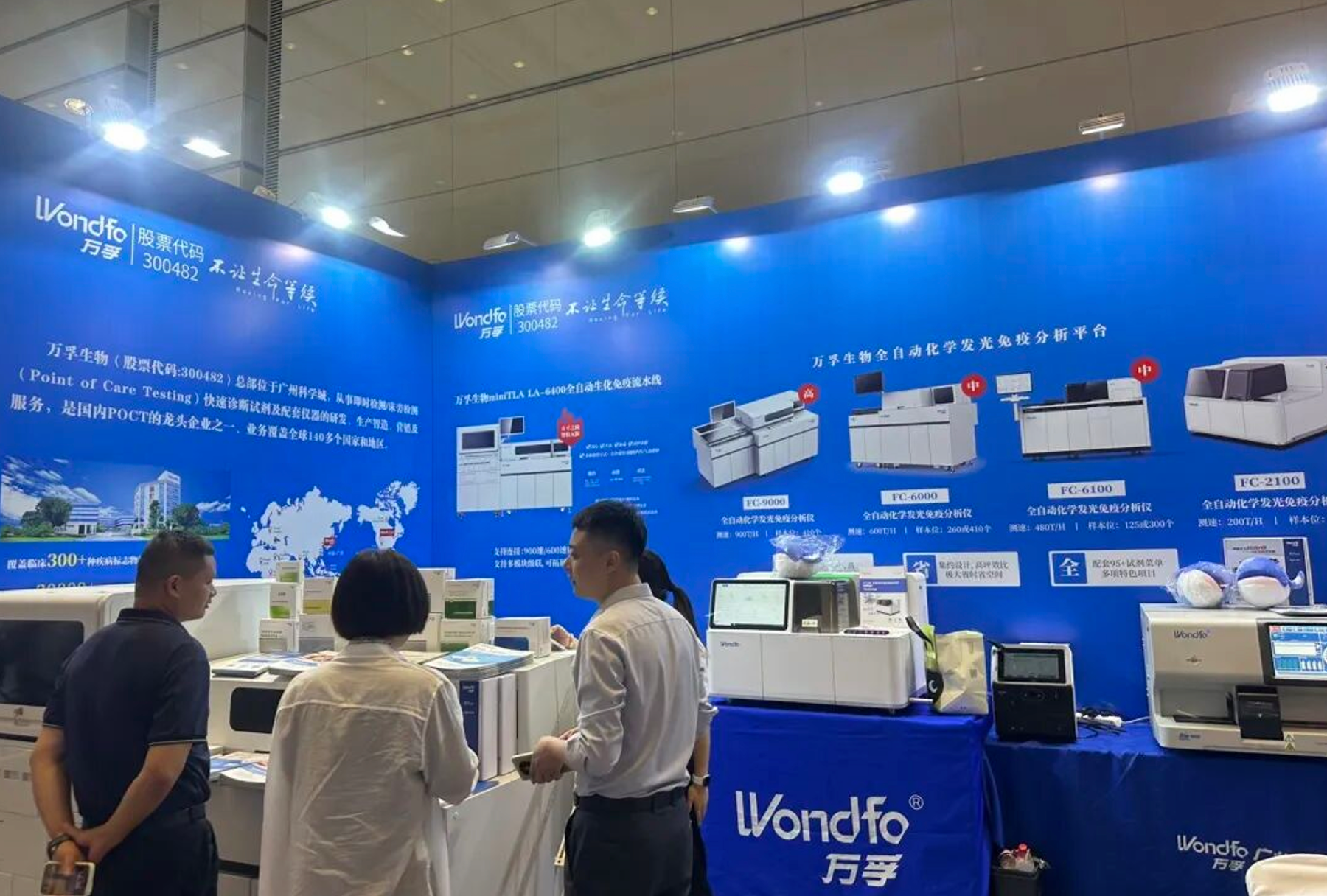
The technical foundation is four platforms that cover most of what a diagnostic test can be: colloidal gold and lateral-flow immunoassay, fluorescence immunoassay, chemiluminescence immunoassay, and molecular diagnostics. On top of those, the company has been adding digital pathology and medical imaging through investment and partnership.
Owning four platforms matters because different tests need different things. A rapid test needs to be cheap, stable and usable by anyone; a chemiluminescence assay needs throughput and precision in a hospital laboratory; a molecular test needs sample preparation and amplification; pathology needs imaging and now software. A company that can build on all four can follow a clinical question rather than defend a technology.
What it sells
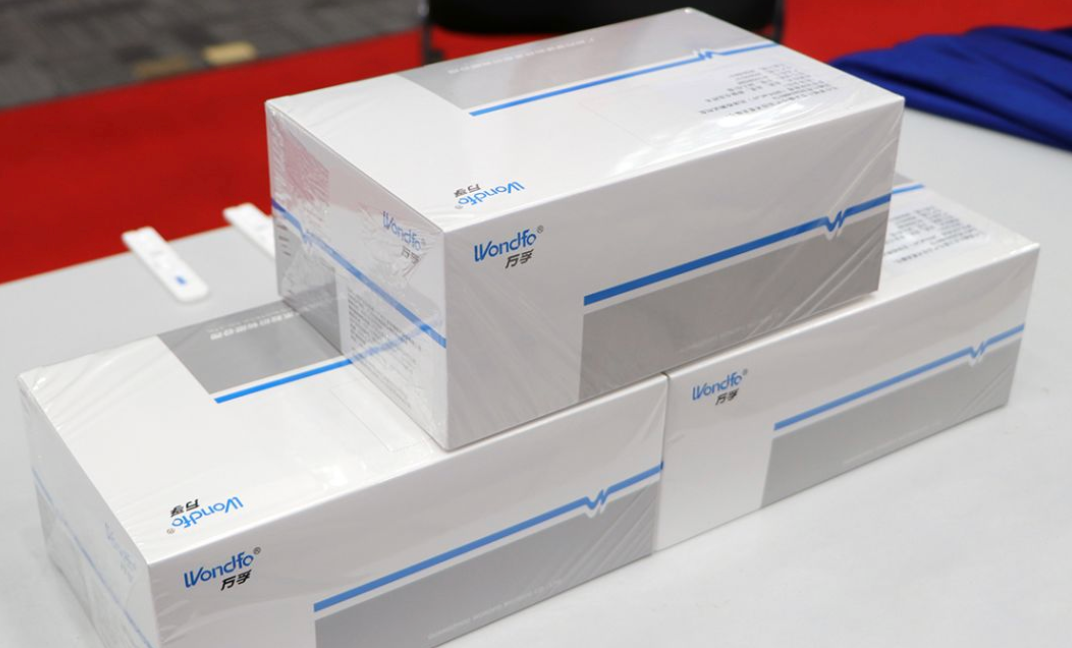
Infectious disease testing
This is the business that made the company's name, covering respiratory infections, tropical diseases and other acute conditions where a result is needed in minutes rather than hours. In Africa, where the company's products and solutions have reached more than forty countries since 2012, this work has included malaria and other endemic disease testing.
Chronic disease management
Chronic disease testing covers cardiovascular markers, diabetes monitoring and related tests used in hospitals and increasingly in primary care. In China, the fluorescence platform has been pushed into grassroots public health screening, with glycated haemoglobin testing growing faster than expected.
Drug of abuse testing
This business is unusual and often surprises visitors: it is substantial, and most of it is sold in the United States. Wondfo's drug of abuse products rank consistently among the top sellers on Amazon in the United States, and online channels have become a real source of growth alongside professional and law enforcement customers. Shipment volumes in this line grew 19.27 per cent in 2025.
Women's health and the rest
The portfolio also covers pregnancy and prenatal testing, and a long tail of assays for clinical and home use. In total the company brought more than 167 new products to market in 2025, including over 160 reagent products and seven new instruments.
Overseas: nearly half the business
Registrations
Overseas revenue was 1.036 billion yuan in 2025, close to 50 per cent of the total and the highest share since 2022. The overseas share rose by about 13.66 percentage points year on year.
That position rests on regulatory work rather than on price. As of the middle of 2025 the company held 304 overseas registration certificates, of which 74 were United States FDA registrations and 210 were European CE certificates. For a delegation, that number is the clearest measure of how much of the hard, unglamorous work of internationalisation has already been done.
Localisation, not export
The company describes its current phase as globalisation 2.0: moving from opportunistic product export to structured local operation, with the objective set as building the system and proving a local operating model before pushing volume.
Concretely, subsidiaries were established in Russia and the Philippines during 2025, both of which recorded strong growth. In Africa, the company renewed a joint training programme with the University of Nairobi in 2026 covering staff training, academic collaboration and talent exchange, and its products have been used in more than forty African countries since 2012. In August 2026 its Ebola detection programme was shortlisted for evaluation under a World Health Organization fund for rapid diagnostic products.
Molecular diagnostics and pathology: the new lines
Molecular
Molecular diagnostics reached a milestone in 2025: 33 international registration certificates and commercial progress in more than twenty countries. In China the company added a fully automated nucleic acid testing system, the WonNova 1600, and two respiratory triple nucleic acid test kits to its registration portfolio, with the WonNova 1600 installed at its first Chinese centre for disease control site.
The company also obtained a certificate for its microsatellite instability detection product during the year, which took it into oncology precision diagnostics — a category with very different customers and evidence requirements from rapid testing.
Pathology and AI
The pathology business was built through investment rather than from scratch. Wondfo holds stakes in Saiweisen Medical and Shengqiang Technology in digital pathology, and in Yizhun Intelligent in medical imaging. Shengqiang provides scanners, digital pathology systems and a pathology large model, and its systems are in scale use in close to a hundred hospitals in China.
Together the three cover the three main clinical examination scenarios — laboratory testing, pathology and imaging — which is what the company means when it describes a multi-modal diagnostic ecosystem.
The digital and AI layer
Digitalisation is one of the company's three stated strategic priorities, alongside portfolio breadth and internationalisation. The work runs along three paths: investment and acquisition, hospital-side application, and direct-to-consumer services.
The most advanced results are in pathology AI, where the barrier is unusually high — registration of AI diagnostic products requires demanding clinical validation data on sensitivity and specificity for standalone AI reads, expensive registration trials, and two to three years from trial start to approval. Wondfo's ecosystem companies hold AI Class III registration certificates that are competitive within their sub-segments.
Overseas, the pathology AI products have been placed at Pok Oi Hospital in Hong Kong — the company describes this as the first placement of a Chinese pathology AI product in Hong Kong — and an AI-plus-software-as-a-service model has been launched in Italy, which tests whether a subscription model works in Europe. Korea, Vietnam, Russia and Mexico are being developed on the same basis, on the argument that these markets have shortages of pathologists and low digitisation.
For a delegation, this is the most forward-looking part of the visit. It is also the part where the company's existing overseas diagnostics business — which has been growing at around 20 per cent — provides the channel, brand and funding.
Money and momentum
Operating cash flow was 463 million yuan in 2025, up 28.01 per cent, and the first quarter of 2026 was stronger again: revenue of 582 million yuan, up 46.66 per cent on the previous quarter, profit attributable to shareholders of 84 million yuan, returning to profit, and operating cash flow of 218 million yuan, up 246.63 per cent year on year.
Gross margin was 56.98 per cent in 2025. The balance sheet is conservative: the gearing ratio is about 17 per cent, and cash plus held-for-trading financial assets stood at 1.971 billion yuan at the end of the first quarter of 2026. The company also completed a share buyback and a share increase by its chair in mid-2026.
The pattern to note is that the overseas business and the newer platforms are carrying the group's growth. That is the shape of Chinese diagnostics in 2026, and the visit is the best place to hear how management thinks about the sequence.

What a visit covers
The standard programme
| Time | What happens |
|---|---|
| First 30 minutes | Reception and exhibition hall with technology centre: the four platforms and the product matrix |
| 30–70 minutes | Manufacturing and quality-control areas |
| 70–120 minutes | Discussion with international business or research staff |
The standard visit runs about 120 minutes: 30 minutes in the exhibition hall, 40 minutes in the manufacturing areas and 50 minutes in discussion, with the start time set with the host. Multi-day programmes can add a deeper technology session and a wider discussion on diagnostics strategy. Multi-day programmes can add a deeper technology session and a wider discussion on diagnostics strategy.
The exhibition hall is where the breadth is easiest to grasp, because rapid tests, instruments and the newer molecular and pathology systems are presented together. The discussion session is where registration strategy, market entry and portfolio questions are handled.
Who it suits
The visit suits diagnostics and medical device companies, pharmaceutical companies moving into companion diagnostics, distributors and hospital procurement teams, investors, and public health delegations. It is also used by university and business school groups working on internationalisation strategy, and the company is experienced in receiving professional visitors.
Practical notes
- The visit is a business programme. Delegations are received as professional visitors and follow the host's rules.
- Booking requires approval in advance. Foreign participants normally need to be registered with the host ahead of time, and that process is longer than for domestic visitors; allow additional working days for the paperwork.
- Provide the participant list, nationalities and professional focus early; the technical depth of the briefing is adjusted to suit.
- Photography rules are confirmed in advance; some areas carry confidentiality requirements. Tell us during planning if you need images for internal reporting.
- Smart casual is appropriate. The programme involves walking through exhibition and technical areas.
- English interpretation can be arranged, including specialist preparation on diagnostics and regulatory terminology. Bilingual materials and an English summary can be prepared on request.
Questions before a Wondfo visit in Guangzhou
Is the visit open to international business delegations? Yes, subject to advance arrangements and confirmation by the host. Registration of foreign participants takes extra time, so we recommend planning at least 30 days ahead.
What is the group size? Visits are normally arranged for groups of 10 or more. We confirm the practical maximum with the host for your date.
How long does the visit take? The standard programme runs about two hours, covering the exhibition hall, a technical briefing and a discussion. Longer programmes can include the technology centre in more depth.
Where is the visit held? At the company's headquarters in Guangzhou Science City. We confirm the meeting point in writing after the host approves the booking.
Do participants need a diagnostics background? No. The visit can be approached through diagnostics, medical devices, public health, investment or international business, and terminology is handled through interpretation.
Is English interpretation provided? Yes, including preparation on diagnostics and regulatory terminology, and bilingual handouts can be arranged.
How international is the company? Overseas revenue was 1.036 billion yuan in 2025, close to half of the total, with products sold in more than 150 countries and regions.
How many overseas registrations does it hold? 304 as of mid-2025, including 74 United States FDA registrations and 210 European CE certificates.
What is new in the portfolio? Molecular diagnostics, with 33 international registrations and progress in more than twenty countries; digital pathology and imaging built through stakes in three specialist companies; and pathology AI products placed in Hong Kong and Italy.
What is the drug of abuse business? A United States-focused line that sells through professional channels and ranks among the top sellers on Amazon in the United States, with shipment volumes up 19.27 per cent in 2025.
What is the current financial position? Operating cash flow was 463 million yuan in 2025, up 28.01 per cent. The first quarter of 2026 returned to profit, with revenue up 46.66 per cent on the previous quarter and operating cash flow up 246.63 per cent year on year.
What documentation is needed in advance? A participant list with passport details for foreign visitors, submitted to the host for registration, plus the delegation's professional focus. We tell you the lead time for your specific group.
Does the programme always run as described? It is built around the elements above. Facilities and areas opened on the day are subject to what the site opens, and we confirm the final scope in writing during planning, before you commit.
Arrange your Wondfo visit
Tell us your dates, group size and what your team wants to understand: how a Chinese diagnostics company reaches nearly half its revenue overseas, what 304 overseas registrations actually take to build, how a rapid-test company moves into molecular diagnostics and digital pathology, or how pathology AI is being commercialised in Hong Kong and Europe. China Innovation Visits will coordinate the company reception, discussion priorities, transport and English interpretation.
Contact China Innovation Visits to arrange your Wondfo Biotech visit in Guangzhou.