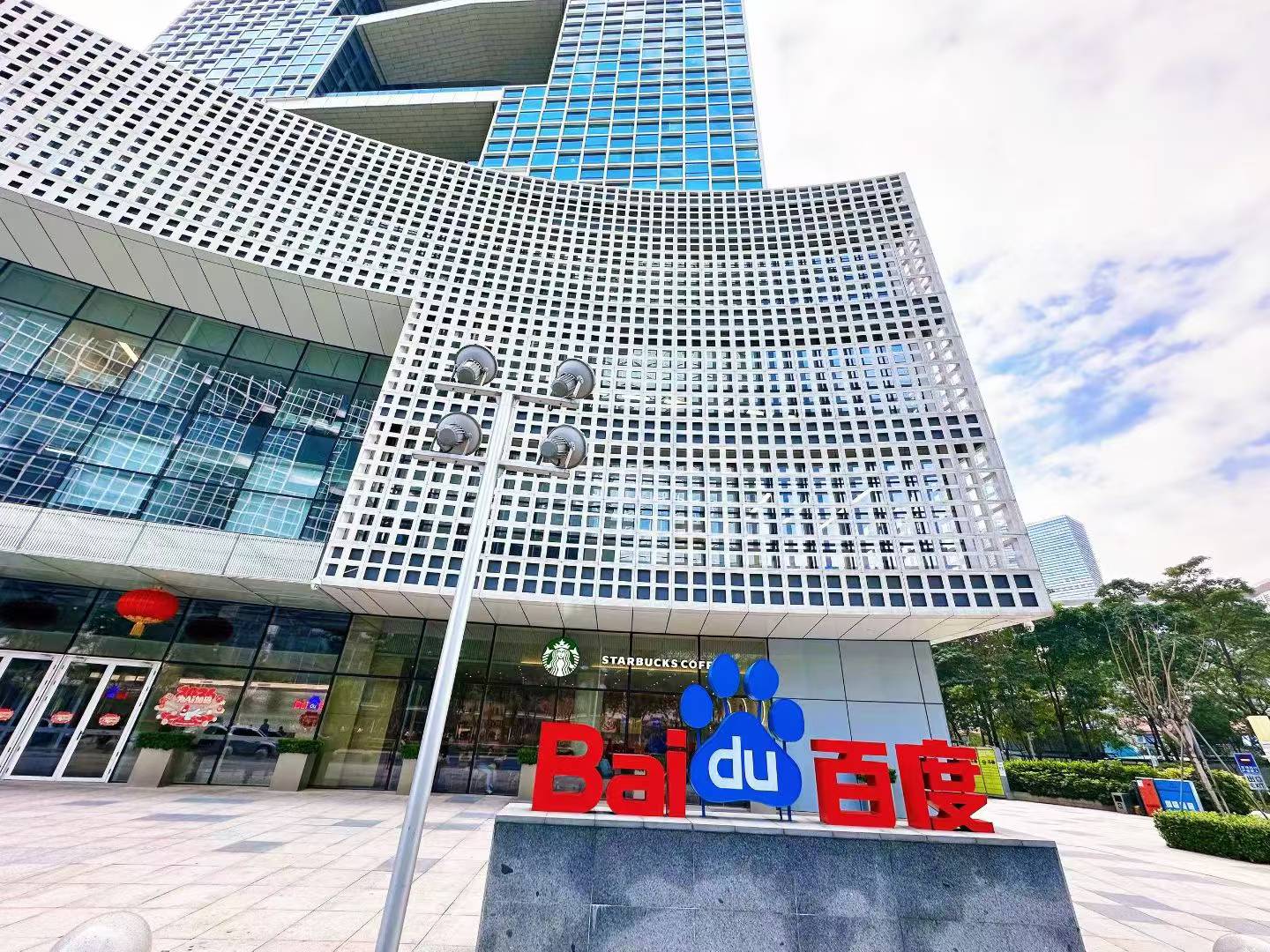
A Baidu visit in Shenzhen takes an international delegation into the company's southern research centre at a moment when the business is visibly changing shape. Baidu was founded in 2000 and lists on Nasdaq under BIDU and in Hong Kong under 9888. The Shenzhen programme runs in Nanshan district, at Baidu International Building.
The reason to go is not the search engine. It is that Baidu is the clearest large case of a Chinese internet company trying to replace a declining core business with an AI one, publishing the numbers quarterly while it does so. In the second quarter of 2026, AI new business accounted for half of Baidu's core revenue while total revenue fell and net profit fell sharply. For a management team working through its own AI transition, that is more instructive than a keynote.
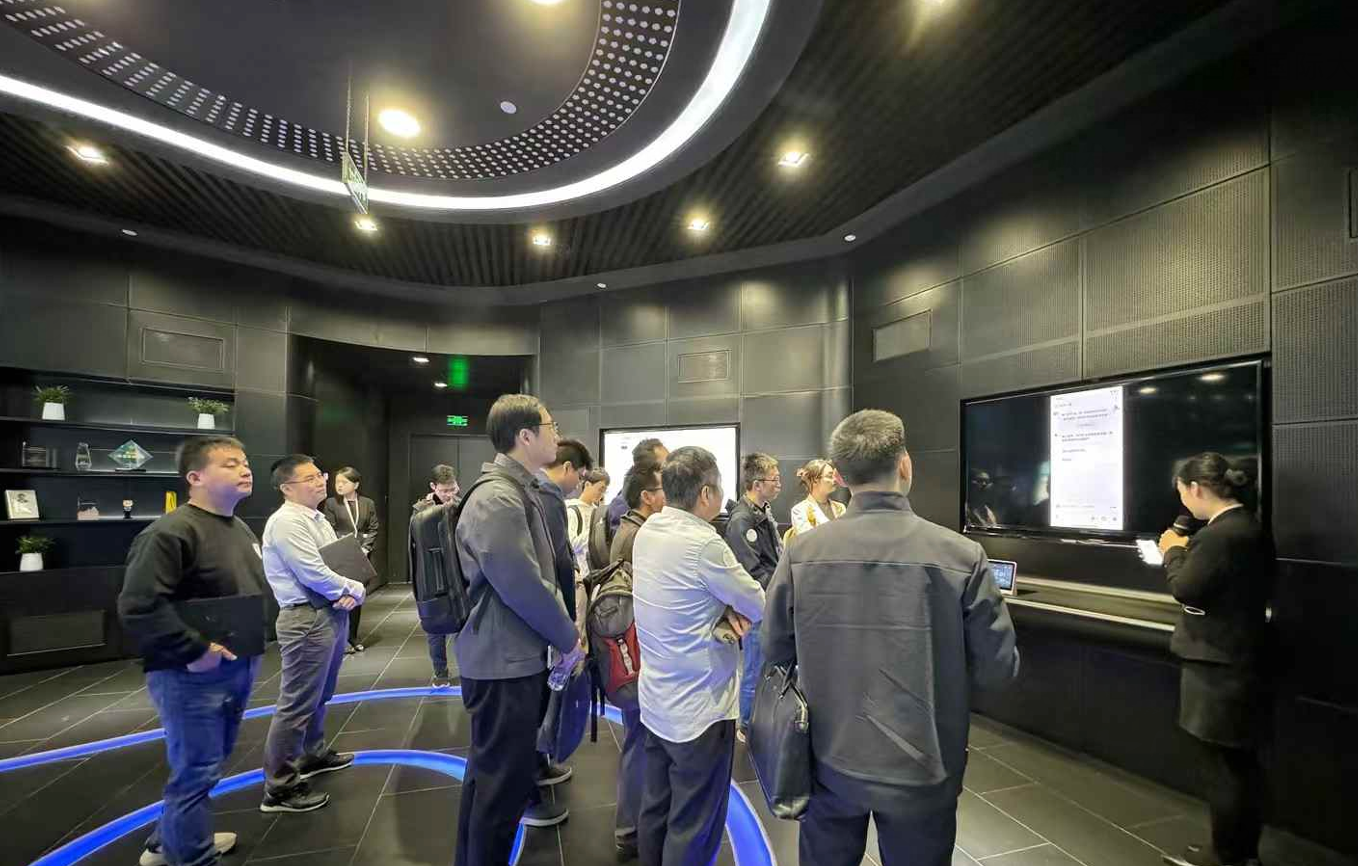
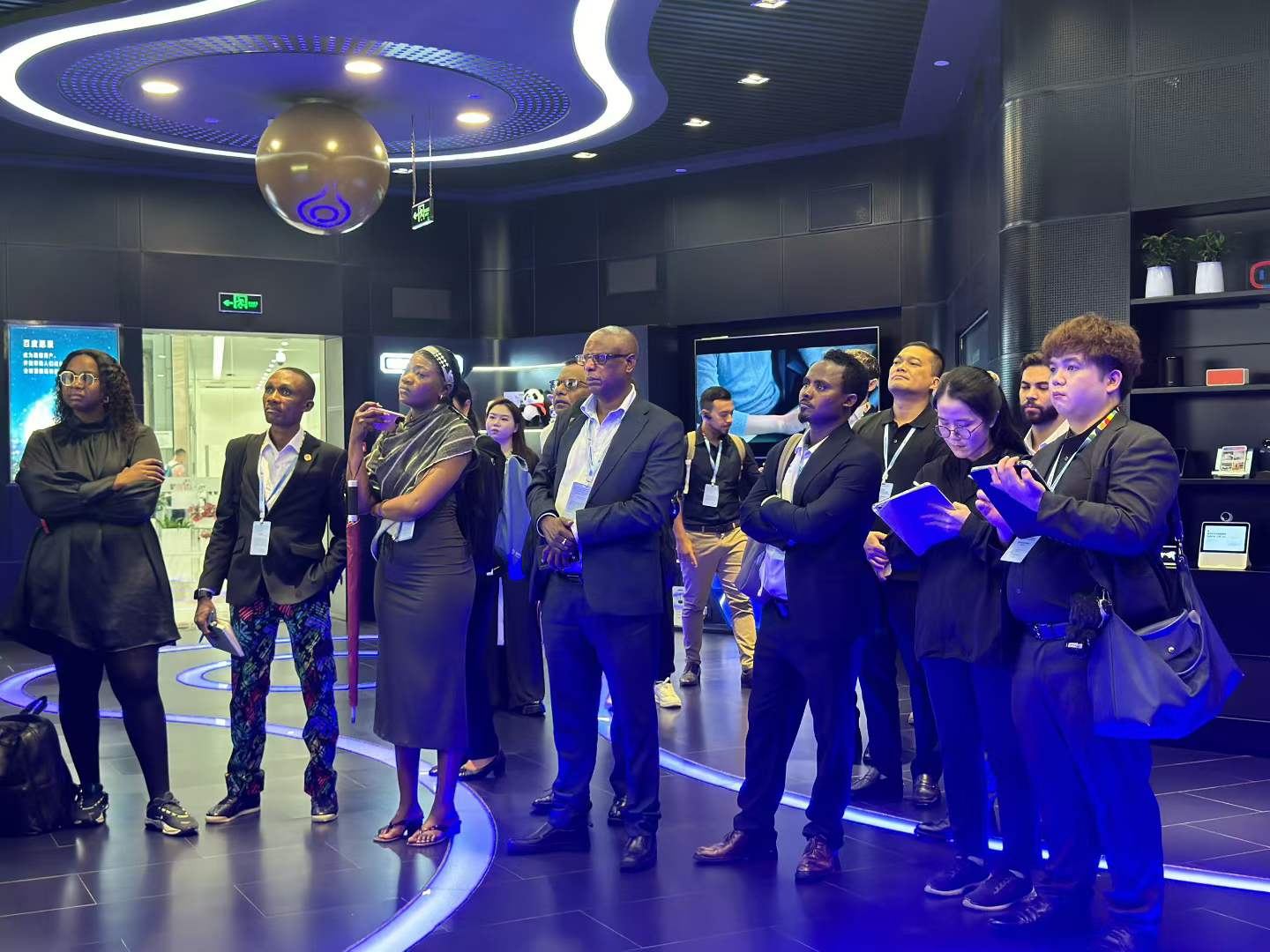
A visit is organised around the Baidu AI showroom and a themed briefing on the Apollo autonomous driving programme, with Q&A.
China Innovation Visits coordinates the Baidu tour, including the company reception, scheduling, Shenzhen transport and English interpretation.
Key takeaways
- See a company replacing a shrinking advertising business with AI infrastructure and applications, in public and quarter by quarter.
- Examine Apollo Go, the robotaxi service, in the one Chinese city that has written driverless rules into law.
- Understand what Baidu's AI showroom says about how the company wants to be read.
- Discuss the cost of the transition: where revenue fell, and why.
- Compare the Shenzhen programme with the Baidu Apollo Park visit in Beijing and the Apollo Park visit in Shanghai.
Why visit Baidu in Shenzhen?
Baidu is useful to visit precisely because it is not a clean success story. It is twenty-five years old, it built one of the largest search and advertising businesses in China, and that business is now contracting under pressure from AI-native search and from competitors. The AI business is growing into the gap, but has not yet filled it.
That makes the visit a working session rather than a showcase. Delegations can ask what the company chose to protect, what it chose to sacrifice, and how it decided. Those are the same questions most established companies face when AI starts eating their own margins.
Shenzhen is the right place to have that conversation about autonomous driving in particular, which is why the briefing here focuses on Apollo.
What the Shenzhen site is
A research centre, not the headquarters
Baidu's headquarters is in Beijing's Haidian district. Shenzhen is one of the company's research centres, listed on Baidu's own contact page as the Baidu International Building in Nanshan district. Baidu (China) Limited's Shenzhen branch was registered in March 2006, with its registered address in the building's west tower.
The building sits inside the Shenzhen high-tech park, about 470 metres from Keyuan station on metro line 2. For delegations already visiting other Nanshan companies, it is a short transfer, which is why this programme combines well with other Shenzhen stops.
Confirming the meeting point
Office addresses change and buildings have multiple entrances and towers. We confirm the building, floor and meeting point in writing after the host approves the booking, and pass that to you before travel. Do not rely on a published address.
The 2026 numbers
Second quarter of 2026
For the quarter ending 30 June 2026, Baidu reported total revenue of about 31.3 billion yuan, down 4 per cent year on year, with Baidu core revenue at about 25.2 billion yuan, also down 4 per cent. Net profit attributable to Baidu was about 2.3 billion yuan, down 68 per cent year on year. On a non-GAAP basis, net profit was about 2.6 billion yuan.
Within Baidu core, AI new business revenue reached about 12.5 billion yuan, half of the total, and the second consecutive quarter above half:
- AI Cloud infrastructure: about 7.3 billion yuan, up 50 per cent, with GPU cloud revenue up 283 per cent, accelerating from 184 per cent in the prior quarter.
- AI applications: about 2.5 billion yuan, up 3 per cent.
- AI-native marketing services: about 2.6 billion yuan, roughly flat year on year.
Traditional business revenue was about 10.4 billion yuan, down 23 per cent. Online marketing revenue was about 13.1 billion yuan, down 19 per cent.
How to read the transition
The pattern is straightforward once you see it. The AI lines are growing fast. The legacy advertising line is shrinking faster than the AI lines are growing, so the total is still falling, and profit has fallen more sharply than revenue because the company is spending on infrastructure while it does so.
Baidu's own management has been explicit about one mechanism. Executives have said the company is deliberately restraining monetisation of AI search while it prioritises user experience, and that this weighs on advertising revenue in the short term. Ask about that trade-off in the briefing: it is the clearest example of a company choosing long-term product position over near-term revenue.
Two supports are worth noting. Operating cash flow was positive for a fourth consecutive quarter, at about 3.4 billion yuan. And cash and investments totalled about 283.1 billion yuan at the end of June 2026, which is what funds the transition.
ERNIE and the model position
Where the models stand
Baidu released ERNIE 5.0 in November 2025. Company statements describe it as a unified native omni-modal model using omni-modal ultra-sparse mixture-of-experts distributed training, with a parameter scale above 2.4 trillion, and it was made available on the company's Qianfan platform.
Delegations should arrive with an accurate picture of the competitive position. In October 2026 Baidu's founder said he was confident ERNIE could return to the first tier of foundation models, which is a statement about where it currently is, not where it already sits. Treat benchmark and ranking claims as company-attributed, and use the visit to ask which customers are deploying which model for which workload.
The developer platform is the firmer ground. Baidu reports PaddlePaddle developers in the tens of millions and a large enterprise customer base; the Guangzhou programme covers that ecosystem in more depth.
Apollo and the robotaxi business
Global operations
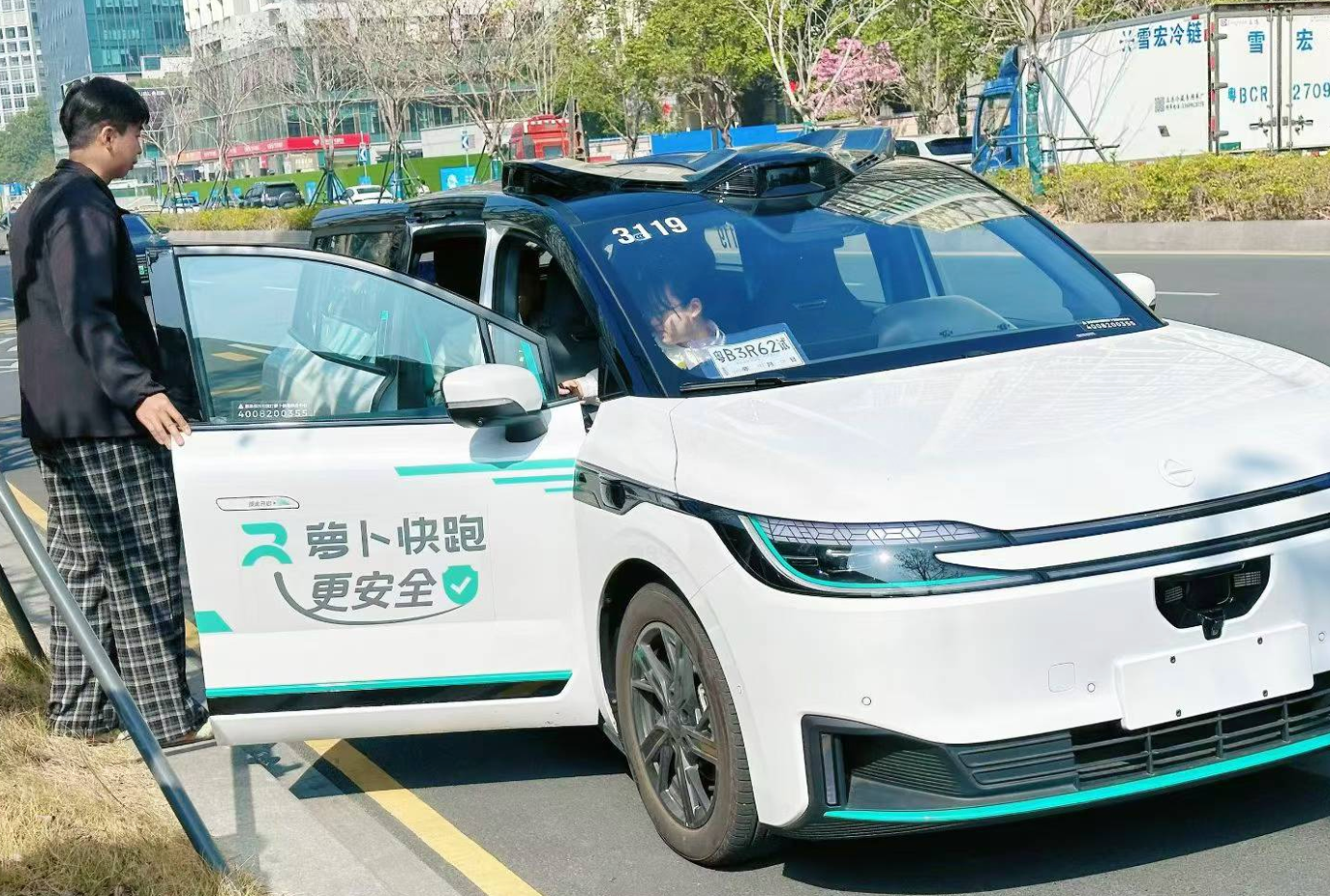
Apollo Go, the robotaxi service, operates in 28 cities globally. Baidu and company spokespeople report cumulative orders above 23 million, total autonomous driving mileage above 350 million kilometres, and fully driverless mileage above 240 million kilometres.
The overseas expansion is the part worth studying. Apollo Go started fully driverless commercial operations in Dubai, where riders can book through Uber as well as Baidu's own app. In Hong Kong it received the first fully driverless testing permit and began testing on the airport island, described as the first fully driverless open-road testing in a right-hand-drive, left-hand-traffic system. Testing with Uber and Lyft began in London, and work with PostBus started in Switzerland.
Why Shenzhen is the interesting city
Shenzhen is where the regulatory question is being answered, not just the engineering one. In May 2026 the Shenzhen municipal people's congress adopted amendments, and in July 2026 the revised Shenzhen Special Economic Zone Intelligent Connected Vehicle Regulation took effect. Chinese reporting describes Shenzhen as the first city in the country to set out driverless rules explicitly, authorising the city government to explore city-wide open road testing, demonstration application and commercial operation pilots.
Apollo Go operates in three Shenzhen districts: Nanshan, Bao'an and Pingshan. As of the end of July 2026, city authorities reported more than 1,300 registered functional unmanned vehicles, 2,052 pilot vehicles connected to the platform, cumulative safe operating mileage of about 40.16 million kilometres, and 2,890 opened delivery routes.
This is the reason to take the Apollo briefing here rather than elsewhere. The delegation can discuss deployment against a real regulatory framework, in the city where the framework is being written.
Sample Visit Agenda
14:30–15:15 Visit to Baidu Exhibition Hall in Shenzhen
- Panoramic display of Baidu's AI layout
- Demonstrations of core applications such as Baidu Maps
- Baidu Brain technology experience
- Apollo autonomous driving real-vehicle experience (30 minutes)
15:30–16:30 Thematic Sharing and Exchange (Choose One):
- Baidu Apollo's Autonomous Driving Practice
- ERNIE Large Model and AI Strategic Layout
- Search Restructuring and Content Ecosystem in the AI Era
- PaddlePaddle Deep Learning Framework and Developer Ecosystem
Tell us which theme your team wants when you book. The host prepares around the delegation's interests, and the choice changes who comes to the room.
Who this visit suits
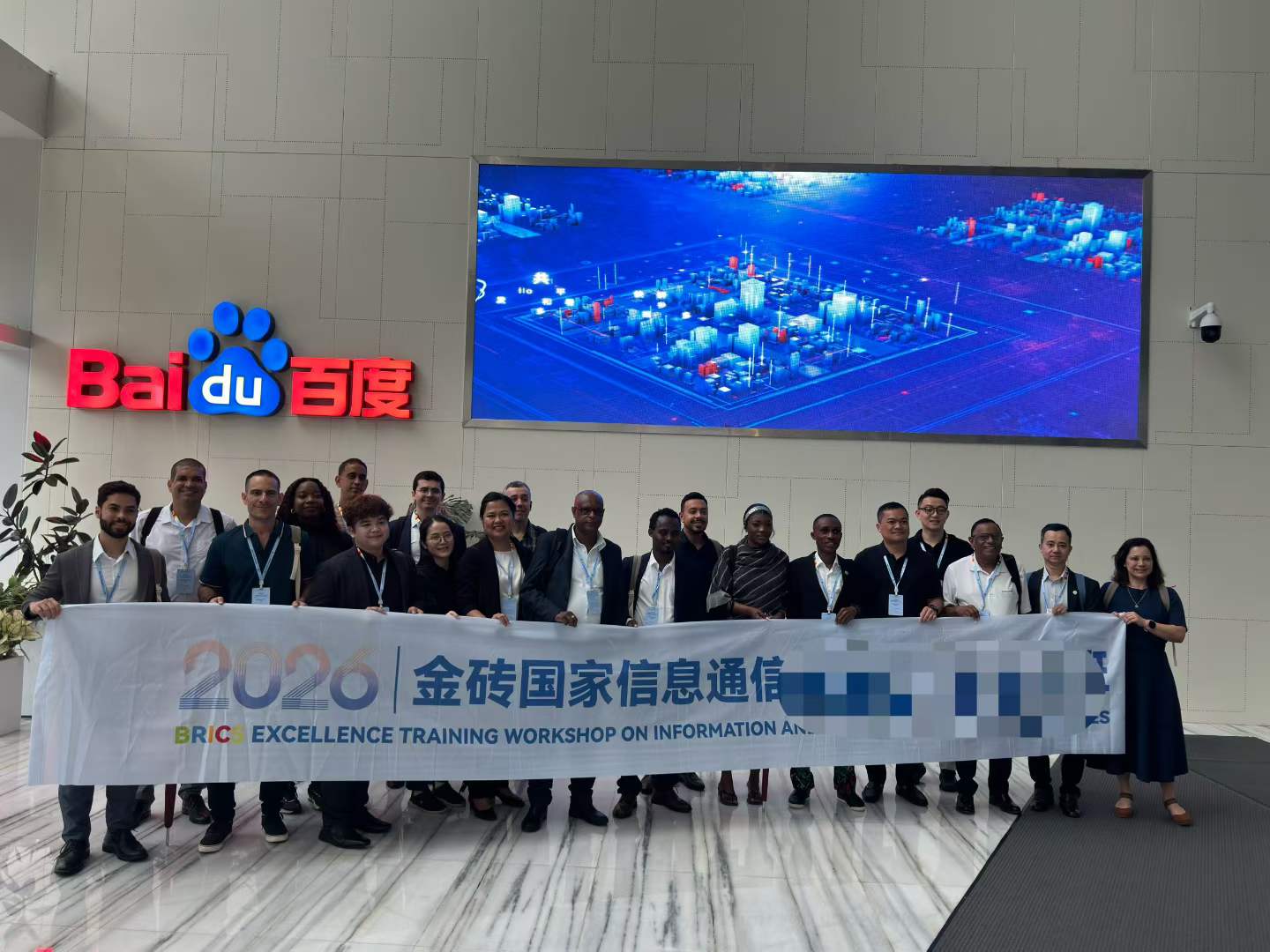
The programme suits executives at established companies facing margin pressure from AI, because Baidu is living through that now and publishes the evidence. It suits mobility, logistics and automotive delegations, because the Apollo discussion is grounded in operating services rather than prototypes. It suits investors and analysts covering the shift from internet to AI revenue. And it suits technology buyers evaluating Chinese cloud and model platforms.
It suits these groups less if what they want is a polished technology demo with no discussion of trade-offs.
Combining the visit with other Shenzhen stops
Baidu works as the AI and mobility anchor of a Shenzhen programme. A Huawei headquarters visit in Shenzhen covers computing and devices, and a Shenzhen robotics cluster visit covers robotics and automation. For a different angle on the same industry, the Baidu PaddlePaddle visit in Guangzhou covers the developer platform.
Combinations are coordinated around the delegation's objectives, travel schedule and host availability.
Practical notes
- The visit is a business programme. Delegations are received as professional visitors and follow the host's visitor rules.
- Photography and video require permission. Assume the showroom is restricted unless we confirm otherwise in writing.
- Smart casual is appropriate; the visit involves standing and walking through exhibition areas.
- Participants must be 18 or over.
- Changes or cancellations should be raised well before the date, because host slots are booked in advance.
- English interpretation can be arranged for the showroom, briefing and Q&A.
- Outside the programme, Apollo Go operates publicly in Nanshan, Bao'an and Pingshan. If your team wants to ride independently, tell us and we will advise on practical arrangements.
Questions before a Baidu visit in Shenzhen
Is the visit open to international business delegations? Yes, subject to advance arrangements and confirmation by the host. We recommend planning at least 30 days ahead.
What is the group size? Visits are normally arranged for groups of 10 or more and fewer than 20 participants. Smaller groups can sometimes be accommodated.
How long does the visit take? The standard programme runs about two hours, typically in the afternoon, covering the showroom and the briefing and Q&A.
Is this the company headquarters? No. Baidu's headquarters is in Beijing. Shenzhen is one of the company's research centres, in Nanshan district.
Where exactly is the site? In Nanshan district at Baidu International Building. We confirm the building, floor and meeting point in writing after the host approves the booking.
Do participants need a technical background? No. The visit can be approached through strategy, operations, investment or mobility, and terminology is handled through interpretation.
Is English interpretation provided? Yes, interpretation can be arranged for the showroom, briefing and Q&A, with terminology prepared around the delegation's interests.
Can we take photographs? Photography and video require the host's permission and are often restricted in the showroom. We confirm the rules in advance and advise accordingly.
Is Baidu growing? The AI business is, and the legacy business is not. In the second quarter of 2026 AI new business was half of Baidu core revenue, while total revenue fell 4 per cent and net profit fell 68 per cent year on year.
Can we ride an Apollo Go vehicle? The showroom programme normally includes a vehicle arranged by the host. Separately, Apollo Go operates publicly in three Shenzhen districts, and independent rides can be arranged outside the programme.
Does the programme always run as described? It is built around the elements above. Facilities and areas opened on the day are subject to what the site opens, and we confirm the final scope in writing during planning, before you commit.
Arrange your Baidu visit
Tell us your dates, group size and which theme your team wants: Apollo and autonomous driving, ERNIE and AI strategy, AI search, or the developer ecosystem. China Innovation Visits will coordinate the company reception, discussion priorities, transport and English interpretation.
Contact China Innovation Visits to arrange your Baidu company visit in Shenzhen.