Connecting the quay and the yard
Autonomous port trucks and automated guided vehicles (AGVs) are vehicle options for quay-to-yard container transport, moving containers between quay cranes and the container yard. Import containers move from the quay into the container yard, while export containers return to the waterside in step with vessel loading. Vehicle movements and the handovers at both ends influence terminal operations. The supply chain behind this activity brings together heavy-duty vehicles, autonomous driving, fleet dispatch and terminal operating systems.
Projects involving Chinese companies provide concrete starting points for examining these layers. Yangshan Phase IV illustrates the division between ZPMC's equipment and equipment control system, and Shanghai International Port Group's terminal operating system. Continued procurement of Westwell vehicles at the UK's Port of Felixstowe provides a record of overseas adoption and expansion. Visiting teams can use these projects to explore equipment, software and engineering support, then compare that experience with conditions at their own terminal.
A new terminal or expansion can consider vehicles, road layouts, energy infrastructure and handling equipment together. An operating terminal has to accommodate existing assets, mixed traffic and a phased transition alongside ongoing work. Local equipment suppliers and integrators also need to define their role in vehicle delivery, autonomous driving integration, systems integration or maintenance.
ZPMC, Westwell and Trunk offer examples of equipment and control integration, autonomous vehicles and fleet systems, and terminal autonomous driving and transport management. Understanding each company's business and project role helps visiting teams identify the right teams for a technical discussion.
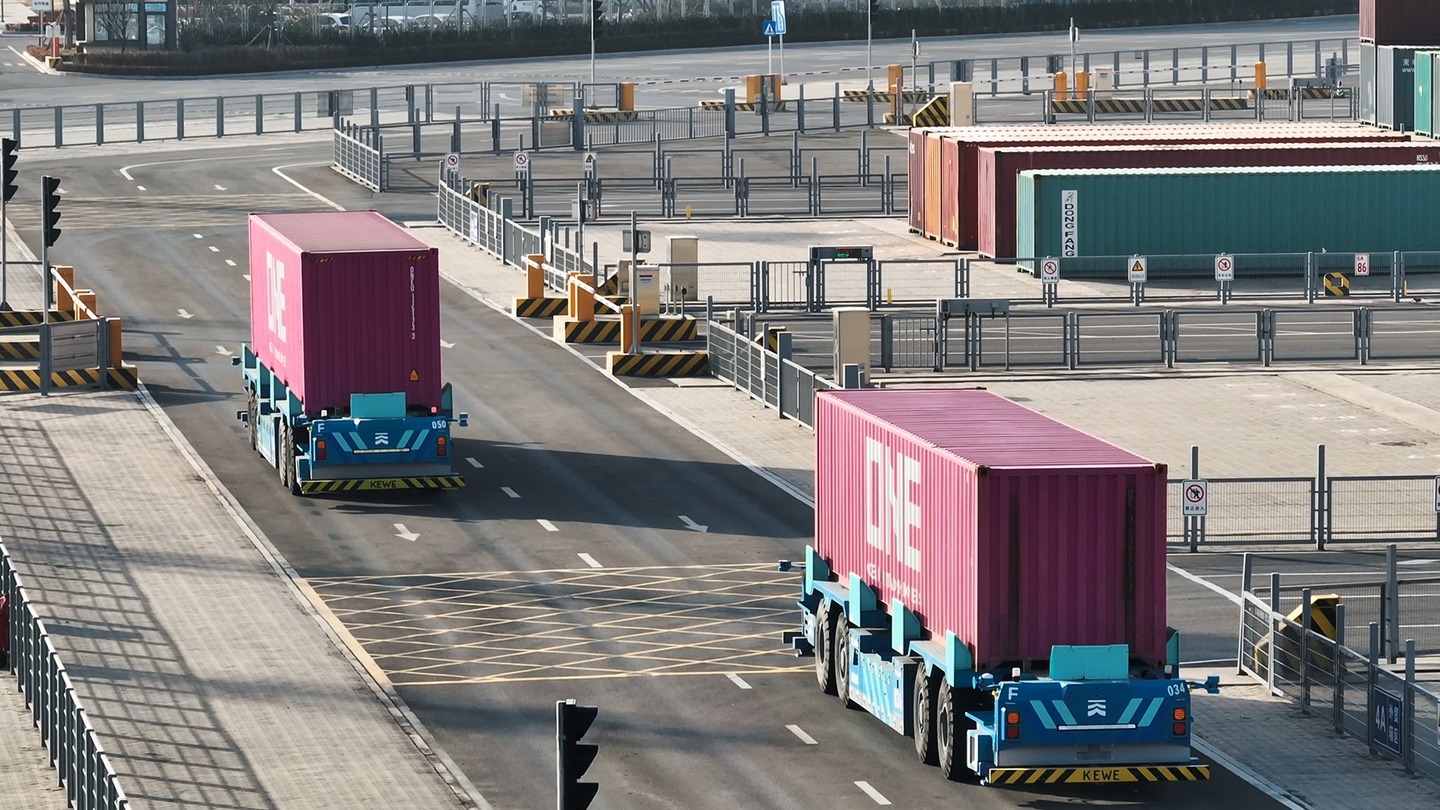
Driverless container transport at Tianjin Port, photographed in the first half of 2023. Photo: Huawei.
Separate vehicles, driving and terminal systems
A horizontal transport solution has several layers. The chassis, load-bearing structure and energy system establish the vehicle's physical capabilities. Positioning, perception and autonomous driving enable it to move within a defined operating environment. Fleet dispatch coordinates task allocation, vehicle sequencing and energy replenishment.
At the terminal level, the terminal operating system, or TOS, manages container operations planning and business processes. An equipment control system, or ECS, takes relevant work instructions, coordinates execution and returns equipment status. The functions of fleet management, dispatch and ECS can overlap in a particular architecture. A technical exchange can examine the interfaces and responsibilities in a particular project.
For an import move, the correct container task must reach a vehicle that can complete the handover with the quay crane and yard equipment. Autonomous driving handles vehicle movement, while the operating systems connect that movement to the terminal's wider work sequence.
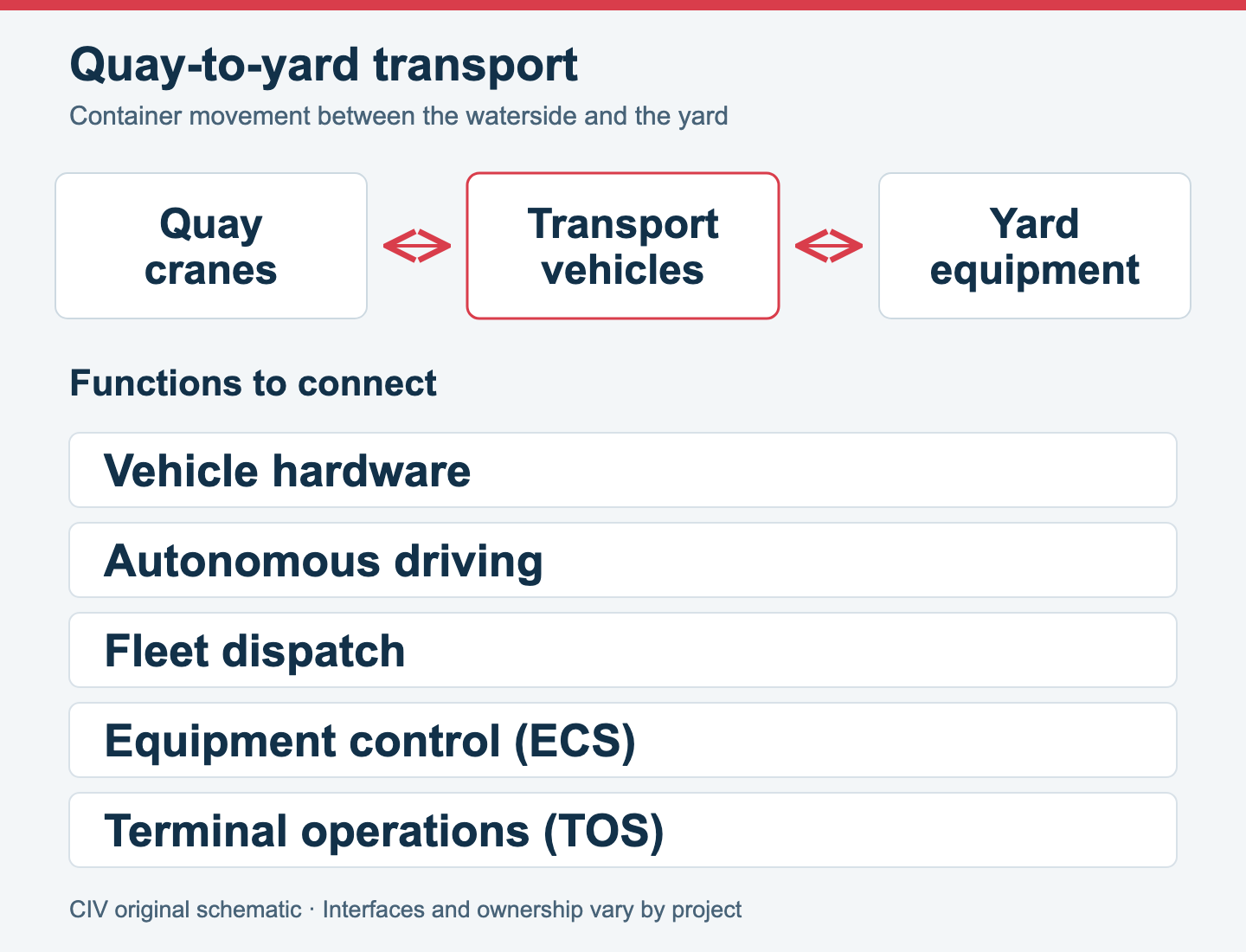
Quay-to-yard transport and its functional layers. Original CIV schematic. Interfaces and ownership vary by project.
| Scope to discuss first | Relevant partners | Responsibilities to examine |
|---|---|---|
| Handling equipment, transport vehicles and their coordination | Port equipment manufacturers and automation integrators | Equipment, control systems and site integration roles |
| Adding or replacing autonomous transport vehicles | Vehicle manufacturers and autonomous transport providers | Responsibility for vehicles, autonomous driving, fleet management and energy infrastructure |
| Introducing autonomous driving at an operating terminal | Autonomous driving providers, vehicle partners and integrators | Assets that can be retained, mixed traffic and phased implementation |
| Connecting to existing business and equipment systems | The terminal's IT team, TOS/ECS providers and transport systems teams | Work instructions, handover status and exception information exchanged between systems |
A standard vehicle model can narrow the equipment selection. Project integration still depends on the terminal's handover arrangements, existing equipment and software. If vehicles are to be retained, establish model compatibility and the engineering scope before choosing an autonomous driving system or a complete transport solution.
Three Chinese companies to understand
ZPMC: port equipment and automation integration
Shanghai Zhenhua Heavy Industries, known as ZPMC, was established in 1992. Its business includes port machinery and smart port systems. For teams studying horizontal transport, its relevant capabilities encompass handling equipment, automated guided vehicles, or AGVs, and equipment control systems. These capabilities provide a way to examine quay cranes, transport vehicles and yard equipment within a shared engineering framework.
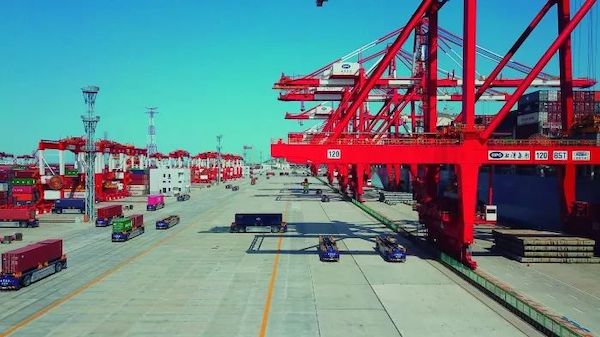
Quay cranes and terminal transport at Yangshan Phase IV. Image source: Shanghai SASAC's November 2023 project account; photograph date not stated.
The early automation project at Yangshan Phase IV provides an example. ZPMC supplied automated handling equipment, AGVs and ECS, while Shanghai International Port Group developed the terminal operating system. The project makes the respective roles of equipment manufacturing, equipment control and the terminal operator's business system tangible. Shanghai State-owned Assets Supervision and Administration Commission project account
A team studying a new terminal or substantial expansion can explore how equipment selection and control architecture are developed together, including the exchange of instructions and status between the companies involved. Where a TOS has already been selected, the discussion can focus on connecting the required equipment and control systems to that architecture.
ZPMC offers a starting point in the relationship between port equipment and automation engineering. A technical exchange can clarify the boundaries between equipment, ECS, TOS and site integration.
Westwell: autonomous vehicles and fleet operations
Westwell was established in 2015, starting in Shanghai, and applies AI and new energy technology to logistics transport. Its relevant products include Q-Truck autonomous transport vehicles and fleet management and dispatch systems. Visiting teams can therefore examine the vehicle product alongside the organisation of transport within a terminal.
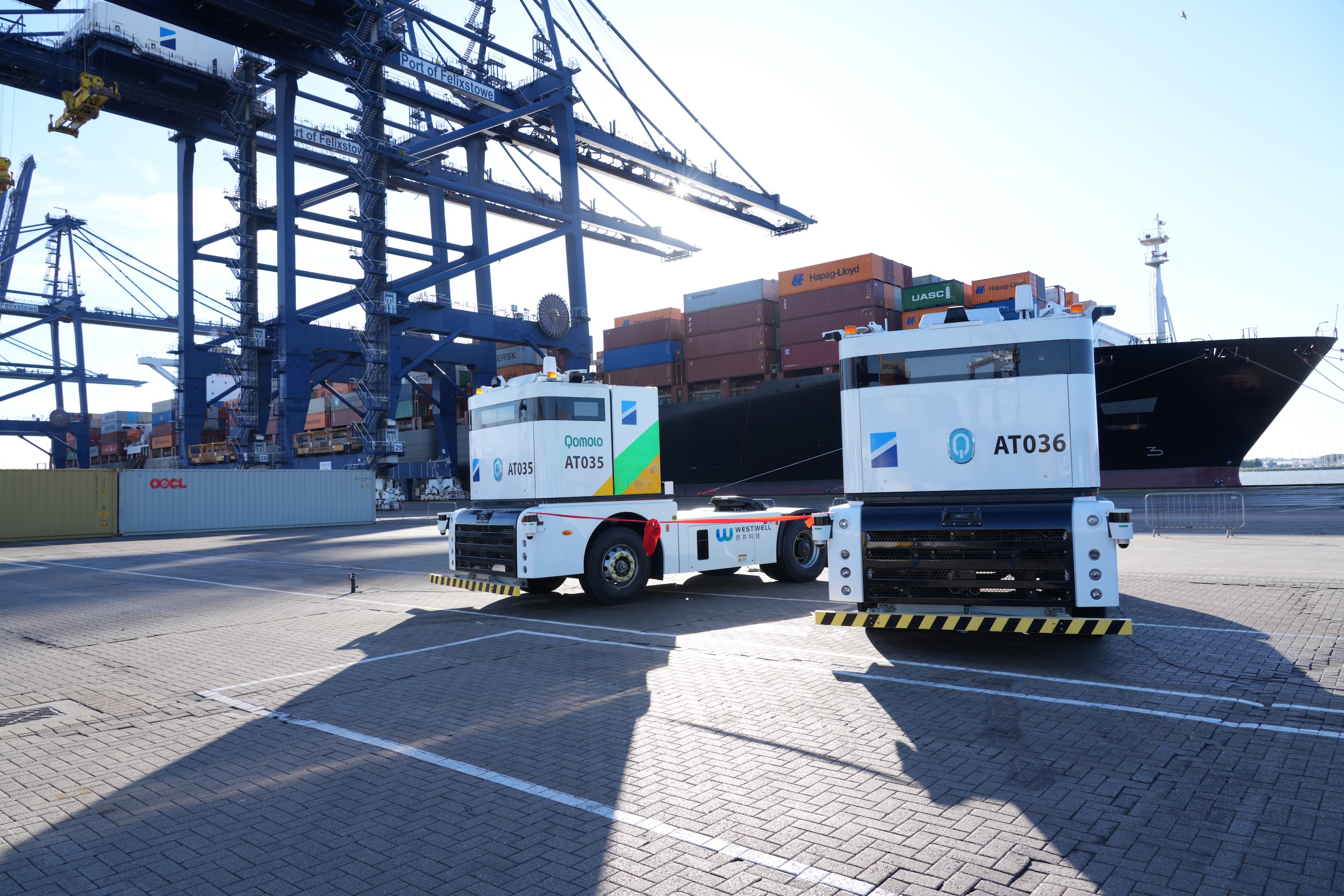
Westwell Q-Trucks pictured with quay cranes at the Port of Felixstowe, UK. Image source: Westwell's November 2025 delivery announcement; photograph date not stated.
The Port of Felixstowe provides a continuing overseas application record. When announcing a further order in September 2025, the port described Westwell vehicles already operating alongside human-driven trucks at Trinity Terminal. In July 2026, the port announced a third order, continuing to expand its use of Westwell autonomous transport vehicles. These stages provide context for understanding how an overseas terminal introduces and expands autonomous transport. Port's September 2025 announcement · Port's July 2026 announcement
Introducing autonomous vehicles into an operating terminal involves connecting to the operator's existing systems and working arrangements. Responsibilities for vehicle supply, fleet management and systems integration need to align.
For operators replacing transport vehicles or expanding an autonomous fleet in stages, Westwell is relevant to a comparison of vehicles and operating solutions. Local integrators can also discuss destination-market service, energy infrastructure and operational support with the relevant teams.
Trunk: mixed traffic and terminal transport management
Trunk focuses on autonomous driving systems and transport solutions. In ports, it offers the Trunk Port solution and uses its TRUNK FIT intelligent transport system to manage autonomous transport operations. Its Tianjin Port work provides a case for exploring terminal retrofits and complex traffic environments.
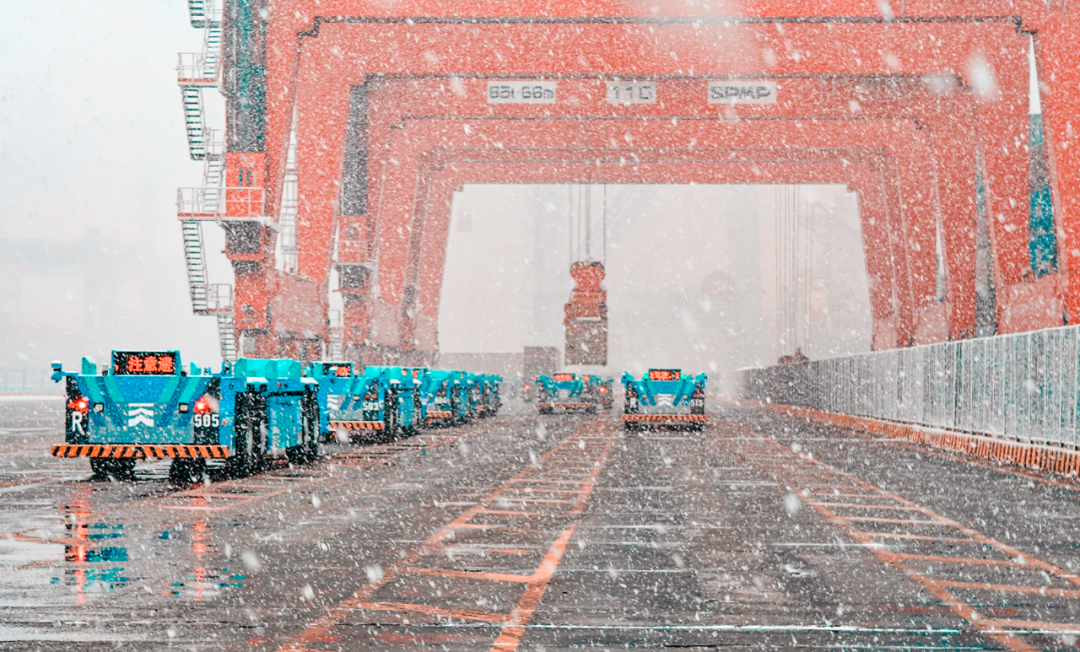
Terminal transport vehicles and quay cranes in Trunk's historical project material for the N9 berth at Tianjin Port's Eurasia International Container Terminal. Photograph date not independently confirmed.
On 17 January 2024, autonomous horizontal transport at the N9 berth of Tianjin Port's Eurasia International Container Terminal supported live-vessel operations. At that time, this long-established terminal contained human-operated port equipment, internal and external container trucks, and other vehicles. Trunk participated in the autonomous driving and transport systems work, with the project account also describing end-to-end management of vehicle operations.
The case is relevant to terminals with established traffic flows and equipment. Discussions can address connections between mixed-traffic areas, vehicle handovers with handling equipment, and how the operating team manages changes and exceptions. For local integration teams, it also offers a way to explore interfaces between autonomous driving, vehicles, transport management software and terminal systems.
This historical terminal application supports those areas of discussion. A project that also involves public-road transport outside the port requires a separate assessment of the corresponding technology, permissions and operating record.
New terminals and retrofits call for different partner choices
A new project can plan transport routes, equipment handover areas and energy replenishment locations together. Bringing the operator, port equipment manufacturer, autonomous transport team and systems providers into the discussion early helps define the overall operating model. Alongside product capabilities, the group can examine who coordinates systems integration and project delivery.
At an operating terminal, existing assets and working arrangements shape the choices. Quay cranes, yard equipment, vehicles and TOS that will be retained collectively define the retrofit scope. Selecting a representative operating area and discussing systems integration, the interaction with human-operated activities and subsequent expansion can help a delegation compare the engineering work involved in different approaches.
The three companies' activities overlap. ZPMC's equipment and control experience, Westwell's vehicles and overseas applications, and Trunk's terminal autonomous driving and mixed-traffic projects offer different starting points for investigation. The final combination should reflect the terminal's own capabilities, systems to be retained and project responsibilities.
Integration and support across terminal operations
A technical exchange can follow the system from installation and commissioning through daily operation. Equipment manufacturers, autonomous driving teams and local integrators can explain their engineering roles, operator training and responses to interruptions.
A port equipment team can explain maintenance workflows, while software teams can trace connections between TOS, ECS and transport systems. Discussion can also cover software updates, fault escalation and how engineering teams coordinate during recovery.
Considering vehicles and software together with site modifications, commissioning, energy infrastructure, training and maintenance gives a fuller view of the operating system. Operating experience from another port can inform the discussion, while the configuration and expected results need to be assessed against local conditions.
Bring a defined project scope to discussions in China
To prepare a technical exchange, overseas terminal operators can outline whether the project is a new development or retrofit, the quay-to-yard area involved, existing vehicles and equipment, the current TOS and the main coordination problems to address. Equipment manufacturers, engineering teams and local integrators can explain how implementation responsibilities are divided.
China Innovation Visits coordinates discussions with port automation companies and engineering teams around the delegation's technical questions, along with China-side visit arrangements.
Share your project background, intended dates, group size and technical priorities through our inquiry page so that we can prepare relevant company discussions. Discuss a port autonomous transport programme
Cover photograph — Yangshan-Port-Containers.jpg by Reb42, CC BY 3.0. Archival view of Yangshan Port, uploaded in 2009. Cropped and resized, with a dark overlay and CIV title and branding added.
