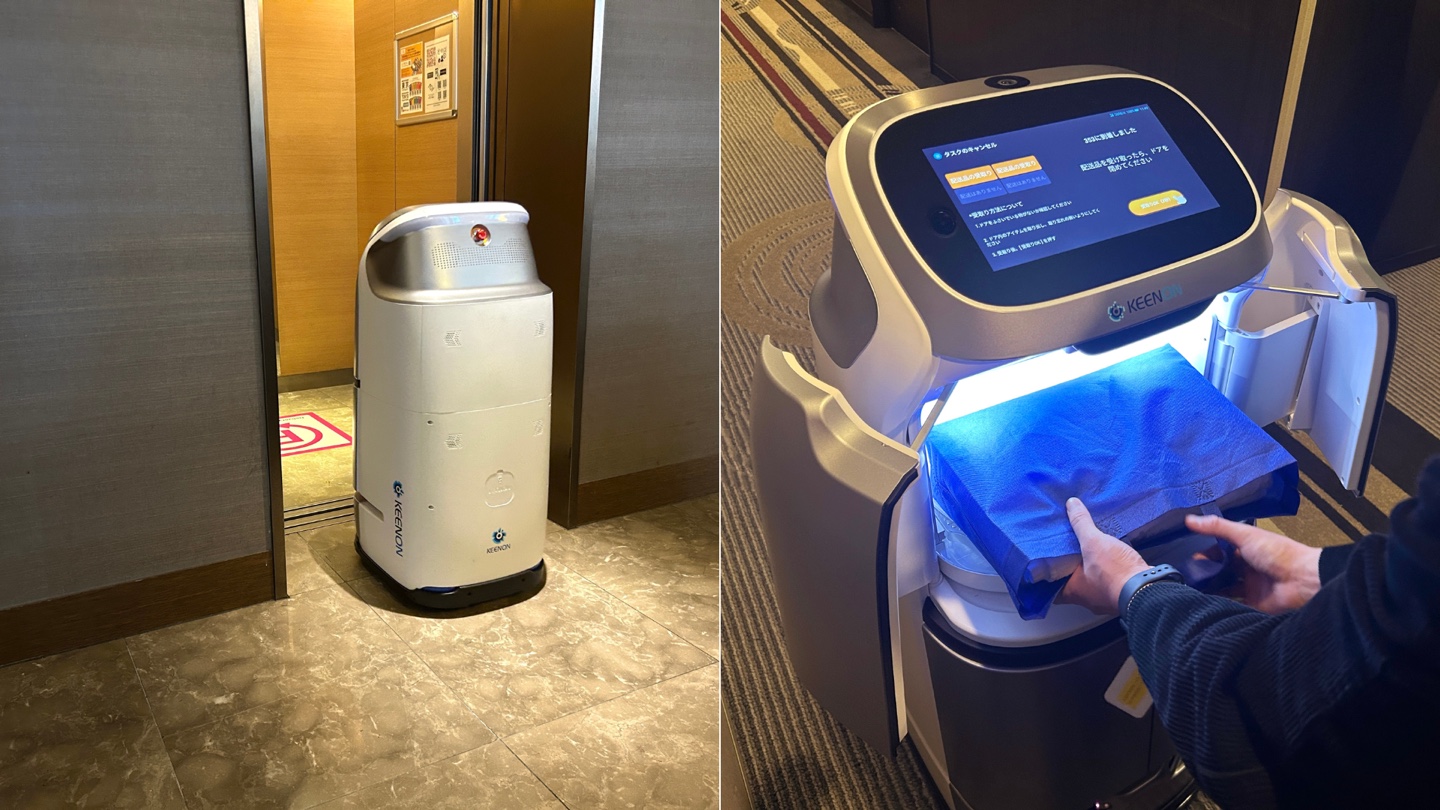
What happens during a room delivery?
Cover photograph: KEENON W3 at Hotel Sunroute Plaza Shinjuku, shown by the elevator and during item collection. Photo: Sotetsu Hotel Management and DFA Robotics, via PR TIMES.
A guest asks for a bottle of water, a towel or a meal. A hotel delivery robot carries the prepared item to the guest room door, with several people and systems taking part. For example, a hotel employee receives the request and loads the item. The robot follows a route and, when the destination is on another floor, calls and rides the elevator. The guest is notified and collects the item. The manufacturer or a local implementation team may provide equipment integration and support.
Room delivery has different requirements from restaurant service, greeting or floor cleaning. An enclosed compartment, travel between floors and the handoff at a guest room all affect how a delivery robot is designed and used.
Four Chinese commercial service robot companies offer different ways to examine these tasks: KEENON's compartments and building connections, PUDU's division of work among robots, Yunji Technology's request handling and dispatch, and Excelland Robotics' two-compartment delivery and staff handoffs.
Four stages of hotel delivery
| Stage | People or equipment involved | Questions to examine |
|---|---|---|
| Request and loading | Hotel staff and robot compartments | How are items loaded, how is a room selected, and how are separate compartments used? |
| Movement through the building | Robot navigation, elevators and their interfaces | How does the robot follow its route and work with the elevator between floors? |
| Arrival and collection | Notification system and guest | How is the room notified, and how does the guest find and collect the item? |
| On-site support | Local implementation team and hotel staff | Who handles building integration and daily support, and when do staff intervene? |
Four companies, four ways to examine hotel delivery
| Company and equipment | Named hotel application | What to examine |
|---|---|---|
| KEENON BUTLERBOT W3 | Hotel Sunroute Plaza Shinjuku: delivery between floors with building connectivity and room telephone notification | Trace how building and telephone connections support a delivery. |
| PUDU FlashBot and other robots | Parkhotel Eisenstadt: room delivery, restaurant service, greeting and cleaning | Compare how different robot models divided tasks at the hotel. |
| Yunji UP and HDOS | Drifting Bear Hotel, Beijing: guest requests, task dispatch and modules changed at different times | Follow a request into HDOS and examine how a task reaches UP. |
| Excelland Yomie, fifth generation | Hilton Wuhan Optics Valley: two compartments; Hetian Hotel, Wuhan: staff loading through guest collection | Examine how staff load items and assign them to rooms. |
The Shinjuku project divided robot supply, building connectivity, elevator modification and hotel operations among separate participants.
KEENON: compartments and travel between floors
Founded in 2010 and based in Shanghai, KEENON makes commercial service robots for hotels, restaurants and other settings. Its BUTLERBOT W3 is designed for room delivery and has enclosed compartments.
The W3 can be configured with up to four independently accessible compartments, so items for different rooms can be stored separately. Its stated specifications include a total payload of 20 kg, a minimum passage width of 70 cm and up to 12 hours of battery life. Delivery between floors also requires the robot to work with the building's elevator and notification systems.
Hotel Sunroute Plaza Shinjuku: from front desk to guest room
In April 2025, Hotel Sunroute Plaza Shinjuku introduced W3 delivery service between floors. At the time, the hotel received dozens of delivery requests a day, with requests concentrated after 10 p.m.
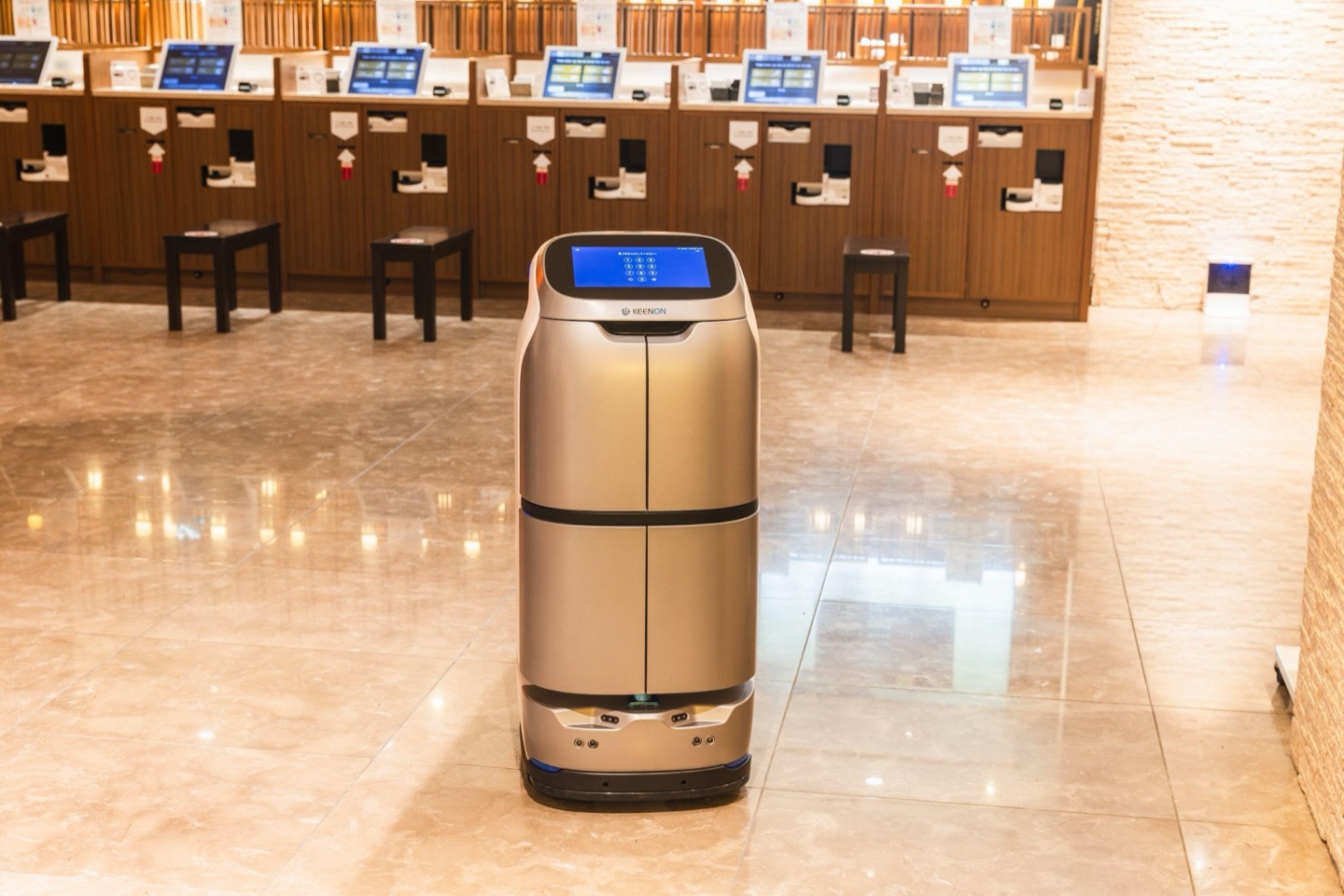
KEENON W3 in the Shinjuku hotel project. Photo: Sotetsu Hotel Management and DFA Robotics, via PR TIMES.
After a guest made a request from the room, an employee loaded the item near the first-floor front desk and selected the destination room. The W3 took the elevator to the designated floor. At the door, it notified the guest through the room's internal telephone. The guest collected the item and pressed the completion button, after which the robot returned.
DFA Robotics coordinated the project and handled robot sales and implementation support. Octa Robotics provided its LCI service to connect the robot with building equipment, while Fujitec handled elevator modifications and support. A cloud connection to the hotel's private branch exchange (PBX) sent arrival notifications to room extensions. Read the joint project announcement.
PUDU: delivery, greeting and cleaning in one hotel
Founded in 2016 and based in Shenzhen, PUDU makes commercial service robots for delivery, greeting and cleaning. Its FlashBot series is designed for deliveries inside buildings, including deliveries to hotel rooms. Other robots in the range handle restaurant service, greeting or cleaning.
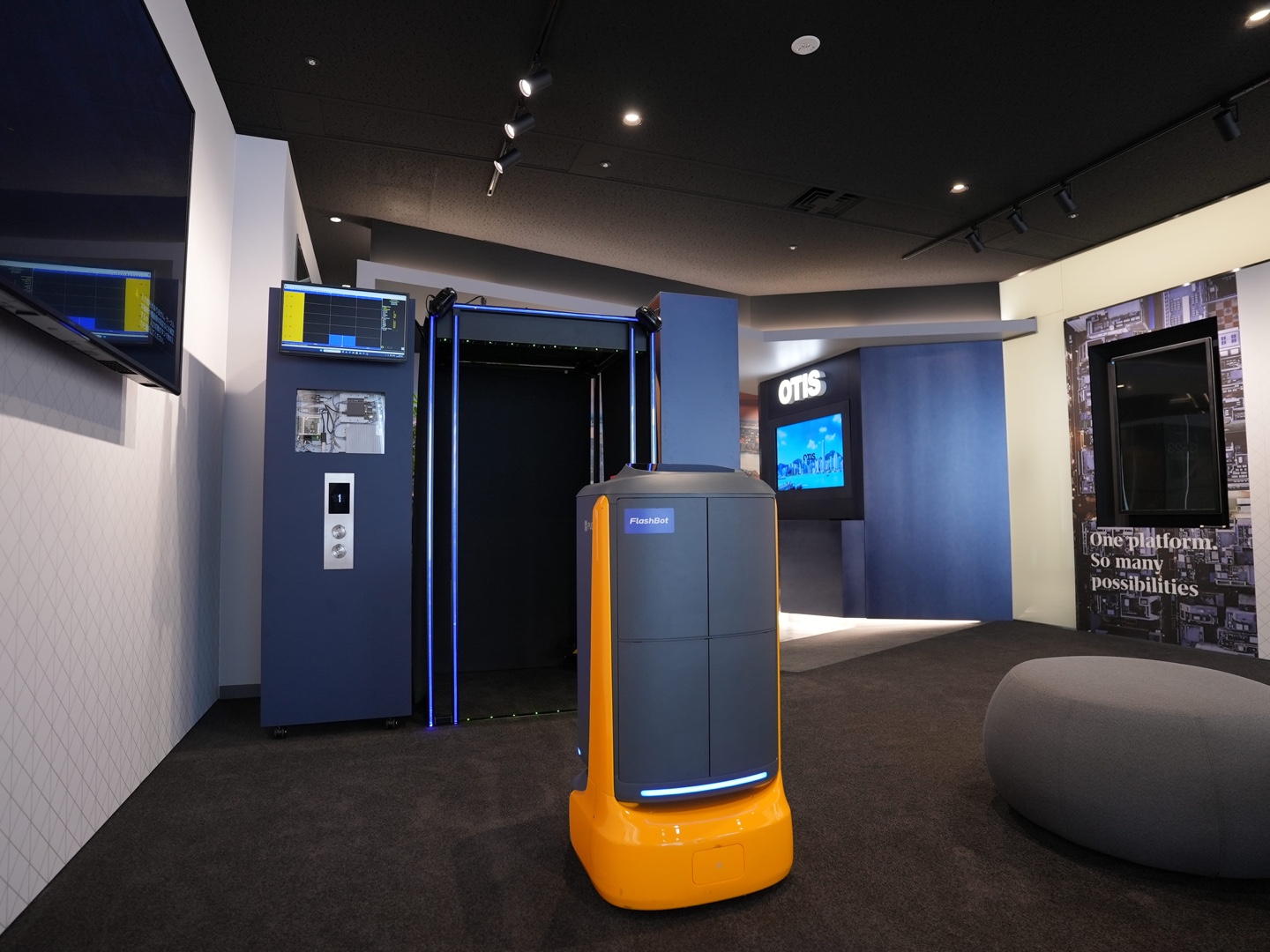
A PUDU FlashBot next to an elevator during a demonstration in Japan. Photo: Pudu Robotics Japan via PR TIMES.
Parkhotel Eisenstadt: different robots, different tasks
Parkhotel Eisenstadt in Austria used a group of PUDU robots. FlashBot delivered towels, toiletries and meals to guest rooms. KettyBot greeted guests and provided information at the entrance; BellaBot and HolaBot took part in restaurant service; and CC1 cleaned meeting room floors.
A room delivery ends at the guest's door, while restaurant robots travel between the kitchen and tables. Greeting and cleaning take place in shared spaces. Read more about the PUDU Robotics visit in Shenzhen or explore commercial cleaning robot manufacturers in China.
Yunji Technology: from guest request to robot task
Beijing-based Yunji Technology makes robots for service settings including hotels. Guests can make requests through channels such as a room telephone or mini program. Yunji's hotel digital operations system, HDOS, receives requests and dispatches tasks to delivery robots.
The UP robot can be fitted with a delivery compartment, a cleaning module or an open compartment, allowing the same mobile platform to support different tasks. The hotel solution connects requests and dispatch with robot movement and building equipment.
Drifting Bear Hotel: a request travels between floors
At Beijing's Drifting Bear Hotel (漂流熊青旅与商务酒店), accommodation sits alongside a stand-up comedy theater and social lounge areas. Around 9:00 p.m., as evening shows end and takeaway orders increase, delivery robots bring meals and orders to guestroom doors.
Guests can place requests through a mobile mini-program or AI voice assistant. HDOS receives requests and assigns delivery tasks to UP, which takes the elevator to guest room doors. An AIoT system connects equipment and systems from different brands, while UP and other terminals carry out tasks. The same mobile base uses delivery and cleaning modules at different times for room deliveries and public-area floor cleaning.
Excelland Robotics: two compartments and staff handoffs
Excelland Robotics was founded in 2013 and has its headquarters and principal place of business in China in Shenzhen. Its commercial service robots include the Yomie series for deliveries inside buildings.
Wuhan hotels: room delivery with Yomie
Hilton Wuhan Optics Valley introduced the fifth-generation Yomie. In this application, takeaway food, drinking water and room supplies could be placed in separate compartments as needed, and the robot took the elevator to the guest room door. The hotel application also describes travel over carpets and door thresholds, corridor obstacle avoidance, and a front HD display showing hotel event notices and local travel tips.
At Hetian Hotel in Wuhan (武汉荷田大酒店), staff entered the room number and loaded the items. The fifth-generation Yomie called and rode the elevator, then notified the guest at the door. After collection, the robot returned and could recharge. The sequence separates the work of hotel staff, the robot and the guest at each handoff.
Comparing hotel service tasks
A multi-compartment delivery robot can keep similar items for different rooms separate, with destinations assigned by room. A modular base can take a delivery compartment or a cleaning module at different times, as in the Drifting Bear application. At Parkhotel Eisenstadt, different robot models shared delivery, restaurant service, greeting and cleaning. These arrangements give a visiting group different actions to examine: loading and destination settings, module changes, or the division of work among machines and staff. Where a demonstration is available, a simulated order can be followed from room-number entry through the elevator call and arrival notification. The group can then ask product or implementation personnel who takes over and how the task resumes if it is interrupted.
An example hotel delivery robotics study visit
A group can share its background, preferred dates, size and discussion topics with CIV before selecting a host or location. Once an arrangement is confirmed, an exchange could cover:
- The delivery task, from a guest's request through loading, robot movement, arrival notification and collection.
- A demonstration unit or a simulated delivery route, subject to what the host can demonstrate on the day. Participants can examine the compartments, task settings, movement and handoffs.
- A discussion with product, solutions or project implementation personnel, using the equipment on display or the Shinjuku example as a starting point. Questions could include:
- If a guest does not collect an item after the robot arrives, how does the system alert people, and when does the front desk intervene?
- If the robot cannot take the elevator, what do the robot, front desk and building maintenance team each need to do, and how is the task resumed?
- How do the compartment and destination settings correspond to deliveries for different rooms? If a module change is demonstrated, how does the equipment or project team schedule it?
- Follow-up materials. For an agreed visit, CIV provides on-site coordination, accompaniment and English interpretation, then prepares discussion notes, a visit summary and relevant materials.
The equipment, demonstrations and attendees depend on the confirmed arrangements for the day.
Questions
How can we choose which companies to learn about? Start with the subject your group wants to examine, such as room delivery, building integration or the division of work among hotel service robots. Compare the companies' products and published applications, then discuss possible hosts with CIV.
What topics should we prepare before an exchange? Share your team's background and the aspects you want to understand, such as delivery workflows, elevator connections, handoffs between people and robots, or exception handling. A list of questions for the demonstration can help the host prepare.
Can we visit the hotels mentioned in these examples? A customer hotel must separately confirm whether it can host a visit. A company showroom visit depends on arrangements confirmed with its host.
What can we examine in a showroom, and when should we confirm elevator and room telephone connections? Ask which demonstration unit or simulated route the host can make available, and whether it can show loading, destination settings and arrival notification. If your group wants to discuss or see elevator or room telephone integration, raise those topics before the visit so the host can confirm what can be shown.
How can an overseas group discuss local implementation and ongoing support? Ask who would handle local implementation and elevator control compatibility, and who would support day-to-day operation and respond when a delivery or elevator connection fails. Public records note regional footprints: PUDU's earlier dining-robot deployment at Comwell Hvide Hus Aalborg in Denmark, Yunji's 2026 distributor progress in Norway, and UDITECH's reported shipments to South Korea and non-hotel deployments in Singapore. Named local integrators for hotel room delivery in those markets are rarely disclosed. The answers can help the group understand how responsibilities would be divided in its own setting.
Share your group's background and the hotel robotics topics you want to explore through the CIV planning enquiry page to discuss a suitable study visit.