Cover photograph: PUDU CC1 at a supermarket in Moscow, 12 June 2025. Retired electrician / Wikimedia Commons (CC0 1.0). Cover design: CIV.

Compare Gausium, PUDU, KEENON and ECOVACS Commercial Robotics through documented applications that collectively cover hotels, supermarkets and commercial property. A technical exchange can start with the surface and task: carpet vacuuming, hard-floor scrubbing or dry floor care during opening hours.
For a carpeted hotel, focus on dry vacuuming. For mixed-floor hotels and public areas, compare cleaning modes and the attachments staff will change. In retail, separate wet cleaning before opening from dry tasks around shoppers, then examine maintenance and local support for each operating approach.
Separate carpet vacuuming, hard-floor scrubbing and dry cleaning
Carpet vacuuming removes dust and particles using a suitable vacuuming assembly, brushes and filtration. A hotel's carpeted corridors and lobby need to be considered separately from wet cleaning on stone, tile and other hard floors.
A robotic floor scrubber washes hard floors with brushes and recovers dirty water. Autonomous operation also requires navigation and task settings suited to the site. Cleaning solution, brush selection, floor material and water-management arrangements all affect how the equipment works on site.
Sweeping and dry dust mopping collect debris and dust as part of routine floor care. The mode used during opening hours depends on foot traffic, passages and the type of dirt. Even when a machine offers several modes, the supplied attachments, docking station and supported floor surfaces need to be checked.
Quick reference: compare products by floor task
Use these product ranges as starting points for company discussions. The application records below identify the models used at each site; attachments, stations and staff responsibilities belong in the proposed configuration.
| Venue and cleaning task | Products to compare | What to examine with the company |
|---|---|---|
| Hotel carpeted lobbies and corridors: dry vacuuming | Gausium Vacuum 40; KEENON C30 | Carpet brush, vacuuming and filtration setup; dust-bag and sensor care; who moves the machine and hands over tasks between floors |
| Hotel areas with carpet and hard floors: separate dry and wet tasks | Gausium Phantas; PUDU CC1 | Floor-specific attachments and mode changes; water-management or docking-station configuration; staff steps between tasks |
| Supermarket hard floors: wet cleaning and routine dry floor care | Gausium Omnie or Phantas; PUDU CC1 or CC1 Pro | Layout, passages and trading hours; the brush and station configuration; interruptions and the shelf-edge and contact-surface work retained by staff |
| Shopping-centre and other public hard floors: scrubbing before opening, sweeping and dust mopping during trading | ECOVACS M1 | The agreed task and time for each mode; machine maintenance and handover to staff for edges and detailed cleaning |
Four manufacturers and their documented applications
Gausium: store formats and hotel floor surfaces
Founded in 2013 and headquartered in Shanghai, Gausium develops cleaning robots and related software for commercial spaces. Its range covers different site sizes and tasks. Phantas offers vacuuming, sweeping, scrubbing and dust-mopping modes. Vacuum 40 focuses on dry vacuuming of carpets and other floors.
Gausium's Selver case, published on 21 July 2026, describes a winter store pilot followed by deployment according to store format. Larger sales floors use Omnie, while more compact spaces use Phantas. The robots undertake repetitive floor-cleaning work; employees continue cleaning shelf edges, shopping baskets, trolleys and contact surfaces. Local partner Avera handles delivery, installation and service, separating the equipment manufacturer's role from local implementation.
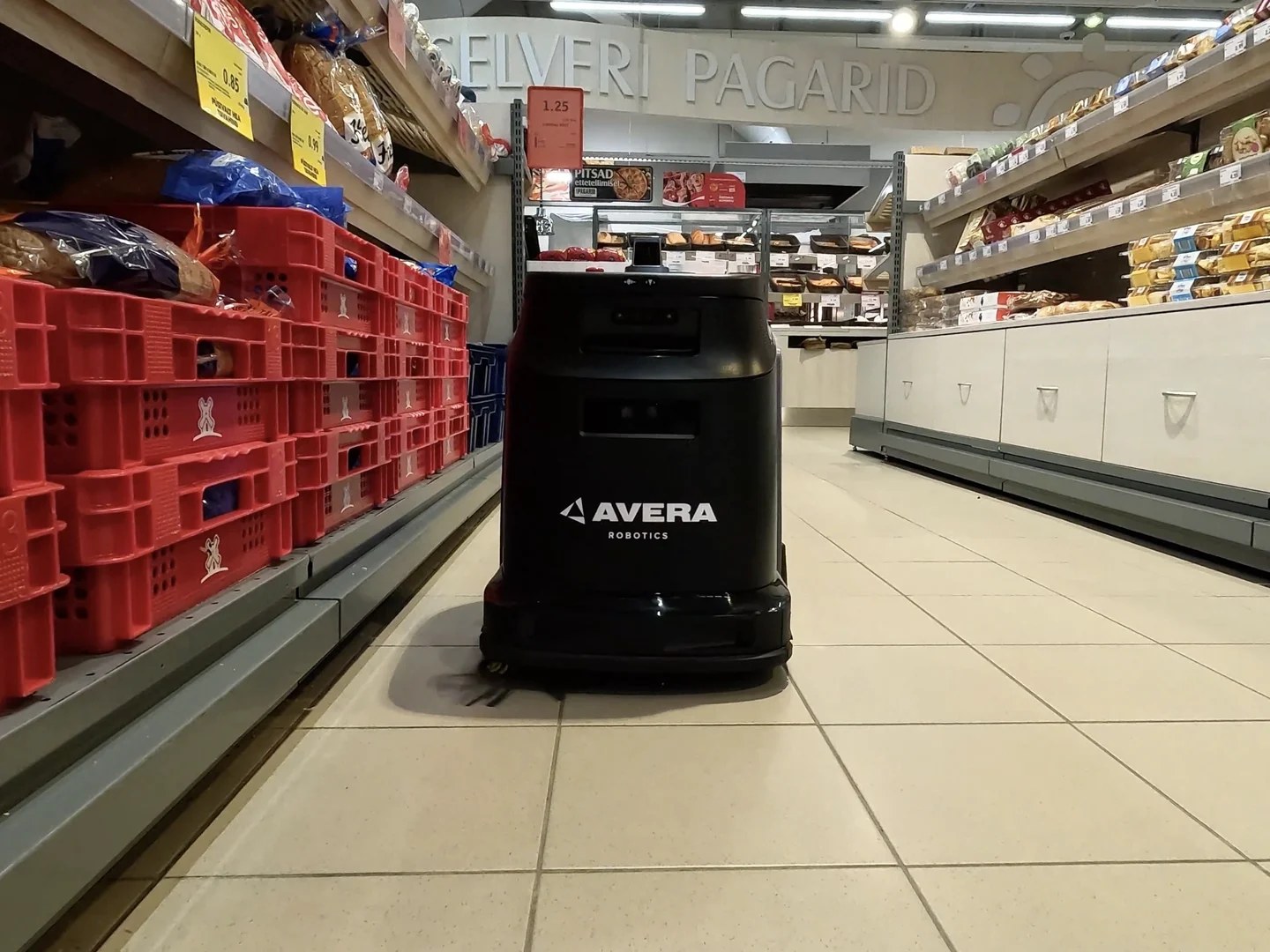
A Phantas at Selver, carrying the branding of local implementation partner AVERA. Photo source: Gausium's Selver case, published on 21 July 2026.
The hotel application shows another division of work. Gausium's account of 6 December 2024 and Austrian delivery partner Gausium Österreich's report of 28 November that year describe the introduction of Vacuum 40 and Phantas at InterContinental Wien in June 2024. Vacuum 40 handled vacuuming on guest floors and other areas, while Phantas served the mezzanine. The site includes carpet and marble, with dry or wet tasks selected for the floor surface. Hotel employees use an app to arrange maps and cleaning schedules.
A discussion with Gausium and an implementation partner can examine how machines and cleaning modes are allocated across different areas, and how installation and maintenance are supported locally.
PUDU: bringing multimode products into hotels and supermarkets
Headquartered in Shenzhen, PUDU develops commercial service robots for delivery and cleaning. CC1 and CC1 Pro cover sweeping, scrubbing, vacuuming and dust mopping; carpet-vacuuming attachments and docking-station configurations need to be checked separately. MT1 is a dry debris-sweeping product.
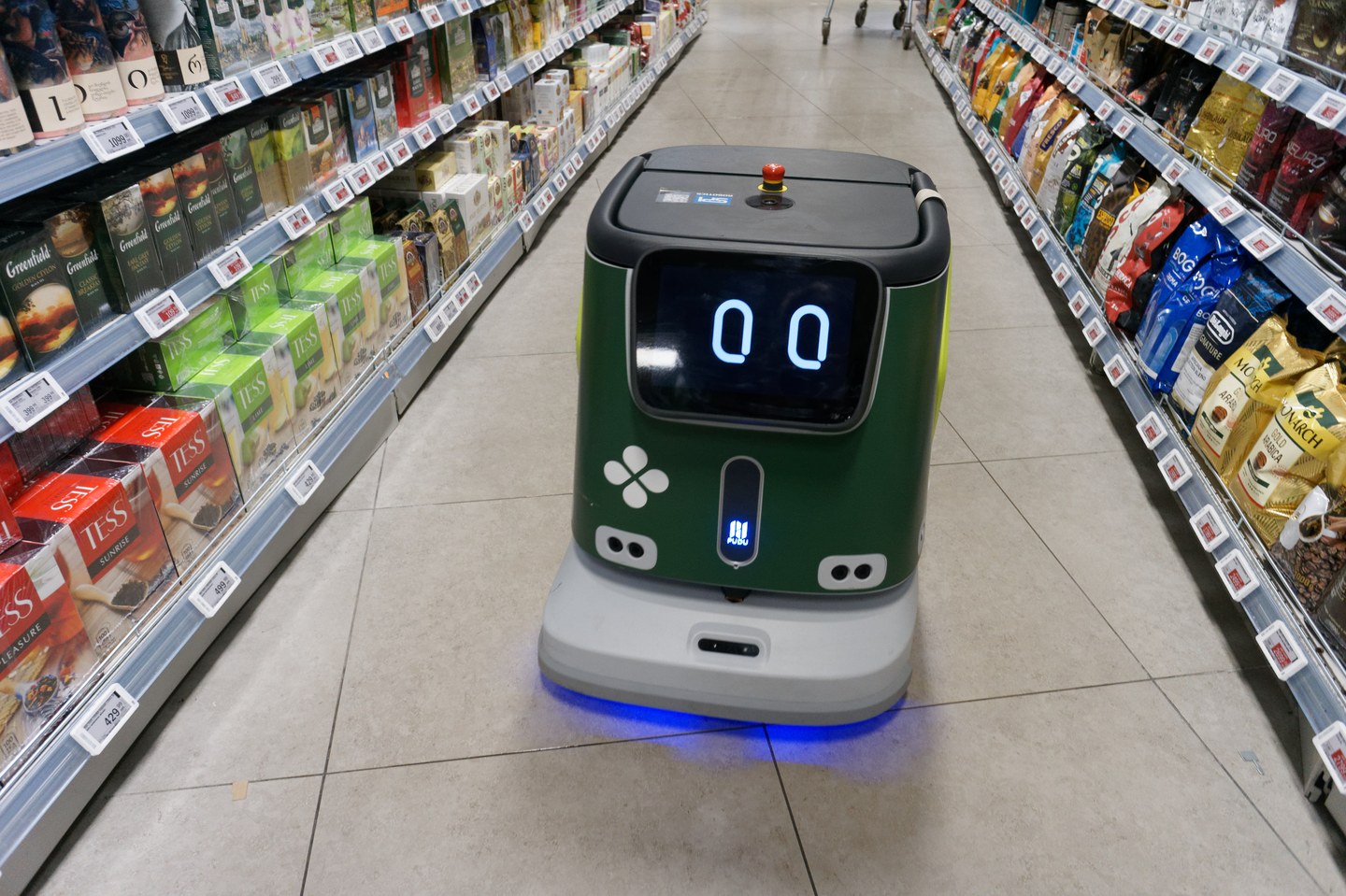
PUDU CC1 at a Perekryostok supermarket in Moscow, photographed on 12 June 2025. Photo: Retired electrician / Wikimedia Commons (CC0 1.0).
Yumoto Fujiya Hotel in Hakone, Japan, participated in a robot implementation trial from December 2023 to March 2024, with DFA Robotics implementing the PUDU CC1. Kanagawa Prefecture's project report records different cleaning tasks in changing rooms, bathrooms and back-of-house areas. It also documents adaptations: ramps at changes in level, no-go zones on the map, risk assessment and staff training. Cleaning the bathroom floor required changing the brush assembly for that task.
This was a time-bounded site trial. It shows the work involved in adapting equipment, premises and staff procedures together: the implementation partner mapped the site and provided training, while hotel employees started tasks, changed attachments and carried out daily maintenance.
PUDU's account of the French Les Mousquetaires retail application describes CC1, CC1 Pro and MT1 used across three stores. The CC1 family handled floors in aisles and fresh-food areas. MT1's dry debris collection addresses a different task from wet scrubbing. PUDU's project account also describes employees directing some of their time towards shelf organisation and customer service.
Ask PUDU or an implementation partner to explain the manual steps between cleaning modes, staff training, and the maintenance and exception-handling tasks that remain after station automation.
KEENON: dry carpet cleaning in hotel public areas
Founded in 2010 and headquartered in Shanghai, KEENON includes C30 in its commercial service robot range. C30 performs sweeping, vacuuming and dry mopping, with its hotel application covering dry vacuuming in carpeted public areas.
On 5 February 2025, Japanese robot delivery provider DFA Robotics published an interview with Hotel Takachiho's general manager. The interview describes the hotel's decision to adopt C30 following a demonstration in summer 2024, using it for daily vacuuming in carpeted lobbies and corridors. Tasks were arranged by floor and time of day. Employees continued changing dust bags, wiping sensors and managing the areas where the machine was used.
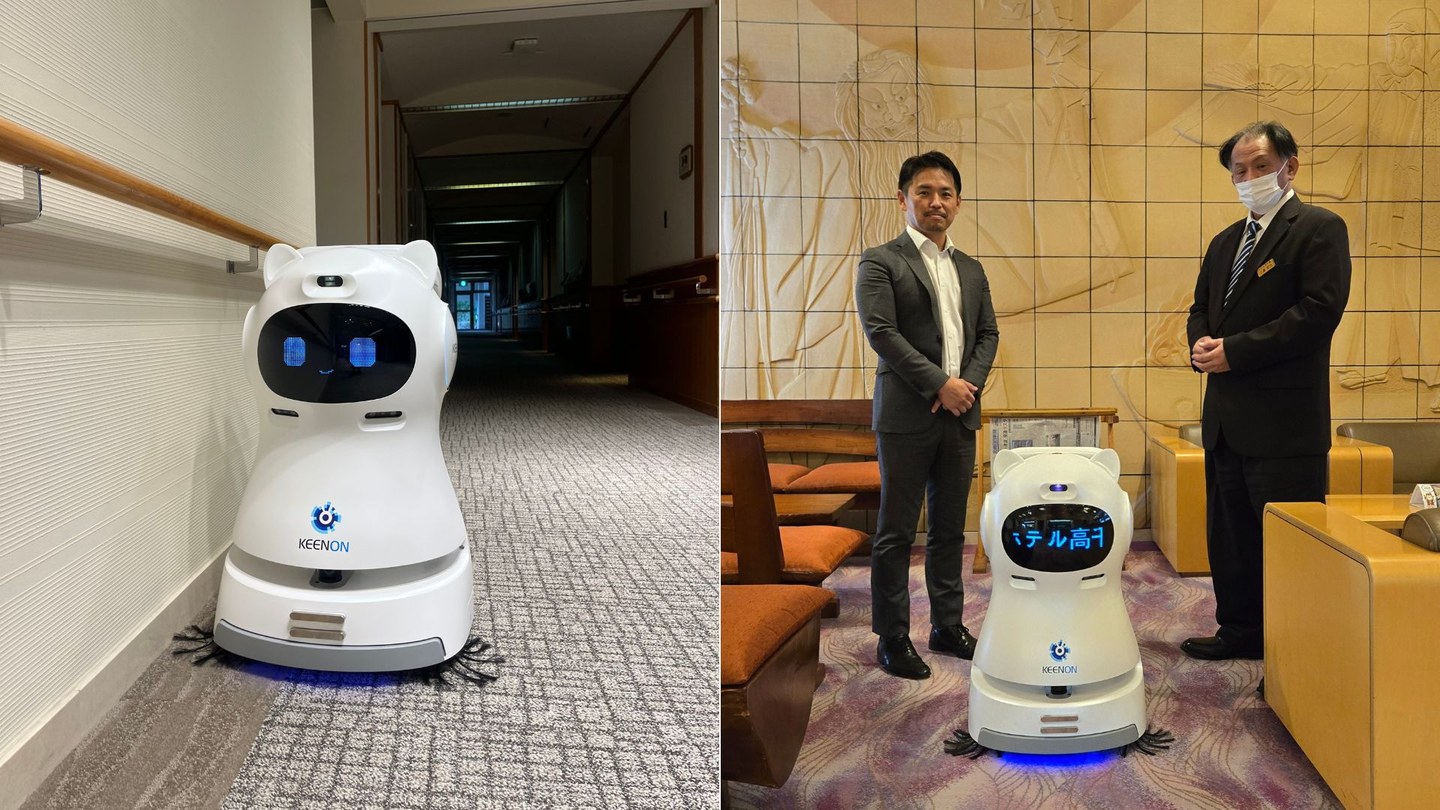
C30 in Hotel Takachiho's public areas. The two photographs come from the same project interview. Photo source: DFA Robotics' hotel-manager interview, published on 5 February 2025.
Ask KEENON or the local partner to show cleaning results on the relevant carpet type and explain the operating procedure for floor-by-floor use. The interview does not establish autonomous lift use, so a technical discussion can examine transfer methods and staff handovers.
ECOVACS Commercial Robotics: scheduling tasks around opening hours
ECOVACS Commercial Robotics' commercial business entity is based in Suzhou. M1 addresses hard-floor cleaning in commercial spaces through scrubbing, sweeping and dry dust mopping. Its historical hotel applications also include machines for carpet vacuuming.
ECOVACS' Shanghai 1000 Trees application, published on 22 August 2024, describes the division of work between M1 and cleaning staff. The robot scrubbed before daily opening and carried out dry cleaning during trading hours. It handled large floor areas, while staff maintained the machine, dealt with edges and continued detailed cleaning of washrooms, glass balustrades, escalators and other areas.
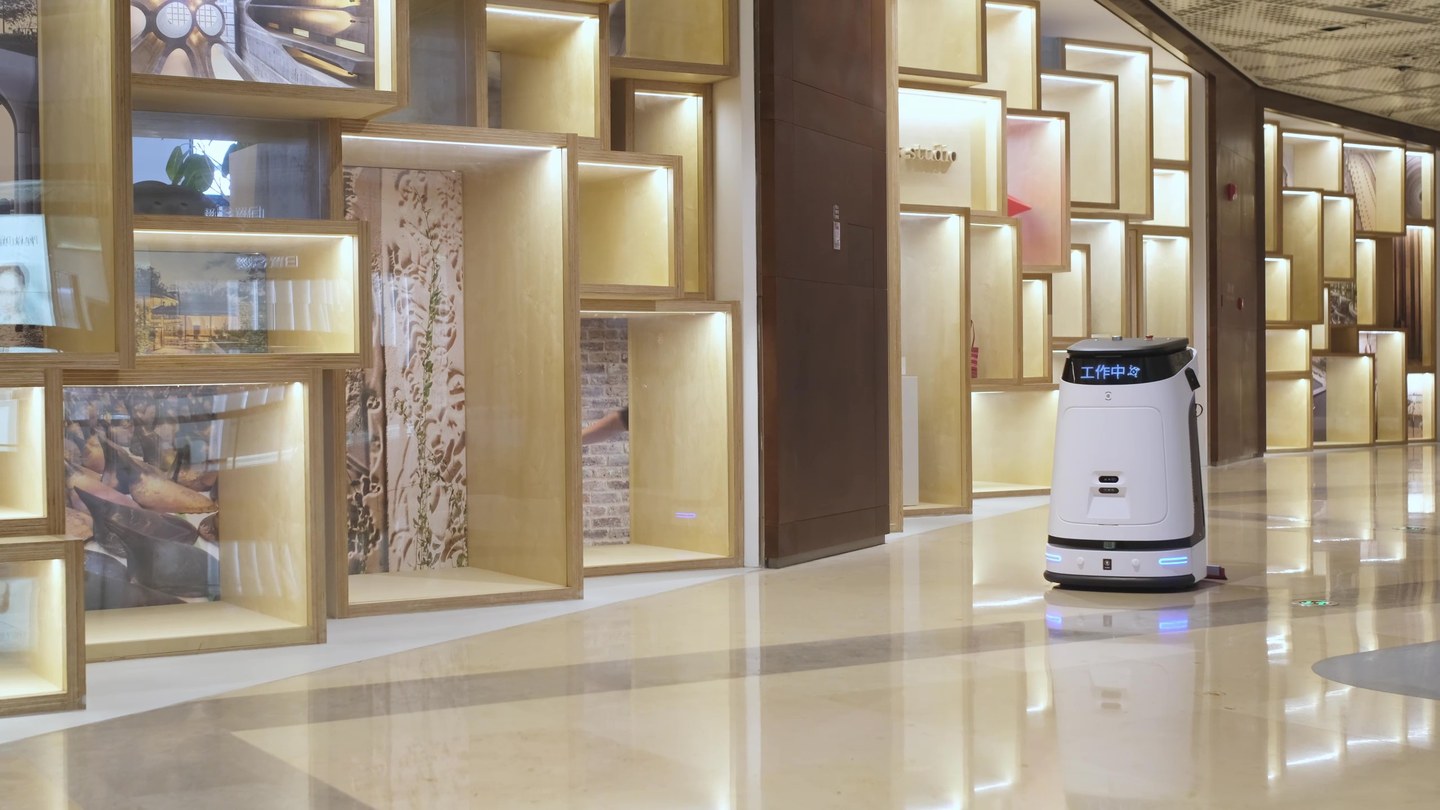
M1 in a passage at 1000 Trees. Photo source: ECOVACS' project account, published on 22 August 2024.
For shopping-centre and property teams, this puts wet cleaning before opening and routine floor care during trading into one work schedule. The areas assigned to the robot and the detailed tasks retained by staff can be listed separately before deciding how they fit existing shifts.
For hotels, ECOVACS' Yangzhou State Guesthouse account of 16 June 2023 describes K1 vacuuming carpets in public areas such as the lobby and guest-floor corridors. This is a historical K1 application. A discussion of a current model should identify its configuration rather than transfer the old project's equipment name and capabilities to a newer product.
A discussion with ECOVACS or an implementation partner can follow a cleaning rota, the division of robot and staff tasks, and the handover when spills or blocked paths interrupt a schedule.
Three questions for a technical exchange
How do equipment and facilities work together?
A discussion can examine floor materials, opening hours and how machines, brushes or vacuuming assemblies and docking stations work together. Wet cleaning also involves water supply, drainage and cleaning solution. For multi-floor work, ask how equipment is transferred and which interfaces are involved.
How are deployment and maintenance organised locally?
Identify who handles installation and mapping, staff training, routine cleaning, consumable replacement, intervention and repairs. Gausium's European partners and DFA's Japanese hotel projects illustrate specific implementation roles. For overseas operations, discuss how local teams manage routine servicing and respond when a task is interrupted.
How do equipment and support responsibilities fit together?
A technical exchange can compare equipment, attachments and docking stations alongside deployment, training, software, consumables and maintenance. Ask which teams handle each part during daily operation.
Use a demonstration to check the operating plan
During a demonstration, examine floor surfaces and cleaning results, including water recovery where relevant. Observe what happens when a route is blocked or a task stops, and ask about staff intervention, attachment changes, replenishment and local support.
Discussing cleaning technology with Chinese companies
China Innovation Visits can help overseas teams identify relevant Chinese companies and coordinate technical exchanges and China-side business visits, with on-site interpretation and itinerary arrangements. Use our industry enquiry form to share your country, venue type, floor surfaces and storeys, and the cleaning tasks you want to compare. The proposal will confirm the meeting locations and scope of the exchange.