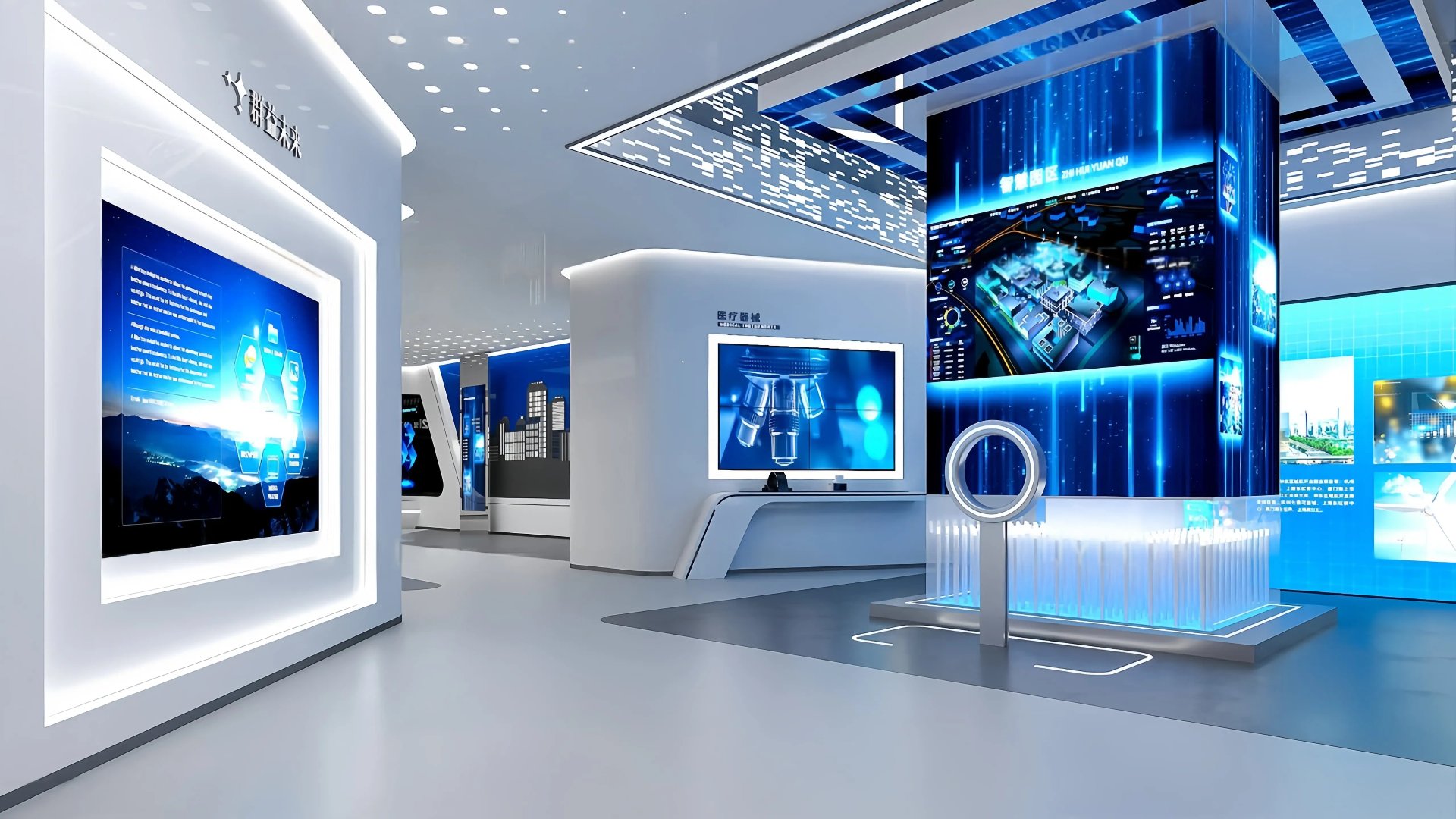
An iFLYTEK company visit in China shows how artificial intelligence moves from core technology into real business applications. This company visit introduces participants to iFLYTEK's development from speech recognition and human-computer interaction to large language models and industry solutions.
The program combines a visit to an artificial intelligence exhibition hall with a focused session on the iFLYTEK Spark Large Language Model and its industry applications. Participants can explore examples across areas such as education, healthcare, manufacturing, smart cities, translation and workplace productivity, then discuss how AI capabilities can be adapted to different business contexts.
Why visit iFLYTEK?
Many people first encounter iFLYTEK through speech recognition, voice input, translation devices or other AI-powered products. These products offer an accessible introduction to the company, but a visit can go further: it can help business teams understand how AI capabilities develop from core technologies into products and industry applications.
iFLYTEK's story offers a useful lens on the evolution of human-machine interaction. Speech technologies help machines receive and process human language. Large language models extend this interaction by enabling systems to work with context, generate content, support reasoning and assist with more complex tasks.
For business leaders, the central question is not only what an AI model can do. It is how a company connects technology with its data, expertise, workflows and customer needs — and how it turns those capabilities into useful services and business value.
What can you learn?
1 — From speech recognition to intelligent interaction: how speech recognition, speech synthesis and natural language processing help people interact with machines through language, connecting familiar products such as voice input and translation tools with the technologies behind them and the business needs they address.
2 — How large language models extend AI capabilities: how large language models move beyond transcription or fixed-command responses to support language understanding, content generation, reasoning and task assistance. The session introduces iFLYTEK's Spark Large Language Model and discusses its development and potential applications.
3 — How AI enters different industries: what business problem an application is designed to address, what data, expertise or industry knowledge it relies on, how it fits into an existing workflow, and what a company should evaluate before applying a similar solution. Examples may come from education, healthcare, manufacturing, smart cities, enterprise digitalization, translation and workplace productivity.
4 — What it takes to turn AI into business value: a model or tool alone does not guarantee useful results. Applying AI in a business setting may also require relevant data, domain knowledge, workflow design, technical integration and ongoing evaluation, and the visit helps teams examine how these elements work together when planning their own AI initiatives.
Sample half-day visit itinerary
The visit content is generally consistent across the available cities; specific arrangements are confirmed during planning.
| Time | Session | What to expect |
|---|---|---|
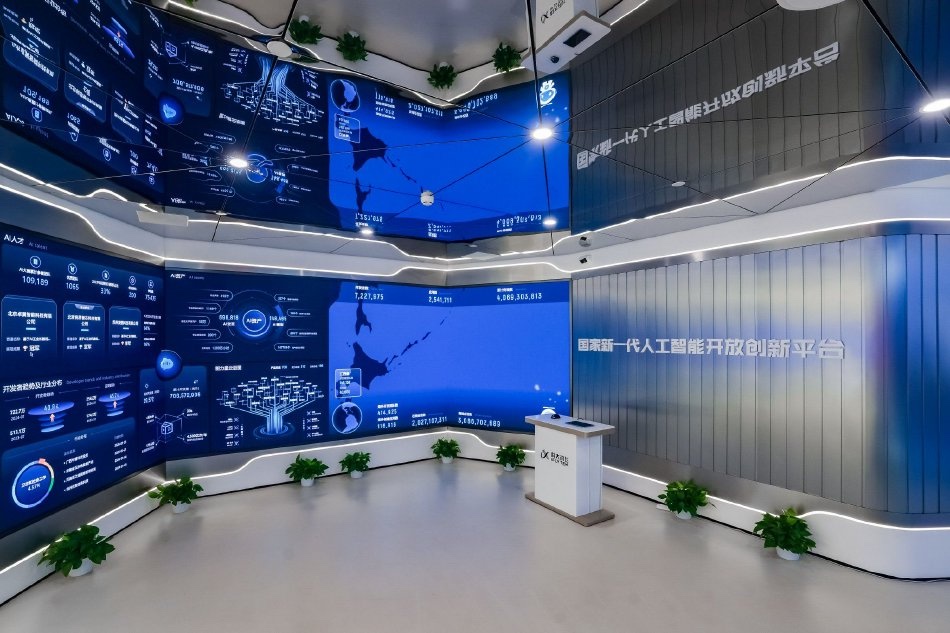
| 09:00–10:00 | AI exhibition hall visit | Explore AI technologies and application scenarios, including the Spark Large Language Model, the virtual presenter, iFLYTEK Tingjian, translation devices and smart office products, with examples from education, healthcare, manufacturing and smart cities. |
| 10:10–11:30 | AI briefing: Spark LLM and industry applications | Learn about the development of iFLYTEK's Spark Large Language Model and discuss its vertical applications and how AI can support industry transformation. |
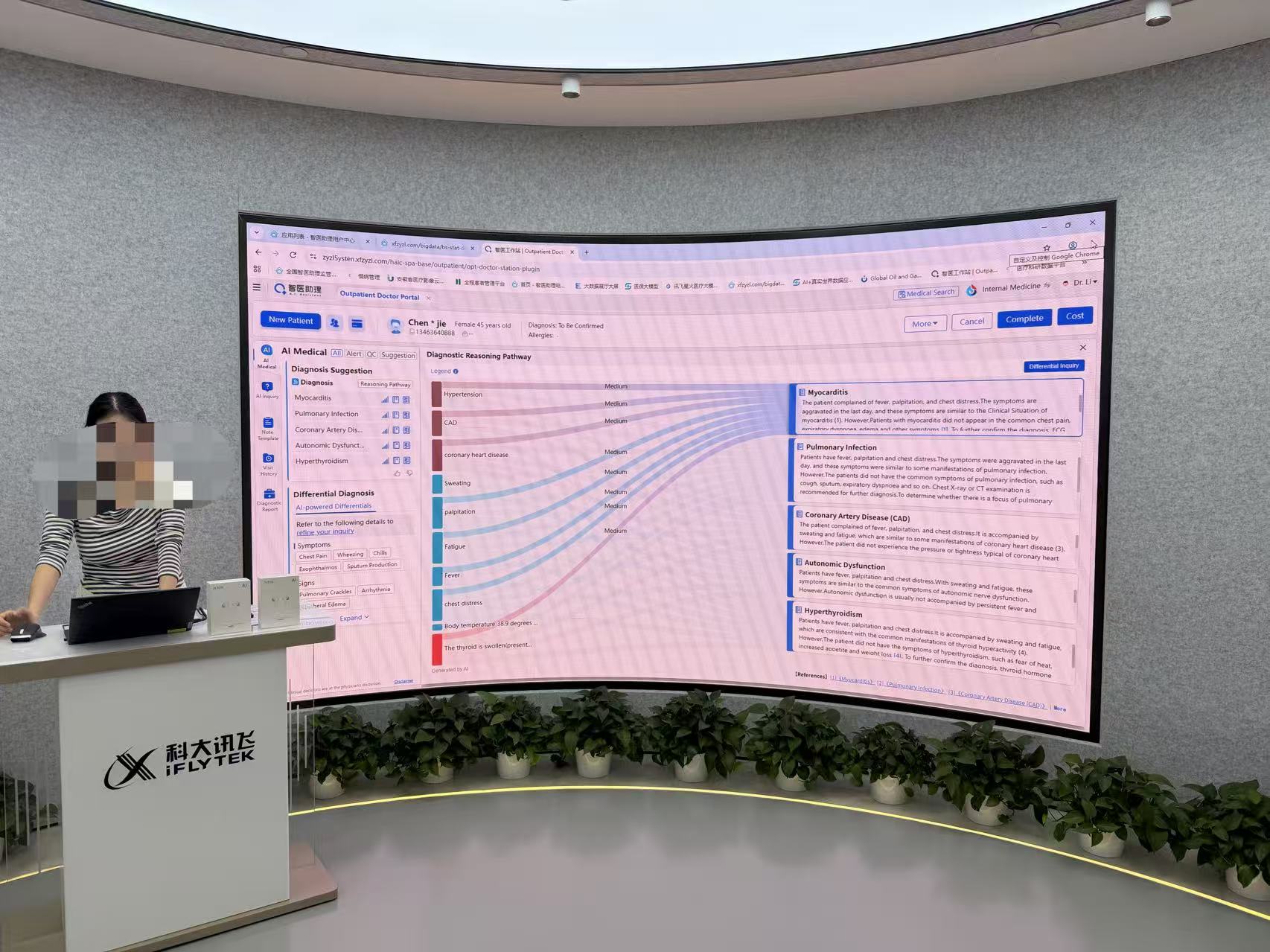
Inside the exhibition hall: a live demonstration of an iFLYTEK industry application.
Who should consider this visit?
The program may suit business owners and executives exploring AI adoption, digital transformation and innovation teams, technology and product leaders, companies assessing large language models and industry AI applications, and business delegations interested in China's AI ecosystem. Participants are encouraged to bring questions related to their own business needs so the visit and discussion can focus on practical learning.
Available cities
Company visit programs may be arranged in six cities: Beijing, Shanghai, Shenzhen, Guangzhou, Hangzhou and Hefei. Hefei is iFLYTEK's headquarters city and the home of its core AI research and exhibition facilities. The visit content is generally consistent across these cities, so the choice of city can follow the rest of your China itinerary. Specific arrangements are confirmed during planning.
Visiting iFLYTEK as a foreigner
The program is hosted in English from start to finish: the exhibition-hall tour, the Spark briefing and the discussion all run with English interpretation, and no Chinese-language preparation is needed on your side. China Innovation Visits handles the introduction to iFLYTEK and all scheduling on the Chinese side, so your team can simply arrive and focus on the content.
More ways to see iFLYTEK
This program is the general, multi-city route. If Beijing is your stop, our iFlytek Beijing experience-hall itinerary walks the hall stop by stop. And if your interest is how a Chinese AI company expands abroad, our field read on iFlytek's 275% overseas surge follows the route from the domestic headquarters to the Singapore command center.
Questions about the iFLYTEK visit
What can visitors learn during an iFLYTEK company visit? Visitors can explore iFLYTEK's work in speech technologies, human-machine interaction, large language models and industry applications, and discuss how AI capabilities can be adapted to their own business context.
Does the program include a visit to an AI exhibition hall? Yes. The sample itinerary pairs the exhibition hall with a briefing on the Spark Large Language Model and its industry applications; specific arrangements are confirmed during planning.
Which cities are available for an iFLYTEK visit? Programs may be arranged in Beijing, Shanghai, Shenzhen, Guangzhou, Hangzhou and Hefei, with generally consistent content across cities.
How far in advance should we arrange the visit? Please contact us at least 30 days in advance so scheduling on the Chinese side can be confirmed.
What group size works best? The programme is best suited to groups of 10–20 participants. We charge per group, so larger groups usually offer better value per person. Individuals and smaller groups are welcome to enquire at a higher per-person rate.
Who is this visit designed for? Business leaders, innovation and digital transformation teams, technology and product leaders, and company delegations exploring AI adoption and industry applications.
Can foreigners visit the iFLYTEK exhibition hall? Yes. The program is open to international business delegations and is hosted in English throughout, in all six cities.
Do I need to speak Chinese or install Chinese apps for the visit? No. English interpretation covers the tour and the briefing, and China Innovation Visits handles all arrangements on the Chinese side.
Arranging your iFLYTEK visit
Please contact us at least 30 days in advance; The programme is best suited to groups of 10–20 participants. We charge per group, so larger groups usually offer better value per person. Individuals and smaller groups are welcome to enquire at a higher per-person rate. We arrange the visit for you end to end: the introduction to the host, the scheduling on the Chinese side and English interpretation on site. Tell us your preferred city, your dates, your delegation size and your main learning objectives, and we will confirm what can be arranged. Start at chinatechvisits.com/company-visits.