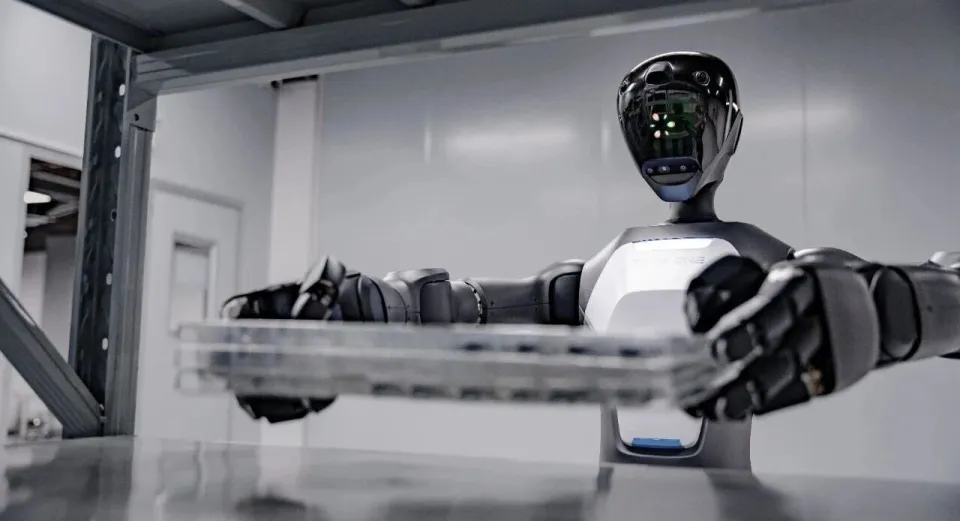
PaXini Robot tour in Shenzhen takes a delegation to a company solving one of the specific bottlenecks in robotics: touch. PaXini builds high-resolution tactile sensors and dexterous hands, the components that let a robot feel how hard it is holding something. The company is named after the Pacinian corpuscle, the mechanoreceptor in human skin that detects pressure and vibration.
The reason to visit is that tactile sensing is where the gap between demonstration videos and factory work is most visible. A robot can look competent in a clip and still crush a light bulb, because vision tells it where an object is but not how hard it is gripping. PaXini is one of the companies trying to close that gap, and it is unusually open about both the technical approach and the commercial questions.
A visit is organised around the company exhibition area, the tactile sensor laboratory and dexterous hand assembly, and a briefing and Q&A with company specialists.
China Innovation Visits coordinates the PaXini tour, including the company reception, scheduling, Shenzhen transport and English interpretation.
Key takeaways
- See why vision alone is not enough for manipulation, and what touch adds.
- Examine the electromagnetic sensing route and why it differs from the alternatives.
- Watch a sensor laboratory test force, texture and slip in real time.
- Discuss the honest version of the business: the market is small, and the customers are also shareholders.
- Place the company within the wider Shenzhen robotics cluster it sits inside.
Why visit PaXini in Shenzhen?
Most robotics visits show machines moving. This one shows the sensing layer that decides whether the movement works, which is the layer most delegations have not thought about. That makes it a good complement to a humanoid or industrial robot visit rather than a substitute.
The commercial story is also unusually instructive, in both directions. PaXini cut the price of a tactile sensor from roughly 100,000 yuan per unit for comparable imports a few years ago to 199 yuan for its entry product, and used that to build volume. At the same time, the company's investors and its customers overlap heavily, which raises questions that any delegation thinking about supplier independence should hear asked out loud.
Shenzhen matters here. Sensor manufacturing, calibration and iteration depend on a dense supply chain, and the city's robotics ecosystem is the customer base.
Company background
Founding and people
PaXini was founded in 2021 in Shenzhen by Xu Jincheng, who returned to China with research experience from the Sugano Laboratory at Waseda University in Japan. Chinese reporting describes him as having more than eight years of work on humanoid robots and high-precision tactile sensors.
Delegations should note that some promotional material circulating online gives a 2019 founding date and describes a founding team from Tsinghua University's precision instruments department. The company's own and recent financial reporting give 2021 and the Waseda background. Ask during the visit if it matters to your notes.
The technical route, and why it matters
There are five mainstream tactile sensing approaches: piezoresistive, capacitive, piezoelectric, optical and electromagnetic. A 2026 securities research report on electronic skin summarised the trade-offs: piezoresistive is widespread but limited in performance, piezoelectric is fast but poor at static sensing, optical is sensitive but too complex to scale near-term, and electromagnetic is currently the only approach that senses shear force while also offering high precision and durability.
PaXini chose electromagnetic, using a Hall array to sense force magnitude and direction through changes in a magnetic field rather than through resistance or capacitance. The practical consequence is shear sensing, which is what lets a robot detect that something is about to slip out of its grip.
The sensor and the chip
The company's current generation is built on a chip it calls GEN4 FUSE, described as the first natively six-dimensional tactile sensing array chip in volume production. Six-dimensional means each sensing unit resolves three force axes and three torque axes. Array means many units across a surface, producing a force field rather than a single reading.
Figures the company publishes: spatial resolution around 1 millimetre, comparable to a human fingertip; minimum detectable force around 0.005 newtons; industrial life above 10 million cycles; and sampling in the megahertz range against roughly 1,000 hertz for typical industrial tactile sensors. That last figure is the one technical delegations should probe, because slip events happen in milliseconds and a slow sensor misses them.
The sensors are described as resolving more than 15 physical properties including six-axis force, texture, temperature and rebound.
What you see on the visit
The exhibition area
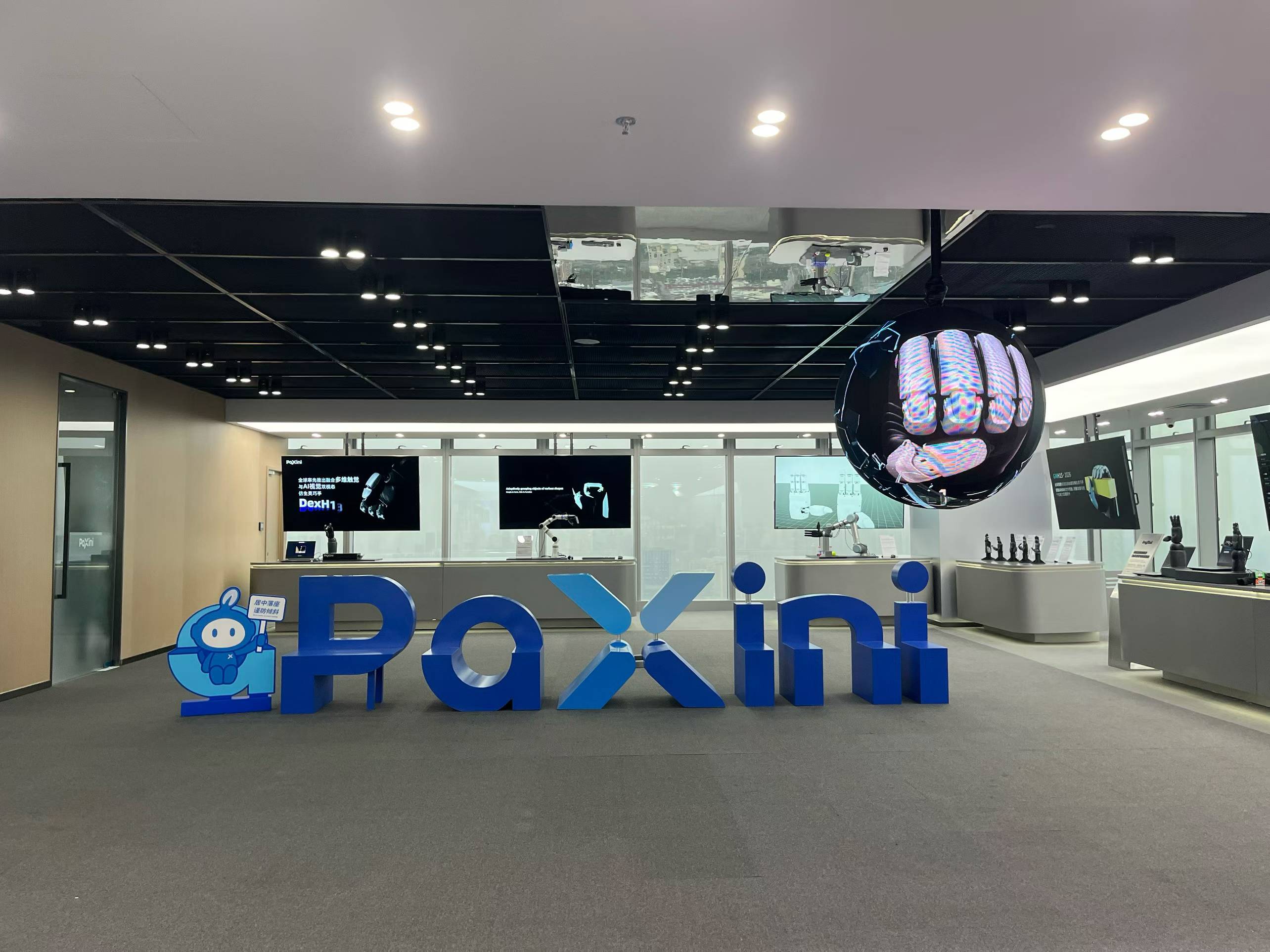
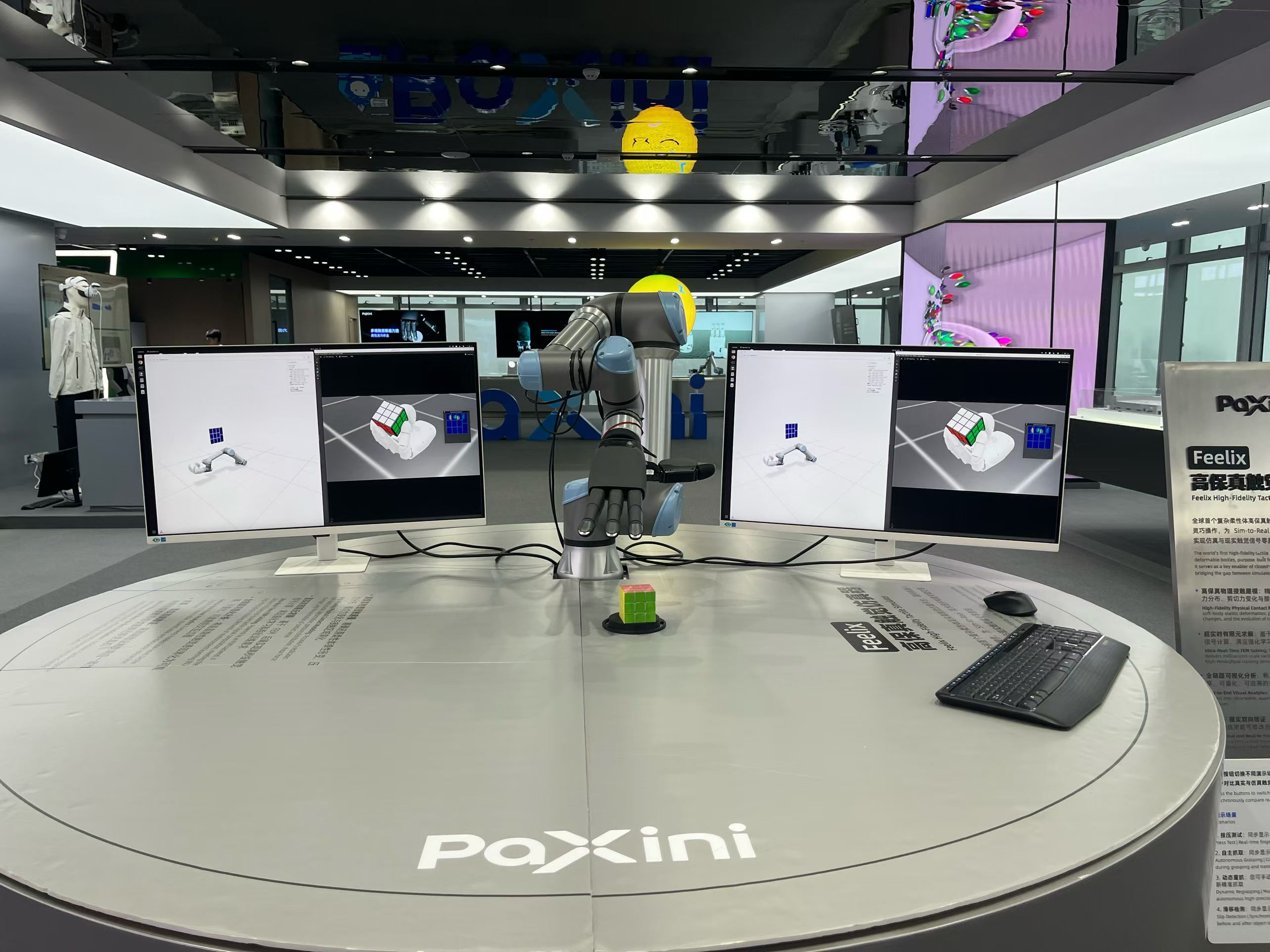
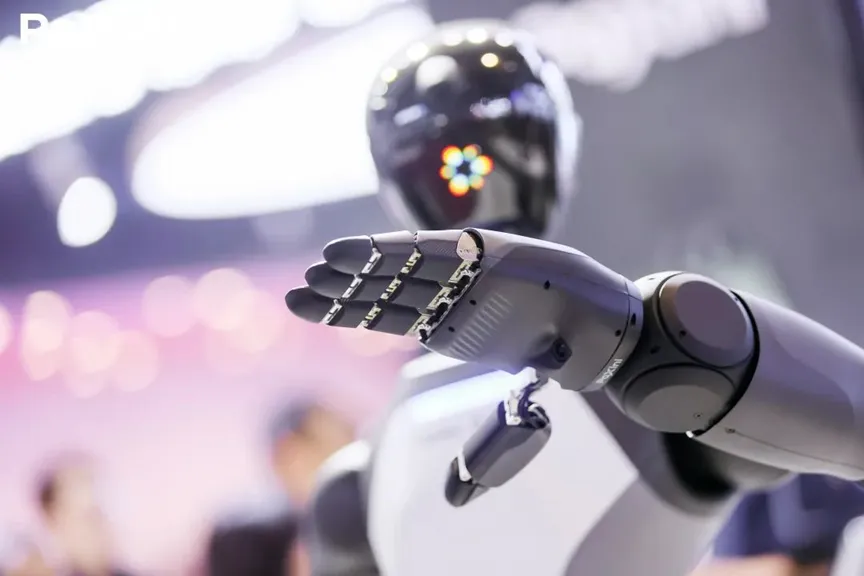
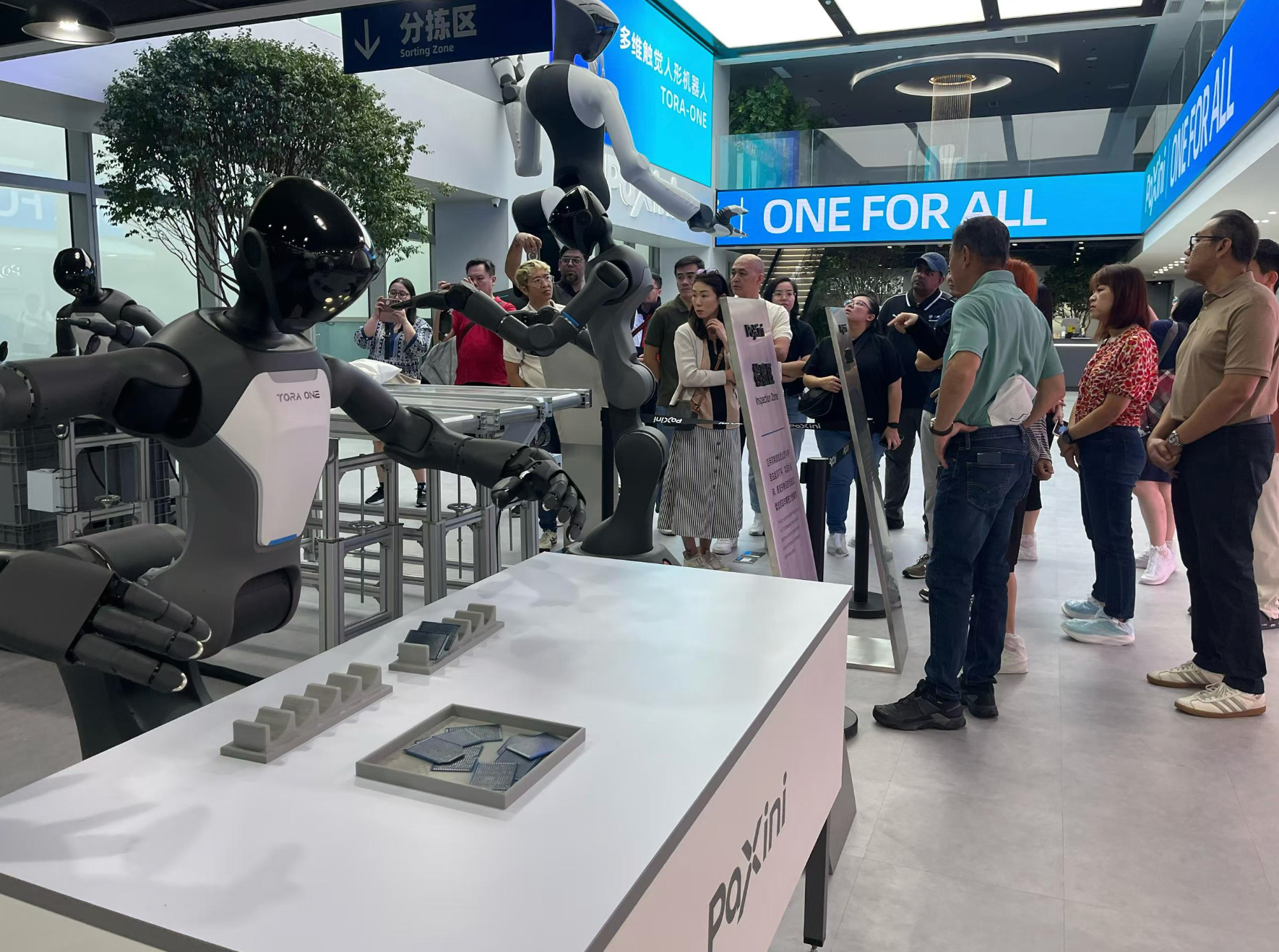
The exhibition area covers the company's development, the core technology, and the product range from sensors to dexterous hands to humanoid robots. It is where the argument about why touch matters gets made, usually with a demonstration: a robot handling something fragile that a vision-only system would break.
The laboratory and assembly
The laboratory is where the sensors are tested, and it is the part worth prioritising. Watching force, texture and slip data appear in real time is more convincing than any specification sheet.
The programme also covers dexterous hand assembly. Ask about the number of sensing units per hand, because it drives both cost and capability: a single dexterous hand may need well over ten sensors.
The briefing
The standard session covers tactile sensing technology, how it is applied in manufacturing, and the company's view on where embodied intelligence is going. Tell us your team's angle, manufacturing, investment or research, and we will route the questions accordingly.
The data business
Why a sensor company built data factories
Tactile sensors produce hardware. The strategic question the company is answering is what happens next: manipulation capability comes from trained models, and trained models need physical interaction data, which is scarce.
In June 2025 PaXini built what it describes as the world's largest embodied intelligence data collection facility in Tianjin, about 12,000 square metres, with around 150 standardised collection stations and an investment reported at about 88.6 million yuan. Company statements describe capacity of up to 550,000 data items per day and close to 200 million high-quality items per year. Four further facilities were planned or built in Jiangsu, Hubei, Sichuan and Jiangxi.
Workers wear data collection gloves and perform real tasks — parcel sorting, car washing, precision assembly — while visual, force and joint trajectory data are recorded together. That data trains the company's own models.
The question to ask about it
Data factories are attractive to investors and, in China, to regulators' scepticism. Some local government-supported collection centres have been criticised as circular: the authority funds a centre, the company sells equipment into it, and money returns as data purchases. PaXini's Tianjin facility is company-owned rather than government-procured, which avoids that specific structure.
The question worth putting to the host is whether data revenue is independent and repeatable. China's data is not automatically reusable across robot platforms, because configurations and formats differ, so a dataset sold once may not sell twice.
Money, ownership and the honest caveats
Funding and listing plans
PaXini raised at a pace that surprised the market in 2026. Chinese financial reporting describes more than 2 billion yuan raised across two rounds in August, a B++ round in September, cumulative funding above 4 billion yuan, and a valuation above 10 billion yuan. It describes the company as the most heavily funded business in tactile sensing globally.
In 2026 the company restructured into a Beijing-domiciled joint stock entity and filed for A-share listing guidance with the Beijing securities regulator, with Guotai Haitong as sponsor. It is positioning itself as a candidate for the first listed tactile sensing company in China.
The two caveats a delegation should hear
First, ownership and revenue overlap. BYD is reported as the largest external investor at about 13.37 per cent and is also a customer. JD.com, TCL, SAIC, BAIC and Samsung appear on both lists. Reported 2025 order value was above 500 million yuan. That is impressive, and it also means a share of revenue comes from shareholders. The company's chief strategy officer has said most industrial investors became customers first and shareholders second, which is a reasonable explanation but not an audit. Ask what independent third-party revenue looks like.
Second, the market is smaller than the valuation implies. One research house forecast the 2026 global robot tactile sensor market at about 330 million US dollars and the Chinese market at about 1.15 billion yuan. Even at 80 per cent share, that implies a revenue ceiling of roughly 900 million yuan in China. A company valued above 10 billion yuan against that ceiling is a bet on the market expanding, not on today's numbers.
The company has also not published full financials; its Shenzhen entity's core financial indicators were not disclosed in public filings. That is legal and not unusual before an IPO, but it means the visit is a better source than the public record.
Who this visit suits
The programme suits robotics and automation companies evaluating manipulation capability, because the sensing decision shapes what a robot can do. It suits manufacturing delegations working on flexible assembly, where force control is the constraint. It suits investors covering embodied intelligence, particularly those who want to hear the bear case from a company that will answer it. And it suits component and supply chain delegations, because the price curve here is the story.
Combining the visit with other Shenzhen stops
PaXini fits naturally with robotics programmes in the city. A Shenzhen robotics cluster visit sets the wider context, and a UBTech humanoid robot visit shows what the sensors go into.
Combinations are coordinated around the delegation's objectives, travel schedule and host availability.
Practical notes
- The visit is a business programme. Delegations are received as professional visitors and follow the host's rules.
- Laboratory access depends on the host's schedule and is confirmed in advance.
- Photography rules are confirmed in advance; tell us during planning if you need images for internal reporting.
- Smart casual is appropriate. The visit involves standing and walking.
- English interpretation can be arranged for the exhibition, laboratory, briefing and Q&A.
Questions before a PaXini visit in Shenzhen
Is the visit open to international business delegations? Yes, subject to advance arrangements and confirmation by the host. We recommend planning at least 30 days ahead.
What is the group size? Visits are normally arranged for groups of 10 or more and fewer than 20 participants. Smaller groups can sometimes be accommodated.
How long does the visit take? The standard programme runs about two hours, typically from 09:30 to 11:40, covering the exhibition, laboratory and assembly area, and the briefing and Q&A.
When was the company founded? PaXini was founded in 2021 in Shenzhen. Some promotional material gives 2019 and a different founding team background; the company's own and recent financial reporting give 2021.
Do participants need a technical background? No. The visit can be approached through manufacturing, investment or research, and terminology is handled through interpretation.
Is English interpretation provided? Yes, interpretation can be arranged for the exhibition, laboratory, briefing and Q&A.
How should the market share claim be read? Company executives have stated around 80 per cent of the tactile sensing market and global leadership in shipments. That is a company figure, and the market itself is small in absolute terms.
Why is the sensor so much cheaper than imports? The company attributes it to algorithm iteration reducing hardware cost and to volume spreading fixed cost, describing a price spiral. Comparable imports were around 100,000 yuan per unit several years ago; the entry product is listed at 199 yuan.
Can we see the laboratory? Laboratory viewing is normally included but depends on the host's schedule and is confirmed in writing in advance.
Who owns the company? Industrial investors including BYD, JD.com, TCL, SAIC and BAIC, several of whom are also customers. That overlap is worth discussing during the briefing.
Does the programme always run as described? It is built around the elements above. Facilities and areas opened on the day are subject to what the site opens, and we confirm the final scope in writing during planning, before you commit.
Arrange your PaXini visit
Tell us your dates, group size and what your team wants to understand: tactile sensing, manipulation, data for embodied intelligence, or the commercial structure behind it. China Innovation Visits will coordinate the company reception, discussion priorities, transport and English interpretation.
Contact China Innovation Visits to arrange your PaXini visit in Shenzhen.