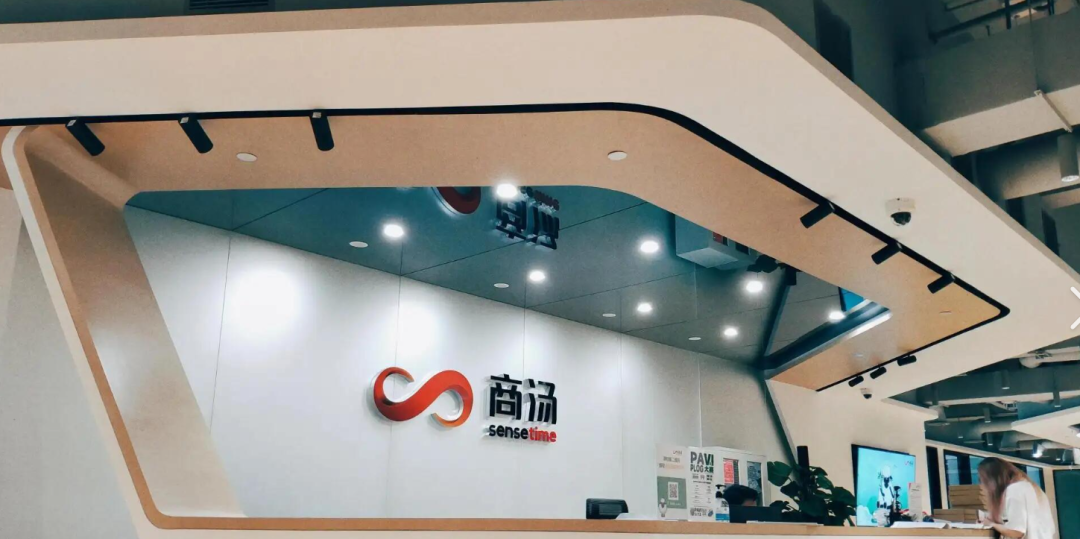
A SenseTime visit in Shenzhen puts an international delegation inside one of the companies that defined China's artificial-intelligence industry, at the point where the technology stops being a model and becomes a product line. SenseTime Group, listed in Hong Kong under code 0020, runs its Chinese headquarters and global research headquarters in Shanghai's Xuhui district. The Shenzhen programme runs at the company's Nanshan site.
What makes this visit worth the time is that SenseTime has just crossed a line most AI companies have not. In the first half of 2026 the group recorded its first profit under international financial reporting standards. The question a delegation can usefully take to Shenzhen is not whether the models are good, but how an AI company converts model capability into recurring revenue.
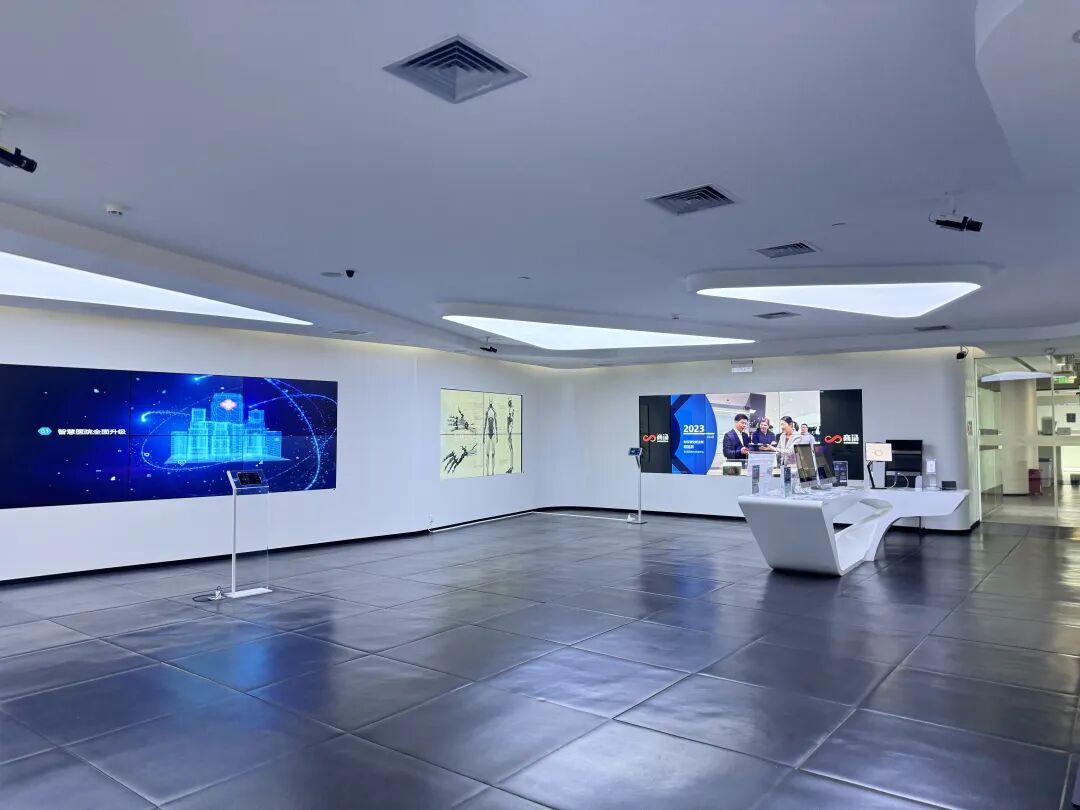
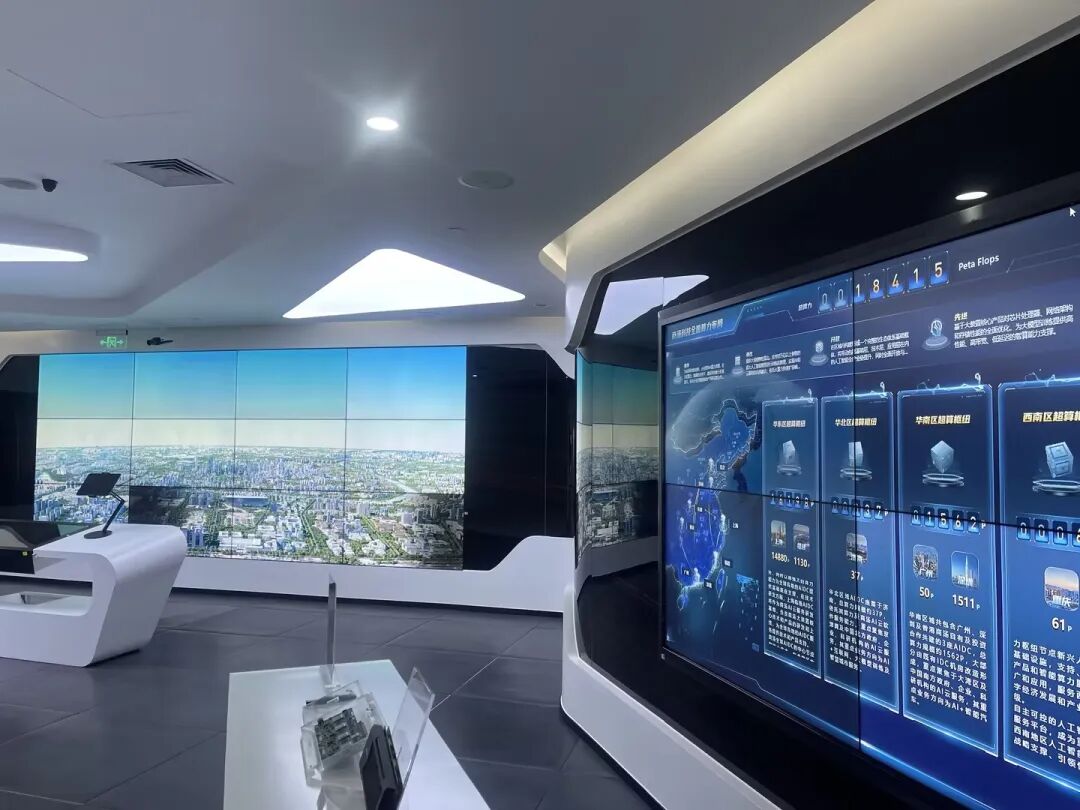
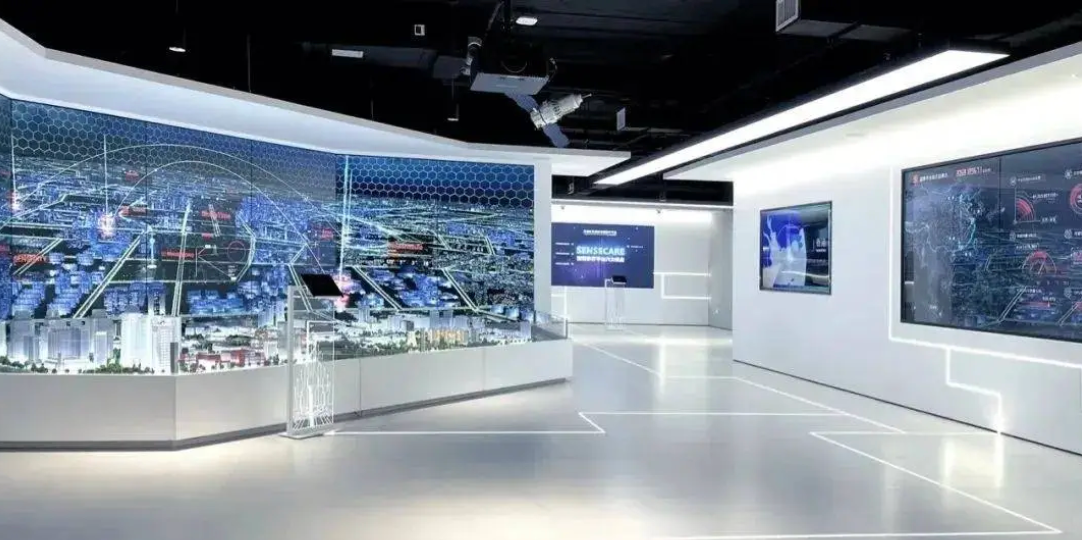
A visit is organised around the company's AI showroom, hands-on time with perceptual and generative AI systems, industry case displays, and a briefing and Q&A with company specialists.
China Innovation Visits coordinates the SenseTime tour, including the company reception, scheduling, Shenzhen transport and English interpretation.
Key takeaways
- See how an AI company moved from research to recurring revenue, and what the financial evidence actually shows.
- Understand the "one model system, one Token Factory, one agent harness" structure the company now describes.
- Test generative and perceptual AI systems directly rather than watching a video about them.
- Discuss the 1+X structure: what stays inside the group, and what is spun out.
- Compare the Shenzhen programme with the company's Beijing headquarters visit and Shanghai AI experience centre.
Why visit SenseTime in Shenzhen?
Most AI company visits show technology. This one can show the business model behind it, because SenseTime publishes enough detail to discuss unit economics: recurring revenue, gross margin, cash conversion and segment mix. For delegations trying to work out whether AI will pay back inside their own organisation, that is more useful than a benchmark score.
The timing is the reason to go now. The company spent years losing money at scale, restructured into a "1+X" group in 2024, and reported its first IFRS profit in August 2026. Arriving at that inflection point lets a delegation ask the questions that matter afterwards: which parts of the profit are operating, and which are not.
Shenzhen adds a second layer. The city's hardware supply chain, device makers and cross-border logistics are where much of China's AI gets deployed, and the visit can be combined with other Shenzhen programmes.
What the Shenzhen site is
A subsidiary, not the group headquarters
SenseTime's Chinese headquarters and global research headquarters are in Shanghai's Xuhui district, at the Caohejing development zone and the West Bund AI Tower. Shenzhen is the company's southern base. Shenzhen SenseTime Technology was registered in Nanshan district in 2015 and moved into the Shenzhen Bay Science and Technology Ecological Park in January 2019.
Chinese reporting from 2019 described the division of labour inside the company as Hong Kong for research and Shenzhen for application, using Guangdong's manufacturing and industrial base to turn research into deployed products. That framing is still the useful one for a visit: Shenzhen is where the applied side of the business sits.
The address, and how we confirm it
The company's Shenzhen offices occupy floors 39 to 41 of Block A, Building 11, Shenzhen Bay Science and Technology Ecological Park in Nanshan. A June 2025 public notice from the park's operator lists Shenzhen SenseTime Technology taking eight units across those three floors, totalling about 7,104 square metres.
Corporate registration records also show a Qianhai address for the Shenzhen entity. Office locations change, and AI companies move teams as business units are spun out. We confirm the exact meeting point with the host after the booking is approved and pass it to you in writing, rather than relying on a published address.
The 2026 numbers
First half of 2026
For the six months to 30 June 2026, the group reported revenue of about 2.91 billion yuan, up 23.4 per cent year on year, and gross profit of about 1.21 billion yuan, up 32.9 per cent, with gross margin at 41.4 per cent, up 2.9 percentage points.
Generative AI revenue reached about 2.33 billion yuan, up 28.2 per cent, close to 80 per cent of the total. Vision AI revenue was about 497 million yuan, up 13.9 per cent. Overseas revenue grew 127 per cent year on year, far faster than the group as a whole.
The company disclosed recurring revenue for the first time: about 1.14 billion yuan in the first half, 39.3 per cent of revenue, up from 510 million yuan and 21.6 per cent a year earlier. Recurring revenue is revenue under in-force contracts with a continuing renewal character. It is the most informative number in the report, because it says how much of the business is subscription-like rather than project-based.
How to read the first profit
The group reported a net profit of about 617 million yuan under IFRS, its first since listing. This needs one caveat, and it is worth raising in the briefing.
The profit was not produced by operations alone. Under non-IFRS measures, the adjusted net loss was about 386 million yuan, although that narrowed by 67.3 per cent year on year. Chinese financial reporting and the company's own statement attribute part of the IFRS profit to a rise in the fair value of incubated and invested AI ecosystem companies under the 1+X structure, describing it as a stage-by-stage release of the financial value of ecosystem assets. The operating business is improving quickly and is much closer to break-even than it was, but it is not the whole story.
The 2025 baseline
For 2025, revenue was about 5.015 billion yuan, up 32.9 per cent, with generative AI at about 3.63 billion yuan, up 51 per cent, and vision AI at about 1.08 billion yuan, up 3.4 per cent. Net loss narrowed by 58.6 per cent to about 1.78 billion yuan. In the second half of 2025, EBITDA turned positive for the first time since listing, at about 376 million yuan, and operating cash flow turned positive for the first time. Trade receivable collections reached about 4.87 billion yuan, and the cash conversion cycle shortened from 228 days to 129 days.

The model system
NEO-Unify and SenseNova U1
The company released and open-sourced the SenseNova U1 series on 28 April 2026. It is built on the NEO-Unify architecture, which the company developed in March 2026, and it unifies multimodal understanding, reasoning and generation inside a single architecture.
The engineering claim is specific and worth testing: conventional multimodal models bolt a vision encoder and a language backbone together through an adapter, so information is translated between components. NEO-Unify removes the separate vision encoder and the variational autoencoder and builds a unified representation space, so language and vision are modelled together. The practical consequence the company claims is that a smaller model reaches the quality of a larger one.
The open-sourced lightweight version ships in two sizes: an 8B dense model and an A3B mixture-of-experts model. Company and official sources report state-of-the-art results among open models of comparable size across image understanding, generation and editing, spatial intelligence and visual reasoning.
The 2026 release cadence
U1 was the beginning of a faster sequence. Through 2026 the company released SenseNova U1.5 and U1.5-Lite, SenseNova Vision, the office-oriented multimodal agent SenseNova 6.8-Flash-Lite, the content creation model SenseNova U1-Pro, the spatial intelligence model SenseNova SI-8B, and the Kairos 3.1 world model co-developed with Ace Robotics.
The company states that these models matched or outperformed leading international models including Gemini, GPT and DeepSeek on several core benchmarks, and that the U1 series passed 11,000 GitHub stars across three projects within four months of open-sourcing. Benchmark claims are company-attributed; the useful question in the room is which customers are paying for which model.
The Token Factory
From compute provision to production
SenseTime describes its SenseCore infrastructure as evolving into a Token Factory. In July 2026, SenseCore delivered an average daily token volume of 2.4 trillion, which the company says is about 22 times the level a year earlier. Total deployed computing power reached 48,000 petaflops as of the August 2026 results announcement, up from about 40,400 petaflops reported in March 2026.
What it changes commercially
The factory framing matters because it moves the unit of sale. The company states that integrated model and infrastructure optimisation tripled training speed for long-context agent models, increased image and video generation efficiency sixfold, and cut the cycle from model research validation to large-scale deployment to one week.
For a delegation, this is the part that maps onto internal decisions. If the cost per token falls faster than the price a customer will pay for a completed task, the margin structure of an AI business changes. Ask how the company prices today, by token volume or by task result, and where it expects to be in two years.
Where the revenue comes from
Generative AI
Generative AI is now close to 80 per cent of revenue. Company materials attribute growth to demand for model training, fine-tuning and inference, and to integrated industry solutions that commercialise the computing platform, the models and the applications together.
The customer list the company describes spans automotive, smart devices, consumer goods, internet, embodied intelligence, finance, education and healthcare. Applications worth asking about include the Xiaohuanxiong office product family, the Ruying marketing agent, and Seko, a multi-episode content generation agent.
Vision AI and overseas
Vision AI grew 13.9 per cent in the first half of 2026 after a period of restructuring, and the company describes it as its entry point into industries and overseas markets. Company materials note repeat purchases in Southeast Asia, Northeast Asia and the Middle East, with growing interest from South America and Europe.
Overseas revenue growing 127 per cent against group growth of 23 per cent is the single clearest signal in the report that the business is not only domestic.
Applications you can test on site
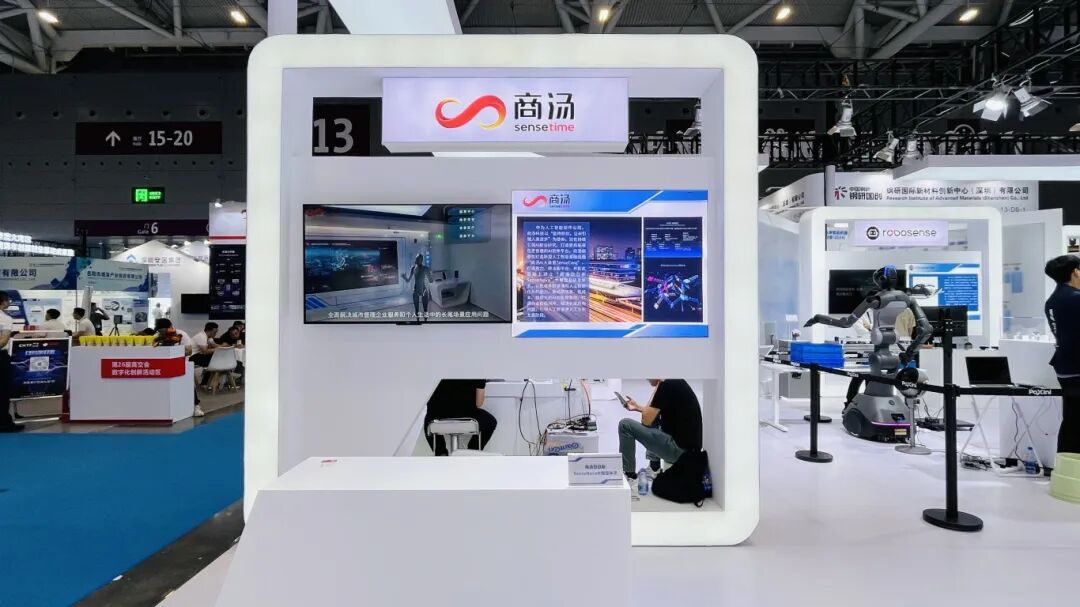
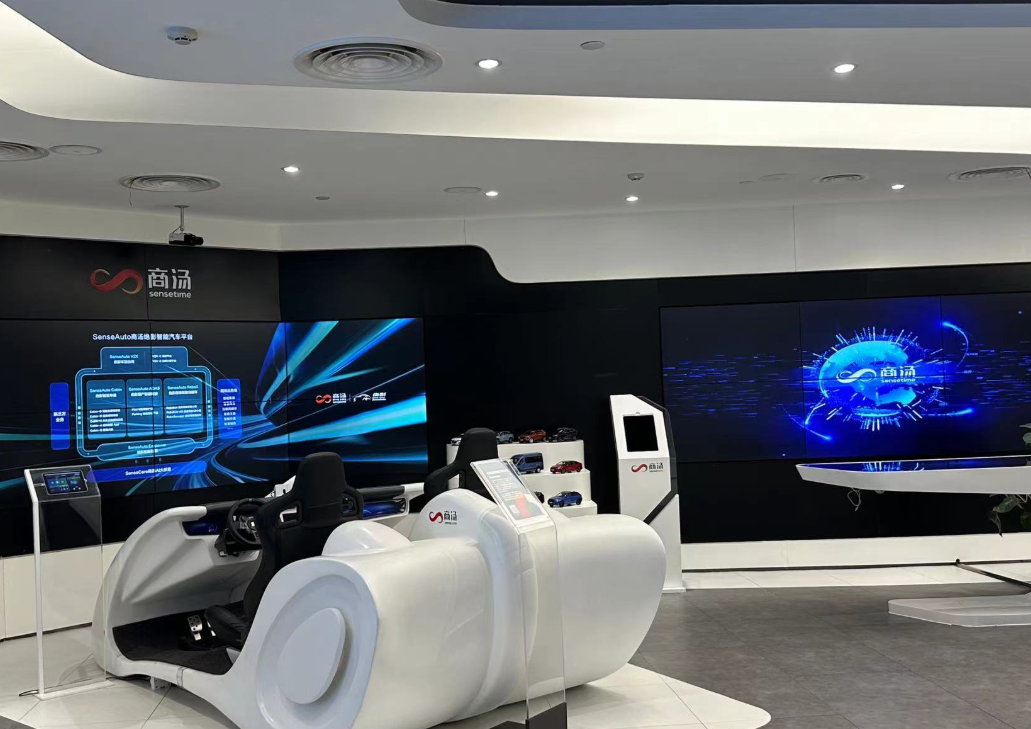
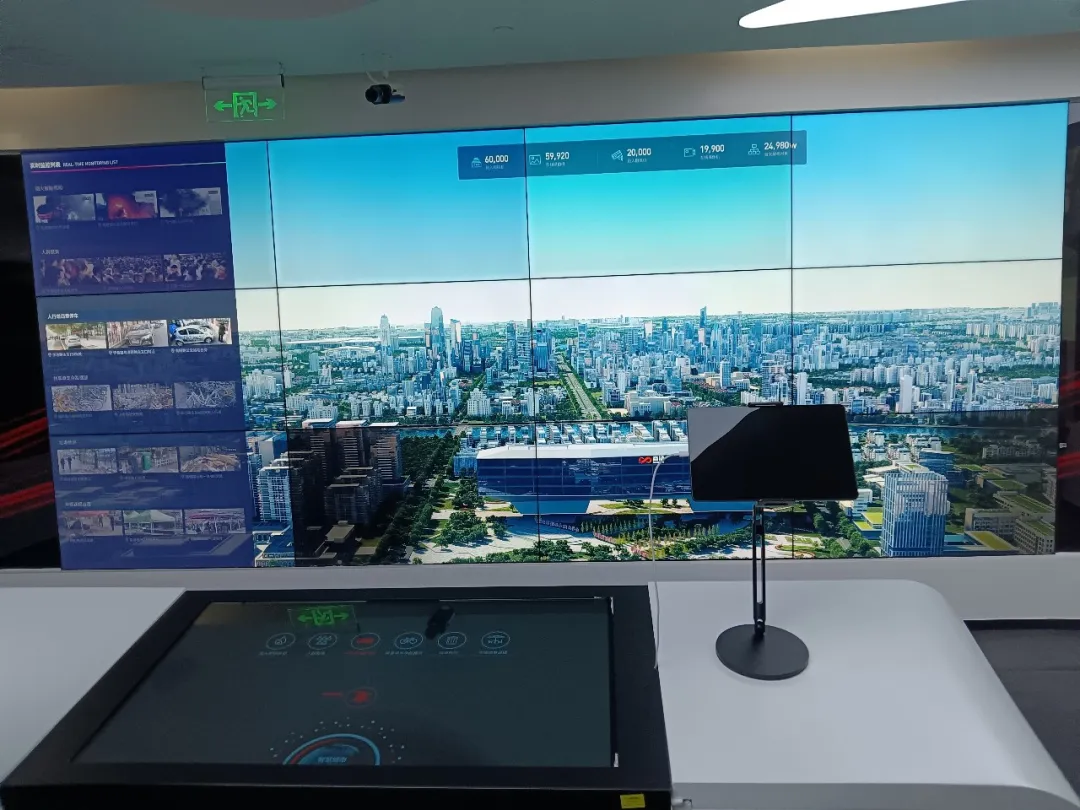
The showroom programme is organised around perceptual intelligence and generative AI demonstrations, plus industry cases in smart city, smart business and intelligent automotive. Delegations with specific sectors should say so in advance, because the host prepares the demonstration set around the group's interests.
The 1+X structure
Since 2024 the group has been organised as "1+X". The "1" is the core: generative AI and vision AI, carrying the computing base, model research, spatial intelligence and visual decision systems. The "X" is a set of incubated ecosystem companies intended to run independently in vertical markets, including intelligent driving, robotics, healthcare and retail.
The structure has financial consequences you should understand before the visit. Business units that attract outside investment can be deconsolidated. Smart driving left the consolidated financial statements in August 2025, which is why X revenue fell 5.9 per cent in 2025 to about 320 million yuan. That also means year-on-year comparisons of X revenue are not meaningful, as the company states.
The incubated companies include SenseAuto for intelligent driving, Sunrise for inference GPUs, SenseRobot for home robots, SenseTime Healthcare, and Ace Robotics for embodied intelligence. Ace Robotics raised an angel round in February 2026 led by Ant Group.
Sample Visit Agenda
9:30–10:00 Visit to SenseTime
- Tour the company's demos and experience various artificial intelligence "black technologies" based on computer vision technology.
- Visit the 3D content generation platform, the SenseRobot AI chess-playing robot, the crowd analysis system, and the vehicle and pedestrian video surveillance system, and personally experience digital human, FaceU, and other entertainment applications.
10:00–11:30 Thematic Exchange: Artificial Intelligence Development and AI Innovation
- Introduction to the company and its development history.
- Brief introduction to core technologies such as facial recognition and human body analysis technology, as well as robot control and sensing technology.
- The development of artificial intelligence and AI innovation and applications.
Who this visit suits
The programme suits four groups. Technology and AI executives working out a large-model adoption path. Traditional-industry leaders running a digital transformation and needing an honest picture of cost and payback. Investors and analysts covering AI commercialisation. And government or park managers working on how to cultivate advanced-technology industry locally.
It suits these groups because the company publishes enough financial detail to be argued with. Delegations looking for a pure technology showcase will get more from the Shanghai experience centre.
Combining the visit with other Shenzhen stops
SenseTime works as the AI anchor of a Shenzhen programme. A Huawei headquarters visit in Shenzhen covers the computing and devices side of the same question, and a Shenzhen robotics cluster visit covers the robotics and automation end where models meet hardware.
Combinations are coordinated around the delegation's objectives, travel schedule and host availability.
Practical notes
- The visit is a business programme, not a public attraction. Delegations are received as professional visitors.
- The meeting point is confirmed in writing after the host approves the booking; office floors and buildings can change between approval and the visit date.
- Photography rules are confirmed in advance; tell us during planning if you need images for internal reporting.
- Demonstrations depend on which systems the host has available and may change on the day.
- English interpretation can be arranged for the showroom, demonstrations, briefing and Q&A.
Questions before a SenseTime visit in Shenzhen
Is the visit open to international business delegations? Yes, subject to advance arrangements and confirmation by the host. We recommend planning at least 30 days ahead.
What is the group size? Visits are normally arranged for groups of 10 or more and fewer than 20 participants. Smaller groups can sometimes be accommodated.
How long does the visit take? The standard programme runs about two and a half hours, typically from 09:30 to 12:00, covering orientation, the showroom and the briefing and Q&A.
Is this the company headquarters? No. SenseTime's Chinese and global research headquarters are in Shanghai's Xuhui district. Shenzhen is the company's southern base, where the applied business sits.
Where exactly is the Shenzhen site? In Nanshan district, at the Shenzhen Bay Science and Technology Ecological Park. We confirm the building, floor and meeting point in writing once the host approves the booking.
Do participants need a technical background? No. The visit can be approached through strategy, operations, investment or policy, and terminology is handled through interpretation.
Is English interpretation provided? Yes, interpretation can be arranged for the showroom, demonstrations, briefing and Q&A, with terminology prepared around the delegation's interests.
Has SenseTime become profitable? The group reported its first IFRS net profit in the first half of 2026, about 617 million yuan. Part of that came from a rise in the fair value of ecosystem investments, and the adjusted non-IFRS result was still a loss of about 386 million yuan.
What is the Token Factory? It is the company's term for its computing infrastructure when measured by token output rather than by raw capacity. It delivered an average of 2.4 trillion tokens per day in July 2026.
How current are the figures? Revenue and profit figures here come from the August 2026 interim results. Model and computing figures change quickly; we confirm the current position during planning.
Does the programme always run as described? It is built around the elements above. Facilities and areas opened on the day are subject to what the site opens, and we confirm the final scope in writing during planning, before you commit.
Arrange your SenseTime visit
Tell us your dates, group size and what your team wants to understand about AI models, commercialisation or industrial deployment. China Innovation Visits will coordinate the company reception, discussion priorities, transport and English interpretation.
Contact China Innovation Visits to arrange your SenseTime company visit in Shenzhen.