A ShenHao Robot(申昊科技) visit in Hangzhou takes a delegation into a narrow and unusual corner of Chinese robotics: machines built to inspect the power grid so that people do not have to climb transmission towers. Hangzhou ShenHao Robot was founded in 2002, is based in Hangzhou's Yuhang district, and listed on the Shenzhen Stock Exchange's ChiNext board under 300853 in 2020. It describes itself as a company that uses multi-sensor systems, artificial intelligence, robotics and big data analytics to keep industrial equipment running safely.
Go for the engineering. The company is widely described in Chinese business media as a hidden champion of power inspection robotics: it has been in one domain for more than twenty years, it reports more than 15,000 units cumulatively deployed across the grid and rail transit, and in 2025 revenue roughly doubled to about 312 million yuan, with the first quarter of 2026 up 258.70 per cent and operating cash flow positive. A delegation gets the most out of the briefing when it knows both the deployed base and the reported scale.
China Innovation Visits coordinates the Hangzhou programme, including the company reception, scheduling, local transport and English interpretation.
Key takeaways
- See inspection robots for transmission lines, substations and distribution rooms, and the AI defect recognition work behind them.
- Ask what doubled revenue in 2025: intelligent monitoring equipment and a home energy storage line scaled from a small base.
- Understand the margin structure — the robotics line carries a 27.10 per cent gross margin, the highest in the portfolio.
- Discuss the move into rail transit and the partnership with Deep Robotics on quadruped platforms.
- Put the company in the wider embodied AI picture, including State Grid procurement plans for 2026.
- Compare with a Unitree Robotics visit on the general-purpose side of Chinese quadruped and humanoid development.
Why visit ShenHao Robot in Hangzhou?
Power inspection is one of the few robotics applications in China that is bought at scale by a single, identifiable customer type. State Grid and China Southern Power Grid run an enormous physical network, inspection is expensive and dangerous when done by people, and the economics of replacing it with machines are unusually clear. That makes it a good place to see robots that are bought for a job rather than demonstrated for a market.
It is also a good place to see what specialisation produces. The company has stayed in one domain for more than twenty years while peers diversified, and the robots it sells are the highest-margin line in its portfolio. The 2025 numbers show the result: revenue roughly doubled, and the first quarter of 2026 grew faster still.
Hangzhou works as a setting. The city is building out an embodied AI and robotics cluster, and a visit here combines naturally with other programmes in the same city — a Dahua AIoT visit on the vision and sensing side of the same industry.
Company background
2002 to the ChiNext listing
The company(申昊科技) was founded in 2002 and listed on ChiNext in 2020, often described at the time as the first listed power robotics company. Its stated positioning is a specialist in industrial intelligent operation and maintenance, applying robotics and AI to equipment safety rather than building general-purpose machines.
It is described in local reporting as a specialised and sophisticated enterprise — the Chinese policy category for focused mid-sized technology manufacturers — and Hangzhou has been promoting exactly this kind of company as it builds its robotics cluster.
What the company says it has deployed
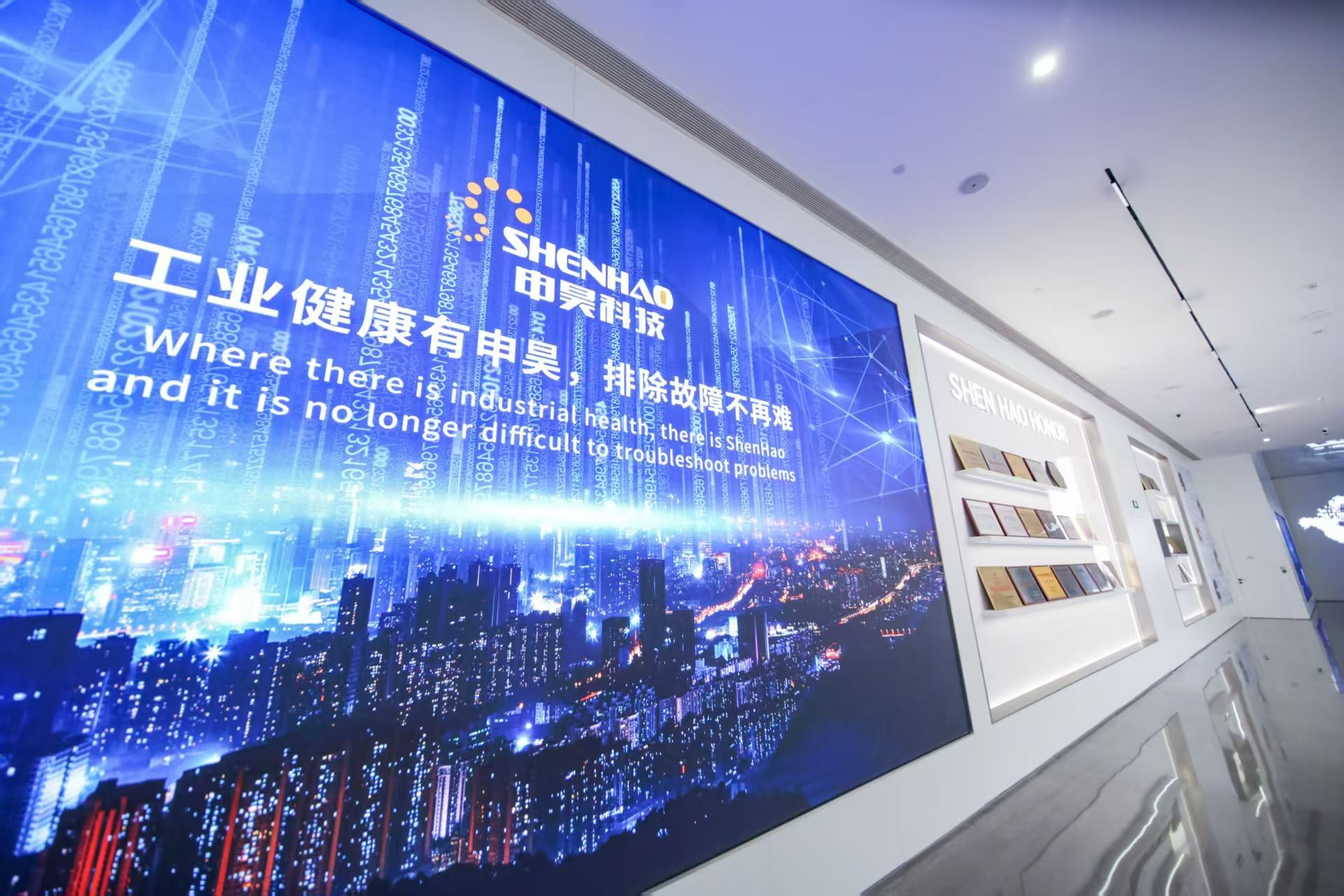
Company and programme materials describe a progression: the first transmission line inspection robot in 2008, more than 5,000 units deployed nationally by 2018, the ChiNext listing in 2020, and more than 15,000 units cumulatively deployed by 2024 as the business extended into rail transit. They also cite inspection robots in service on more than ten high-speed rail and metro lines.
These are company figures, not audited segment data, and they are worth quoting back at the briefing — the gap between cumulative units deployed and annual revenue is where a lot of the interesting questions sit.
What it sells
Inspection robots
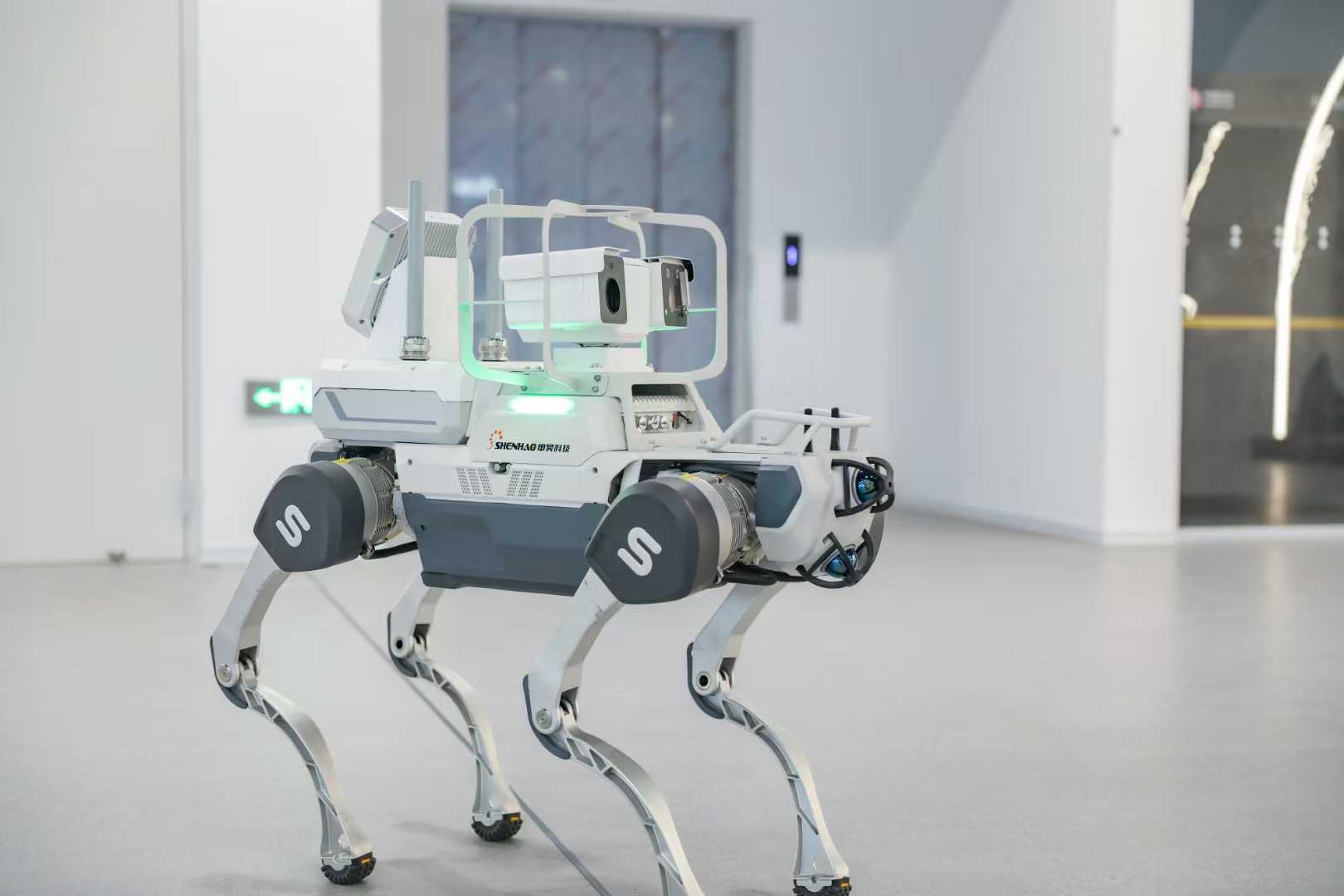
The core line covers transmission lines, substations and distribution rooms. In the exhibition hall the company shows the range from early line-walking robots to newer quadruped inspection platforms, and the pitch is that a machine can walk a line, photograph components and flag defects without putting a person on a tower.
Programme materials describe defect recognition running in under half a second with accuracy above 99.5 per cent. Treat demonstration figures as demonstration figures: ask what the false positive rate looks like in field operation over a full year, because that is the number that determines whether a utility keeps buying.
Monitoring and detection equipment
Intelligent monitoring, detection and control equipment was the largest line in 2025 at about 130 million yuan, up 64.61 per cent, or 41.58 per cent of revenue. This is the sensor and monitoring side of the business rather than the robots themselves, and it is where most of the volume sits.
The exhibition hall shows where this line is heading: a live power-generation monitoring centre display covers solar plants and thermal power stations, including panels fed by systems running at sites such as Guoneng Jinjie and the Jinjiang thermal power plant. The monitoring business is no longer only the grid — power generation itself is now in scope.
Rail transit
The company extends its inspection technology into high-speed rail and metro, describing this as a second growth curve. Rail is a sensible adjacency for a company whose core competence is autonomous inspection of linear infrastructure, and it is worth asking what share of revenue it has actually reached.
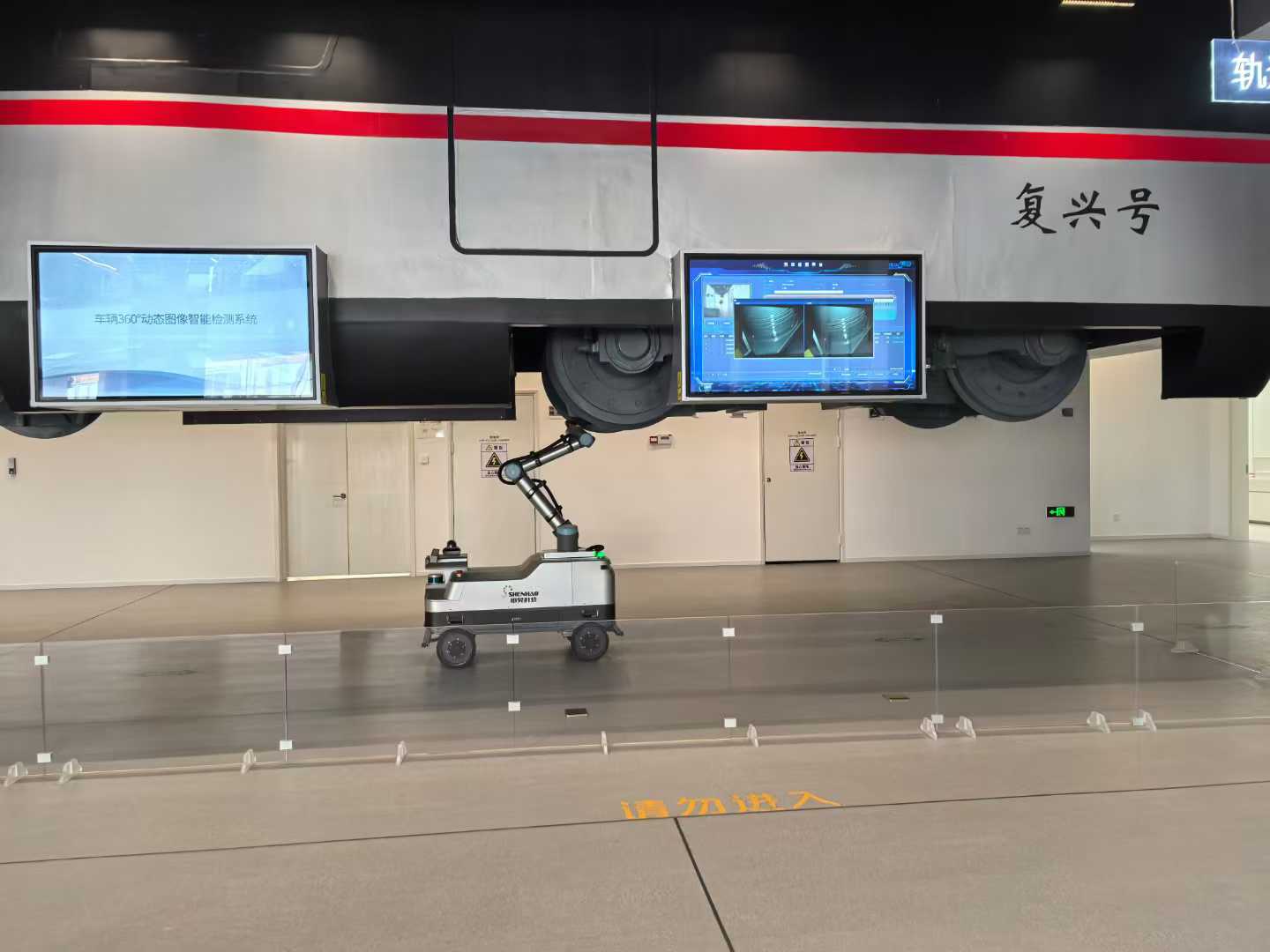
The exhibition hall demonstrates the capability directly: a vehicle-bottom dynamic image inspection system shown on a high-speed rail mock-up, with a wheeled robot that drives under the carriage and captures the running gear.
The 2025 results
Revenue doubled
Revenue was about 312 million yuan in 2025, up 98.15 per cent on 158 million yuan in 2024. That is a real recovery: the order book in power grid, smart transport, smart city and oil, gas and chemical applications moved into delivery, and demand picked up with new power system construction and infrastructure upgrades.
Cash turned positive
Operating cash flow was about 53 million yuan in 2025, and about 30 million yuan in the first quarter of 2026. The company attributes this to tighter receivables management, stronger collection and changed supply chain payment timing. In a sector where customers pay slowly, generating cash while revenue nearly doubles is a meaningful signal, and it is worth asking how the company manages working capital as the order book grows.
What the scale looks like on the ground
The company's footprint is worth reading alongside the reported figures. It describes the first transmission line inspection robot in 2008, more than 5,000 units deployed nationally by 2018, the ChiNext listing in 2020, and more than 15,000 units cumulatively deployed by 2024 as the business extended into rail transit, with inspection robots in service on more than ten high-speed rail and metro lines.
For a delegation, the useful exercise on site is to connect that deployed base to the revenue line: how much of it is under service contract, how much is replacement demand, and how the company plans to convert field experience into the next procurement cycle.
Reading the margins
Where the margin sits
Gross margin by line in 2025: intelligent monitoring equipment 4.80 per cent, home energy storage 10.61 per cent, smart robots 27.10 per cent. The robots are by far the most profitable thing the company sells, and the reason is the twenty years of domain work behind them rather than the hardware itself.
That is the strategic picture in one table. The robotics line carries the margin, monitoring carries the volume, and the storage business is the newest and fastest-scaling of the three. Ask which of the three the company expects to lead over the next three years, and how the State Grid procurement programme below feeds each.
The 2026 first quarter
Revenue was about 46 million yuan in the first quarter of 2026, up 258.70 per cent, with operating cash flow positive at about 30 million yuan. A delegation visiting in 2026 is arriving at a point where the order book is moving into delivery across power grid, smart transport, smart city and oil, gas and chemical applications, and the question worth asking is how much of the pipeline is contracted rather than expected.
Robotics strategy and embodied AI
The Deep Robotics partnership
In March 2025 the company signed a strategic cooperation agreement with Deep Robotics, combining ShenHao Robot's scenario capability in power inspection, emergency firefighting, policing and security, and oil, gas and chemical work with Deep Robotics' hardware and platform capability. For a delegation, this is the most concrete thing to ask about: what has shipped since.
The company's own view is that wheeled, rail-mounted and quadruped robots will remain the mainstream forms in power inspection for now, with humanoid platforms arriving as embodied AI technology improves and component costs fall.
State Grid procurement plans
Industry reporting on State Grid's plans for 2026 describes embodied intelligent equipment procurement across power inspection, live-line work, emergency rescue and warehousing, with a reported investment scale of about 6.8 billion yuan and equipment types including quadruped inspection robots, humanoid live-line working robots and dual-arm inspection robots.
If that procurement materialises as described, companies with field delivery experience in grid inspection are positioned to benefit. If it does not, the sector's recovery rests on thinner ground. Ask how much of the company's own planning assumes it.
Sample Visit Agenda
09:30–10:00 Visit to Shenhao Technology Exhibition Hall Participants will tour and learn about cutting-edge products such as intelligent inspection robots and intelligent operation and maintenance systems for industrial equipment, gain insights into Shenhao Technology's application practices in fields including electric power and rail transit, and develop a deeper understanding of the company's development history, core technologies, and innovative achievements.
10:00–10:30 Exploration of the Robotics Laboratory and Hands-on Robot Operation Participants will explore the open robotics laboratory, discover various intelligent robot testing scenarios, learn about their main functions, observe their modes of operation, and examine their remarkable capabilities (covering rail transit, power grids, emergency safety, ecological environment, and marine and water conservancy).
10:30–12:00 Thematic Exchange and Sharing: Shenhao Technology's Development and Technological Innovation
Who it suits
The visit suits delegations working on robotics applications, utility and infrastructure operations, industrial AI, and procurement from grid or rail operators. It also suits investors and analysts who want to test a specialist robotics thesis against a real operating business with twenty years of field delivery rather than a showcase.
Practical notes
- The visit is a business programme. Delegations are received as professional visitors and follow the host's rules.
- Booking requires approval in advance. Programme materials note that government and public institution delegations are asked to submit a formal inspection request letter, and corporate delegations a participant list, with the booking confirmed by the host.
- Foreign participants normally need to be registered with the host ahead of time, and that process is longer than for domestic visitors; allow additional working days for the paperwork.
- Provide the participant list, nationalities and industry focus early; the technical depth of the briefing is adjusted to suit.
- Photography rules are confirmed in advance; some areas carry confidentiality requirements. Tell us during planning if you need images for internal reporting.
- Smart casual is appropriate. Part of the programme may be outdoors.
- English interpretation can be arranged, including specialist preparation on robotics and power industry terminology. Bilingual materials and an English summary can be prepared on request.
Questions before a ShenHao Robot visit in Hangzhou
Is the visit open to international business delegations? Yes, subject to advance arrangements and confirmation by the host. Registration of foreign participants takes extra time, so we recommend planning at least 30 days ahead.
What is the group size? Visits are normally arranged for groups of 10 or more. We confirm the practical maximum with the host for your date.
How long does the visit take? The standard programme runs about two hours, typically covering the exhibition hall, production and assembly areas, and a briefing and Q&A.
Where is the visit held? At the company's base in Hangzhou, Yuhang district. We confirm the meeting point in writing after the host approves the booking.
Do participants need a technical background? No. The visit can be approached through robotics, infrastructure operations, procurement, investment or supply chain, and terminology is handled through interpretation.
Is English interpretation provided? Yes, including preparation on robotics and power industry terminology, and bilingual handouts can be arranged.
How large is the company? Revenue was about 312 million yuan in 2025, with 393 employees at the end of the year and more than 15,000 units cumulatively deployed across the grid and rail transit.
What is the recent growth record? Revenue rose 98.15 per cent in 2025 and 258.70 per cent in the first quarter of 2026, with operating cash flow positive at about 53 million yuan in 2025 and about 30 million yuan in the first quarter of 2026.
What drove the 2025 revenue doubling? Revenue rose 98.15 per cent, led by intelligent monitoring equipment at about 130 million yuan and a home energy storage line that grew more than twenty-four fold to about 108 million yuan.
How much of the business is robots? Smart robots were about 14.51 per cent of 2025 revenue, at about 45 million yuan, and were the highest-margin line at 27.10 per cent gross margin.
What documentation is needed in advance? A participant list with passport details for foreign visitors, submitted to the host for registration, plus the delegation's industry focus. We tell you the lead time for your specific group.
Does the programme always run as described? It is built around the elements above. Facilities and areas opened on the day are subject to what the site opens, and we confirm the final scope in writing during planning, before you commit.
Arrange your ShenHao Robot visit
Tell us your dates, group size and what your team wants to understand: inspection robotics for grid and rail, AI defect recognition in field operation, the economics of a specialist robotics supplier, the storage business that carried 2025, or embodied AI procurement plans in the power sector. China Innovation Visits will coordinate the company reception, discussion priorities, transport and English interpretation.
Contact China Innovation Visits to arrange your ShenHao Robot visit in Hangzhou.