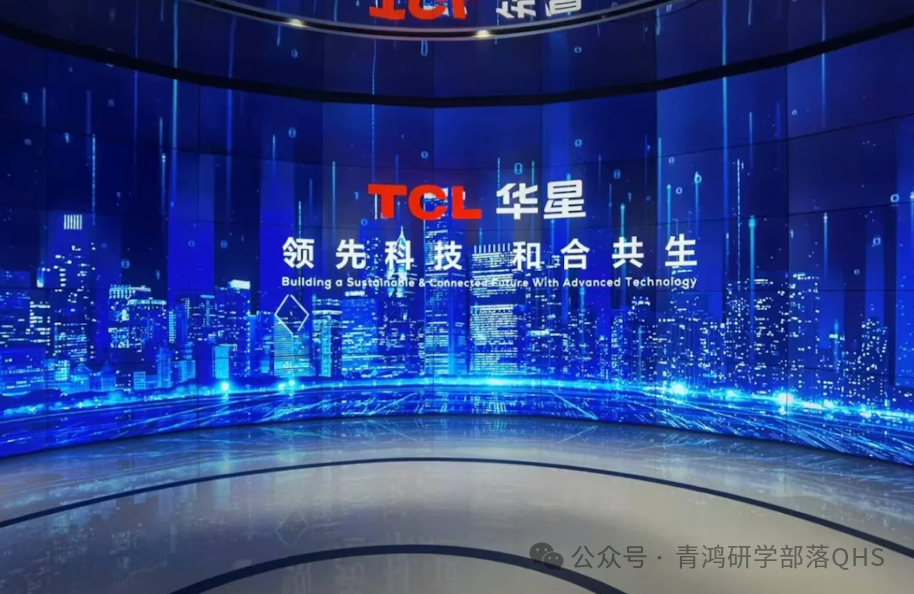
A TCL CSOT company visit in Shenzhen takes international business delegations inside one of the world's largest display manufacturers. TCL China Star Optoelectronics Technology, known as TCL CSOT or simply CSOT, was established in November 2009 and is headquartered in Guangming district, Shenzhen.
The company makes the panels that sit inside televisions, monitors, laptops, tablets and vehicle displays. It operates as the display arm of the listed group TCL Technology, which trades in Shenzhen under code 000100.
Display manufacturing is a useful subject for a delegation because scale, capital intensity and process discipline are all visible at once. A fab is measured in billions of yuan, in generations of glass substrate size, and in yield percentages that decide whether a product line makes money.
A visit is organised around the company's exhibition and museum halls, the intelligent manufacturing factory and laboratory, and a briefing and Q&A with company specialists.
China Innovation Visits coordinates the TCL CSOT tour, including the company reception, scheduling, Shenzhen transport and English interpretation.
Key takeaways
- See how a display manufacturer built eleven panel lines and seven production bases in about fifteen years.
- Understand what "generation" means in a fab, and why substrate size drives the economics.
- Examine printed OLED: why it matters, what it produces today, and what remains unproven.
- Discuss how factory AI is actually used, from defect classification to process control.
- Compare Chinese display manufacturing against a BOE factory tour in Beijing as a second reference point.
Why visit TCL CSOT in Shenzhen?
Few industries make capital discipline as visible. A display line costs tens of billions of yuan before it produces a single sellable panel, and its economics depend on cutting larger sheets of glass into more panels with fewer defects. Delegations working on manufacturing strategy, supply chain risk or industrial policy find the comparison direct and concrete.
The company is also mid-transition. It built its position on large-size LCD, is now investing in printed OLED as a next-generation process, and is applying AI models to factory decisions. That combination of a mature cash-generating business and an unproven new process is a realistic picture of Chinese advanced manufacturing, rather than a showcase version of it.
Shenzhen adds context. The city's equipment suppliers, materials chain and engineering talent let a panel maker iterate quickly, and the visit can be combined with other Shenzhen stops. A Huawei headquarters visit in Shenzhen covers the computing and devices side of the same ecosystem, and a BYD company visit covers automotive manufacturing at similar scale.
Company background
From one line to a multi-base manufacturer
CSOT's first line, t1, went into production in 2011 with reported investment of about 24.5 billion yuan in Guangming, Shenzhen. t2 followed in 2017 with a similar scale of investment. The two eleventh-generation lines, t6 and t7, are the larger step: t6 topped out in 2018 with reported investment of about 46.5 billion yuan, and t7 entered mass production in 2020 with reported investment of about 42.7 billion yuan.
The pace matters for the visit discussion. Each line added substrate size, which raises the number of panels cut per sheet and changes which panel sizes are economic to make. Understanding that sequence is the fastest way to understand why the industry consolidates into a handful of players.
Scale at the end of 2024
Company materials describe eleven panel production lines, five module plants and seven production bases by the end of 2024, with cumulative investment above 280 billion yuan and more than 40,000 employees. The same materials put around 22 per cent of staff at master's or doctoral level and around 35 per cent from China's 985 or 211 university groups. Treat these as company-reported figures; they are useful for scale, not for verification.
Ownership and the listed parent
CSOT is not separately listed. It sits inside TCL Technology, whose annual report is the audited source for the business. For 2024, the report states display business revenue of about 104.3 billion yuan and net profit of about 6.23 billion yuan, with group research and development spending of about 8.87 billion yuan, or 5.4 per cent of revenue.
Two transactions are worth asking about during the briefing. TCL Technology acquired LG Display's China operations, taking 80 per cent of one entity and 100 per cent of the Guangzhou entity for a combined reported sum around 10.8 billion yuan, and reorganised the assets as t11. It also agreed to buy an additional 21.53 per cent minority stake in the entity holding the t6 and t7 lines for about 11.56 billion yuan. Both consolidate capacity under one operator.
What you see on the visit
The museum and exhibition halls
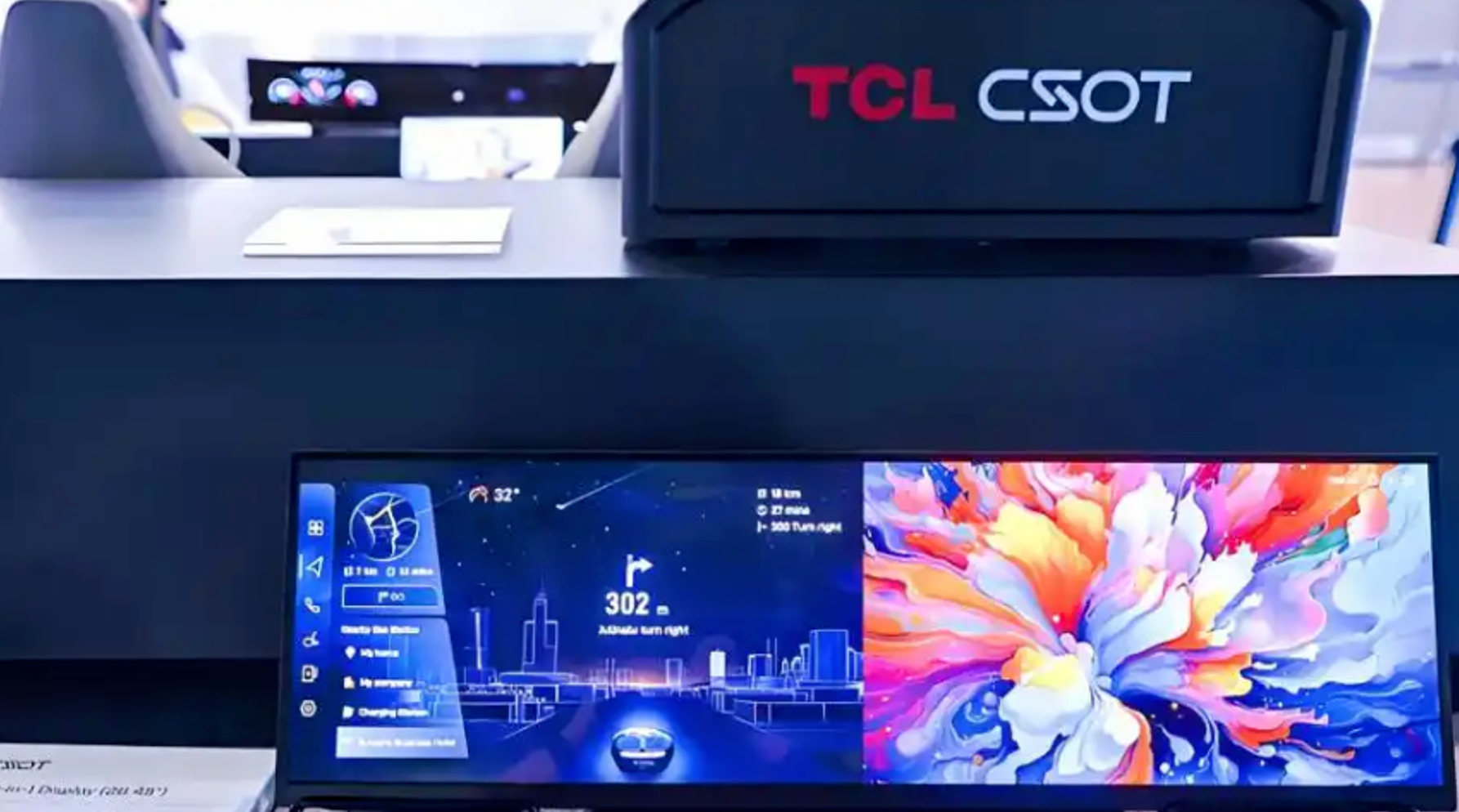
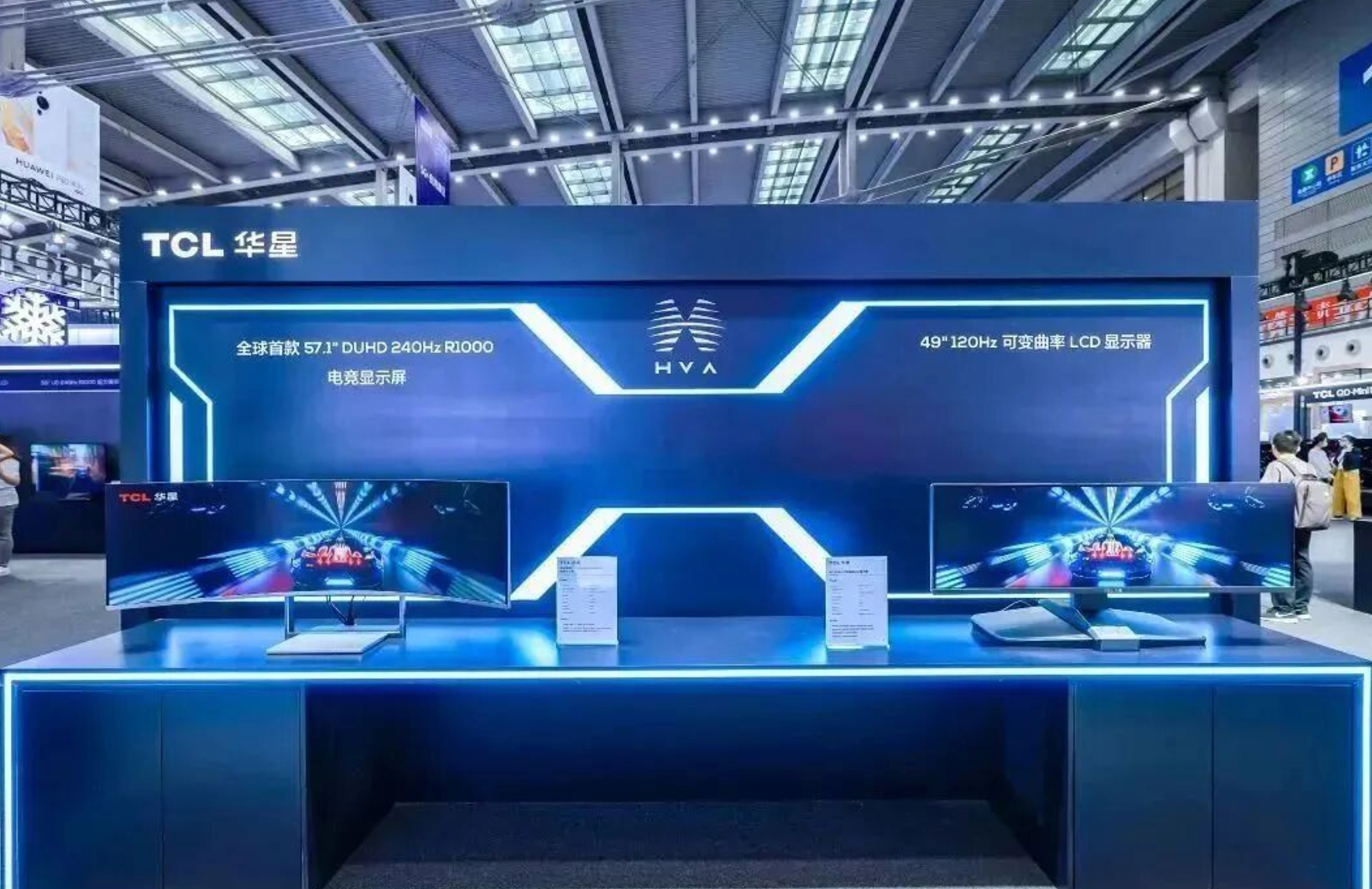
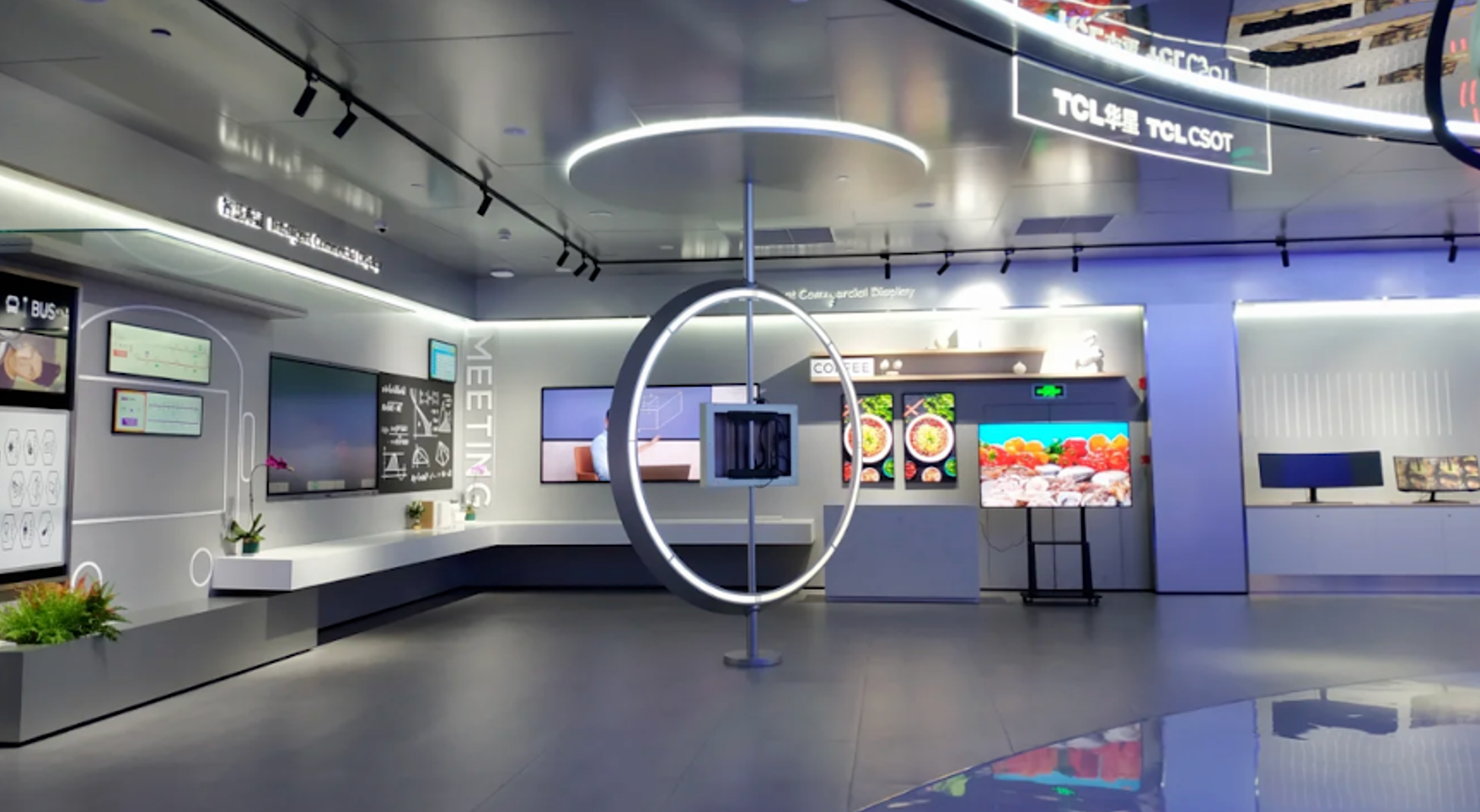
The museum hall covers the company's development timeline, from the decision to enter panel manufacturing through each line's construction and ramp. The product hall shows finished panels across applications: large television panels, monitor and laptop panels, vehicle displays, and commercial and medical displays.
The patent wall and the industry-customisation area are the parts most delegations underestimate. The patent wall shows where the company has filed, and the customisation area shows how the same panel technology is repackaged for retail, education, healthcare and transport customers. That is where a discussion about margin usually starts.
The intelligent manufacturing factory and laboratory
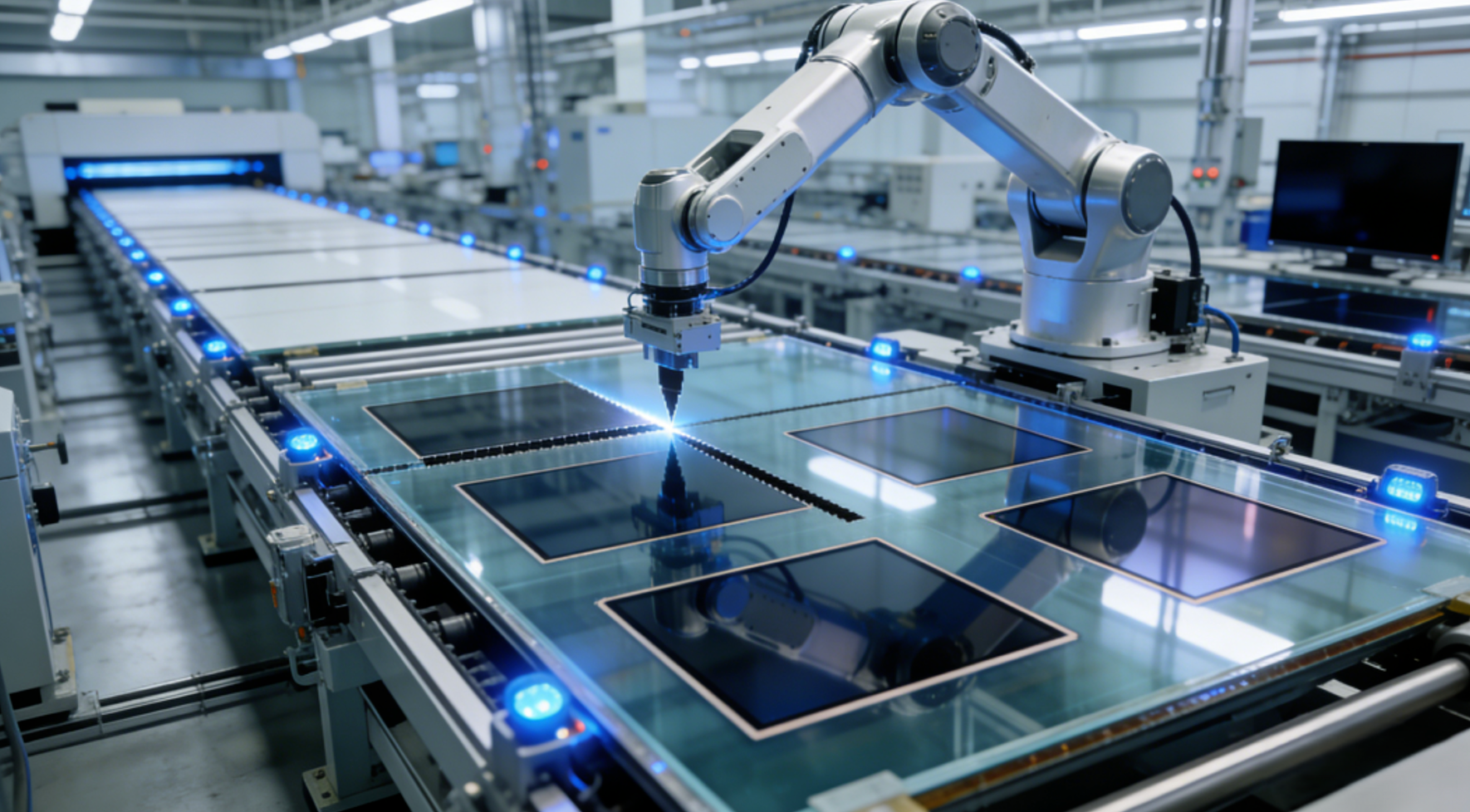
The factory section shows how a panel line is automated: substrate handling, inspection stations, and the movement of material between process steps without manual intervention. The laboratory section covers the process and equipment work behind yield improvement.
For technical delegations, the useful question is not how automated the line looks, but which decisions are still made by people. Yield management, equipment maintenance timing and new-product ramp are where human judgement and models meet, and the answer differs by line age.
The technology story
Why generation size matters
Panel lines are named by substrate generation. A larger substrate means more panels per sheet, but only for the sizes the sheet cuts efficiently. This is why an eleventh-generation line is built for large television panels and why a smaller-generation line can be the better asset for medium sizes.
This logic explains the company's recent investment choices better than any market forecast. It also explains why capacity acquisitions are attractive: buying an existing line buys substrate capacity and customer qualification at once.
Printed OLED, and why it is interesting
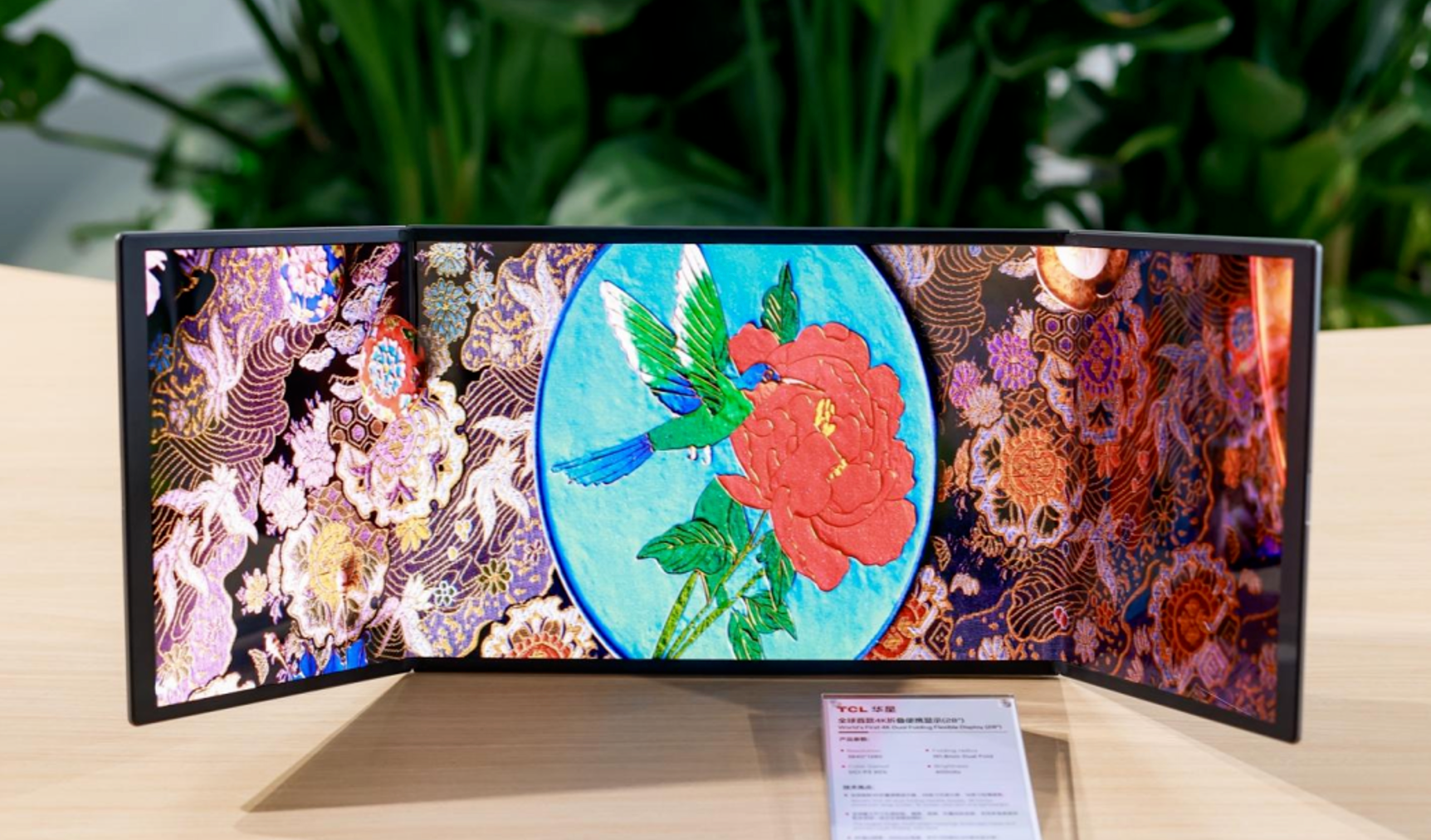
Printed OLED makes the light-emitting layers by printing rather than by vacuum evaporation. The appeal is material efficiency and the potential for lower capital cost at large substrate sizes. The company describes material utilisation around 90 per cent for its printed process, versus far lower figures for evaporation, and cites a RealStripe RGB structure at 390 pixels per inch.
The company has worked on printed OLED since around 2012. The t12 line in Wuhan, a 5.5-generation pilot and production line, entered mass production in November 2024 with a 21.6-inch 4K medical display. Company and Chinese official media describe this as the only printed OLED line in mass production globally. That is a company-attributed claim worth testing in the Q&A: ask what volumes it runs, which customers buy it, and what the yield curve looks like.
The Guangzhou t8 project
The larger bet is t8 in Guangzhou, an 8.6-generation printed OLED line. Official sources including the Guangzhou municipal government and Guangzhou Daily report main construction starting on 30 November 2025 and structural topping-out on 8 May 2026, a 151-day interval described as a record for the industry. Total investment is reported at about 29.5 billion yuan, with capacity of about 22,500 glass substrates per month at a substrate size of 2,290 by 2,620 millimetres.
The line targets medium sizes: laptop, monitor and tablet panels. Mass production is expected in the second half of 2027. Some secondary material circulating online gives an earlier groundbreaking date in October 2025; the official municipal and newspaper reporting is the more reliable source, and it is worth confirming the current status during planning.
Products and market position
Large-size television panels
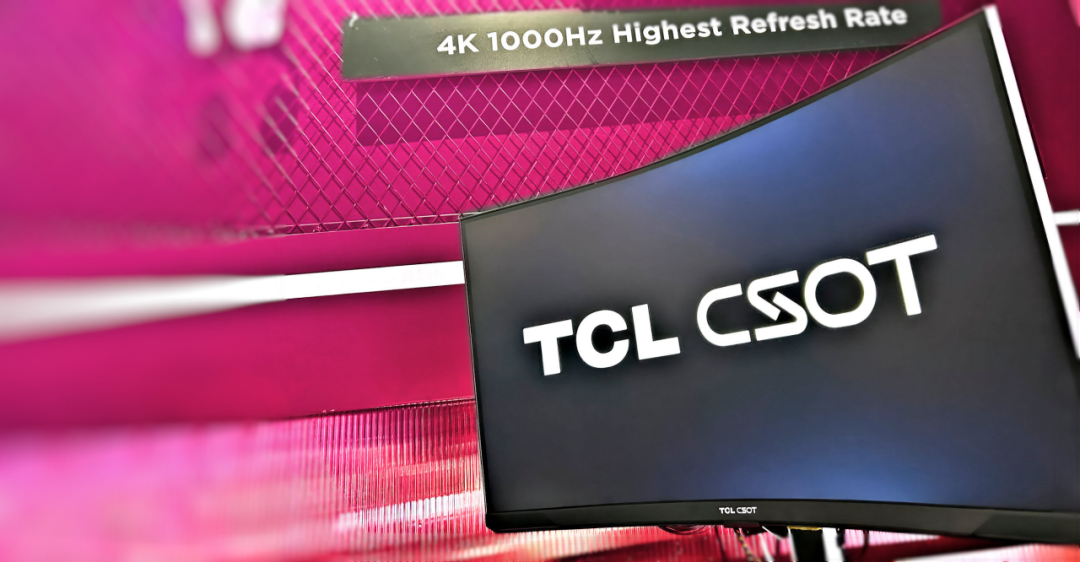
Independent research firm RUNTO puts CSOT's 2024 television panel shipments at about 48.1 million units and about 40.5 million square metres, ranking it second in the industry behind BOE. Shipment area grew faster than unit count, which reflects the shift toward larger screen sizes.
Company and annual report materials additionally claim first place globally in several size and product categories, including 55-, 65- and 75-inch television panels, panels above 98 inches, gaming monitors, and LTPS panels for laptops and tablets, with third place in LTPS automotive displays. Read these as company-cited positions based on particular definitions and periods; the underlying shipment data is the firmer ground.
How to read share claims
Delegations often arrive with a single market share number and leave with three. Company presentations may cite a share figure for a product category, research firms cite shares for a period and a definition, and annual reports use qualitative wording such as "top two globally" where a precise figure is harder to defend.
The practical approach is to ask which definition is being used, over what period, and by whom. The visit is a good place to do that, because the specialists present can usually separate the audited figures from the promotional ones.
Manufacturing and AI
The X-Intelligence platform
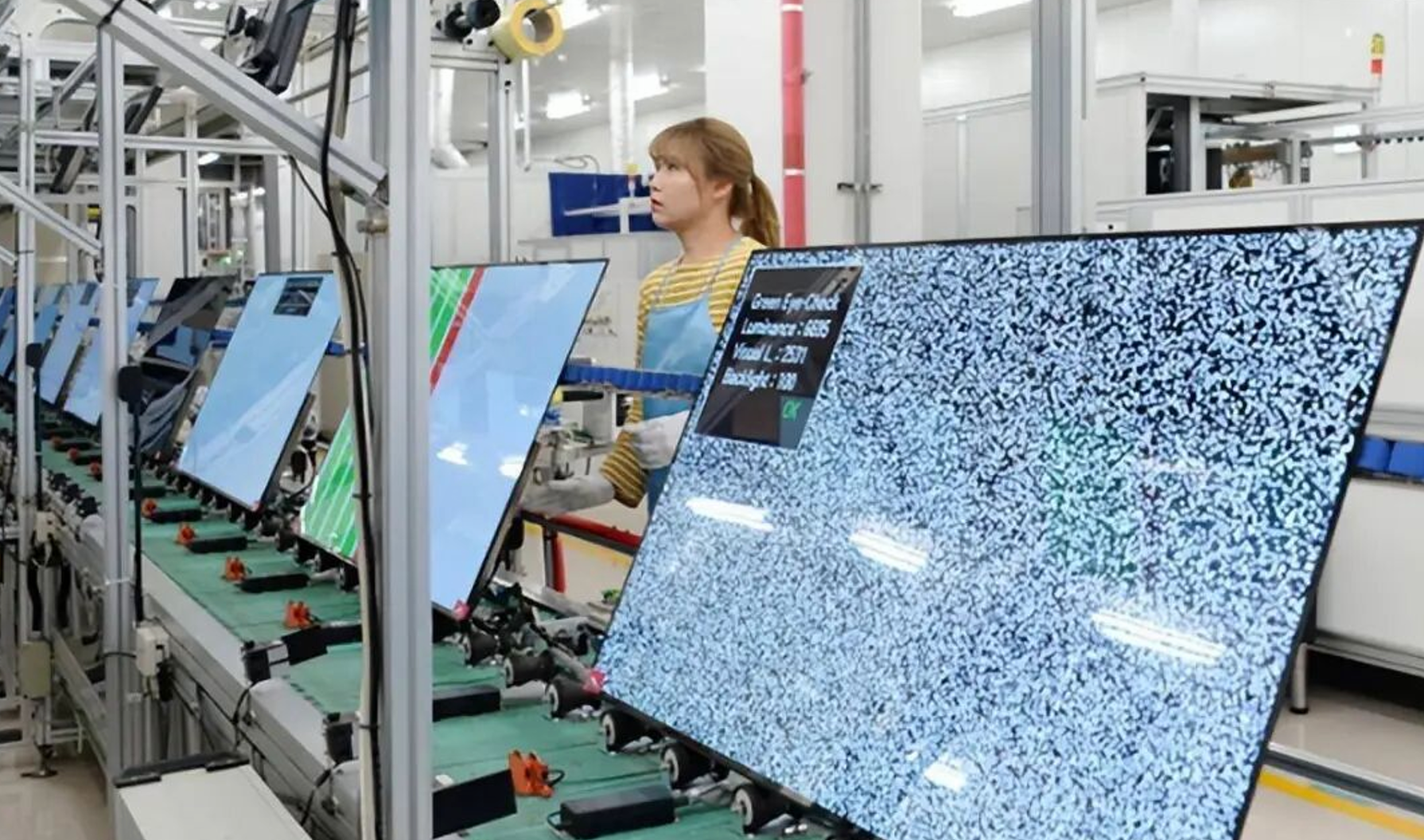
The company describes an industrial intelligence platform, X-Intelligence, now at version 3.0, organised around a data lake, a domain model and three platforms. In practice, the deployment that matters for output is automated defect classification, where the company reports accuracy improving from about 85 per cent to about 95 per cent, and automated defect review.
What AI changed, and what it did not
A defect classification model moving from 85 to 95 per cent accuracy does not remove inspectors; it changes what they do. The commercial value is in consistent judgement across shifts and lines, and in catching process drift earlier. That is a narrower and more credible claim than "AI runs the factory."
This is the section where delegations get the most useful answers. Ask which decisions the model makes autonomously, which require human confirmation, and how the model is retrained when a new product is introduced.
The briefing
Intelligent manufacturing
The standard briefing covers intelligent manufacturing: how the company structures its digital systems, where automation has paid back, and where it has not. Delegations with factory operations or industrial software backgrounds should route their questions here.
Corporate university and talent development
The second theme covers the corporate university and talent development: how a manufacturer staffs and trains for a process industry where a single line employs thousands and mistakes are expensive. Delegations with HR, organisational or education interests usually choose this theme.
Combining the visit with other Shenzhen stops
CSOT works well as the manufacturing anchor of a Shenzhen programme. A Shenzhen robotics cluster visit covers the automation and robotics side that supplies factories like this one, while a BYD or Huawei visit covers the demand side.
Combinations are coordinated around the delegation's objectives, travel schedule and host availability.
Practical notes
- Comfortable flat shoes are recommended; the visit involves sustained walking and standing.
- The visit is a business programme, not a tourist attraction. Delegations are received as professional visitors.
- Photography rules are confirmed in advance; tell us during planning if you need images for internal reporting.
- Presentation content may change according to the speakers available on the day.
- English interpretation can be arranged for the halls, factory visit, briefing and Q&A.
Questions before a TCL CSOT visit
Is the visit open to international business delegations? Yes, subject to advance arrangements and confirmation by the host. We recommend planning at least 30 days ahead.
What is the group size? Visits are normally arranged for groups of 10 or more and fewer than 20 participants. Smaller groups can sometimes be accommodated.
How long does the visit take? The standard programme runs about two and a half hours, typically from 09:30 to 12:00, covering the halls, the factory and laboratory visit, and the briefing and Q&A.
Do participants need a technical background? No. The visit can be approached through manufacturing, supply chain, investment or technology, and terminology is handled through interpretation.
What preparation is useful? Please share your business background and key questions in advance, and wear comfortable shoes for walking and standing.
Is English interpretation provided? Yes, interpretation can be arranged for the halls, factory visit, briefing and Q&A, with terminology prepared around the delegation's interests.
Is this a factory tour in the tourist sense? No. It is a structured business visit built around exhibition halls, a manufacturing visit route and a briefing, and the content is set with the host in advance.
Which briefing themes can we choose? Two themes are normally offered: intelligent manufacturing, and the corporate university and talent development. Tell us which fits your delegation.
How current is the printed OLED information? The t12 line entered mass production in November 2024 and the Guangzhou t8 line topped out in May 2026 with mass production expected in the second half of 2027. Status changes; we confirm it during planning.
How should the market share figures be read? Independent research firm RUNTO ranked the company second in 2024 television panel shipments. Company-cited first-place positions in specific sizes and product categories use their own definitions and periods.
Does the programme always run as described? It is built around the elements above. Facilities and areas opened on the day are subject to what the site opens, and we confirm the final scope in writing during planning, before you commit.
Arrange your TCL CSOT visit
Tell us your dates, group size and what your team wants to understand about display manufacturing, printed OLED or factory AI. China Innovation Visits will coordinate the company reception, discussion priorities, transport and English interpretation.
Contact China Innovation Visits to arrange your TCL CSOT company visit in Shenzhen.