Underwater robotics begins with the asset and the task
An offshore wind foundation, a hydropower gate and a submerged piece of coastal infrastructure need different inspection and maintenance methods. Visibility, water movement, access and the required evidence all influence the choice of robot. For an overseas team exploring underwater robotics in China, the productive question is how a system completes a particular job and delivers information an asset owner can use.
Three Chinese companies illustrate different parts of this industry. Deepinfar combines underwater vehicles with survey and inspection payloads. BOYA Gongdao develops systems for specialised underwater work, including hydropower maintenance. CHASING Innovation makes compact remotely operated vehicles used by inspection and service teams overseas.
The examples here focus on remotely operated work. A remotely operated vehicle (ROV) remains connected to a surface team by a tether. An autonomous underwater vehicle (AUV) follows a different mission and control model. The two should be compared against the task, the payload and the required operator involvement.
Three underwater robotics companies and their applications
| Company | Headquarters | Technical focus | Application to examine |
|---|---|---|---|
| Deepinfar | Tianjin | ROVs, AUVs, underwater gliders and engineering services | Sonar and video inspection at an offshore wind farm in Yangjiang |
| BOYA Gongdao | Beijing | Observation and work-class ROVs, specialist crawlers and underwater tools | A-400 development for Three Gorges hydropower maintenance; a separate gate-maintenance system at Gezhouba |
| CHASING Innovation | Shenzhen | Compact ROVs and inspection accessories | M2 PRO MAX used by a Japanese service operator for seabed-equipment inspection |
These companies are useful to compare because their cases expose different engineering problems: collecting inspection data, interacting with an underwater structure and deploying equipment from a small workboat.
Deepinfar: combining the vehicle with inspection instruments
Deepinfar was founded in 2013 and is headquartered in Tianjin. Its industrial portfolio includes tethered ROVs, autonomous underwater vehicles and underwater gliders, supported by an engineering-service team. This breadth makes it relevant to asset owners considering both the underwater platform and the instruments needed to complete an inspection.
Its technical strength is the ability to combine a vehicle, payload and operating team around a defined survey or inspection job. Cameras provide visual records; sonar provides another way to examine structures and the surrounding seabed. The useful output is a set of records that engineers can review, compare and connect to maintenance decisions.
At an offshore wind farm in Yangjiang, a Dolphin II-C ROV inspected an offshore substation and four wind turbines. The equipment combined M900 multibeam sonar, BV5000 3D imaging sonar and high-definition video. Work covered matters including foundation scour, cable condition, structural surfaces, anodes and marine growth. Inspection records included sonar data, images and video.
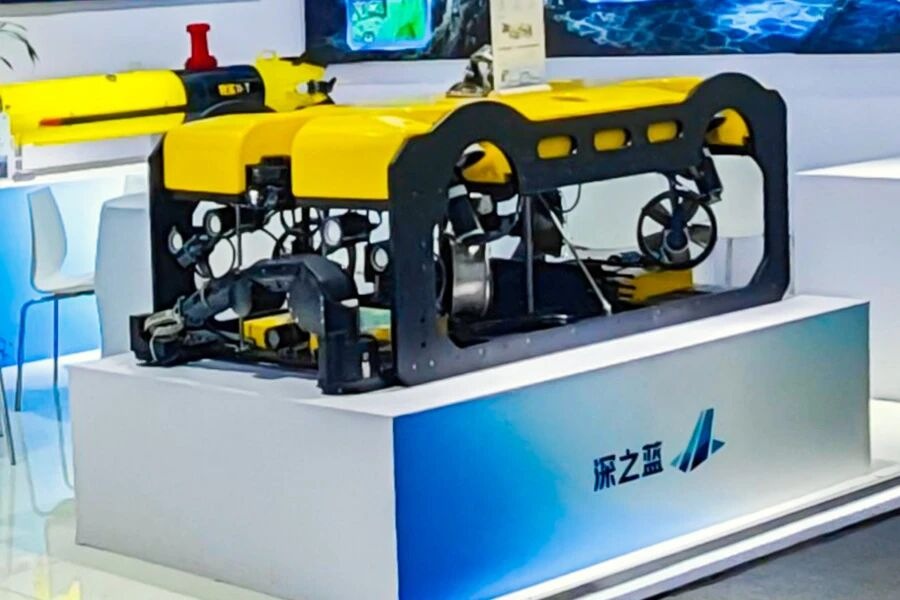
Deepinfar equipment at the 2026 Beijing wind-energy exhibition. Photograph: Deepinfar. This equipment photograph is separate from the Yangjiang field case.
A useful technical exchange would follow a single inspection target from mission preparation to the final record: why those sensors were selected, how coverage was tracked, what the operator could see and how the data were reviewed. Ask to compare the raw observations with the engineering report. A detailed underwater image and an accepted engineering conclusion are different deliverables.
For offshore wind operators and engineering consultancies, this is a route into discussing repeat inspections and payload integration. It also helps establish whether the intended relationship is equipment supply, a complete inspection service or cooperation with a local survey team.
BOYA Gongdao: underwater work designed around hydropower maintenance
BOYA Gongdao was established in 2015 and is headquartered in Beijing's Economic-Technological Development Area. Its portfolio includes observation ROVs, work-class vehicles, tracked underwater robots and specialist accessories. The company also develops surface equipment and underwater research products, but its hydropower work is the most relevant focus for this article.
The engineering challenge here extends beyond seeing a structure. A machine may need to reach a surface, remain stable, identify an obstruction and use an appropriate tool. BOYA's A-400 combines swimming and tracked movement, with provision for inspection and work payloads.
For the Three Gorges hydropower station, BOYA developed a dedicated A-400 underwater maintenance system. The project was contracted in 2021 and the system was manufactured and delivered in 2022. The application includes gate-obstruction removal, bringing manipulation and inspection into the same maintenance discussion.
A separate Gezhouba hydropower case concerns a purpose-built gate inspection and leak-sealing robot. Acoustic and optical equipment supported observation, while an ink-tracing method helped locate leakage before sealing material was applied. This is a distinct system and application; it should not be treated as proof that every A-400 carries the same tools.
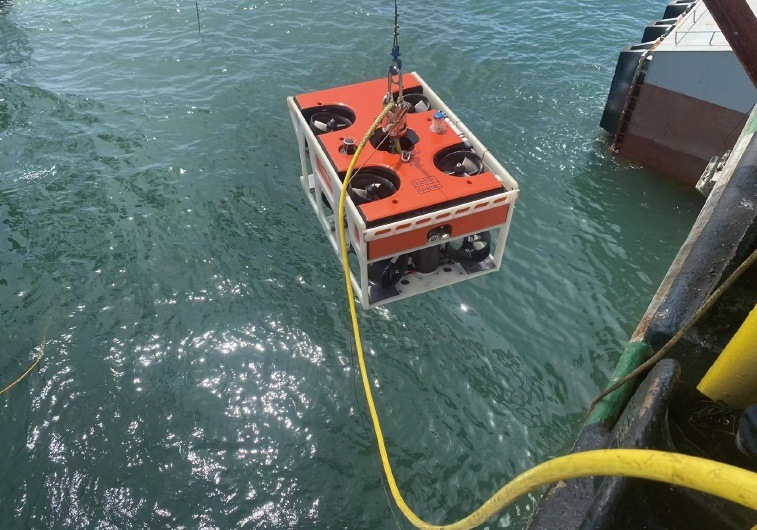
BOYA Gongdao ROV deployment, from the company's development-history photographs. Photograph: BOYA Gongdao.
For dam owners and maintenance contractors, a visit can focus on contact with the asset: positioning, tool changes, operator feedback, recovery and the inspection trail left after an intervention. A group can describe the structure and maintenance task in advance so that the engineering team can explain standard and custom approaches.
CHASING Innovation: compact ROVs in an overseas service workflow
CHASING Innovation was founded in Shenzhen in 2016. Its product range spans consumer and industrial underwater ROVs, including the M2 family. Its relevance to overseas professional visitors is the connection between compact equipment and the service businesses that operate it. The company serves consumer and professional users through international sales and support channels.
Compact systems offer a different starting point from a large, purpose-built maintenance vehicle. A service team needs to transport the ROV, deploy it from the available platform, manage the tether and return usable visual observations. Equipment handling, operator practice and support are therefore useful subjects alongside the vehicle itself.
In a Japanese seabed-equipment inspection documented in March 2026, Okinawa Drone Service Center used a CHASING M2 PRO MAX to move around underwater equipment while the surface operator viewed live video. The operation combined deployment from a small boat with surface-based control and live observation of the inspection target. Seabed inspection operation.
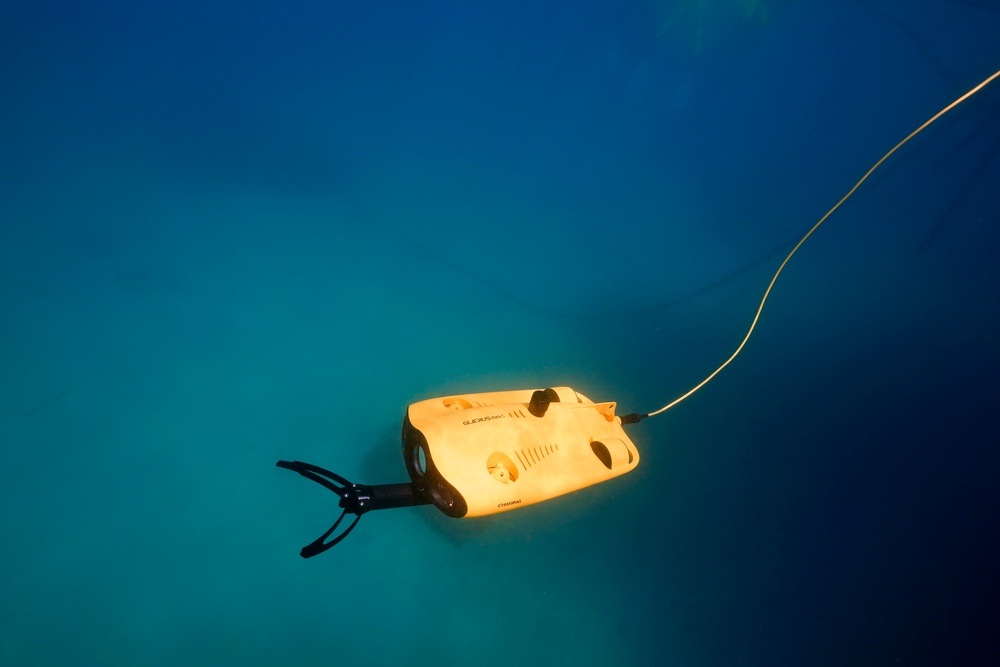
CHASING GLADIUS MINI S portable underwater robot. Image: Focus Nordic media library. The Japanese inspection case uses M2 PRO MAX.
For an inspection contractor, the useful conversation is how a field team prepares, pilots, records observations and supports the equipment after a job. For a visiting engineering team, ask what the selected configuration can measure as well as what it can show on camera. The required report, sensor payload and recovery method should drive the evaluation.
What an underwater robotics evaluation should cover
Begin with the decision the inspection needs to support. A camera record of surface condition, a sonar survey around a foundation and a hands-on gate intervention are different work packages. Define the asset, water conditions, access method, target features and required output before comparing vehicles.
Then follow the complete operation. Deployment and recovery, tether management, localisation, sensor calibration and data processing can matter as much as time underwater. Ask for a sample deliverable with its coverage record, scale or measurement method and review process. This reveals how an observation becomes a usable inspection result.
For contact work such as cleaning, sealing or obstruction removal, the tool and surface interaction deserve their own discussion. A platform's ability to carry an accessory does not establish that a particular maintenance procedure has been validated for your asset. A technical exchange can examine a representative structure and the inspection or maintenance method.
Planning an underwater robotics visit to China
Tianjin is the starting point for Deepinfar, Beijing for BOYA Gongdao and Shenzhen for CHASING. A hydropower-focused delegation may prioritise vehicle control and specialist intervention tools. An offshore wind team may focus on sensor integration and inspection records. A marine-service business may place more weight on portable equipment and field deployment.
China Innovation Visits can coordinate company exchanges, technical interpretation and China-side logistics around those objectives. Share the asset type, operating environment, target task and participant roles so the proposed meetings can address a concrete engineering problem. Request an underwater robotics visit. For the broader technology context, see our China robotics industry-chain guide.
Sample visit programme
This is an example for a selected company. The proposal specifies whether a demonstration is on land, in a test tank or at another approved venue.
| Segment | Time | What to expect |
|---|---|---|
| Asset and mission briefing | Opening session | Discuss the delegation's inspection or maintenance task and a relevant completed application. |
| Vehicle and payload review | Main session | Examine the selected platform, sensors, tether, control equipment and deployment requirements. |
| Data or tool demonstration | Technical discussion | Review a sample inspection record or a defined tool operation, including the operator's role. |
| Technical takeaways | Closing session | Discuss integration, training, service support and open questions for follow-up. |
Questions about underwater robotics visits
Are underwater robots autonomous? Some are, but the inspection and maintenance cases in this article use remotely operated systems. An ROV is tethered to its surface team; an AUV follows a different mission model. Specify the level of autonomy and intervention your task requires.
Which company is most relevant to an energy or infrastructure delegation? Deepinfar is relevant to sensor-equipped inspection and offshore survey workflows. BOYA Gongdao offers hydropower maintenance and specialist intervention examples. CHASING is relevant to compact ROV deployment and service operations. Selection should follow the asset and required work rather than vehicle appearance.
Can a visit include a working underwater demonstration? The proposed venue and demonstration format are agreed with the host. An equipment review, test-tank session and live field operation have different requirements. Share the task early so that the programme can specify what your team will examine.
Can we visit the wind farms or hydropower stations described here? These cases explain the equipment and its use. Entering an operating energy facility requires a separate arrangement with its owner and operator. A company meeting does not itself provide that access. Relevant equipment and case records can form the basis of a company exchange.
How do we request a programme and quotation? Send your organisation, dates, group size, participant roles, city preferences and technical priorities. Include a short description of the asset, water conditions and desired inspection or maintenance output. The proposal identifies company arrangements, interpretation, local transport and any other included services.
Final host locations, equipment, demonstrations, meeting participants and customer-site access are confirmed during programme planning.