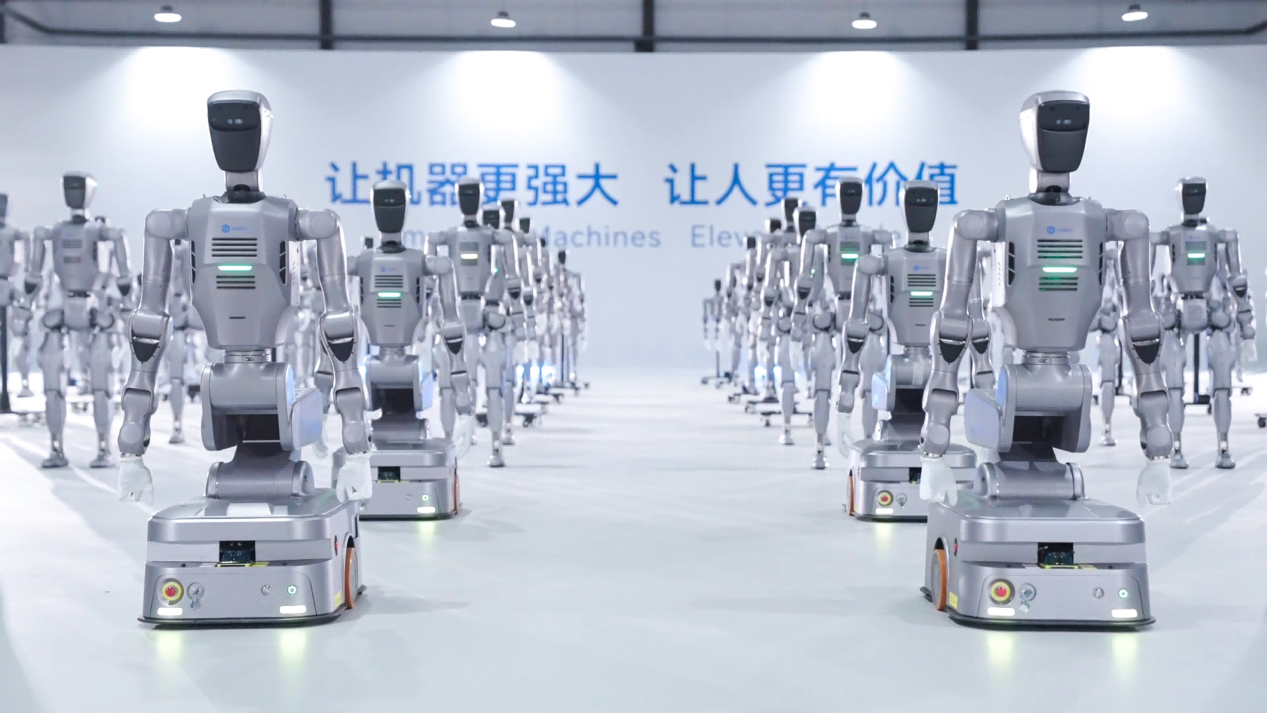
A DOBOT company visit in Shenzhen introduces international business delegations to one of the world's dedicated collaborative robot makers. DOBOT, or Shenzhen Yuejiang Technology, was founded in 2015 and is headquartered in Nanshan district. It develops, manufactures and sells collaborative robot arms and embodied intelligence robots used in factories, classrooms, laboratories and commercial settings.
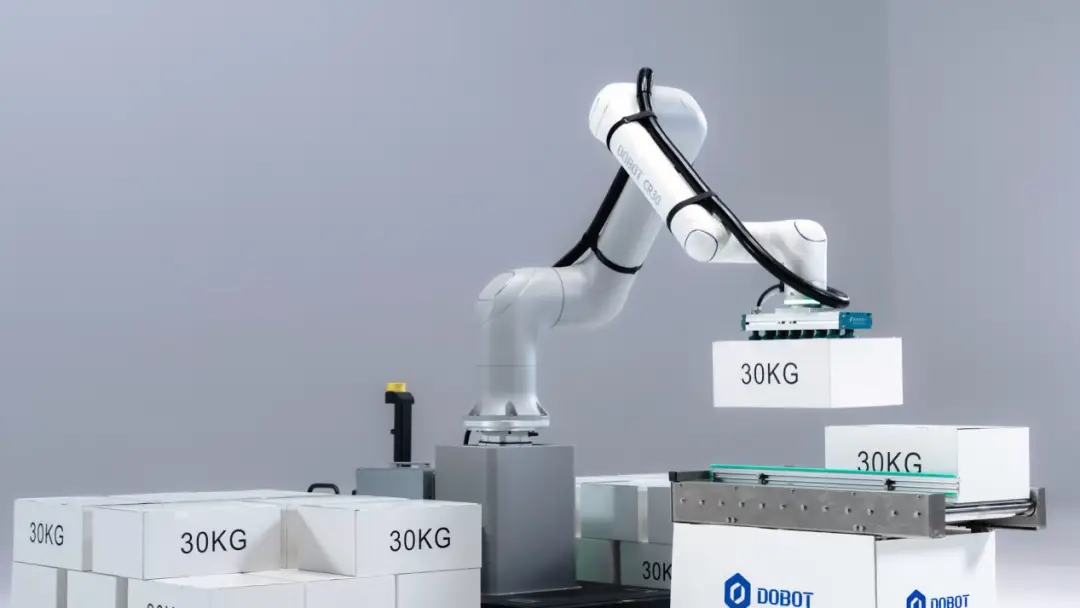
DOBOT is a listed company. It trades on the Hong Kong Stock Exchange, and reports describe a process toward an additional mainland listing. This status is part of what makes the visit useful: shipments, revenue and strategy are disclosed, so they can be discussed with evidence rather than only through presentations.
A visit is organised around the company's exhibition hall, product demonstrations and a briefing and Q&A with company specialists.
China Innovation Visits coordinates the DOBOT tour, including the company reception, scheduling, Shenzhen transport and English interpretation.
Key takeaways
- See DOBOT's collaborative robot range, from desktop units to 30 kg industrial arms.
- Understand how one company serves industry, education and research at the same time.
- Discuss how collaborative robots are deployed in welding, assembly, palletising and inspection.
- Examine the move from fixed automation toward embodied intelligence.
- Learn from company specialists how product decisions connect with commercial reality.
Why visit DOBOT in Shenzhen?
Collaborative robots are one of the clearest ways to understand practical factory automation. Unlike a humanoid robot, which still has to prove where it works best, a collaborative arm already has established tasks: welding, palletising, machine tending, assembly, gluing, polishing and inspection. A visit lets a delegation discuss automation decisions that can be judged on payback and reliability today.
DOBOT also sits at a useful point in the market. It sells into more than 100 countries and regions, works across more than a dozen industries, and runs both a large industrial business and a large education business. Delegations comparing automation suppliers, education partnerships or distribution models can all find relevant material here.
The Shenzhen location adds context. The city's electronics supply chain, precision manufacturing and component ecosystem support rapid product iteration, and the visit can be combined with other Shenzhen technology visits.
Company background
Founded in 2015
DOBOT was founded in July 2015 and grew from a single office in Nanshan. The company describes itself as having developed the first desktop collaborative robot, and it built an early reputation on compact arms aimed at education, research and light industrial tasks before extending into higher-payload industrial models.
Founder and team
The founder and chief executive, Liu Peichao, is a Shandong University graduate who has led the company since it was established. Around 30 per cent of staff work in research and development, and the company reports more than 1,300 intellectual property assets.
The company operates research and development centres in Shenzhen, Shanghai and Qingdao, with production based in Shandong province. It also maintains branches in several Chinese cities and overseas locations including Dallas, Frankfurt and Tokyo, organised around domestic industrial, domestic education and overseas business groups.
A product system, not a single arm
Industrial collaborative robots
The industrial range covers payloads from light assembly up to 30 kg. The CRA series covers seven models in the 3 to 20 kg range, while the CR 30H is a high-speed arm with a 30 kg payload. Other lines address specific conditions: the CRAF series adds joint torque sensing, and the CRA-IP68 series is built for dusty or humid environments. The CR and CRS series cover a broad set of industrial payloads.
| Range | Positioning |
|---|---|
| CR 30H | 30 kg payload, high joint speed |
| CRA series | Seven models, 3 to 20 kg |
| CRAF series | Joint torque sensing |
| CRA-IP68 | Dusty and humid environments |
| Nova series | Compact cobots for commercial automation |
| MG400 and M1 Pro | Desktop and SCARA units |
| Magician series | Education and research |
| DOBOT Atom | Full-size embodied AI humanoid |
Desktop, education and research robots
The desktop and education lines remain central to the company. The Nova series is aimed at commercial automation, with Nova 2 using the company's Dobot Brain multimodal model so that tasks can be set through voice, text or demonstration without writing code. The MG400 and M1 Pro cover agile industrial and SCARA work, while the Magician series, including Magician E6, is used in K12, vocational, higher education and research settings.
For education delegations this is often the most relevant part of the portfolio. The same hardware can support teaching, research and light production, and the company has built curricula and training around it.
Embodied intelligence
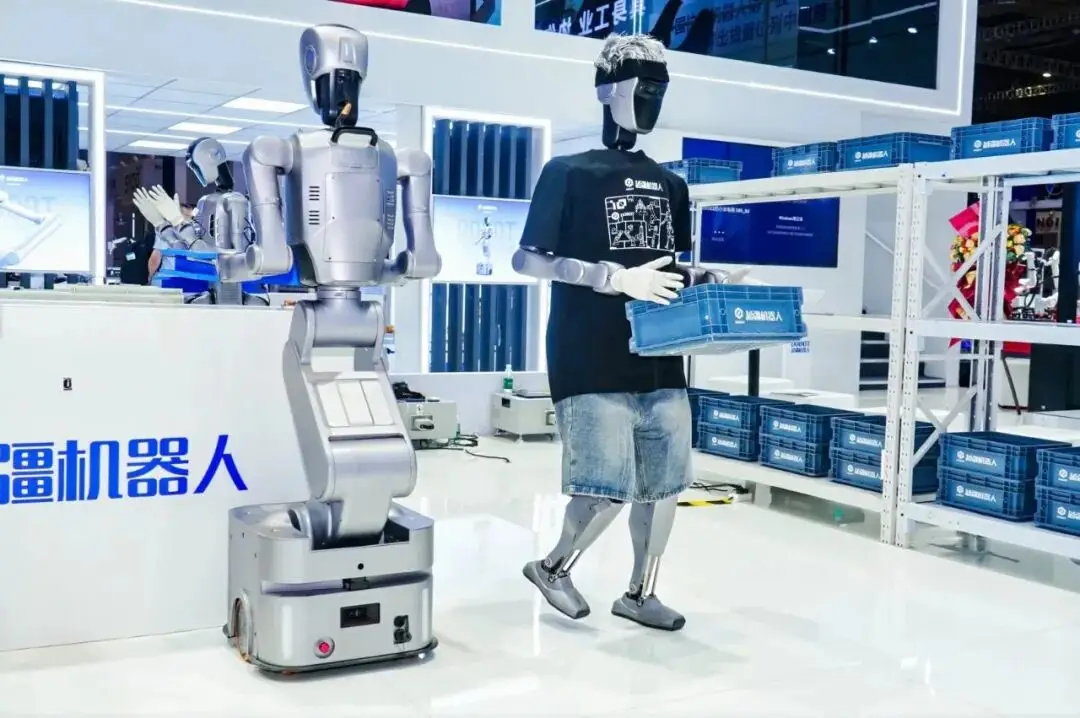
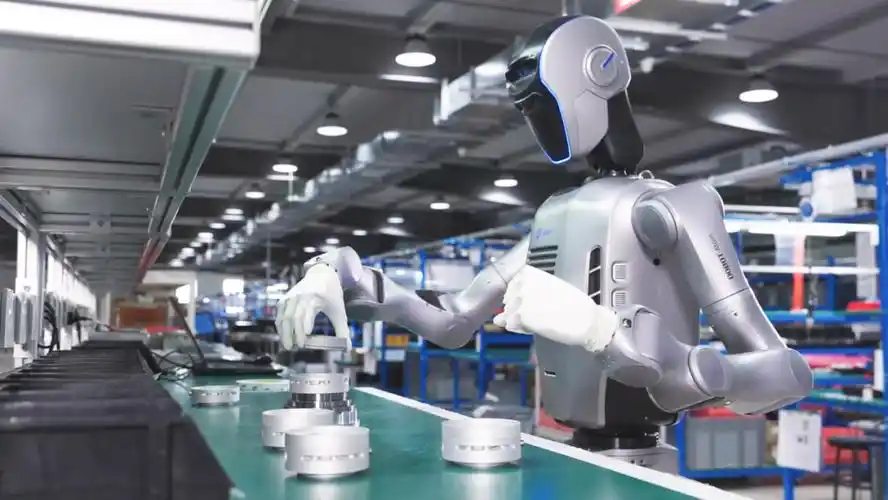
DOBOT has extended into embodied intelligence. Atom is its first full-size embodied AI humanoid robot, standing about 1.53 metres and listed from 199,000 yuan, with dexterous hands and straight-knee walking aimed at industrial handling, retail and pharmacy sorting. The X-Trainer is a dual-arm teleoperation platform used to collect data for training models. The company has also described an embodied large model, Dobot WAM, intended to move robots from executing fixed programmes toward understanding tasks.
This is the part of the business where discussion is most open-ended. Embodied intelligence is at an early commercial stage, and the company's own reporting describes it as a growth area rather than an established profit line.
Scale and market position
Shipments and footprint
DOBOT says it has sold more than 100,000 robots and serves more than 100 countries and regions, with more than 350 partners worldwide. The company's 2025 annual report states that its collaborative robot shipments ranked first globally, with a 13.0 per cent global market share, while revenue reached 492 million yuan, up 31.7 per cent year on year.
Those figures should be read together with profitability. The same reporting shows a net loss of about 84 million yuan for 2025, narrower than the previous year, with research and development spending up roughly 60 per cent as investment shifted toward embodied intelligence. For a delegation, this combination of volume leadership, continued losses and heavy research spending is more instructive than a growth number alone.
Where the robots are used
Industrial applications
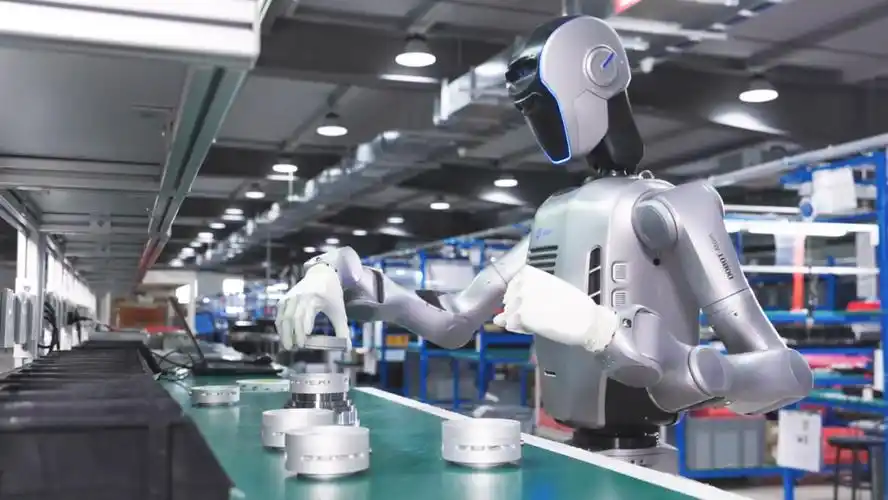
Industrial deployments cover metal processing, automotive, consumer electronics, semiconductor, chemical, food and beverage and healthcare manufacturing. Typical tasks include welding with seam inspection, palletising, machine tending and loading, assembly, bin picking, gluing, insertion and polishing.
Commercial service and education
Beyond the factory, the company has pursued commercial service and education settings. Atom has been reported working in a cinema in Shenzhen and at a mobility service site, and the company has announced cooperation in pharmacy automation and cloud model work. Education remains a large channel, with desktop arms used in teaching and research.
Research, development and manufacturing
DOBOT combines research centres in Shenzhen, Shanghai and Qingdao with production in Shandong, including an AI robot production base in Rizhao. Around 30 per cent of staff work in research and development, and the company holds more than 1,300 intellectual property assets.
For manufacturing delegations, the interesting question is how a company serving both high-volume education buyers and demanding industrial customers organises quality, cost and product development. The briefing can be used to examine this directly.
What the visit covers
Exhibition hall and demonstrations
The visit uses DOBOT's exhibition hall in Shenzhen, where the product range is presented together. Demonstrations arranged by the host show robots performing representative tasks, and different payload classes and control methods can be compared directly.
Company briefing and Q&A
A company specialist leads the briefing and Q&A. The discussion can cover the company's development, product strategy, industry applications, education and overseas business, and its move into embodied intelligence. Priorities are adjusted to the delegation's interests, and questions submitted in advance help the host prepare.
How to arrange a DOBOT visit
Visits are arranged in advance through China Innovation Visits and confirmed by the host. We recommend planning at least 30 days ahead.
Visits are normally organised for groups of 10 or more and fewer than 20 participants. Smaller groups can sometimes be accommodated.
Please provide your preferred dates, group size, business background, learning objectives and language requirements. A short list of questions helps coordinate the briefing and the terminology used for interpretation.
Sample visit programme
09:40–10:00 Assembly and Group Photo at the 24th Floor Lobby
10:00–10:30 Tour of Dobot's Product and Technology Exhibition Hall; Hands-on Experience with the Intelligent Coffee Robot
10:30–11:00 Tour of Dobot's Robot Operation Laboratory; Hands-on Robot Operation Experience
11:00–12:00 Thematic Sharing (Choose One):
- Dobot's Technological Innovation and Robot Application Solutions
- Dobot's AI Reflections and Application Promotion
- Dobot Empowering New Quality Productive Forces
*The schedule and timing are subject to final confirmation with the host.
Combine with other Shenzhen visits
A DOBOT visit fits naturally into a wider Shenzhen automation or robotics programme. For teams comparing robot approaches, a UBTech visit offers a humanoid perspective, while a Unitree visit covers a company built first on quadruped robots. A BYD visit adds a view of large-scale vehicle manufacturing and production technology in the same city.
Combinations are coordinated around the delegation's objectives, travel schedule and host availability.
Practical notes
- Comfortable casual shoes are recommended for walking and standing during the hall visit.
- Follow the guided route and staff instructions during demonstrations.
- Photography rules are confirmed in advance; tell us during planning if you need images for internal reporting.
- Demonstrations may change according to equipment availability and reception arrangements.
- English interpretation can be arranged for the hall visit, briefing and Q&A.
Questions before a DOBOT visit
Is the visit open to international business delegations? Yes, subject to advance arrangements and confirmation by the host. We recommend planning at least 30 days ahead.
What is the group size? Visits are normally arranged for groups of 10 or more and fewer than 20 participants. Smaller groups can sometimes be accommodated.
How long does the visit take? The standard programme is about two and a half hours, typically from 09:30 to 12:00, covering the exhibition hall, demonstrations, briefing and Q&A.
Do participants need a technical background? No. The visit can be approached through operations, automation investment, education partnerships or distribution, and terminology is handled through interpretation.
What preparation is useful? Please share your business background and key questions in advance, and wear comfortable shoes for walking and standing.
Is English interpretation provided? Yes, interpretation can be arranged for the hall visit, briefing and Q&A, with terminology prepared around the delegation's interests.
Is DOBOT a listed company? Yes. DOBOT trades on the Hong Kong Stock Exchange, and reports describe a process toward an additional mainland listing, so performance and strategy are discussed against public disclosure.
How large is the company's installed base? The company says it has sold more than 100,000 robots across more than 100 countries and regions, with more than 350 partners.
Which industries use the robots? Deployment is reported across metal processing, automotive, consumer electronics, semiconductor, chemical, food and beverage and healthcare, plus commercial service and education settings.
What is DOBOT's position on embodied intelligence? The company has released Atom, a full-size humanoid, along with teleoperation and model work, and reports this as a growth area rather than an established profit line.
Does the programme always run as described? It is built around the elements above. Facilities and areas opened on the day are subject to what the site opens, and we confirm the final scope in writing during planning, before you commit.
Arrange your DOBOT visit
Tell us your dates, group size and what your team wants to understand about collaborative robots and automation. China Innovation Visits will coordinate the company reception, discussion priorities, transport and English interpretation.
Contact China Innovation Visits to arrange your DOBOT company visit in Shenzhen.