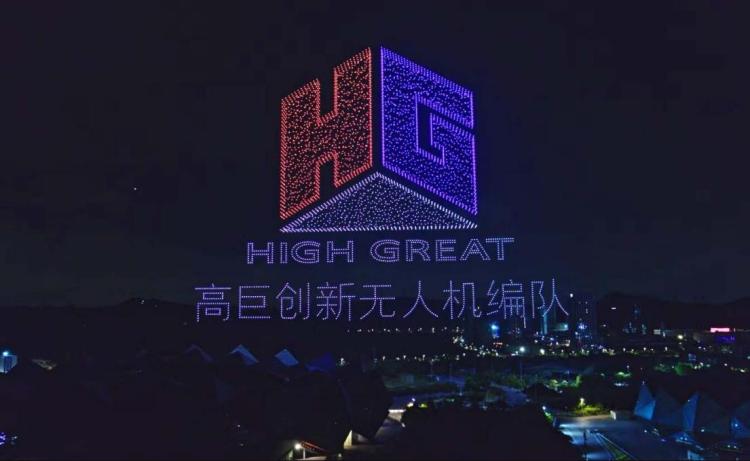
HIGH GREAT company visit in Shenzhen introduces international business delegations to one of the companies behind the drone light shows that have become standard at major events. Shenzhen Gaoju Innovation Technology Development, known in English as HIGH GREAT, was founded in October 2014 and is based in Longgang district.
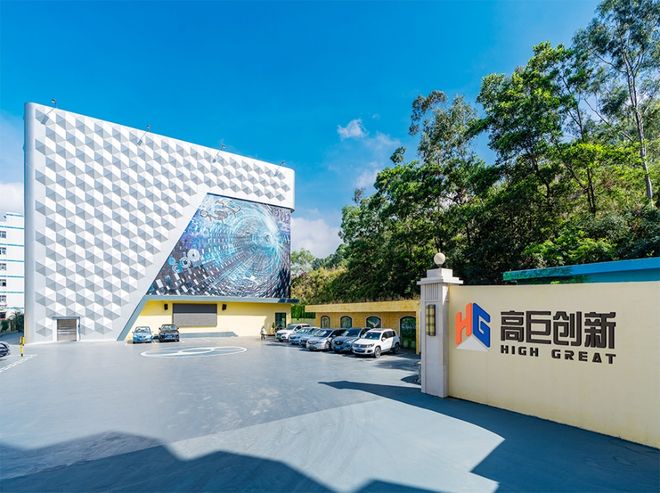
The company designs, manufactures and operates formation drones, and organises itself around four areas: low-altitude manufacturing, formation performance, low-altitude science education, and low-altitude regulation and monitoring. It is a national-level specialised and sophisticated "little giant" enterprise, a Chinese designation for focused, high-technology small and mid-sized manufacturers.
For delegations, the interest is practical. Drone formation has moved from novelty to a booked, repeatable service with measurable reliability requirements, and HIGH GREAT is one of the few companies operating at ten-thousand-drone scale.
A visit is organised around the company's exhibition halls, a formation demonstration and a briefing and Q&A with company specialists.
China Innovation Visits coordinates the HIGH GREAT Innovation tour, including the company reception, scheduling, Shenzhen transport and English interpretation.
Key takeaways
- See how a precision manufacturer turned itself into a drone formation business.
- Watch a formation demonstration and understand what makes it repeatable.
- Learn what limits formation size, from positioning and timing to battery logistics.
- Discuss the four-part low-altitude business model, including education and regulation.
- Examine how a Chinese manufacturer built an overseas service business around events.
Why visit HIGH GREAT in Shenzhen?
Drone formation is a useful subject because it is measurable. A show either forms the intended image or it does not, it either launches on schedule or it does not, and the failure modes are visible. That makes it a clean way to discuss engineering discipline, manufacturing consistency and operational reliability with the people responsible for them.
The company is also a good case study in transition. It began in precision manufacturing, making phone models for international brands, and moved into drones when that market shrank. Delegations interested in how a contract manufacturer builds its own brand and products will find the comparison direct.
Shenzhen adds context. The city's electronics supply chain, moulding and machining capacity and engineering talent allow a drone maker to iterate hardware quickly, and the visit can be combined with other Shenzhen and low-altitude technology visits.
Company background
From precision manufacturing to drones
The company was founded in October 2014 by Gao Jianmin, who had come to Shenzhen in the 1990s and built a precision manufacturing business making phone models for international brands including Motorola and Samsung. Media reports describe the decision to move into drones as a response to the shrinking phone model market, using existing manufacturing capability as the foundation.
The company's own timeline shows steady product development: an early self-developed drone in 2015, a folding drone shown at CES in 2016, an indoor formation drone in 2018, outdoor formation drones from 2019, and education products from the same period. The company describes the 2018 Hong Kong-Zhuhai-Macao Bridge formation, in which 300 drones formed a dolphin, as opening its 3D choreography era.
Four business segments
The company organises itself around four segments. Low-altitude manufacturing covers design, tooling, injection moulding, machining, assembly and testing. Formation performance covers outdoor and indoor shows. Low-altitude education covers AI programming hardware, software, curricula and a science-education base. Low-altitude regulation covers monitoring systems and equipment for tracking flight data and supporting low-altitude safety.
This structure is worth examining during the visit. Manufacturing generates the hardware, performance generates the brand and the demand signal, and education and regulation extend the business into areas with different customers and longer cycles.
Technology inside a formation show
Positioning and timing
Formation flying depends on two things working together: each drone knowing exactly where it is, and all drones acting on the same clock. The company describes its work on high-precision positioning, millisecond-level timing synchronisation, multi-aircraft path coordination, redundant flight control and anti-interference cluster control as the core of its systems.
Its current flagship outdoor drone uses dual visual positioning with RTK dual-mode navigation, with stated horizontal positioning accuracy at the centimetre level under RTK. For technical delegations, the interesting discussion is less about peak accuracy and more about degradation: what happens when signal quality drops, when weather changes, or when a unit behaves unexpectedly.
Scale and reliability
Scale changes the problem. Coordination that is trivial at a few hundred aircraft becomes a communications, power and logistics problem at tens of thousands. The company has stated fleet scale in the tens of thousands of aircraft and describes preparing large shows through distributed control and box-based charging systems.
Reliability is the commercial constraint. A show at a national event has a fixed window, and the cost of failure is reputational as well as financial. Discussing how the company handles verification, spares and abort criteria is more useful than discussing maximum aircraft counts.
Drone families
Outdoor formation
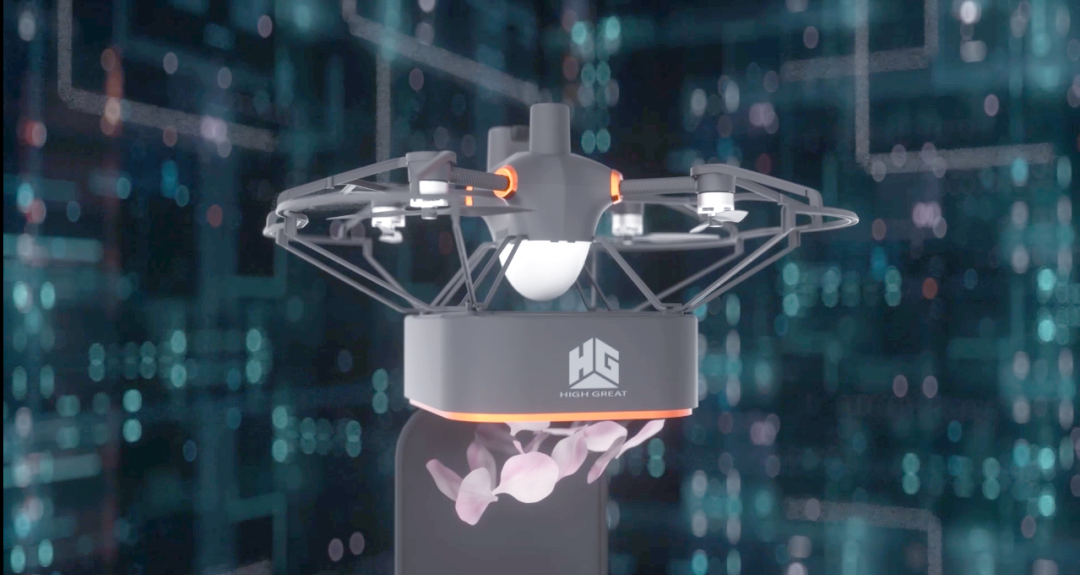
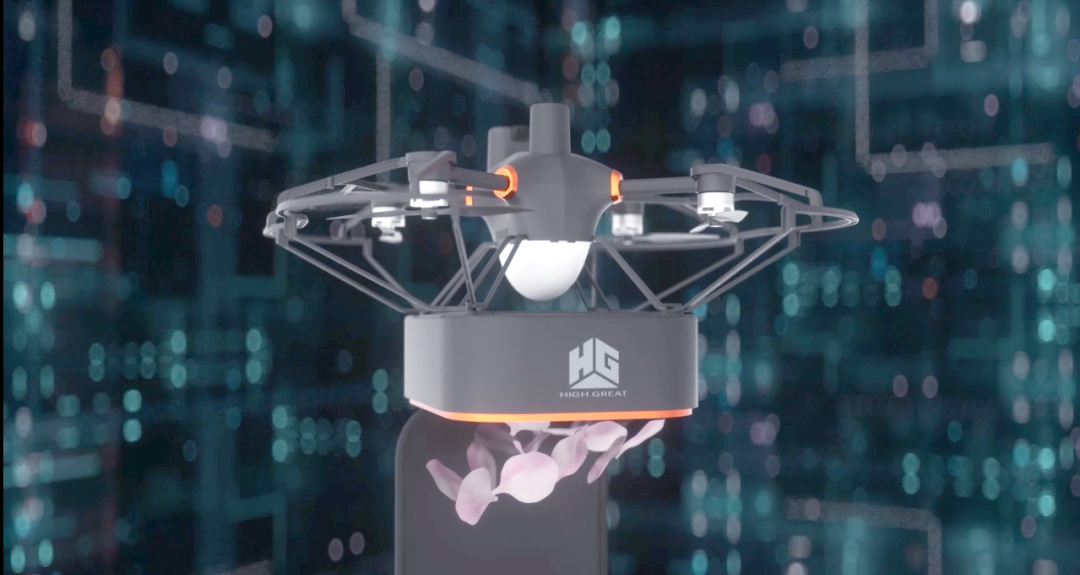
The outdoor range includes the EMO series, with the current flagship designed for large-scale and high-standard events. Stated features include dual visual and RTK positioning, obstacle perception, intelligent take-off and landing with box-based fast charging, self-heating for cold environments, IP43 protection and a maximum performance speed around 10 metres per second.
Indoor and special payloads
Indoor formation uses a separate compact platform designed for wireless indoor positioning and confined spaces. A dedicated payload drone supports effects including fireworks, lanterns and smoke, which extends shows beyond light alone. This is one of the more instructive product decisions to discuss, because it turns a light show into a timed special-effects sequence with different safety constraints.
Education hardware
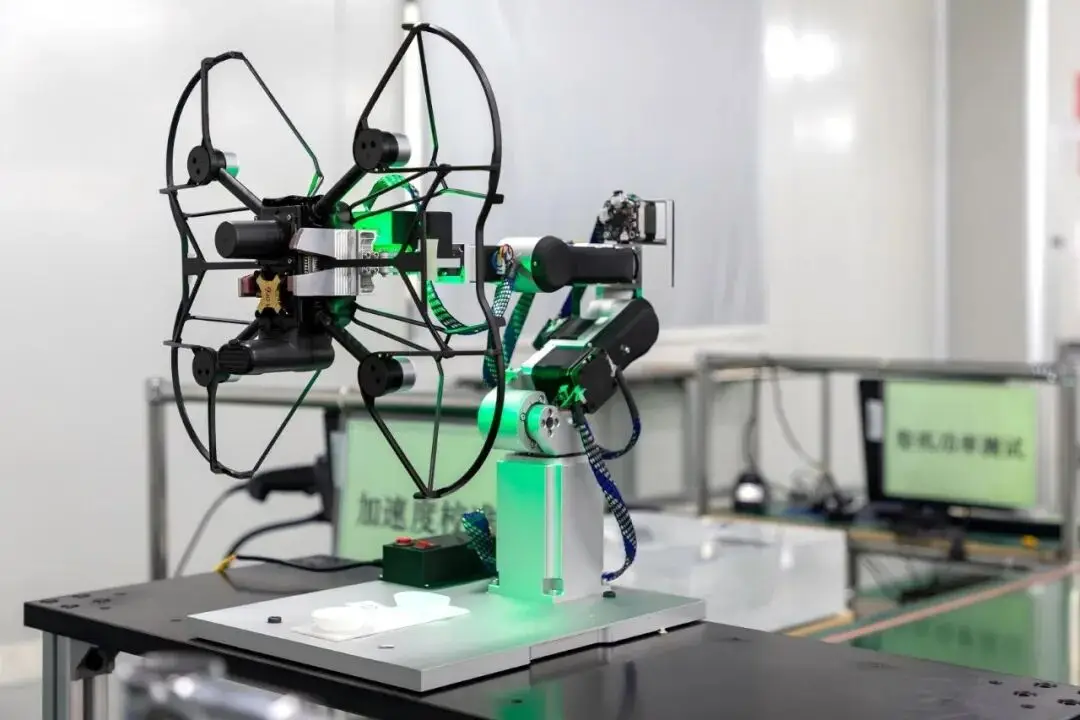
The education range covers programmable drones, ground vehicles, robotic arms and other hardware used in AI and programming teaching, supported by software, curricula and a teaching service platform. The company has built a science-education base at its site and provides competition support.
Record performances
The company's public timeline includes a series of record attempts and major events. In May 2021 it states that 5,200 drones broke four records. In 2024 it cites Guinness records for 7,998 drones forming the largest aerial image by drones, and 8,100 drones for the most drones airborne simultaneously.
In October 2025, at a fireworks festival in Liuyang, Hunan, company and media reports describe 15,947 drones launched under the control of a single computer, together with 7,496 fireworks released from drones, setting records in both categories. Earlier appearances include the Beijing Winter Olympics opening in 2022, Spring Festival Gala broadcasts, and a Paris 2024 Olympic-related preview show.
For a visiting delegation, the useful question is what these records prove about the production system rather than the show itself. Ten-thousand-drone events test communications bandwidth, ground station load, battery logistics, manufacturing consistency and exception handling at the same time.
Market position
Market share figures should be read with care because different sources measure different things. Company materials and Shenzhen government information cite close to 70 per cent of the global drone formation performance market, alongside coverage of more than 600 cities and more than 30,000 performances. A 2026 industry report cited separately puts the company's share of formation drone equipment at about 50 per cent, with the next competitor around 30 per cent, and higher shares in specific segments such as effects-based performances.
Both figures can be true at once: one measures shows delivered, the other measures hardware sold. What is consistent across sources is that the company is the largest supplier in its category by a wide margin, and that its position rests on manufacturing capacity as much as on show design. The company states annual drone production capacity of more than one million units at a base covering research, production, testing and education facilities.
Low-altitude ecosystem: education and regulation
Two segments extend the business beyond events. Education sells hardware and curricula into schools, which builds familiarity with the brand and creates a pipeline of users. Regulation sells monitoring systems and equipment that collect and report flight data, supporting low-altitude safety and city-level governance.
The combination is deliberate. A company that manufactures drones, operates them at scale, teaches with them and builds the monitoring layer around them has several independent revenue paths within one industry. Delegations thinking about platform strategy will find this structure worth discussing.
What the visit covers
Exhibition halls and production areas
The visit uses the company's exhibition halls, where the route covers the company display area, formation and 3D light presentation areas, a swarm laboratory, composite materials displays, a data centre and a transparent factory viewing area. This structure lets a delegation see design, manufacturing and operations in one route.
Formation demonstration
Demonstrations arranged by the host typically include an indoor formation with matrix lighting, and where conditions allow an outdoor or rooftop formation of around a hundred aircraft. Seeing a short show live is the fastest way to understand timing, brightness and choreography constraints.
Company briefing and Q&A
A company specialist leads the briefing and Q&A. The discussion can cover the manufacturing transition, formation technology, record projects, the education and regulation segments, and overseas delivery. Priorities are adjusted to the delegation's interests, and questions submitted in advance help the host prepare.
How to arrange a HIGH GREAT EVTOL tour
Visits are arranged in advance through China Innovation Visits and confirmed by the host. We recommend planning at least 30 days ahead.
Visits are normally organised for groups of 10 or more and fewer than 20 participants. Smaller groups can sometimes be accommodated.
Please provide your preferred dates, group size, business background, learning objectives and language requirements. A short list of questions helps coordinate the briefing and the terminology used for interpretation.
Sample visit programme
09:30–09:45 (Sign-in and Welcome): Visitor registration
09:45–10:15 (Corporate Introduction and Technology Sharing): Senior executives or technical experts present the company's development history, core technologies, product system, and future strategy.
10:15–11:00 (Smart Manufacturing Workshop Tour): On-site tour of the UAV automated production line, SMT placement workshop, and assembly and testing area to gain an understanding of the smart manufacturing process and quality control system (safety helmets and anti-static shoe covers are required).
11:00–11:30 (UAV Formation Technology Demonstration): Outdoor/indoor UAV formation flight demonstration showcasing technical highlights such as swarm control, lighting programming, and precise positioning (weather conditions and venue permission must be confirmed in advance).
11:30–12:00 (Roundtable Exchange Session): Interactive Q&A between both parties, with in-depth exchanges on technology applications, industry trends, and related topics.
The timings and programme are subject to final confirmation with the host.
Combine with other visits
A HIGH GREAT visit fits into a wider low-altitude or Shenzhen technology programme. For another view of low-altitude aircraft, an EHang visit covers passenger-grade autonomous aerial vehicles in Guangzhou. A Fengyi visit looks at drone delivery and logistics, while a Shenzhen Robotics Valley visit places the wider Shenzhen hardware cluster in context.
Combinations are coordinated around the delegation's objectives, travel schedule and host availability.
Practical notes
- Comfortable casual shoes are recommended for walking through the halls and viewing areas.
- Formation demonstrations are weather-dependent and follow the host's safety instructions and designated viewing areas.
- Photography rules are confirmed in advance; tell us during planning if you need images for internal reporting.
- Demonstrations may change according to equipment availability, weather and reception arrangements.
- English interpretation can be arranged for the hall visit, demonstration and Q&A.
Questions before a HIGH GREAT Evtol tour
Is the visit open to international business delegations? Yes, subject to advance arrangements and confirmation by the host. We recommend planning at least 30 days ahead.
What is the group size? Visits are normally arranged for groups of 10 or more and fewer than 20 participants. Smaller groups can sometimes be accommodated.
How long does the tour take? The standard programme runs about two and a half hours, typically from 09:30 to 12:00, covering the halls, a demonstration, briefing and Q&A.
Do participants need a technical background? No. The visit can be approached through events and marketing, manufacturing, investment or education, and terminology is handled through interpretation.
What preparation is useful? Please share your business background and key questions in advance, and wear comfortable shoes for walking and standing.
Is English interpretation provided? Yes, interpretation can be arranged for the halls, demonstration, briefing and Q&A, with terminology prepared around the delegation's interests.
Will we see a live drone show? A demonstration arranged by the host is normally included, typically indoor formation with matrix lighting and, conditions permitting, an outdoor formation of around a hundred aircraft. Content is confirmed with the host.
How large can a formation be? The company states fleet scale in the tens of thousands of aircraft and has set records including 15,947 drones under single-computer control in 2025. What a specific show can fly depends on site, permissions and conditions.
How should market share claims be read? Company and Shenzhen government materials cite close to 70 per cent of the formation performance market, while a 2026 industry report cites about 50 per cent of formation drone equipment. The two measure different things.
Is the business only about light shows? No. The company organises itself into four segments covering manufacturing, formation performance, education hardware and curricula, and low-altitude monitoring and regulation.
Does the programme always run as described? It is built around the elements above. Facilities and areas opened on the day are subject to what the site opens, and we confirm the final scope in writing during planning, before you commit.
Arrange your HIGH GREAT visit
Tell us your dates, group size and what your team wants to understand about drone formation and the low-altitude economy. China Innovation Visits will coordinate the company reception, discussion priorities, transport and English interpretation.
Contact China Innovation Visits to arrange your HIGH GREAT company visit in Shenzhen.