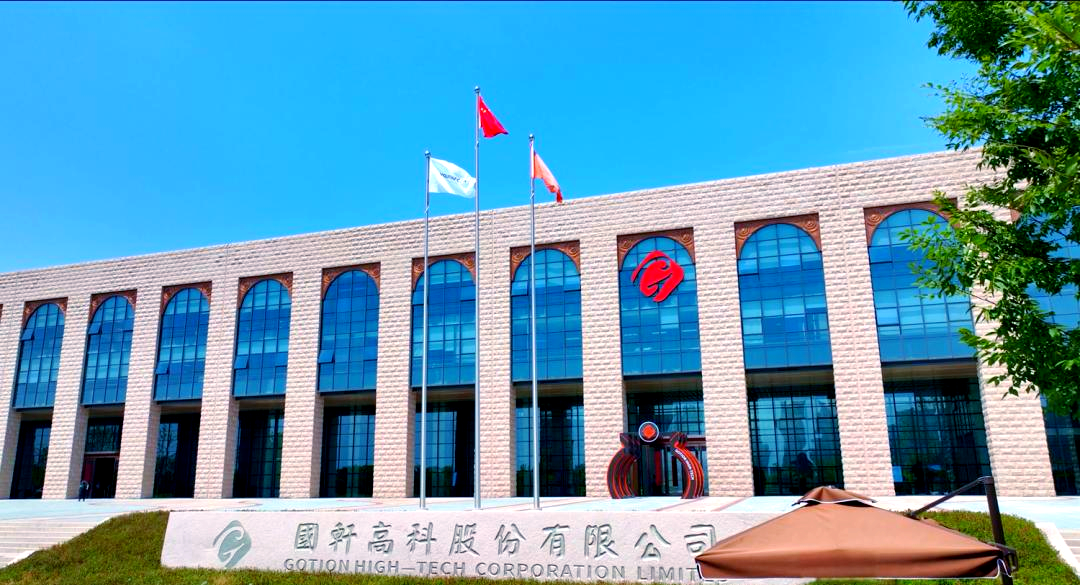
Gotion High-Tech(国轩高科) has been building batteries in the same corner of Hefei since 2006, unusual in an industry where most capacity is only a few years old, and is one of the earliest Chinese firms to develop and manufacture new-energy batteries independently.
It listed on the Shenzhen Stock Exchange in May 2015 as 002074 and later became the first Chinese battery company to list in Switzerland. In 2021 Volkswagen Group took a strategic stake of about 26 per cent, and Gotion was nominated as the first developer of Volkswagen's Unified Cell, which reached volume delivery from Hefei in November 2025.
Two technologies attract most of the questions on a visit. The Jinshi all-solid-state battery has pushed energy density past 400 Wh/kg, with a 0.2 GWh pilot line already connected. The G-Yuan hybrid solid-liquid battery is in mass production, and packs built on it support roughly 1,000 kilometres on a single charge. Keeping those two apart is one of the more useful things a visiting team takes home.
Key takeaways
- The half-day programme covers the corporate culture exhibition hall, the Fangyuan Hall and the verification centre, followed by a themed exchange on technology and the dual-carbon transition.
- Gotion High-Tech was founded in Hefei in 2006 and listed on the Shenzhen Stock Exchange in May 2015 as 002074, the first Chinese battery company to list in Switzerland.
- Volkswagen Group has been the largest shareholder since 2021 with a stake of about 26 per cent, and Gotion became the first nominated developer of the Volkswagen Unified Cell.
- Revenue reached 45.07 billion yuan in 2025, up 27.35 per cent, and installations reached 53.5 GWh, up 82.5 per cent, for a 4.5 per cent global share and fifth place on SNE Research figures.
- The Jinshi all-solid-state battery has passed 400 Wh/kg with a 0.2 GWh pilot line connected, while the G-Yuan hybrid solid-liquid battery is already in mass production.
Why visit Gotion High-Tech in Hefei?
A visit to a battery company is not a factory tour in the ordinary sense. It is a look at how a business turns chemistry into industrial advantage: which cathode chemistry to scale, which customer to build a platform around, and how early to commit money to a technology that may not sell for years.
Hefei is part of the argument. The city has become one of the densest concentrations of vehicle, battery, display and appliance manufacturing in China, and Gotion sits at the battery end of that cluster. A morning here and an afternoon elsewhere in the city show how closely the links of an electric vehicle supply chain sit together.
The Volkswagen relationship gives the visit a second dimension. Watching a Chinese battery company's technology move into a European group's global vehicle platform raises questions a domestic supplier story does not: how qualification cycles work, what a first-developer role demands, and how a shareholder's standards travel through a company that remains independently run.
For teams working on their own energy transition, the attraction is the combination of scale and unfinished business: Gotion is large enough that its numbers matter to the global market, and young enough that its technology roadmap is still moving.

Company background
Two decades in Hefei
Gotion High-Tech was founded in Hefei in 2006, making it one of the earliest independent developers and manufacturers of new-energy batteries in China. It listed on the Shenzhen Stock Exchange in May 2015 under the code 002074 and later became the first Chinese battery company to list in Switzerland. Revenue reached 45.07 billion yuan in 2025, up 27.35 per cent.
Volkswagen's largest shareholder stake
In 2021 Volkswagen Group made a strategic investment in Gotion and became its largest shareholder, with a stake of about 26 per cent. In the same year Gotion was nominated as the first developer of the Volkswagen Unified Cell, a standardised cell format intended to serve a wide range of models and price points. In November 2025 the Unified Cell reached volume delivery from Hefei.
Research scale and national recognition
Gotion spends more than 10 per cent of revenue on research and development, supporting eight global research centres, four validation platforms, a research team of more than 7,000 people and more than 13,000 cumulative patents. It holds national designations as an enterprise technology centre and as a green factory, and its cells carry TÜV SÜD ECE R100 certification.
Inside the visit: what to look for
Reading the exhibition hall as a strategy document
The corporate culture exhibition hall is where the company tells its own story, and the useful move is to treat it as a strategy document rather than a timeline. Note what the display leads with: the founding in Hefei in 2006, the Swiss listing, the 2021 Volkswagen investment. Then ask the host which of the cells on show are shipping today and which are still on the roadmap.
What to ask in the Fangyuan Hall
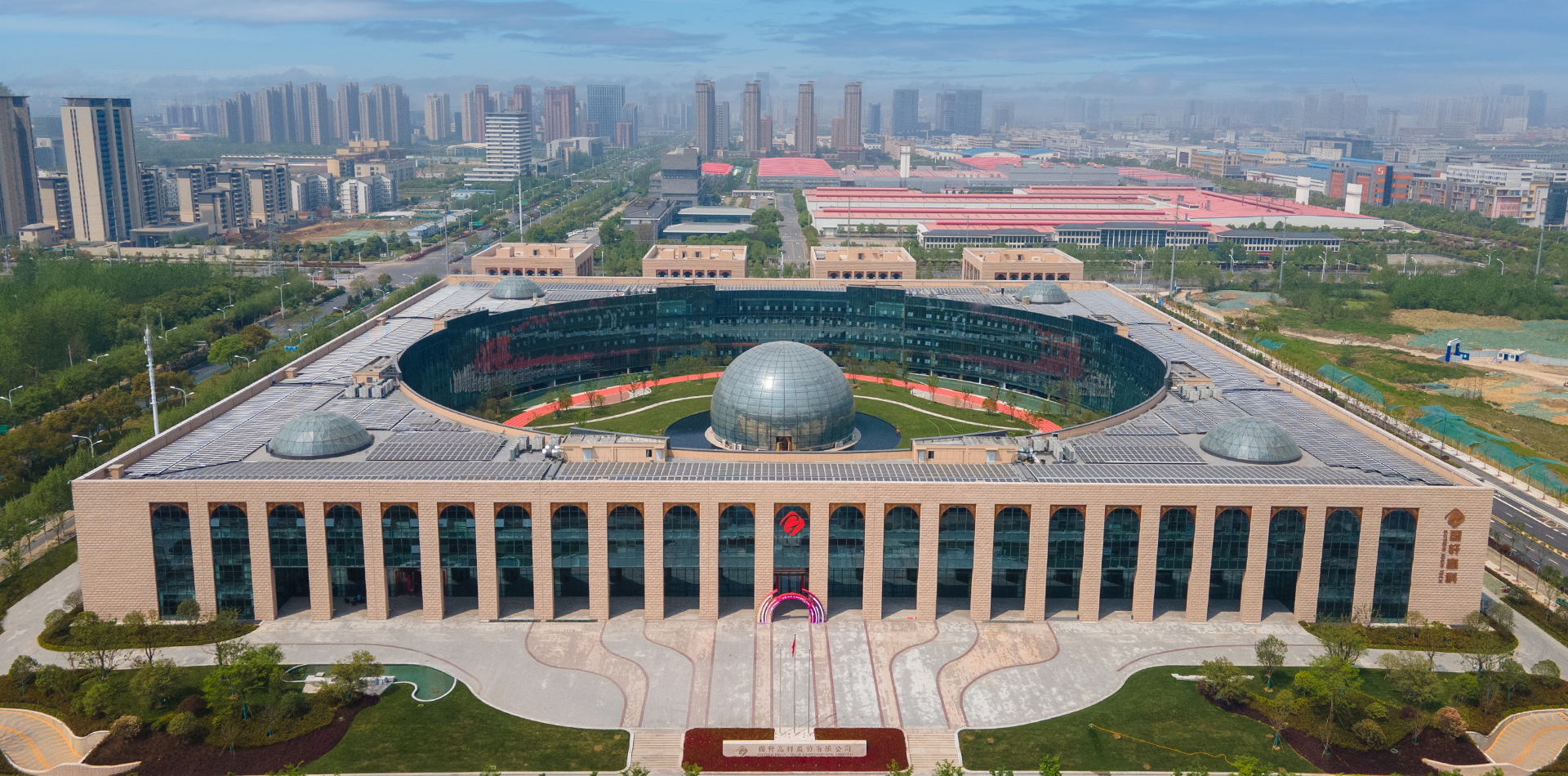
The Fangyuan Hall is where the commercial portfolio is laid out: lithium iron phosphate and nickel manganese cobalt cells, packs for vehicles and energy storage systems. Three questions repay the time. Which chemistries are being scaled, and for which customer segments? How much of the pack stays in house? And where the next leg of growth sits, between vehicle demand and stationary storage.
The verification centre and the two advanced programmes
At the verification centre the conversation turns to testing, qualification and timing, and this is where the two advanced programmes should be separated. The Jinshi all-solid-state battery has pushed energy density past 400 Wh/kg, with a 0.2 GWh pilot line connected and the design for 2 GWh of mass-production capacity complete. The G-Yuan hybrid solid-liquid battery is already in production, and packs built on it support roughly 1,000 kilometres on a single charge. Ask the host to place each on the same axis of research, pilot and shipping.
What a visit covers
| Time | What happens |
|---|---|
| 09:00–09:30 | Arrive at the Hefei site and hear a short briefing on the group, the morning programme and the areas the host opens. |
| 09:30–10:30 | Walk through the corporate culture exhibition hall, the Fangyuan Hall and the verification centre with a Gotion host. |
| 10:30–11:00 | Pause for refreshments and informal discussion with the host team. |
| 11:00–12:00 | Join the themed exchange on technology and the dual-carbon transition, and the new trends shaping the energy revolution. |
| 12:00 | Departure |
The schedule above is the standard half-day shape of the programme, running for about three hours, and it can be adjusted for a team's interests. The final scope, timings and the areas the host opens on the day are confirmed with you in writing during planning, before you commit to travel.
What the themed exchange adds
The exchange on technology and the dual-carbon transition is the part of the morning visitors tend to quote afterwards. It connects the walkthrough to how storage and battery capacity fit into a grid adding renewables faster than flexible generation, and how a manufacturer positions itself between vehicle demand and stationary storage demand. Because it is a discussion rather than a briefing, groups that arrive with two or three specific problems usually get more out of the hour.
What different teams take away
Corporate strategy teams use the visit to test their assumptions about vertical integration. Seeing which parts of a cell and pack business are kept in house is faster than reading a prospectus, and the exchange lets you ask why the boundary sits where it does.
Research and engineering teams focus on the two advanced programmes. Separating a pilot line that is connected, a design that is complete and a product that is already shipping is the practical lesson, and it maps onto how their own portfolios are staged.
Supply chain and manufacturing teams look at the qualification story behind the Unified Cell. A standardised cell for a global customer imposes a particular discipline on suppliers and process control, which is useful whether or not you work in batteries.
Sustainability and ESG teams find the dual-carbon exchange the most relevant session. The national green factory designation and the customer requirements behind it give a concrete example of an industrial company reducing its own footprint while its products help reduce someone else's.
Teams with partnership or investment intentions tend to leave with a clearer sense of scale. The 2025 revenue and installation figures, the fifth-place global ranking and the shareholder structure describe a company that is already mid-sized by global standards.
How to arrange a Gotion High-Tech visit
Programmes are arranged for teams of ten or more, and we ask for at least 30 days of notice so the host can match the right people to your questions and reserve the spaces the morning uses.
Tell us the date you are considering, how many people are travelling and what your team most wants to understand, whether that is solid-state research, the Unified Cell relationship, storage strategy or the green factory programme. We use that to shape the exchange and to brief the host in advance, so the hour is spent on your questions.
Combine with other Hefei visits
Hefei rewards a two-day itinerary, and Gotion sits easily alongside the rest of the city's manufacturing base. A battery morning pairs naturally with a vehicle afternoon, and the NIO Hefei visit is the closest match, bringing the cell conversation forward into the finished product. The BOE Hefei visit shows the same cluster logic applied to a different component, and the Lianbao Technology visit covers electronics production in the same city. Teams building a longer itinerary can add the iFlytek visit in Hefei; together the four stops show how Hefei built an industrial base around vehicles, batteries and displays.
Practical notes
- We recommend confirming a date at least 30 days ahead; group visits are arranged for teams of ten or more.
- The half-day programme runs for about three hours, with travel time to and from the site outside that window.
- Interpretation, including English, is arranged in advance on request, so teams that do not work in Mandarin can use the exchange fully.
- Dress for a morning on foot, with comfortable shoes and a layer for air-conditioned spaces.
- Photography and recording rules are set by the host and confirmed before you travel.
- Bring two or three specific questions for the themed exchange; that is where the session earns its place.
Questions before a Gotion High-Tech visit
What does a Gotion High-Tech visit in Hefei include? The half-day programme covers the corporate culture exhibition hall, the Fangyuan Hall and the verification centre, followed by a themed exchange on technology and the dual-carbon transition.
How large is Gotion High-Tech? The company was founded in Hefei in 2006, listed on the Shenzhen Stock Exchange in May 2015 as 002074, employs more than 7,000 researchers and holds more than 13,000 cumulative patents.
What are the headline numbers to know before visiting? Revenue reached 45.07 billion yuan in 2025, up 27.35 per cent, net profit attributable to shareholders was 2.383 billion yuan, up 97.49 per cent, and global installations reached 53.5 GWh, up 82.5 per cent.
What is the difference between the Jinshi and G-Yuan batteries? The Jinshi all-solid-state battery has passed 400 Wh/kg with a 0.2 GWh pilot line connected, while the G-Yuan hybrid solid-liquid battery is already in mass production and supports roughly 1,000 kilometres on a single charge.
Why does Volkswagen matter to this visit? Volkswagen Group became the largest shareholder in 2021 with a stake of about 26 per cent, and Gotion became the first developer of the Volkswagen Unified Cell, which reached volume delivery from Hefei in November 2025.
How many people can join a visit? Group visits are arranged for teams of ten or more. Smaller groups can be combined with other stops in Hefei; tell us and we will suggest how.
How far in advance should we plan? We ask for at least 30 days of notice so the host can match the right people to your questions.
Can you arrange interpretation? Yes. English and other languages can be arranged in advance on request, so a team that does not work in Mandarin can follow the walkthrough and the exchange.
Is the visit suitable for non-technical teams? Yes. The host adapts the level of technical detail to the group, and the dual-carbon exchange suits strategy, sustainability and commercial teams as well as engineers.
What does the visit cost and how long does it take? The standard programme is a half day of about three hours. Cost depends on group size and interpretation needs, and we set it out in a written proposal before you decide.
Does the programme always run as described? It is built around the elements above. Facilities and areas opened on the day are subject to what the site opens, and we confirm the final scope in writing during planning, before you commit.
Arrange your Gotion High-Tech visit
Tell us the date you have in mind, how many people are travelling and what your team wants to understand most, whether that is solid-state research, the Volkswagen relationship, storage strategy or the green factory programme. We will shape the morning around those questions and handle the arrangements on the ground in Hefei.
Contact China Innovation Visits to plan a Gotion High-Tech programme, or to build it into a longer Hefei itinerary.