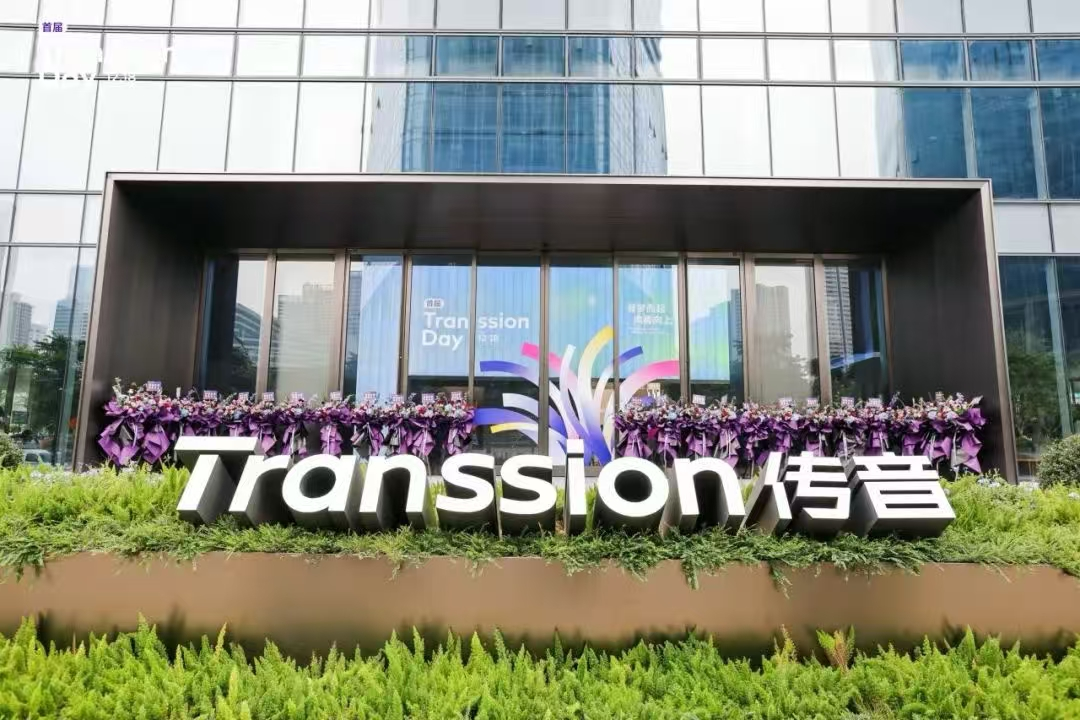
A Transsion(传音控股) visit in Shenzhen takes a delegation to the company that sells more phones in Africa than anyone else. Transsion Holdings was founded in 2006, is headquartered in Shenzhen, and has been listed on Shanghai's STAR Market under 688036 since 2019. Its three brands — TECNO, itel and Infinix — cover Africa, South Asia, the Middle East, Latin America and parts of Europe.
The reason to go is that Transsion is the clearest available case study in how a Chinese company wins a market by refusing to sell the same product everywhere. It is not a technology leader in the usual sense. It is a distribution and product-adaptation company that happens to make hardware, and that distinction is the most useful thing a delegation can take away.
The second reason is the financial story. Revenue was about 35.431 billion yuan in the first half of 2026, up 21.85 per cent, with net profit of about 1.773 billion yuan, up 46.22 per cent and profit excluding non-recurring items up 64.98 per cent. The company has also shown it can manage cost: it bought memory and other components ahead of further price increases and raised average selling prices in response, and gross margin improved from 18.4 per cent to 21.9 per cent. A visit is the place to see how a hardware business handles that transition.
China Innovation Visits coordinates the Shenzhen programme, including the company reception, scheduling, local transport and English interpretation.
Key takeaways
- Understand how a company built a 50 per cent share of a continent by adapting products rather than leading on specs.
- See the three-brand structure and what each brand is for.
- Discuss the 2025 profit collapse and what the 2026 recovery is actually made of.
- Examine the Hong Kong listing and why the proceeds are going into AI.
- Ask the question the company cannot avoid: what happens when memory chip prices stay high.
- Compare the approach with a Huawei headquarters visit in Shenzhen, where the strategy is the opposite — premium, not volume.
Why visit Transsion in Shenzhen?
Most delegations visit Chinese technology companies to see advanced engineering. Transsion is worth visiting for a different reason: it is the best-documented example of Chinese companies winning in markets that Western brands wrote off.
That makes it unusually useful for teams whose question is market entry rather than technology. How do you price for a buyer at the bottom of the pyramid? How do you build distribution where there is no modern retail? How do you run three brands without cannibalising them? Transsion has answers to all three, and they are not the answers a premium-brand delegation will expect.
Shenzhen is the right place to have the conversation because the company's supply chain sits around it. The design decisions are made here; the markets are 8,000 kilometres away.
Company background
Three brands, three price points
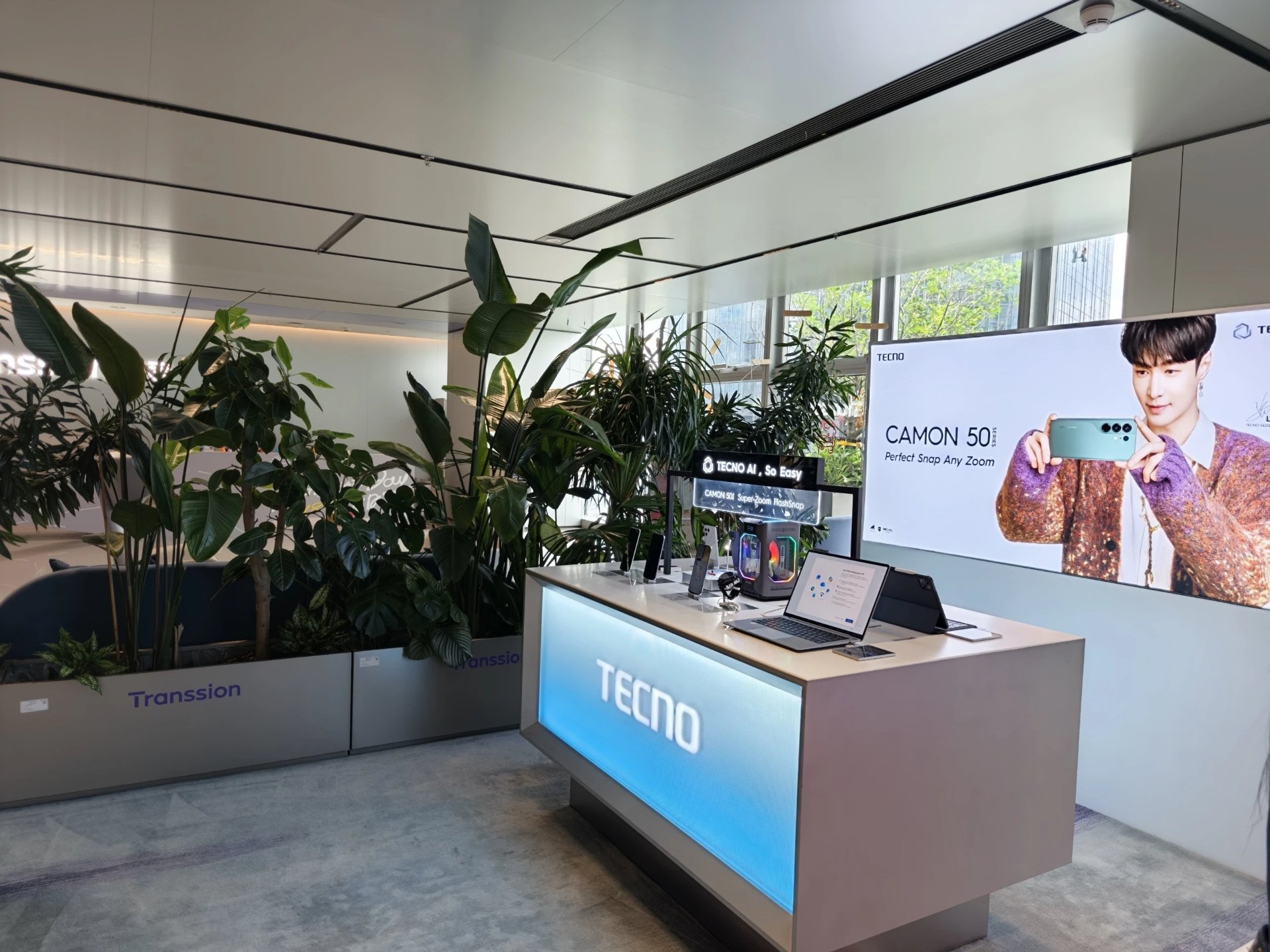
Transsion runs TECNO, itel and Infinix. The structure exists because its markets are not one market: a buyer in Lagos, a buyer in rural Bangladesh and a buyer in Dubai are at wildly different price points, and a single brand cannot credibly serve all three. The company's product line still includes feature phones, which is itself a statement about the markets it serves — in the first half of 2026 feature phone revenue was about 1.543 billion yuan against about 28.177 billion yuan for smartphones.
What it is not
Transsion does not make its own chipsets, does not lead on camera hardware, and does not compete at the premium end. Its advantage has been distribution depth and product adaptation. Delegations arrive expecting a hardware story; the useful story is a commercial one.
Listing
The company listed on the STAR Market in Shanghai in 2019 under 688036. In October 2026 it launched an H-share offering in Hong Kong, discussed below.
Africa: the 53.1 per cent question
The share
Transsion's Hong Kong listing documents state that in 2025 the company ranked first in Africa by mobile phone sales volume, with a share of 53.1 per cent. That is a majority of a continent's handset sales, and it is the single most striking number about the company.
Delegations often arrive with a lower figure in mind from older reporting. The share has moved, and the listing document is the most recent authoritative source.
Where else it leads
The same documents place Transsion third in the world by mobile phone sales volume in 2025, with 7.1 per cent of the global smartphone market and sixth place in smartphones. Its smartphone share ranks first in Pakistan and Bangladesh, seventh in India, and second in the Middle East, with an 18.9 per cent Middle East share in 2025. IDC put its global handset share at 11.3 per cent and third place in the first half of 2026.
The pattern is consistent: Transsion leads where affordability decides the purchase and follows where brand and financing do. Delegations working on the same problem in adjacent categories usually pair this with an OPPO global visit and an Anker Innovation headquarters visit, where the route to the same buyers runs through brand rather than price.
Beyond Africa
Revenue by geography
In 2025 Africa contributed about 24.75 billion yuan, or 37.7 per cent of revenue; emerging Asia-Pacific about 23.9 billion yuan, or 36.4 per cent. The Middle East accounted for 9.4 per cent, Latin America 8.0 per cent, and Central and Eastern Europe 5.4 per cent.
The important line is the second one. Emerging Asia-Pacific is nearly as large as Africa. A delegation that treats Transsion as an Africa company will miss the fact that half its revenue now comes from somewhere else.
Beyond handsets
Handsets were about 58.45 billion yuan in 2025, or 89.1 per cent of revenue, of which smartphones were about 54.82 billion yuan. Mobile internet services contributed about 940 million yuan, and IoT products and other businesses about 6.20 billion yuan, or 9.5 per cent.
Services revenue is small, which is itself the lesson: selling the device does not automatically sell the platform when the buyer's disposable income is the binding constraint.
The recent record
The peak years
Net profit attributable to shareholders was about 5.537 billion yuan in 2023 and about 5.549 billion yuan in 2024, and revenue reached about 68.715 billion yuan in 2024 — the company's highest annual total to date.
The first half of 2026
In the first half of 2026 revenue was about 35.431 billion yuan, up 21.85 per cent, and net profit about 1.773 billion yuan, up 46.22 per cent. Net profit excluding non-recurring items rose 64.98 per cent.
The mechanism
The recovery was not driven by volume. The company raised prices. According to the listing documents, in the four months to 30 April 2026 revenue was about 23.29 billion yuan against about 17.908 billion yuan a year earlier, while gross margin recovered from 18.4 per cent to 21.9 per cent and net profit rose from about 614 million yuan to about 1.361 billion yuan. The company attributes the higher average selling price to raising prices in response to rising memory chip costs.
This is the most important thing to understand before the visit: the company has demonstrated it can pass cost increases through to price in markets that are highly price-sensitive, and how far that ability goes is the question worth putting to management.
How the margin was rebuilt
Pricing and forward purchasing
The first is pricing, described above. The second is inventory. Transsion increased purchases of memory and other components in early 2026 to lock in cost, and inventory reached about 14.22 billion yuan at the end of the first quarter, up about 5.32 billion yuan on the end of 2025. Buying ahead of further price increases is what allowed the company to protect margin while it adjusted prices.
That combination — forward purchasing and a higher average selling price — is the mechanism worth examining on a visit, and the briefing is the place to ask how the company plans component purchasing and pricing together.
The Hong Kong listing
The H-share offering is the clearest statement of where the company expects its next phase of growth to come from, and it is a useful frame for the briefing.
The terms
Transsion launched its H-share offering on 7 October 2026, offering 86.6483 million H shares globally at an indicative range of 35.30 to 38.80 Hong Kong dollars per share, with trading expected to begin on 15 October 2026. Net proceeds were estimated at about 3.118 billion Hong Kong dollars at the midpoint of 37.05.
What the money is for
About 40 per cent of net proceeds, roughly 1.247 billion Hong Kong dollars, is earmarked for AI-related research and development — the largest single allocation. The plan covers AI basic capabilities including small language models tailored to emerging markets and a 3-billion-parameter model designed to run on lower-end chips, AI assistant and agent development, integration of AI into Transsion's own operating system, and imaging capability including AI imaging algorithms and camera modules.
The strategic read is straightforward: the company is building software and AI capability to sit alongside the hardware business, including a 3-billion-parameter on-device model designed to run on lower-end chips. How that changes a buyer's decision in an emerging market is the question worth putting to it.
Who backed it
Cornerstone investors included GIC, E Fund, Jinxing Global (a wholly owned unit of BYD (H.K.) Co., Limited), Digimoc (a wholly owned unit of MediaTek), and others. A handset maker's listing backed by a chip supplier and a carmaker is a statement about where it expects its next inputs and adjacent markets to come from.
Product: what "localisation" actually means
The well-known examples
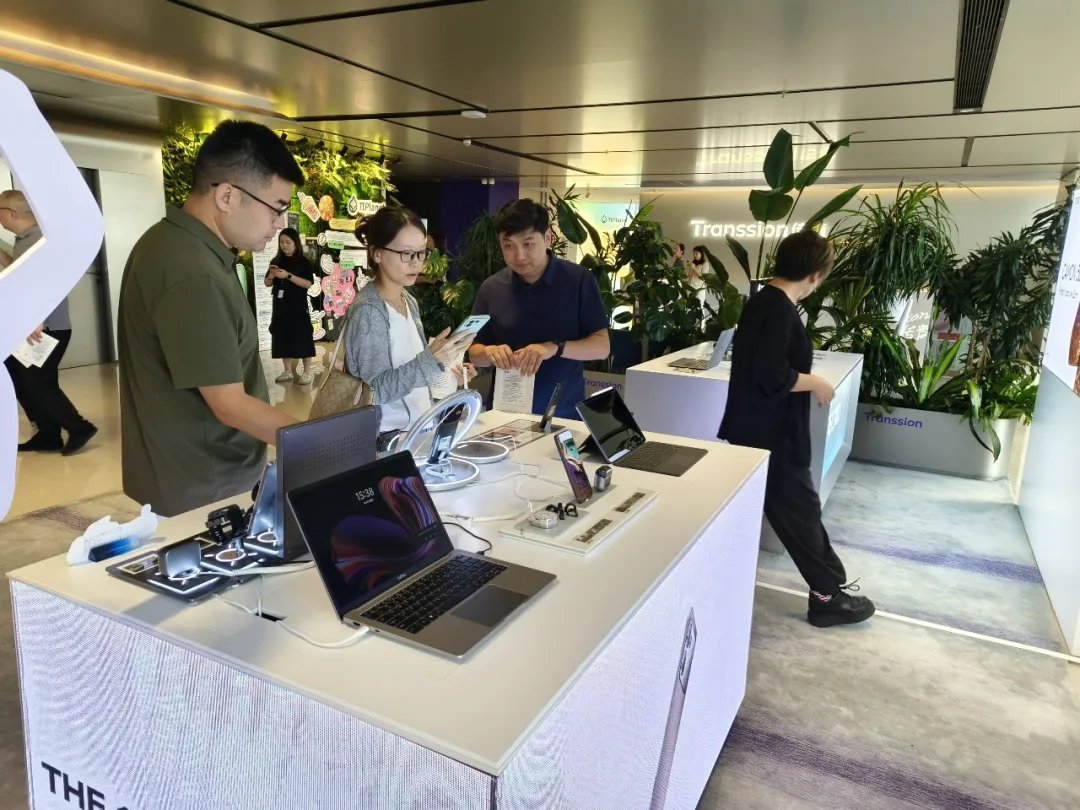
Transsion's reputation rests on adaptations that cost little and matter a lot to the buyer: camera tuning calibrated for darker skin tones, multi-SIM support for markets where users carry several carriers' cards, and power management for places where charging is unreliable. These are the examples the company leads with, and they are worth examining in the product area because they are cheap, specific and easy to miss.
The harder version
The more instructive question is what localisation means now. Early wins came from hardware and firmware. The next round has to come from software and services, in markets where the company's services revenue was about 940 million yuan in 2025. Ask what the company has learned about monetising an emerging-market user base, and how much of the AI investment is aimed at that.
What a visit covers
The standard programme
| Time | What happens |
|---|---|
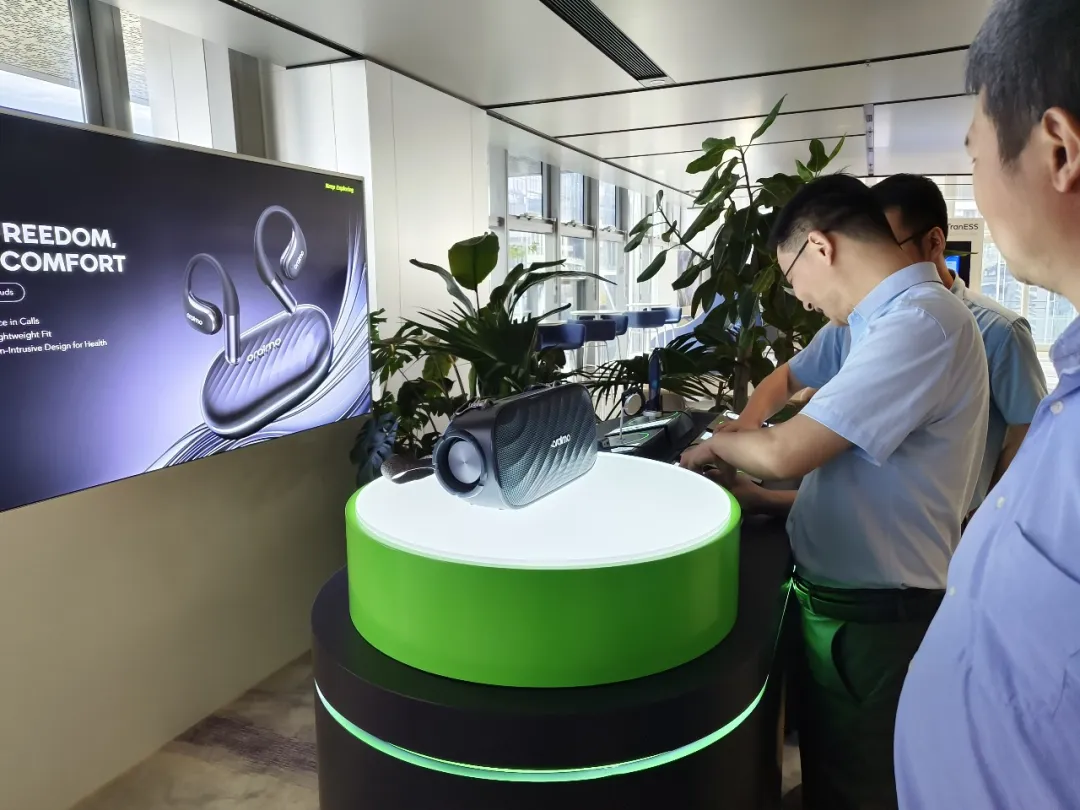
| First 30 minutes | Exhibition hall: from a Shenzhen startup to the leading handset brand in Africa, the multi-brand portfolio and the emerging-market footprint |
| 30–75 minutes | R&D centre or product experience area: localised product design and user insight methods |
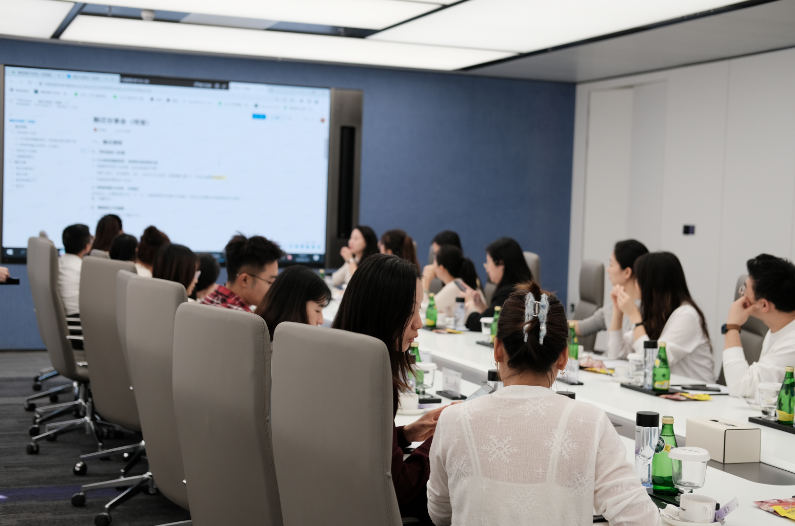
| 75–130 minutes | Discussion with overseas market and product leads on emerging-market depth, local operations and the multi-brand portfolio, with time for questions |
| 130–180 minutes | Open Q&A and case discussion on going global and consumer electronics |
The programme runs about three hours as a half-day visit. The sequence and durations above are the standard pattern; the host confirms the final schedule, and we confirm the scope in writing during planning, before you commit.
Practical notes
- The visit is a business programme. Delegations are received as professional visitors and follow the host's rules.
- Booking requires approval in advance, normally two to three weeks. Headquarters visits need host approval, so lock the date early.
- Groups are normally kept to about 40 people per batch, with larger delegations split.
- Photography rules are confirmed in advance; R&D areas generally carry confidentiality requirements. Tell us during planning if you need images for internal reporting.
- Smart casual is appropriate.
- English interpretation can be arranged for the exhibition, product sessions, briefing and Q&A.
Questions before a Transsion visit in Shenzhen
Is the visit open to international business delegations? Yes, subject to advance arrangements and confirmation by the host. Host approval takes time, so we recommend planning at least 30 days ahead.
What is the group size? Visits are normally arranged for groups of 10 or more, with a single batch usually kept to about 40 participants. Larger delegations are split.
How long does the visit take? The standard programme runs about three hours, typically covering the exhibition hall, product or R&D sessions, and a briefing and Q&A.
Where is the visit held? At the company's base in Shenzhen. We confirm the meeting point in writing after the host approves the booking.
Do participants need a technical background? No. The visit can be approached through market entry, brand, distribution, sourcing or investment, and terminology is handled through interpretation.
Is English interpretation provided? Yes, interpretation can be arranged for the exhibition, product sessions, briefing and Q&A.
How large is Transsion? Revenue was about 35.4 billion yuan in the first half of 2026, up 21.85 per cent, with net profit of about 1.77 billion yuan. Revenue was about 68.7 billion yuan in 2024, its highest annual total to date.
What is its share of the African market? Its listing documents state 53.1 per cent of African mobile phone sales volume in 2025, ranking first. Older figures circulating in secondary sources are lower and out of date.
How has the company handled rising component costs? It raised average selling prices and bought components ahead of further increases. Gross margin improved from 18.4 per cent to 21.9 per cent in the four months to 30 April 2026, and first-half net profit rose 46.22 per cent.
What is the Hong Kong listing for? Transsion launched its H-share offering in October 2026 with net proceeds estimated at about 3.118 billion Hong Kong dollars, of which about 40 per cent, roughly 1.247 billion Hong Kong dollars, is earmarked for AI-related research and development.
Does the programme always run as described? It is built around the elements above. Facilities and areas opened on the day are subject to what the site opens, and we confirm the final scope in writing during planning, before you commit.
Arrange your Transsion visit
Tell us your dates, group size and what your team wants to understand: emerging-market product adaptation, multi-brand architecture, distribution in markets without modern retail, or sourcing from a company exposed to component cost swings. China Innovation Visits will coordinate the company reception, discussion priorities, transport and English interpretation.
Contact China Innovation Visits to arrange your Transsion visit in Shenzhen.